Telecom

Search documents
中兴通讯- 发布豆包 AI 智能手机;联合设计 AI 原生设备;评级:中性
2025-12-03 02:16
Summary of ZTE (0763.HK) Conference Call Company Overview - **Company**: ZTE Corporation - **Ticker**: 0763.HK - **Industry**: Telecommunications and Consumer Electronics Key Points Product Launch and Innovation - ZTE has launched the Nubia M153 AI smartphone, priced at Rmb3,499 (US$489), in partnership with Bytedance, featuring advanced AI capabilities [1][11] - The Nubia M153 includes an operating system level AI assistant, Doubao, which offers features like multi-modal capabilities, smart task execution, and AI photo editing [9][10][12] - The phone will receive bi-weekly software updates through Q1 2026 to enhance user experience [1] Market Position and Growth - ZTE's smartphone business is experiencing rapid growth, with overseas smartphone activations increasing by over 25% year-on-year in the first nine months of 2025 [12] - The collaboration with Bytedance is expected to enhance the attractiveness of ZTE's smartphone products, potentially boosting demand for Nubia smartphones globally [1][12] Financial Performance and Valuation - ZTE maintains a neutral rating with a fair valuation, supported by solid growth opportunities in AI devices and data center computing infrastructure [1][17] - The target price for ZTE's H-share is set at HK$43.6, based on a 19.2x 2026E P/E ratio, while the A-share target price is Rmb67.6, reflecting a 32.4x 2026E P/E [24] Competitive Landscape - The Nubia M153 competes with other mid-high end smartphones, offering larger RAM (16GB) and ROM (512GB) compared to peers, but with less emphasis on camera specifications [11][13] - The global smartphone market is projected to see a 1% shipment growth in 2026 and 2027, with foldable phone shipments expected to reach 46 million and 66 million respectively [22] Risks and Considerations - Key risks include fluctuations in demand for telecom infrastructure and 5G BTS building in China, as well as potential non-operating gains or losses affecting financial estimates [25] Conclusion - ZTE is positioned as an early mover in AI smartphone innovation, leveraging its design and manufacturing capabilities to capture growth in the evolving smartphone market [1][12]

中国联通-AI 资本开支增长,IDC 覆盖广泛;电信用户整合扩张;给予 “买入” 评级
2025-12-02 02:08
1 December 2025 | 7:32PM HKT Equity Research China Unicom (0762.HK): Rising AI Capex with wide IDC coverage; Integrated telecom users in expansion; Buy We view China Unicom as one of the key beneficiaries of the rising AI trend in China, supported by continuous Capex spending on AI computing infrastructure and its wide coverage of IDC cabinets across China. The company's 3Q25 revenues remained flattish at Rmb92.8bn (vs. -1% YoY in 2Q25), and Unicom Cloud delivered double digit YoY growth in 3Q25. Despite mu ...

Exxon Mobil: Only Short-Term Players Will Say It's Not A Buy
Seeking Alpha· 2025-12-01 11:42
Core Insights - The logistics sector has seen significant engagement from investors, particularly in the ASEAN and US markets, highlighting its growth potential and diversification opportunities [1] - The popularity of insurance companies in the Philippines since 2014 indicates a shift in investment strategies among local investors, moving towards a more diversified portfolio [1] - The trend of investing in blue-chip companies has evolved, with investors now holding a mix of stocks across various industries and market capitalizations, reflecting a broader investment strategy [1] Investment Focus - The primary focus areas for investment include banking, telecommunications, logistics, and hospitality sectors, both in the ASEAN region and on NYSE/NASDAQ [1] - The entry into the US market in 2020 has allowed for a comparative analysis of investment opportunities between the US and Philippine markets, enhancing investment strategies [1] - The use of platforms like Seeking Alpha has facilitated knowledge sharing and analysis, contributing to informed investment decisions in the US market [1]



How Brené Brown and Lumen CEO Kate Johnson Sparked This Telecom Comeback | WSJ Leadership Institute
WSJ News· 2025-12-01 11:00
Transformation & Leadership - The challenge society faces is leadership, not technology, and the best leadership comes from those on the cutting edge of change [1] - Lumen's transformation involves financial, strategic, and cultural shifts, aiming to disrupt the market through innovation, customer experience changes, and investment in people [1] - A key element of transformation is shifting from a "play not to lose" to a "play to win" mindset, which involves risk-taking, learning, resilience, and courage [1] - 80% of transformation is about the people, not process or technology, highlighting the importance of culture [2] - Vulnerability, defined as the emotion experienced in uncertainty, risk, and exposure, is crucial for staying anchored to mission, values, and winning during disruption [10] Strategy & Vision - Lumen's potential lies in its fiber optic network and the increasing demand for data driven by AI, requiring data centers and connectivity [1] - Lumen's North Star is to uniquely connect people, data, and applications quickly, securely, and effortlessly [2] - The company aims to provide an "easy button" for CIOs dealing with complex technology architectures, differentiating itself from legacy telcos [46] - A critical aspect of transformational change involves protecting the core mission while breaking some things and resisting the urge to rebuild with systems that don't serve growth and revenue [14] Cultural & Operational Changes - Systemic thinking is crucial for navigating internal and external complexity, requiring permeable boundaries for feedback between systems [30][31] - Building a culture of candor and honesty is essential, with transparency about existential threats [14] - The company is investing in skills building, including communication, conflict resolution, and tough conversations, to rewire the nervous system to tolerate uncertainty [37]

Credit growth to rebound as IPO liquidity spent and working capital demand rises: SBI
MINT· 2025-12-01 05:54
Core Insights - The credit growth of banks in India is expected to rebound as companies increase their working capital utilization for day-to-day operations, following a temporary dip linked to IPO fundraising [1][2][5][7] Group 1: Credit Growth Trends - Recent credit offtake slowdown is seen as temporary, primarily due to the surge in IPO fundraising across various sectors [1][3] - Historical data indicates a modest negative correlation between IPO mobilization and overall bank credit growth, suggesting that higher IPO funds can lead to reduced immediate borrowing needs from banks [2][3] Group 2: Sectoral Analysis - Industries such as finance, automobiles, pharmaceuticals, telecom, consumer durables, and infrastructure have shown lower credit growth in years with higher IPO fundraising [3][4] - Companies typically utilize IPO funds for expansion, capital expenditure, or debt repayment, which reduces their immediate need for bank loans [4] Group 3: Economic Context - As business activity remains strong and production levels rise, firms are expected to seek more financing for operational expenses, leading to increased demand for bank loans [5] - The overall economic momentum in India, supported by strong GDP numbers, is anticipated to drive higher funding needs among companies [5] Group 4: Role of the Reserve Bank of India - The Reserve Bank of India is expected to play a crucial role in maintaining proactive liquidity management to support the anticipated rise in credit demand [6] - Adequate liquidity in the banking system is essential for stable borrowing conditions and recovery in loan growth [6] Group 5: Future Outlook - With rising working capital requirements, fading IPO-related effects, and robust economic activity, India's credit growth is projected to rebound in the coming quarters [7]

Why IQSTEL (Nasdaq: IQST) Is Doubling Down on AI-Driven Cyber Shields—Just as FCC Deregulates Telecom Defenses
Investorideas.com· 2025-11-28 14:45
Core Insights - IQSTEL is enhancing its cybersecurity capabilities through a partnership with Cycurion, focusing on AI-driven solutions to address increasing cyber threats in the telecom sector [3][6][20] - The Federal Communications Commission's recent deregulation of telecom cybersecurity standards raises concerns about consumer protection, highlighting the need for proactive measures [5][6] - The collaboration aims to create a robust AI-enhanced cybersecurity ecosystem, with a focus on predictive threat neutralization [13][20] Group 1: Cybersecurity Landscape - The telecommunications and media industries are increasingly targeted by cybercriminals, with a notable rise in phishing, ransomware, and advanced persistent threat (APT) campaigns [4] - A significant cyber-attack attributed to the group Salt Typhoon affected major telecom companies, emphasizing the urgency for enhanced cybersecurity measures [6] Group 2: Partnership Developments - IQSTEL's AI subsidiary, Reality Border, has completed Phase One of its program with Cycurion, introducing a secure Model Context Protocol (MCP) for AI agents [6][10] - The MCP standardizes secure interactions for AI agents, enhancing their operational security and compliance with least-privilege policies [9][12] - Both companies are committed to long-term collaboration, reinforcing their strategic alliance through a shared vision and joint product development [14][16][19] Group 3: Technological Innovations - The ARx multi-layer cybersecurity platform from Cycurion is integrated with IQSTEL's AI services, providing advanced threat detection and response capabilities [7][12] - Key features of the MCP and ARx integration include real-time anomaly detection, operational visibility, and dynamic threat intelligence [11][12] - Future developments will focus on AI taking a leading role in cybersecurity, with solutions designed to predict and neutralize threats proactively [13][20]


中国股票策略:2026 年 A 股展望 -迈向新台阶-China Equity Strategy-A-share outlook 2026 – ascending to a new level
2025-12-01 00:49
Summary of Key Points from the Conference Call Industry Overview - **Industry**: A-share market in China - **Outlook for 2026**: Expected earnings growth of 8% YoY, driven by faster nominal GDP growth and margin recovery due to supportive policies and anti-involution efforts [2][42][43] Core Insights and Arguments - **Earnings Growth**: A-share earnings growth is projected to accelerate from 6% in 2025 to 8% in 2026, supported by a recovery in margins and nominal GDP growth [2][42] - **Market Valuation**: The A-share market's equity risk premium remains above historical averages, indicating potential for further re-rating as macro policies and household savings shift towards equities [2][62][63] - **Market Correction**: Recent market pullbacks are attributed to short-term factors, including profit-taking and a retreat in global tech sectors, but are seen as buying opportunities [3][18] - **Investment Themes**: Key themes for 2026 include technology self-reliance, consumer recovery, selective investments in solar and lithium sectors, and the global competitiveness of Chinese companies [4][28] Tactical Style and Sector Allocations - **Investment Style**: Growth stocks are expected to outperform value stocks, with cyclicals likely to outperform defensives due to narrowing PPI contraction [5][71] - **Sector Preferences**: Favorable sectors include electronics, telecom, non-bank financials, national defense, non-ferrous metals, chemicals, and electrical equipment [5][63] Preferred A-share Stocks - **Top Picks**: - **Sungrow (300274.SZ)**: Buy, market cap Rmb 3,643 million, target price Rmb 225.00, upside 28% [6] - **NAURA Technology (002371.SZ)**: Buy, market cap Rmb 3,028 million, target price Rmb 545.50, upside 31% [6] - **Wanhua Chemical (600309.SS)**: Buy, market cap Rmb 1,979 million, target price Rmb 84.00, upside 33% [6] - **Huatai Securities A (601688.SS)**: Buy, market cap Rmb 1,890 million, target price Rmb 31.20, upside 49% [6] Economic Indicators and Projections - **GDP Growth**: Expected real GDP growth of 4.5% in 2026, with CPI inflation at 0.4% and a slight decline in PPI [28][30] - **Infrastructure Investment**: Anticipated recovery in infrastructure investment growth to 4-6% in 2026, supported by special financing tools [29] - **Consumption Policies**: Shift towards consumption-focused policies is expected, with household consumption share projected to rise from 40% in 2024 to 43-45% by 2030 [33][37] Risks and Considerations - **Trade Tensions**: Ongoing trade tensions with the US and potential tech constraints pose risks to the A-share market [35] - **Property Market**: Continued downturn in the property market may affect overall economic sentiment and consumption [29][33] Additional Insights - **Liquidity Trends**: The balance of margin financing has stabilized, indicating a cautious approach among investors [18][21] - **Household Savings**: There is significant potential for reallocation of household savings into the A-share market, which could drive further valuation re-rating [78][81] This summary encapsulates the key points discussed in the conference call, providing a comprehensive overview of the A-share market outlook, investment strategies, and economic projections for 2026.
Verizon Is Slashing 13,000 Jobs. Is This a Sign the Dividend May Be in Trouble?
The Motley Fool· 2025-11-27 13:45
Core Viewpoint - Verizon Communications is undergoing significant changes under new CEO Dan Schulman, focusing on cost reductions and improving customer experiences while maintaining its attractive dividend yield of 6.7% [1][2][4]. Group 1: Leadership and Strategy - Dan Schulman, the new CEO, is prioritizing cost reductions and has announced the layoff of 13,000 employees to streamline operations and enhance customer satisfaction [2][3]. - The company aims to address operational complexities and inefficiencies, potentially leveraging artificial intelligence tools to improve workflows [3]. Group 2: Financial Health and Dividend Safety - Despite the job cuts, Verizon's profitability remains stable, with net income consistently around $5 billion over the past four quarters and a payout ratio below 60%, indicating strong support for its dividend [4][5]. - The cost-reduction strategy may provide Verizon with the flexibility to pursue growth initiatives while maintaining its dividend, which is crucial for attracting income-focused investors [5]. Group 3: Market Position and Investment Appeal - Verizon's stock has underperformed compared to the S&P 500, with a year-to-date increase of only 3%, but it remains a compelling option for long-term stability and dividend income [6][8]. - The company is considered a relatively safe blue-chip stock, trading at a forward price-to-earnings multiple of less than 9, offering investors a margin of safety [7].


SpaceX Now Offers Starlink Hardware On Amazon.com - Kyivstar Group (NASDAQ:KYIV), Amazon.com (NASDAQ:AMZN)
Benzinga· 2025-11-26 10:56
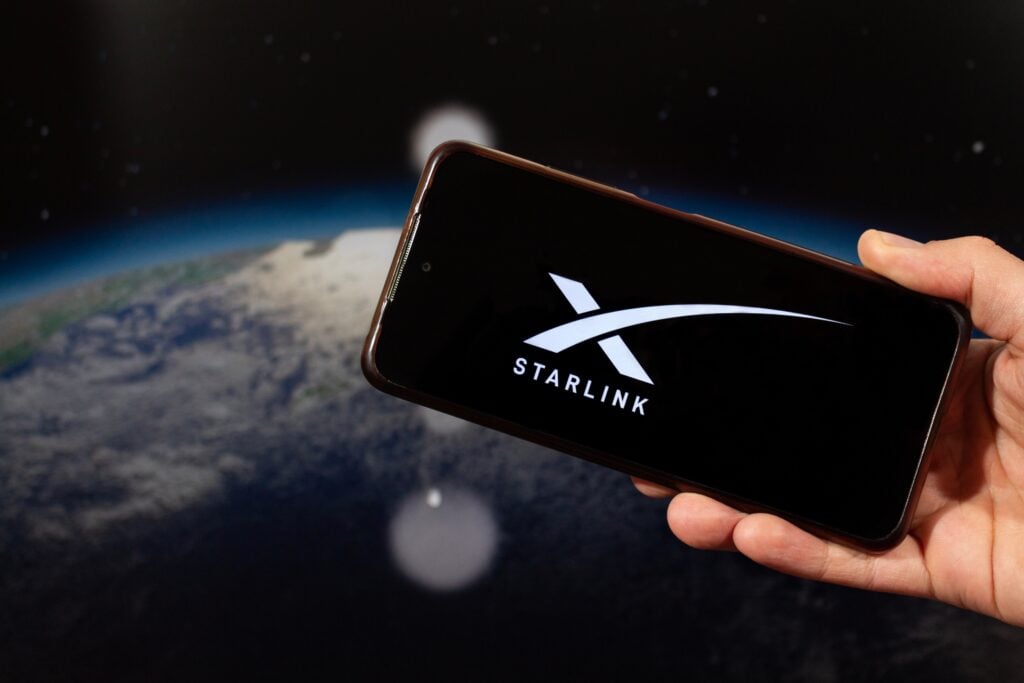
Group 1 - SpaceX is now selling Starlink hardware on Amazon's e-commerce platform, expanding its distribution channels [1][2] - The available Starlink products include a Mini Router, Standard Wall Mount Kit, replacement cable, 3rd generation WiFi Routers, Pipe adapter, and Pivot Mount kit [2] - Amazon has rebranded its Project Kuiper to Amazon LEO and is launching a preview program to test its hardware and network services [3] Group 2 - Amazon LEO's Ultra terminal features a phased array antenna capable of delivering download speeds of up to 1 Gbps and upload speeds of 400 Mbps, making it the fastest of its kind [4] - Starlink has entered into a partnership with Kyivstar Group Ltd. to provide direct-to-cell technology, which has been in testing for over a year [5] - Elon Musk has proposed the concept of orbital AI datacenters, claiming they would be more cost-effective than terrestrial datacenters [6]

Are Singapore Blue-Chip Stocks Really ‘Safe’? The Risks You Need to Know
The Smart Investor· 2025-11-25 23:30
Core Insights - Singapore blue-chip stocks are traditionally viewed as stable investments with strong financials and reliable dividends, but they also carry inherent risks that investors must consider [1][18]. Group 1: Definition and Characteristics - A blue chip is typically a large company with solid financials, stable earnings, prudent money management, and consistent dividends, often represented in the Straits Times Index [2]. - Blue-chip companies are usually industry leaders, such as DBS Group Holdings, Singapore Telecommunications Limited, and Singapore Exchange Limited [2]. Group 2: Risks Associated with Blue-Chip Stocks - **Market Sensitivity**: Blue-chip stocks are not immune to market fluctuations; historical examples show that even established companies can experience significant share price declines during downturns [3][4]. - **Regulatory and Policy Changes**: Many blue-chip companies operate in highly regulated industries, making them vulnerable to changes in regulations and competitive environments, as seen with Singtel's profit contraction due to adverse regulatory rulings [6][7]. - **Industry-Specific Challenges**: Blue-chip companies face unique challenges within their industries, such as the shift to online retail impacting physical retailers like CapitaLand Integrated Commercial Trust [9][10]. - **Economic Sensitivity**: Blue-chip stocks can be cyclical and sensitive to economic conditions, as demonstrated by Singapore Airlines' significant revenue loss during the COVID-19 crisis [11][12]. - **Overvaluation in Bull Markets**: Blue-chip stocks can become overvalued during bull markets, leading to compressed future returns and increased risk of price corrections; for instance, DBS's high price-to-book ratio indicates potential overvaluation [14][16]. Group 3: Investment Strategies - Maintaining a diversified portfolio is essential to mitigate risks associated with market sensitivity, regulatory changes, industry challenges, economic sensitivity, and overvaluation [5][19]. - Investors should conduct careful analysis of price-to-earnings and price-to-book ratios, dividend yields, and business fundamentals to ensure investments have growth potential [16][17].