汽车制造业

Search documents
英利汽车:拟使用不超1.45亿元闲置募集资金进行现金管理
2 1 Shi Ji Jing Ji Bao Dao· 2025-10-30 09:13
Core Viewpoint - Yingli Automotive announced the approval of a proposal to use part of its idle raised funds for cash management, emphasizing the focus on high safety and liquidity investments [1] Group 1: Cash Management Proposal - The company will utilize up to 145 million yuan of temporarily idle raised funds for cash management [1] - Investments will include products with high safety, good liquidity, and capital protection agreements, with a maximum investment period of 12 months [1] - The cash management initiative is valid for 12 months from the date of board approval and allows for rolling use of funds within the specified limit [1] Group 2: Impact on Operations - The company stated that this cash management will not affect the progress of the raised fund investment projects or the normal production and operation of the company [1]

今年前三季度广州GDP同比增长4.1%,增速继续回升
Sou Hu Cai Jing· 2025-10-30 08:32
Core Insights - Guangzhou's GDP for the first three quarters of 2025 reached 23,265.65 billion yuan, showing a year-on-year growth of 4.1% at constant prices [1] - The economic recovery in Guangzhou is accelerating, with GDP growth improving from 3.8% in the first half of the year to 4.1% in the first three quarters [2] Economic Performance - The primary industry added value was 197.94 billion yuan, growing by 4.2% - The secondary industry added value was 5,564.37 billion yuan, with a growth of 2.7% - The tertiary industry added value was 17,503.34 billion yuan, increasing by 4.6% [1] - The industrial added value for large-scale enterprises grew by 1.4%, an increase of 0.7 percentage points compared to the first half of the year [2] Investment Trends - Fixed asset investment in Guangzhou grew by 1.3%, up by 0.5 percentage points from the first half of the year - Industrial investment surged by 9.6%, while infrastructure investment rose by 2.2% - Real estate development investment increased by 2.4%, driven by urban renewal projects - Investment in the automotive manufacturing sector grew by 15.8%, with a notable 38.6% increase in automotive parts manufacturing investment [2] Contribution to GDP - The tertiary sector contributed over 80% to the city's GDP growth - The financial sector, buoyed by an active securities market, achieved a 6.1% increase in added value, contributing significantly to the overall GDP growth [2] Transportation and Logistics - The total passenger volume for the first three quarters reached 254 million, with a year-on-year growth of 6.5% - Air and rail transport saw passenger volume increases of 2.4% and 0.9%, respectively - Cargo transport also showed stability, with a total cargo volume of 700 million tons, growing by 2.4% [3] Economic Outlook - The overall economic performance in Guangzhou is characterized by steady progress and quality improvement - However, challenges remain, including external uncertainties and structural issues in supply and demand - Future strategies will focus on stabilizing existing economic activities, expanding new investments, and enhancing quality to foster high-quality development [3]
赛力斯启动全球发售:折价或高达27%及基石阵容失衡背后 估值与业绩匹配失衡及独立性挑战凸显
Xin Lang Zheng Quan· 2025-10-30 02:15
Core Viewpoint - The company, Seres, is set to launch a global offering on October 27, with a pricing date of November 3 and listing on the Hong Kong Stock Exchange on November 5. The offering price is capped at HKD 131.50 per share, with a base issuance of approximately 100 million shares, potentially raising up to HKD 174.3 billion if the overallotment option is fully exercised. This IPO could become the third largest in Hong Kong this year and the largest for a complete vehicle manufacturer since 2022. However, the offering features an unusual discount of over 26%, a lack of participation from foreign long-term funds, and a reliance on government and industrial capital, indicating deeper risks related to valuation and performance, particularly the dependency on Huawei [1][5][13]. Pricing Strategy - The pricing strategy for Seres' IPO shows a stark contrast to similar large A to H projects this year, with a discount of 26.9% compared to the A-share closing price of CNY 163.99. This discount is significantly higher than the typical range for comparable projects, where discounts are generally kept below 20% [2][4]. Investor Composition - The IPO attracted 22 cornerstone investors, raising a total of USD 830 million, which accounts for 48.7% of the base issuance. However, the investor composition is heavily skewed towards government and industrial capital, with foreign long-term funds largely absent, raising concerns about the long-term value perception of the company [5][6]. Performance and Valuation Concerns - Seres' sales data indicates a weakening growth trend, with September 2025 sales of 48,000 vehicles showing an 8.33% year-on-year increase, but a cumulative decline of 7.79% for the first nine months. The company's reliance on Huawei is diminishing, as evidenced by its ranking among Huawei's electric vehicle models, where it faces increasing competition from other manufacturers [7][9][12]. Financial Metrics - As of the current valuation, Seres has a market capitalization of HKD 306.9 billion, with projected P/E ratios for 2024, TTM, and 2025 at 47.2x, 38.6x, and 27.9x respectively. These figures are significantly higher than the average P/E ratios of traditional automakers in Hong Kong, which hover around 14.9x to 22x, indicating a potential valuation bubble lacking solid fundamental support [10][11][12]. Dependency on Huawei - The valuation premium associated with Seres is largely attributed to its partnership with Huawei. Prior to this collaboration, Seres had a market value of only CNY 10 billion, which skyrocketed to over CNY 250 billion post-collaboration. However, as Huawei diversifies its partnerships with other manufacturers, Seres risks losing its competitive edge and growth momentum, raising concerns about its long-term sustainability [13].


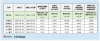
赛力斯港股招股 预计募资净额129.249亿港元
Cai Jing Wang· 2025-10-30 01:33
Core Viewpoint - The company, Seres Group, has officially launched its IPO process in Hong Kong, aiming to become the largest car company IPO in the region by 2025 if successful [1][6]. Group 1: IPO Details - The IPO will last until October 31, with shares expected to be listed on November 5 under the stock code "9927" [1]. - Seres plans to issue 100.2 million H-shares, with 10.02 million shares available for public sale in Hong Kong and approximately 90.18 million for international sale [3][5]. - The estimated net proceeds from the IPO, assuming the maximum share price of HKD 131.50, would be approximately HKD 12.9249 billion [3]. Group 2: Use of Proceeds - About 70% of the funds raised will be allocated to research and development, 20% for diversifying marketing channels and enhancing global brand recognition, and 10% for working capital and general corporate purposes [3][10]. - The company plans to establish 100 experience centers in Europe and the Middle East by 2026 and collaborate with Huawei to build a supercharging network covering 80% of major international highways [3]. Group 3: Financial Performance - For the first half of the year, Seres reported revenue of CNY 62.359 billion, with a gross profit of CNY 16.531 billion and a gross margin of 26.5% [10]. - The company’s revenue for 2022, 2023, and projected figures for 2024 and the first half of 2025 are CNY 34.056 billion, CNY 35.789 billion, CNY 145.114 billion, and CNY 62.358 billion respectively [10][16]. Group 4: Brand and Market Position - The company has launched four models under the "Wenjie" brand, with projected total deliveries of 387,100 units in 2024, representing a year-on-year increase of 268% [7][12]. - The partnership with Huawei has significantly enhanced Seres' brand image and market performance, with sales from the Wenjie brand accounting for 90.3% of total revenue by the first half of 2025 [14][17]. Group 5: Competitive Landscape - As Huawei expands its partnerships with other automakers, the unique advantages of the Wenjie brand may diminish, leading to increased competition within the Huawei ecosystem [17]. - Seres has also engaged in strategic investments, including a CNY 5 billion capital increase and a 10% stake acquisition in Huawei's subsidiary, indicating active capital management [17].
永茂泰单季净利暴增63倍 主业稳固机器人业务获突破
Chang Jiang Shang Bao· 2025-10-30 00:04
Core Insights - The demand for automotive lightweighting has significantly boosted the performance growth of Yongmaotai (605208.SH) [1][3] - The company reported a revenue of 1.655 billion yuan in Q3 2025, a year-on-year increase of 59.65%, and a net profit of approximately 30.41 million yuan, up 6319.92% [1][3] Revenue Growth - For the first three quarters of 2025, Yongmaotai achieved a revenue of 4.275 billion yuan, representing a year-on-year growth of 54.66%, with a net profit of 50.18 million yuan, up 39.58% [3] - The substantial revenue growth is attributed to the expansion of new customers and projects, leading to a significant increase in the sales volume of main products [3] Automotive Lightweighting - Yongmaotai has excelled in the automotive lightweighting sector, with aluminum alloy product sales reaching 134,000 tons in the first half of 2025, a year-on-year increase of 50.7% [3] - The revenue from components for new energy vehicles accounted for nearly 50% of the company's total component revenue in the first half of 2025 [3] Robotics Sector Development - The company is actively investing in the robotics sector, having secured significant orders from a leading domestic robotics enterprise for 173 core components, which represent over 90% of the client's total orders [4] - This order includes critical systems for humanoid robots, marking a significant milestone in Yongmaotai's strategic layout in the robotics field [4] R&D Investment - Yongmaotai has consistently increased its R&D investment, with expenditures of 73.90 million yuan, 91.84 million yuan, and 100 million yuan from 2022 to 2024, reflecting year-on-year growth rates of 51.06%, 24.26%, and 9.62% respectively [5] - In the first three quarters of 2025, R&D expenses reached 90.61 million yuan, a year-on-year increase of 30.2% [5]

东北首座万亿城市之争 尘埃落定?
Mei Ri Jing Ji Xin Wen· 2025-10-29 16:35
Core Insights - The Northeast region of China is expected to witness the emergence of its first trillion-yuan city, with Dalian and Shenyang as potential candidates, as they are both approaching the 900 billion yuan GDP mark [1] - Dalian has shown strong economic resilience with a GDP of 724.82 billion yuan and a growth rate of 6.0%, while Shenyang's GDP is 661.43 billion yuan with a much slower growth rate of 2.3% [1][8] - The contrasting economic performances of Dalian and Shenyang highlight the challenges and opportunities in the region's industrial landscape [1][15] Dalian's Economic Performance - Dalian's industrial output has increased significantly, with a year-on-year growth rate of 12.8% in the first three quarters [8] - The petrochemical industry plays a crucial role in Dalian's economy, accounting for 45.1% of the total revenue from industrial enterprises [9] - New projects and capacity expansions in the petrochemical sector are driving Dalian's industrial growth, with significant contributions from the Hengli Industrial Park [12][13] Shenyang's Economic Challenges - Shenyang's economy is heavily reliant on the automotive industry, which constitutes 49.5% of its manufacturing revenue, leading to vulnerabilities [6][18] - The automotive sector has faced challenges, including a 45.2% decline in vehicle production in the Dandong District, primarily due to the impact of domestic electric vehicle competition [6][7] - Shenyang's industrial output has been negatively affected, with a 4.7% decline in industrial added value and a 9.8% drop in foreign trade [3][5] Industrial Structure and Transition - Both cities exhibit a concentration in specific industries, with Dalian's petrochemical sector and Shenyang's automotive industry being dominant [9][6] - The need for industrial transformation is evident, as Dalian is pursuing a shift towards green petrochemical production, while Shenyang is attempting to diversify its automotive sector towards electric vehicles [14][17] - The overall industrial growth in Liaoning province remains sluggish, with a 2.2% increase in industrial added value, indicating a need for structural adjustments [15][16] Future Outlook - The contrasting trajectories of Dalian and Shenyang may influence the overall economic landscape of Liaoning province and the Northeast region [15][18] - The emergence of a trillion-yuan city in the Northeast could signal new opportunities for economic revitalization in the region [1][18]
动力新科(600841.SH):前三季度净亏损3.5亿元
Ge Long Hui A P P· 2025-10-29 12:18
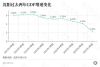
Core Viewpoint - The company reported a significant decline in revenue for the first three quarters of 2025, alongside a reduced net loss compared to the previous year [1] Financial Performance - The total operating revenue for the first three quarters reached 4.171 billion yuan, representing a year-on-year decrease of 20.34% [1] - The net profit attributable to shareholders of the parent company was -350 million yuan, which is an improvement of 914 million yuan compared to the same period last year [1] - The basic earnings per share stood at -0.25 yuan [1]

均胜电子股价涨5.13%,永赢基金旗下1只基金位居十大流通股东,持有891.33万股浮盈赚取1452.87万元
Xin Lang Cai Jing· 2025-10-29 05:53
Core Insights - Junsheng Electronics experienced a stock price increase of 5.13%, reaching 33.42 CNY per share, with a trading volume of 2.235 billion CNY and a turnover rate of 5.06%, resulting in a total market capitalization of 46.643 billion CNY [1] Company Overview - Junsheng Electronics, established on August 7, 1992, and listed on December 6, 1993, is located in Ningbo, Zhejiang Province, China. The company specializes in automotive electronics, new energy vehicles, industrial automation, robotics, and the research, development, production, and sales of interior and exterior functional components [1] - The revenue composition of Junsheng Electronics is as follows: automotive safety systems account for 62.53%, automotive electronic systems for 27.53%, other segments for 9.44%, and supplementary items for 0.49% [1] Shareholder Information - Among the top ten circulating shareholders of Junsheng Electronics, Yongying Fund's advanced manufacturing mixed fund (018124) entered the list in the second quarter, holding 8.9133 million shares, which represents 0.65% of the circulating shares. The estimated floating profit for today is approximately 14.5287 million CNY [2] - The Yongying Advanced Manufacturing Mixed Fund (018124) was established on May 4, 2023, with a latest scale of 4.697 billion CNY. Year-to-date returns stand at 85.61%, ranking 183 out of 8,155 in its category; the one-year return is 136.49%, ranking 14 out of 8,031; and since inception, the return is 134.76% [2]

投资逻辑质变:从规模扩张到效益优先
Sou Hu Cai Jing· 2025-10-29 05:14
Core Insights - The article emphasizes the importance of fixed asset investment in stabilizing economic growth and optimizing investment structure for high-quality economic development [1] Investment Landscape Changes - Recent years have seen significant changes in China's investment landscape, with fixed asset investment growth slowing to 3.2% in 2024 and 0.5% from January to August 2025 [2] - Real estate investment, once a primary driver, has declined significantly, with a 27.1% drop in 2024 compared to 2021, and a further 12.9% decrease from January to August 2025 [2] - The share of secondary industry in fixed asset investment has increased to 34.8% in 2024, up 6.1 percentage points from 2020, with manufacturing investment growing by 5.1% from January to August 2025 [2] High-Tech Industry Competition - The rapid growth of high-tech industry investment has led to "involution" competition, characterized by price wars and reduced quality, impacting profitability [3] - For instance, the profit growth of large-scale automotive manufacturing enterprises was -0.3% in the first eight months of 2025, contrasting sharply with a 20.2% investment growth [3] Enhancing Investment Efficiency - Improving investment efficiency involves several key areas, including necessary investment returns for enterprises, financial feasibility of infrastructure projects, and the efficiency of investments in driving economic growth [4][6][7] - The capital-output ratio in 2024 reached 9.38, the highest since 2020, indicating a need to enhance the relationship between investment and consumption [7] Role of Investment in Economic Quality - The quality of economic growth is linked to total factor productivity, which needs to be improved through targeted investments in technology and resource reallocation [8] - In 2024, total factor productivity contributed 2.2% to GDP growth, highlighting the importance of investment in enhancing economic potential [8] Recommendations for Investment Improvement - Addressing "involution" competition through government intervention and industry self-regulation is crucial for maintaining a healthy market environment [9] - Developing a sustainable financing model for infrastructure projects is essential, focusing on balancing government and private sector roles [10][11] - Enhancing investment's role in boosting consumption and optimizing supply structure is vital for future economic stability [12][13]
倒计时1天,李在明或将签字,美逼韩国割土地,中国家门口生变
Sou Hu Cai Jing· 2025-10-29 04:08
Economic Impact - The U.S. demands South Korea to pay $350 billion, equivalent to South Korea's total foreign investment over the past five years, which poses a significant financial burden on the country [3] - South Korea's economy is heavily reliant on exports, with the automotive industry having a profit margin of only 5% to 8%, and a potential increase in tariffs from 15% to 25% could severely diminish competitiveness [3] - The South Korean government has indicated it can only allocate $15 to $20 billion annually from its budget, making it nearly impossible to meet the U.S. demands without long-term financial strain [3] Political and Social Reactions - A significant portion of the South Korean population, 62%, opposes any compromise with the U.S., viewing the potential agreement as unequal [7] - The political landscape in South Korea is increasingly polarized, with opposition parties criticizing the agreement as a betrayal of national interests [11] - Public sentiment is marked by anger and frustration, with protests occurring in major cities against perceived economic coercion and loss of sovereignty [9] Military and Sovereignty Concerns - The U.S. is not only seeking financial contributions but also land ownership for military bases, fundamentally altering the nature of the U.S.-South Korea relationship from "leased" to "occupied" [5][7] - There are fears that U.S. military expansion in South Korea could destabilize the regional military balance, particularly concerning China [22] - The potential for the U.S. to gain access to South Korea's core technologies in semiconductors and renewable energy raises concerns about technological sovereignty and economic implications for China [20][22] Regional Economic Relations - South Korea's trade with China is deeply intertwined, with bilateral trade expected to reach $360 billion in 2024, and a significant portion of South Korea's exports to China being in critical sectors like semiconductors [20] - A shift of $350 billion in investments from South Korea to the U.S. could disrupt supply chains and increase production costs for Chinese companies [20] - The dynamics of U.S.-South Korea relations could lead to a weakening of East Asia's overall economic competitiveness, as the U.S. aims to consolidate its influence in the region [24] Strategic Implications - The situation exemplifies the dangers of over-reliance on a single power, as highlighted by experts who warn of the erosion of soft power and strategic short-sightedness in U.S. foreign policy [26] - The case serves as a cautionary tale for smaller nations about the risks of dependency on a dominant power, with potential long-term consequences for sovereignty and economic stability [28]