
电力

Search documents
国务院办公厅:到2035年全面建成全国统一电力市场体系
Xin Hua Cai Jing· 2026-02-11 09:59
《意见》提到,全面建设更好发现价格、调节供需的现货市场。充分发挥现货市场发现实时价格、准确 反映供需的重要作用,更好引导电力资源优化配置。推动现货市场2027年前基本实现正式运行。推动发 用两侧各类经营主体全面报量报价参与电力市场。在明确落实各方电力保供责任的前提下,稳妥推动用 户参与省间现货交易。加强现货市场与其他市场在交易时序、价格、结算等方面的衔接,通过分时价格 信号更好引导经营主体优化发用电行为,激发电力系统灵活调节潜力。 此外,《意见》还提到,进一步推动发电侧经营主体参与电力市场。落实新能源可持续发展价格结算机 制,鼓励新能源企业与用户开展多年期交易。推动"沙戈荒"新能源基地各类型电源整体参与电力市场, 强化跨省跨区和省内消纳统筹。推动分布式电源公平承担系统调节成本,支持分布式新能源以聚合交 易、直接交易等模式参与市场。进一步优化煤电机组运营模式,合理确定机组开机方式和调峰深度,上 网电量全部参与电力市场,通过多种交易类型获得收益以覆盖建设运营成本。在保障能源安全的基础 上,分品种有节奏推进气电、水电、核电等电源进入电力市场。探索建立体现核电低碳价值的制度,鼓 励煤电机组在重污染天气预警期间降低交易 ...
新华财经晚报:2026年1月份CPI同比上涨 PPI同比降幅收窄
Xin Hua Cai Jing· 2026-02-11 09:59
Group 1: National Policies and Economic Measures - The State Council has issued an implementation opinion to establish a unified national electricity market system by 2030, aiming for 70% of electricity consumption to be market-based, with full completion by 2035 [1] - The Ministry of Commerce announced the allocation of the first batch of 62.5 billion yuan in national subsidies to support consumer spending during the Spring Festival, with over 1 billion yuan in bonuses planned for a pilot program in 50 cities [2] - The National Bureau of Statistics reported a 0.2% year-on-year increase in the Consumer Price Index (CPI) for January 2026, with a 1.4% year-on-year decrease in the Producer Price Index (PPI), although the decline has narrowed compared to the previous month [2] Group 2: Industry Developments - The China Automobile Industry Association reported that in January 2026, the production and sales of new energy vehicles reached 1.041 million and 945,000 units, respectively, marking a year-on-year increase of 2.5% and 0.1% [3] - Shanghai's "14th Five-Year Plan" aims to establish a world-class international shipping center by 2030, with container throughput expected to reach approximately 58 million TEUs [4] - The "Three-Year Action Plan for High-Quality Development of New Materials Industry in Lanzhou" emphasizes the development of hydrogen energy materials, including key research and pilot projects [5][6]

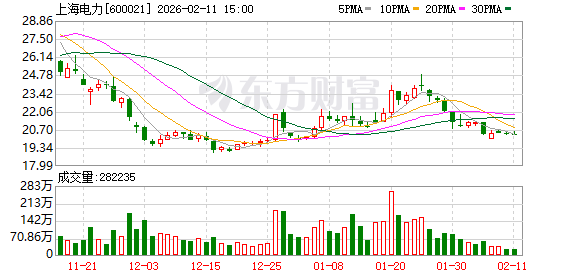
上海电力:公司在欧洲区域的境外项目主要为投资和运营发电项目
Mei Ri Jing Ji Xin Wen· 2026-02-11 09:57
Group 1 - The core viewpoint of the article is that Shanghai Electric (600021.SH) is actively involved in overseas power generation projects in Europe, specifically in Hungary, Malta, and Turkey [2] Group 2 - The company focuses on both investment and operation of power generation projects in the mentioned European countries [2]

中广核电力(01816.HK)公布,公司于2026年2月10日完成了2026年度第一期及第二期超短融的发行
Sou Hu Cai Jing· 2026-02-11 09:50
Group 1 - The company, China General Nuclear Power Corporation (CGN Power), completed the issuance of the first and second phases of ultra-short-term financing on February 10, 2026, with each phase totaling RMB 1 billion and a maturity of 268 days at an interest rate of 1.55% [1][1][1] - The first phase of the ultra-short-term financing has an interest start date of February 11, 2026, and a repayment date of November 6, 2026, with a face value of RMB 100 [1][1][1] - The second phase mirrors the first in terms of total amount, maturity, interest rate, and repayment schedule [1][1][1] Group 2 - As of February 11, 2026, CGN Power's stock closed at HKD 3.14, reflecting an increase of 0.64%, with a trading volume of 15.43 million shares and a turnover of HKD 48.19 million [1][1][1] - The company has a market capitalization of HKD 34.831 billion, ranking fifth in the power industry [1][1][1] - There has been low attention from investment banks, with no ratings provided for the stock in the past 90 days [1][1][1]

国家发展改革委:全国统一电力市场体系取得重大进展
Yang Shi Xin Wen· 2026-02-11 09:48
Core Insights - The core viewpoint of the article is that China's electricity production organization has transitioned from a planned system to a market-oriented one over the past decade, with significant progress in establishing a unified national electricity market system [1] Market Development - By the end of 2025, the market-based electricity trading volume is expected to reach 6.6 trillion kilowatt-hours, an increase of approximately 7 times compared to 2015, with the market share of electricity consumption rising from less than 15% to 64% [1] - All commercial and industrial users, as well as all coal-fired power plants, nearly 60% of renewable energy, 40% of hydropower, and nearly half of gas and nuclear power plants will participate in the electricity market by the end of 2025 [1] Market Participants - The number of registered market participants has exceeded 1.09 million, which is 22 times that of 2015, with over 5,000 electricity sales companies and nearly 500,000 electricity traders emerging [1] Cross-Regional Trading - The scale of cross-provincial and cross-regional electricity trading has increased from less than 0.1 trillion kilowatt-hours in 2015 to approximately 1.6 trillion kilowatt-hours by 2025 [1] - A comprehensive coverage of electricity trading across all categories has been largely achieved, and a market-based pricing mechanism that allows for price fluctuations has been initially established [1]
中广核电力(01816.HK):发行2026年度第一期及第二期超短期融资券
Ge Long Hui· 2026-02-11 09:33
Core Viewpoint - China General Nuclear Power (01816.HK) has completed the issuance of the first and second phases of ultra-short-term financing bonds for the year 2026, with all funds raised allocated for repaying loans of its subsidiaries [1] Group 1 - The total amount raised in the first phase of ultra-short-term financing bonds is RMB 1 billion, with a term of 268 days and an interest rate of 1.55% [1] - The total amount raised in the second phase of ultra-short-term financing bonds is also RMB 1 billion, with the same term and interest rate as the first phase [1] - Both phases have the same start date of February 11, 2026, and a maturity date of November 6, 2026 [1]
中广核电力(01816)合共完成发行20亿元的超短融
智通财经网· 2026-02-11 09:31
Core Viewpoint - China General Nuclear Power Corporation (CGN Power) has completed the issuance of the first and second phases of ultra-short-term financing for the year 2026, raising a total of RMB 20 billion to repay loans for its subsidiaries [1] Group 1: Financing Details - The first phase of ultra-short-term financing amounted to RMB 10 billion, with a term of 268 days, a face value of RMB 100, and an interest rate of 1.55% [1] - The second phase also raised RMB 10 billion, with identical terms and conditions as the first phase [1] - Both phases have the same interest commencement date of February 11, 2026, and a repayment date of November 6, 2026 [1] Group 2: Use of Proceeds - The funds raised from this ultra-short-term financing will be used entirely for repaying loans of the company's subsidiaries [1]
中国华能:迎战寒潮“速冻” 保供有新招
Zhong Guo Neng Yuan Wang· 2026-02-11 09:30
Core Viewpoint - The company is actively responding to severe cold weather conditions by implementing multiple measures to ensure power generation, heating supply, and the well-being of residents, thereby reinforcing energy supply security [1]. Group 1: Emergency Response and Operations - The company has entered a "wartime" state in response to recent severe weather, enhancing frontline staffing and increasing inspection frequency in critical areas to ensure operational stability [2]. - A large heat storage tank, set to be operational by January 2026, has already supplied 15,000 GJ of heat, improving the heating system's regulation and emergency response capabilities [4]. - From November 15, 2025, to February 5, 2026, the company generated 22.9 billion kWh of electricity and supplied over 9.86 million GJ of heat, maintaining stable operations across all units [4]. Group 2: Technological Innovations - The company has developed an AI customer service system that integrates natural language processing and multi-turn dialogue understanding, significantly improving customer service efficiency and response times [5]. - Since its launch, the AI system has handled nearly 20,000 calls with an average response time of under 8 seconds, expanding service coverage threefold compared to previous methods [5]. Group 3: Renewable Energy Contributions - The company has focused on clean energy sectors, achieving a solar equipment utilization rate of 99.98% and a wind energy utilization rate of 98.36% by the end of January 2026, contributing to energy security during winter [9]. Group 4: Heating Supply Innovations - The company has implemented innovative heating solutions in Yantai, including turbine low vacuum heating modifications, which have doubled heating capacity and added 2 million square meters of heating capability [10]. - The company has designed and implemented low bypass heating technology, enhancing the flexibility of thermal power units while ensuring stable heating supply [10]. - The company’s heating area has reached 446 million square meters, with annual heating volume exceeding 100 million GJ, serving over one million direct heating users [12].

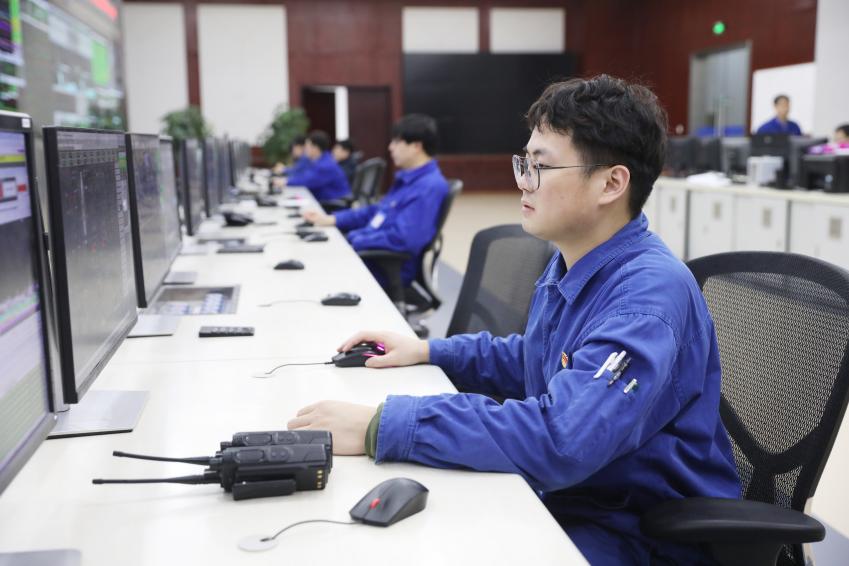
国务院:推动电力资源在全国范围内优化配置 完善跨省跨区电力交易制度
Xin Lang Cai Jing· 2026-02-11 09:28
【国务院:推动电力资源在全国范围内优化配置 完善跨省跨区电力交易制度】智通财经2月11日电,国 务院办公厅日前印发《关于完善全国统一电力市场体系的实施意见》。《意见》要求,坚持以习近平新 时代中国特色社会主义思想为指导,深入贯彻党的二十大和二十届历次全会精神,完整准确全面贯彻新 发展理念,按照构建全国统一大市场、深化电力体制改革、建设新型电力系统要求,坚持全国统一、畅 通循环,着力打破市场分割、破除区域壁垒,促进市场高效联通和有机衔接,统筹推动电力市场供需高 水平动态平衡,着力扩大规模、改善结构、拓展功能,健全统一开放、竞争有序、安全高效、治理完善 的电力市场体系,在确保电力系统安全可靠运行的基础上,实现市场运行畅通有序、交易规则统一高 效、利益分配公平合理,为保障能源安全、经济社会发展和绿色低碳转型提供有力支撑。《意见》明 确,到2030年基本建成全国统一电力市场体系,到2035年全面建成全国统一电力市场体系。《意见》指 出,一要推动电力资源在全国范围内优化配置,优化全国统一电力市场体系实现路径,完善跨省跨区电 力交易制度。二要健全电力市场各项功能,全面建设更好发现价格、调节供需的现货市场,持续完善保 障电 ...
国务院办公厅:到2030年,市场化交易电量占全社会用电量的70%左右
Xin Lang Cai Jing· 2026-02-11 09:28
格隆汇2月11日|国务院办公厅印发《关于完善全国统一电力市场体系的实施意见》提出,到2030年, 基本建成全国统一电力市场体系,各类型电源和除保障性用户外的电力用户全部直接参与电力市场,市 场化交易电量占全社会用电量的70%左右。跨省跨区和省内实现联合交易,现货市场全面转入正式运 行,市场基础规则和技术标准全面统一,市场化电价机制基本健全,公平统一的市场监管体系基本形 成。到2035年,全面建成全国统一电力市场体系,市场功能进一步成熟完善,市场化交易电量占比稳中 有升。 ...