进出口贸易

Search documents
广宇集团(002133.SZ):旗下杭州广宇久熙的包装材料出口业务涉及西班牙、意大利等国
Ge Long Hui· 2025-07-29 08:35
格隆汇7月29日丨广宇集团(002133.SZ)于投资者互动平台表示,公司旗下杭州广宇久熙进出口有限公司 的包装材料出口业务涉及西班牙、意大利等国。 ...

上半年大连市外贸进出口实现2350.1亿元 同比增长8.8%
Shang Wu Bu Wang Zhan· 2025-07-28 11:38
Group 1 - The core viewpoint highlights that Dalian's foreign trade in the first half of 2025 reached 2350.1 billion yuan, with an 8.8% year-on-year growth, surpassing national and provincial growth rates [1] - Exports amounted to 1228.1 billion yuan, reflecting a significant increase of 21.5%, while imports were 1122 billion yuan, showing a decline of 2.4% [1] - The city ranked 9th among 15 sub-provincial cities in terms of total foreign trade value, maintaining the same position as the previous year [1] Group 2 - The bonded logistics method showed remarkable growth, becoming the strongest driving force for foreign trade expansion, with a 54.8% increase in trade value, contributing 8.9 percentage points to overall foreign trade growth [1] - The general trade method saw a decline of 3.3%, while processing trade increased by 6.3% [1] - The number of active foreign trade enterprises in Dalian rose by 6% to 8171, with state-owned, foreign, and private enterprises all experiencing growth [1] Group 3 - Traditional markets showed steady progress, while emerging markets experienced significant growth, with exports to ASEAN increasing by 53.2% and to Japan by 3.2% [2] - The equipment manufacturing sector demonstrated strong performance, with shipbuilding and floating storage platforms exporting 149.6 billion yuan, a growth of 87.2%, contributing 32.1% to overall export growth [2] - Exports of automotive parts and vehicles also saw substantial increases, with growth rates of 45.4% and 168.5%, respectively [2]
上半年西藏货物贸易进出口总值达43.4亿元
Zhong Guo Chan Ye Jing Ji Xin Xi Wang· 2025-07-28 05:48
Core Insights - The total value of Tibet's foreign trade reached 4.34 billion yuan in the first half of the year, marking a year-on-year growth of 14.1% [1] - Exports amounted to 3.7 billion yuan, increasing by 15.4%, while imports were 640 million yuan, up by 7% [1] Trade Growth Factors - The growth in Tibet's foreign trade is attributed to the optimization of the port business environment and the implementation of key measures such as the "Iron and Public" intermodal transport model for South Asia [2] - Overall logistics efficiency improved by 50%, with the city of Shigatse experiencing a 49.8% increase in imports and exports [2] Trade Partners and Products - Tibet's trade with Nepal reached 2.19 billion yuan, growing by 22.1%, accounting for 25.9% of the total Sino-Nepal trade [2] - Exports of new energy vehicles and photovoltaic products totaled 910 million yuan, while specialty agricultural products exported nearly 30 million yuan [2] Role of Private Enterprises - Private enterprises played a significant role in driving Tibet's foreign trade, with imports and exports totaling 4.25 billion yuan, a growth of 14%, representing 97.9% of the total foreign trade value [3] - During the 14th Five-Year Plan period, private enterprises accounted for 93.2% of the total foreign trade value, with a cumulative total of 34.06 billion yuan, reflecting a 1.1-fold increase compared to the previous five-year period [3]
外贸十强市,又变了
虎嗅APP· 2025-07-27 23:51
Core Viewpoint - The article discusses the competitive landscape of China's top foreign trade cities in the first half of the year, highlighting shifts in rankings and growth rates among key players in the foreign trade sector [1][3]. Summary by Sections Foreign Trade Rankings - Shenzhen regained its title as "Foreign Trade First City" in the first half of the year, with a total import and export value of 2.17 trillion yuan, a year-on-year decrease of 1.1% [3]. - Shanghai closely followed with an import and export value of 2.15 trillion yuan, showing a slight increase of 2.4% year-on-year [3]. - The competition for the fifth position between Dongguan and Ningbo was intense, with Dongguan achieving a 16.5% growth, surpassing Ningbo [4]. Growth Rates and Performance - Dongguan's total import and export value reached 749.28 billion yuan, contributing to a 2.4 percentage point increase in Guangdong's overall foreign trade growth [4]. - The Yangtze River Delta and Guangdong-Hong Kong-Macao Greater Bay Area both showed stable growth in foreign trade, with the Yangtze River Delta's import and export scale exceeding 8 trillion yuan, a year-on-year increase of 5.4% [4][5]. Guangzhou's Export Performance - Guangzhou's exports surged by 25.2%, the highest growth rate among the top ten cities, while imports saw a modest increase of 0.7% [7]. - The city's export structure, heavily reliant on traditional industries, contributed to its strong performance, with significant growth in machinery and electronics [9]. Kinhwa's Rapid Growth - Kinhwa's total foreign trade reached 508.68 billion yuan, with a growth rate of 20.1%, making it the fastest-growing city among the top ten [9]. - The city benefited significantly from the performance of Yiwu, which accounted for a substantial portion of Kinhwa's foreign trade [10].

给征巴西50%关税“理亏”找补?特朗普政府被爆找新法律依据
Hua Er Jie Jian Wen· 2025-07-25 20:12
Core Viewpoint - The U.S. government is seeking legal justification for President Trump's recent threat to impose a 50% tariff on all Brazilian products starting August 1, 2025, despite the lack of trade deficit data supporting this action [1][4]. Group 1: Tariff Justification and Trade Data - Trump's claim of an "unfair trade relationship" with Brazil is contradicted by trade data, which shows a trade surplus of $7.4 billion for the U.S. against Brazil in 2024, indicating higher U.S. exports than imports [4]. - Brazilian President Lula highlighted that Brazil's exports to the U.S. were approximately $40 billion, while imports were about $47 billion, resulting in a $7 billion surplus for the U.S. [4]. Group 2: Political Motivations - The tariff threat appears to be politically motivated, as it coincides with Trump's dissatisfaction regarding the judicial proceedings against former Brazilian President Bolsonaro, who is facing trial for alleged attempts to overturn the election results [5][6]. - Trump's letter demanded that the Lula government cease the judicial investigation into Bolsonaro, labeling it as "political persecution" [5]. Group 3: Brazil's Response - In response to the tariff threat, Brazil has established a special committee to address the trade crisis and is prepared to negotiate with the U.S. [7]. - Lula stated that if negotiations fail, Brazil would implement reciprocal measures, potentially imposing a 50% tariff on U.S. exports to Brazil, as trade with the U.S. only constitutes 1.7% of Brazil's GDP [7].
31省份外贸“半年报”出炉:22省实现正增长 外贸大省挑大梁
Zheng Quan Ri Bao· 2025-07-25 16:11
Core Viewpoint - China's foreign trade showed steady growth in the first half of 2025, with 22 provinces reporting positive year-on-year growth, highlighting the resilience and vitality of the foreign trade sector amid external pressures [1][2]. Group 1: Overall Trade Performance - The total value of China's goods trade in the first half of 2025 reached 21.79 trillion yuan, marking a historical high for the same period, with a year-on-year increase of 2.9% [2]. - Major provinces such as Guangdong, Jiangsu, and Zhejiang accounted for 64.1% of the national total trade value, with a combined year-on-year growth of 4.8%, surpassing the national average growth rate [2][3]. Group 2: Regional Contributions - The central and western provinces, including Sichuan and Henan, are gradually releasing their potential, with significant increases in trade values [4]. - Qinghai province experienced a remarkable 57.7% growth in total import and export value, driven by a surge in exports of new energy products, particularly lithium-ion batteries [1][4]. Group 3: Future Strategies - Provinces are encouraged to focus on upgrading industries, enhancing infrastructure connectivity, and fostering new competitive advantages in foreign trade [6]. - There is a call for collaboration between inland and coastal regions, as well as between eastern and western provinces, to create a complementary trade structure [6][5].
二季度规模创历史新高,解码上海外贸“先抑后扬”背后
第一财经· 2025-07-25 09:29
Core Viewpoint - Shanghai's foreign trade has shown resilience in the face of complex external challenges, achieving a historical high in scale and a significant upward trend [1]. Group 1: Trade Performance - In the first half of the year, Shanghai's total foreign trade reached 2.15 trillion yuan, a year-on-year increase of 2.4%. Exports amounted to 952.7 billion yuan, growing by 11.1%, while imports were 1.2 trillion yuan, down 3.6% [3]. - Shanghai has achieved positive growth for five consecutive months since February, with exports maintaining growth for nine months and imports for three months. The second quarter saw a record high in trade volume at 1.14 trillion yuan, with a growth rate of 7.2%, the highest in nearly eight quarters [2][3]. Group 2: Private Enterprises - Private enterprises in Shanghai have shown significant growth, with imports and exports reaching 818.3 billion yuan in the first half of the year, a 23.6% increase, surpassing the overall city's growth rate by 21.2 percentage points. This sector has maintained double-digit growth for six consecutive months [5]. - The number of private enterprises with import and export records reached 41,000, a 7.6% increase from the previous year. Specialized "little giant" enterprises have also outperformed the overall growth rate, with a 7% increase in exports [6]. Group 3: High-tech Products - High-tech product exports reached 239.6 billion yuan in the first half of the year, accounting for 25.2% of total exports. Notable growth was seen in liquefied natural gas transport vessels (42% increase) and surgical robots (3.9 times increase) [8]. - The export of intermediate goods supported Shanghai's export growth, with a total of 527.4 billion yuan in intermediate goods exported, a 20.5% increase, contributing 10.5 percentage points to overall export growth [9]. Group 4: Market Diversification - Shanghai's exports to non-US markets grew by 16.1%, compensating for a decline in exports to the US. The increase amounted to 117.0 billion yuan, effectively offsetting a decrease of 21.4 billion yuan in exports to the US [12]. - Exports to countries involved in the Belt and Road Initiative reached 887.3 billion yuan, an 11.8% increase, with significant growth also seen in exports to ASEAN and BRICS countries [13]. Group 5: Import Trends - Although overall imports in Shanghai saw a slight decline, monthly imports have been increasing since April, indicating positive trends in both production and consumption [15]. - In June, imports of industrial raw materials such as iron ore and plastics increased significantly, while imports of consumer goods also showed growth, particularly in dairy products and fruits [15]. Group 6: Port Performance - Shanghai's port accounts for nearly one-fourth of the national total in import and export value, maintaining its position as the largest port in China for 11 consecutive years [16]. - The port's capabilities include handling a significant volume of vehicles and various consumer goods, with copper and plastics making up substantial portions of national imports [16].
朱冰倩:双引擎驱动上海外贸韧性增长 民企从“数量补充”转向“创新主力”
news flash· 2025-07-25 09:00
Core Insights - Shanghai's foreign trade showed resilience with a total import and export value of 2.15 trillion yuan in the first half of the year, marking a year-on-year increase of 2.4% [1] - The second quarter recorded an import and export value of 1.14 trillion yuan, the highest for the same period in history [1] - The growth in foreign trade is attributed to a "dual-engine" drive, highlighting the role of private enterprises [1] Private Enterprises - The number of private enterprises with import and export records in Shanghai reached 41,000, an increase of 7.6% compared to the same period last year [1] - "Specialized, refined, distinctive, and innovative" small giant enterprises saw a 7% increase in import and export activities [1] - This shift indicates that Shanghai's small and medium-sized enterprises are evolving into "invisible champions" in their respective fields, transitioning from quantity supplementation to becoming the main force of innovation in foreign trade [1]
上半年大湾区内地9市 进出口同比增4.3%
Sou Hu Cai Jing· 2025-07-25 03:08
Core Insights - The Guangdong-Hong Kong-Macao Greater Bay Area has seen significant trade activity, with nearly 1,000 enterprises served and import-export value exceeding 34.2 billion yuan in the first half of the year [2] - The total import-export value of the nine mainland cities in the Greater Bay Area reached 4.38 trillion yuan, a year-on-year increase of 4.3%, accounting for 96.3% of Guangdong's total import-export value [2] Group 1: Customs and Trade Facilitation - The Guangdong Customs has implemented the "Cross-Border One Lock" reform, allowing vehicles to pass through border checkpoints with electronic locks, reducing logistics costs by approximately 28% and cutting transportation time by about 30% [3] - The "One Port Link" and "Combined Port" reforms have simplified customs procedures, allowing for a single declaration, inspection, and release process, significantly lowering logistics costs by over 300 yuan per container [5] - The "Parallel Port" logistics model is being piloted, which is expected to increase the loading rate of barges from 30% to 80% and reduce container logistics costs significantly [6] Group 2: Air Cargo and Logistics Innovations - The Guangdong Customs has integrated customs supervision with air cargo security and inspection processes, reducing transportation time by 30% and logistics costs by 20% for air exports [7] - The establishment of a one-stop service at the Guangzhou Baiyun Airport Comprehensive Bonded Zone has cut cargo waiting times by over 50% [7] - The new logistics model in the Qianhai Comprehensive Bonded Zone has led to a 30% reduction in logistics costs, with a significant increase in foreign trade volume, reaching 191.24 billion yuan, a year-on-year growth of 31.2% [7]
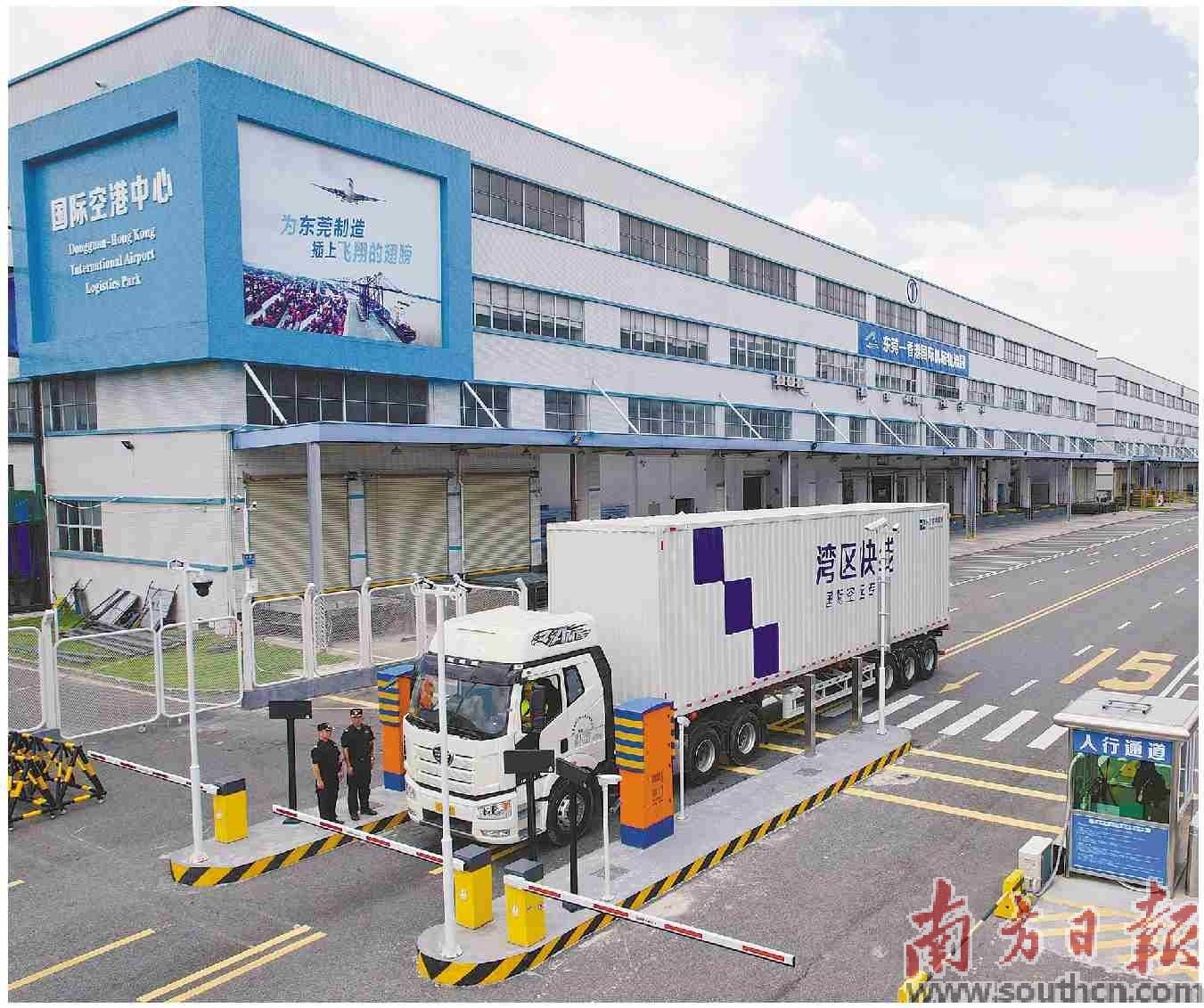
外贸城市十强榜:深圳第一,东莞、金华等增速跑赢全国
21世纪经济报道· 2025-07-25 02:52
Core Viewpoint - The article highlights the strong performance of major foreign trade cities in China during the first half of the year, driven by effective export strategies and an optimized product structure, particularly in high-tech exports, indicating a positive trend in the transformation and upgrading of China's foreign trade [2][11]. Group 1: Import and Export Data - The top ten cities in terms of import and export scale in the first half of the year are Shenzhen, Shanghai, Beijing, Suzhou, Dongguan, Ningbo, Guangzhou, Jinhua, Xiamen, and Qingdao, with five cities surpassing the national growth rate of 2.9% [1]. - Shenzhen's total import and export value reached 2.17 trillion yuan, accounting for 9.9% of the national total, maintaining its position as the "foreign trade capital" [6]. - Guangzhou's import and export total was 6050.5 billion yuan, marking a 15.5% year-on-year increase, while Suzhou's total was 1.3 trillion yuan, up 5.7% [7]. Group 2: Factors Driving Growth - The strong performance of foreign trade cities is attributed to two key factors: effective "export grabbing" strategies by enterprises and the resilience of diverse international markets [2]. - The export structure of these cities has been continuously optimized, with a notable increase in high-tech product exports, reflecting a positive trend in the transformation of China's foreign trade structure [2][13]. Group 3: Monthly Trends and Specific City Performances - Dongguan's import and export value reached 7492.8 billion yuan, a historical high with a year-on-year growth of 16.5%, reclaiming its position as the "fifth foreign trade city" [7][8]. - Jinhua's import and export total was 5086.8 billion yuan, with a growth rate of 20.1%, surpassing Xiamen and Qingdao [8]. - Monthly growth trends show that Dongguan's exports of toys and high-tech products have significantly contributed to its performance, with high-tech product exports increasing by 23.4% [8]. Group 4: Import Trends and Challenges - Despite the strong export performance, many cities experienced a decline in import data, with Shanghai, Ningbo, and Qingdao showing negative growth rates [9]. - The decline in imports is attributed to various factors, including falling international commodity prices and uneven domestic investment recovery, which has suppressed demand for intermediate and capital goods [9]. Group 5: Structural Transformation and Market Diversification - The export structure is rapidly transforming, with a shift from low-value products to high-tech and high-value products, indicating an improvement in China's manufacturing technology and industry position [13]. - Emerging markets are becoming significant sources of structural growth, with cities like Dongguan and Suzhou increasing their trade with ASEAN and other regions [14][15].