Semiconductors

Search documents
LP周报丨武汉,成立了一只“院士基金”
投中网· 2026-03-21 07:01
Core Viewpoint - Wuhan is leveraging its strong academic resources to transform scientific research into industrial capabilities through the establishment of the Jiangcheng Academician Fund, which aims to support the commercialization of high-level laboratory results [4][5]. Group 1: Jiangcheng Academician Fund - The Jiangcheng Academician Fund, initiated by Wuhan Jin Kong, has a target fundraising scale of 1 billion RMB and a duration of 15 years [5][7]. - The fund will provide comprehensive capital support for academicians' teams, covering the entire chain from concept validation to industrialization [5]. - The fund aims to bridge the gap between academic research and industrial application in Wuhan, potentially transforming the city into a hub for technological innovation [5]. Group 2: Other Investment Funds - The Beijing-Tianjin-Hebei Venture Capital Guidance Fund has completed its private fund registration and signed investment agreements for four sub-funds and one direct investment project, focusing on artificial intelligence and embodied intelligence [8]. - The Chengdu Intelligent Technology Fund has been established with a capital of 200 million RMB, indicating a trend of traditional infrastructure companies seeking intersections with advanced technology [9]. - The Guotai Junan and Jinan Steel Intelligent Manufacturing Industry Investment Partnership has been formed with a capital of 500 million RMB, supporting Jinan Steel's transition to high-end manufacturing [10][11]. - The Anhui Gaotou Huamin M&A Investment Fund has been registered with a total investment of 500 million RMB, focusing on high-quality development of listed companies [12]. - The Longjiang New Area Future Industry Guidance Fund has been established with a total scale of 1 billion RMB, targeting future industries such as new energy and biotechnology [14]. Group 3: Emerging Trends - The establishment of the Jiangcheng Academician Fund reflects a broader trend of local governments and financial institutions collaborating to enhance the commercialization of scientific research [5][4]. - The focus on artificial intelligence and advanced manufacturing across various funds indicates a strategic alignment with national priorities for technological advancement [8][10][12]. - The combination of traditional industries with innovative technology investments is becoming a prevalent model, as seen in the partnerships formed in Chengdu and Jinan [9][11].


Meet the 5 "Magnificent Seven" Stocks That Are Brilliant Buys Now
The Motley Fool· 2026-03-21 06:45
Core Viewpoint - The "Magnificent Seven" stocks have performed well in recent years, driven by AI demand, but have recently seen declines from their all-time highs, presenting potential investment opportunities in five of these stocks [1]. Group 1: Nvidia - Nvidia is trading at 22.2 times forward earnings and is projected to achieve a 70% revenue growth this year due to high demand for its GPUs [2]. - Despite a recent decline of over 10% from its all-time highs, Nvidia is viewed as an excellent investment opportunity as AI demand is expected to continue rising [4]. Group 2: Alphabet - Alphabet's stock is also down around 10% from its highs, but it has established itself as a leader in generative AI with its model, Gemini [5]. - The company has a market cap of $3.6 trillion and a gross margin of 59.68%, making it a strong long-term AI investment [7]. Group 3: Microsoft - Microsoft is down more than 25% from its all-time high, presenting a buying opportunity as it trades at about 25 times earnings, which is considered cheap historically [8][10]. - The company's business remains strong, despite the stock falling out of favor with the market [10]. Group 4: Amazon - Amazon's stock is down around 15% from its all-time high, but its AWS segment is experiencing significant growth, with a 24% revenue increase in the fourth quarter [11]. - AWS contributed to 50% of Amazon's operating profits, highlighting its importance as a key investment driver [12]. Group 5: Meta Platforms - Meta Platforms is the cheapest stock on the list, trading at 20.9 times forward earnings, which is lower than the S&P 500 average [13]. - Despite concerns over AI spending and future outlook, Meta is still generating profits and is expected to make a strong comeback, making it a compelling investment option [15][16].






Micron Technology And Its Real Value (NASDAQ:MU)
Seeking Alpha· 2026-03-21 05:03
Core Viewpoint - Micron Technology, Inc. is identified as a leading company in memory and storage systems, with a diverse product lineup that includes DRAM, NAND, and high-bandwidth memory, applicable in data centers, AI systems, and consumer products [1]. Company Overview - Micron Technology specializes in memory and storage solutions, which are critical for various applications including data centers and artificial intelligence [1]. - The company’s products are integral to everyday consumer electronics, highlighting its broad market reach [1]. Investment Strategy - The investment approach focuses on identifying companies with strong fundamentals that are available at significant discounts to their intrinsic value, following value investing principles similar to those of Warren Buffett [1]. - The service offered includes daily stock analysis, alerts for transactions, newsletters, weekly summaries, and a watch list for subscribers [1].

AI, Bubbles, and Markets
HumbleDollar· 2026-03-21 04:57
Core Viewpoint - The current excitement surrounding artificial intelligence (AI) is compared to the tech stock bubble of the 1990s, with concerns about the sustainability of financing and market valuations [1][2][4]. Group 1: AI Financing and Market Dynamics - Peter Thiel highlights that while AI is a significant technology, the financing methods are questionable, particularly with circular financing deals among companies like Nvidia and OpenAI [2][3]. - Nvidia has invested up to $100 billion in OpenAI, which in turn has committed to purchasing billions of dollars in Nvidia's chips, raising concerns about the ability of these companies to maintain rapid earnings growth [3]. - The S&P 500 is currently trading at a price-to-earnings (P/E) ratio of 21, significantly above the long-term average of 16, indicating elevated market valuations and potential risks if investor sentiment shifts [4]. Group 2: Historical Context and Economic Theories - Economists have long studied the cyclical nature of financial markets, with Hyman Minsky's Financial Instability Hypothesis suggesting that financial stability can lead to overconfidence and increased debt levels, ultimately resulting in instability [5][6]. - Charles Kindleberger notes that shifts in investor sentiment often occur due to unexpected failures in financial institutions, exemplified by Blue Owl Capital's recent decision to halt redemptions from one of its funds [7]. Group 3: Productive Bubbles and Long-term Implications - Economist Bill Janeway argues that not all bubbles are detrimental; he cites historical examples like the British railway bubble and the electrification projects in the U.S. as instances where investor enthusiasm led to significant technological advancements despite initial excesses [8][10]. - Janeway believes that the current AI bubble may also lead to productive outcomes, suggesting that while bubbles are unsettling, they can facilitate technological progress [11].


小米回应新SU7提车时间;特斯拉Semi电动卡车价格据悉低于30万美元丨汽车交通日报
创业邦· 2026-03-21 03:59
Group 1 - Xiaomi responds to delivery time for new SU7, stating that they are well-prepared for production capacity and have introduced measures like "ready-to-deliver cars" and "priority production" [2] - Tesla's Semi electric truck is reportedly priced below $300,000, which is about twice the cost of diesel trucks, with two models offering ranges of 325 miles and 500 miles [2] - Geely has launched the world's first green methanol-powered racing car, featuring a self-developed methanol engine with a thermal efficiency exceeding 48% and peak torque of 400 Nm [2] - German automotive semiconductor company Elmos Semiconductor is considering a sale, with a market value of approximately €2.3 billion ($2.5 billion), and has hired Morgan Stanley as an advisor for the transaction [2]




ASML vs. Broadcom: Which AI Stock Is a Better Buy?
The Motley Fool· 2026-03-21 03:51
Core Insights - The rise of artificial intelligence (AI) has significantly boosted semiconductor stocks, particularly ASML and Broadcom, which are crucial players in this sector [1][2] ASML - ASML holds a monopoly on extreme ultraviolet (EUV) lithography systems, essential for advanced semiconductor manufacturing [3] - In 2025, ASML reported total net sales of 32.7 billion euros, a 15% year-over-year increase, with net income reaching 9.6 billion euros, resulting in a 28% year-over-year earnings-per-share growth [4] - The company ended 2025 with a backlog of 38.8 billion euros, indicating strong future demand [4] - For 2026, ASML expects net sales between 34 billion and 39 billion euros, suggesting an 11.6% growth at the midpoint [6] - ASML's forward price-to-earnings ratio is around 40, indicating a high valuation that assumes continued dominance and rapid growth [7] - The high valuation poses risks, as any delays in customer orders or macroeconomic downturns could negatively impact the stock [8] Broadcom - Broadcom reported a 29% increase in total revenue to $19.3 billion in its fiscal first quarter of 2026, with AI semiconductor revenue soaring 106% year-over-year to $8.4 billion [9] - The company has a strong outlook for its data center infrastructure opportunities, with CEO Hock Tan projecting over $100 billion in AI chip revenue by 2027 [12] - Broadcom's forward price-to-earnings ratio is approximately 29, making it more attractively priced compared to ASML [13] - The company’s growth in AI revenue and its profitable software division present a favorable risk-reward profile for investors [15] Comparative Analysis - ASML is recognized for its strong market position but appears fully valued, with potential for multiple contraction if execution falters [14] - Broadcom, with its rapid growth and lower valuation, is seen as a more appealing investment option in the AI semiconductor space [15]



涉变相收购?英伟达与 Groq 巨额交易或引发反垄断调查
Huan Qiu Wang Zi Xun· 2026-03-21 03:30
Group 1 - The core point of the article is that Nvidia's $20 billion licensing agreement with AI startup Groq has drawn scrutiny from U.S. lawmakers, who are investigating potential antitrust violations related to the deal [1][2] - Senators Elizabeth Warren and Richard Blumenthal have expressed concerns that the transaction may be designed to circumvent antitrust scrutiny and could further entrench Nvidia's dominance in the AI computing market [1] - The senators have requested detailed information from Nvidia regarding the terms of the Groq deal and whether it was intentionally structured to avoid antitrust review [1] Group 2 - The licensing agreement between Nvidia and Groq is set to be completed by the end of 2025, marking another strategic investment by Nvidia in the AI sector [2] - Under the agreement, Nvidia gains non-exclusive rights to Groq's technology and has absorbed some of Groq's executives, including CEO Jonathan Ross, while Groq continues to operate independently [2] - The deal has not been submitted for antitrust review, which is typically required for most acquisition transactions under U.S. antitrust law, raising concerns about similar practices in the tech industry [2]

ADI封装厂,投产
半导体行业观察· 2026-03-21 02:53
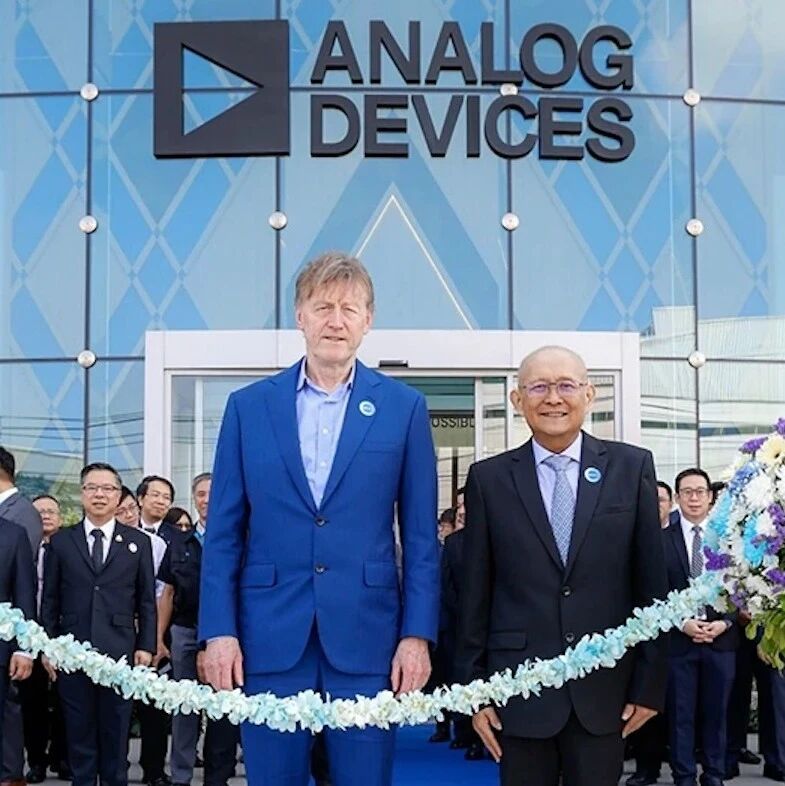
Core Viewpoint - Analog Devices, Inc. (ADI) has officially opened a new advanced manufacturing facility in Thailand, enhancing its manufacturing and testing capabilities while expanding resilient and sustainable semiconductor production in the Asia-Pacific region [2][4]. Group 1: Manufacturing Expansion - The new facility is part of ADI's mixed manufacturing strategy, leveraging both internal factories and external foundry and OSAT partners to provide resilient and high-performance solutions [2]. - Thailand plays a critical role in ADI's global manufacturing network, offering resilience, flexibility, and scale to support long-term growth across multiple market segments [2][5]. - The facility is designed as a smart and sustainable factory, integrating advanced automation and digital manufacturing technologies to respond quickly to demand while maintaining quality and reliability [2][4]. Group 2: Enhanced Testing and Packaging Capabilities - The new factory significantly boosts ADI's testing operations, with increased cleanroom and manufacturing capacity for testing, wafer-level processing, chip-level packaging, and final IC testing [4]. - It serves as a center for innovation and automation, enhancing efficiency, precision, and intelligent operations while ensuring world-class quality standards [4]. Group 3: Supply Chain Resilience - The expansion in Thailand strengthens ADI's global resilience strategy through improved geographic diversity, operational agility, and enhanced flexibility across its manufacturing network [5]. - The facility is strategically located in the Eastern Economic Corridor (EEC) of Thailand, benefiting from robust infrastructure, skilled engineering talent, and a stable operational environment [5]. Group 4: Sustainable Manufacturing Commitment - The factory is being developed to meet LEED standards, aiming for LEED Platinum certification, reflecting ADI's commitment to environmentally responsible manufacturing [7]. - It incorporates energy-efficient systems, resource optimization, and designs that promote employee well-being, supporting ADI's broader sustainability commitments, including 100% renewable electricity and enhanced water recycling systems [7]. - ADI Thailand is the first semiconductor manufacturer in Thailand to use low-carbon liquid nitrogen, reducing carbon intensity in testing operations and reinforcing ADI's leadership in sustainable semiconductor manufacturing [7]. Group 5: Talent Development - ADI is investing in the semiconductor talent ecosystem in Thailand through the ADI Thailand Academy and partnerships with top local universities, focusing on building engineering and technical capabilities in areas such as testing engineering, automation, and smart factory technologies [8]. - The new facility supports expanded internship programs and long-term talent development initiatives, contributing to the next generation of semiconductor talent while enhancing ADI's engineering capabilities locally and globally [8].

英伟达200亿收购,被调查,涉嫌垄断
半导体行业观察· 2026-03-21 02:53
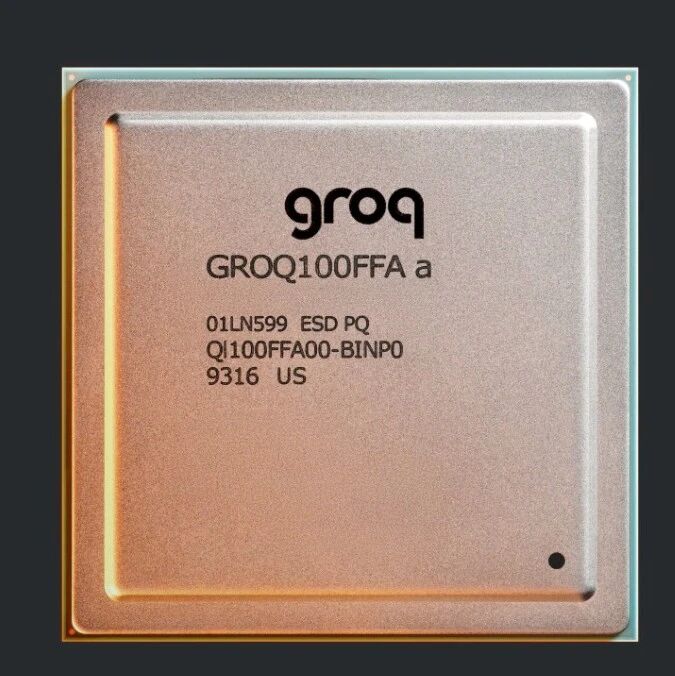
Core Viewpoint - Nvidia's acquisition of AI startup Groq for $20 billion is under investigation by two Democratic senators, questioning whether the deal violates antitrust laws and potentially consolidates Nvidia's dominance in the AI computing market [2][3] Group 1: Acquisition Details - The senators, Elizabeth Warren and Richard Blumenthal, expressed concerns that the deal's structure appears designed to "evade antitrust scrutiny" [2] - Nvidia's spokesperson clarified that the company has not acquired Groq but has obtained a non-exclusive license for Groq's intellectual property and hired engineering talent from Groq [2] - The deal is expected to be completed by the end of 2025, expanding Nvidia's investments in AI-related companies and providing access to new technology [2] Group 2: Market Implications - Nvidia's chips dominate the training of large language models, which are foundational to AI, while Groq focuses on inference, a more competitive area [3] - The senators highlighted that Nvidia's technology is crucial for the development of advanced AI, effectively controlling which companies can compete in the AI sector [3] - At Nvidia's annual conference, CEO Jensen Huang announced the integration of Groq's technology into a new AI computing platform [3]
21社论丨应关注AI算力涨价的市场影响
21世纪经济报道· 2026-03-21 01:11
Group 1 - The core viewpoint of the article indicates that the cloud computing industry is transitioning from a price decline driven by economies of scale to a price increase driven by supply-demand imbalance, as evidenced by recent price hikes from major cloud service providers [1][2] - Major cloud computing companies in China have announced price increases for AI computing power and storage products, following similar moves by global leaders like AWS and Google Cloud, marking a significant shift in pricing strategy [1][2] - The demand for AI applications has fundamentally changed, with a notable increase in token consumption as AI moves from simple chat applications to more complex multi-step execution applications, leading to a surge in demand for computing resources [1][2] Group 2 - The rise in hardware prices is attributed to multiple new demands, particularly the explosive growth in storage chip requirements, which has created supply bottlenecks, especially in AI server memory configurations [2] - The current price increase is primarily a short-term effect of demand congestion, as capital rapidly flows into validated technologies, while the production of AI chips remains highly concentrated among a few companies, limiting the ability to quickly increase supply [2] - The AI computing industry exhibits monopolistic characteristics, with a few major players dominating the hardware and service sectors, contrasting sharply with the more distributed structure of the consumer electronics industry, which has broader economic impacts [3]