Retail

Search documents
每月平均约40家首店落地!首发“引力场”引爆南京新消费
Sou Hu Cai Jing· 2025-12-01 02:43
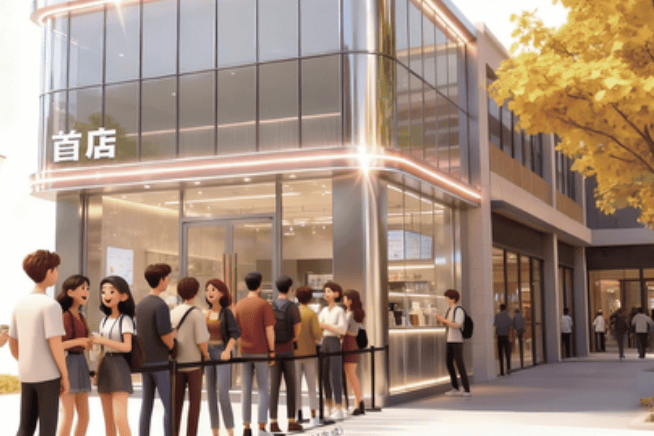
Core Insights - The opening of the first store of Fei Dazhu Chili Stir-Fry in Nanjing on November 15 attracted massive crowds, leading to what has been termed a "phenomenal queue" [2] - Nanjing has become a focal point for the "first store" economy, with policies introduced in 2022 to promote this trend, resulting in the introduction of 276 first stores in the past seven months, averaging about 40 new stores per month [3][4] - The city has been recognized as a pilot city for new consumption models, receiving financial support from the central government due to its strong consumer base and innovative development [3] First Store Economy - The first store phenomenon is reshaping the commercial landscape in Nanjing, with a significant increase in foot traffic and consumer engagement [3][4] - The restaurant sector leads the first store introduction, accounting for 44.73% of new stores, while retail follows closely at 43.96%, together contributing to 88.7% of the market share [6] - The introduction of first stores has been linked to increased sales and customer flow in surrounding businesses, with some restaurants experiencing wait times of up to an hour [5][6] Cultural and Historical Integration - Historical districts like Mendo and Xinanli are becoming experimental grounds for first stores, blending cultural heritage with modern retail experiences [8][9] - The MINISO FRIENDS store in Mendo has attracted a young audience, showcasing a mix of cultural and creative products [7][8] - The integration of first stores into historical areas has revitalized these spaces, creating unique consumer experiences that combine shopping with cultural engagement [9][10] Innovation and Consumer Experience - The concept of "micro-innovation" is emphasized as a key driver for the success of first stores, allowing brands to differentiate themselves while minimizing risks [13][14] - Brands like Ma Wuwang are leveraging innovative strategies, including seasonal product iterations and collaborations with popular IPs, to maintain consumer interest and drive repeat purchases [15][16] - The focus on creating immersive and engaging shopping experiences is evident in the design and operation of new stores, which aim to enhance customer satisfaction and loyalty [12][19] Economic Impact and Future Outlook - Nanjing has attracted over 1,500 first stores, including global and Asian firsts, positioning itself as a leader in the first store economy [16][18] - The city's commercial landscape is evolving, with a mix of high-end and innovative retail options catering to diverse consumer preferences [16][18] - Upcoming projects, such as the Jinling Changlefang, aim to further enhance the cultural and commercial offerings in Nanjing, indicating a continued focus on integrating new retail concepts with local heritage [18][19]



奋进的河南 决胜“十四五”·郑州篇丨于开放处听潮声 在烟火中见韧性
He Nan Ri Bao· 2025-12-01 00:24
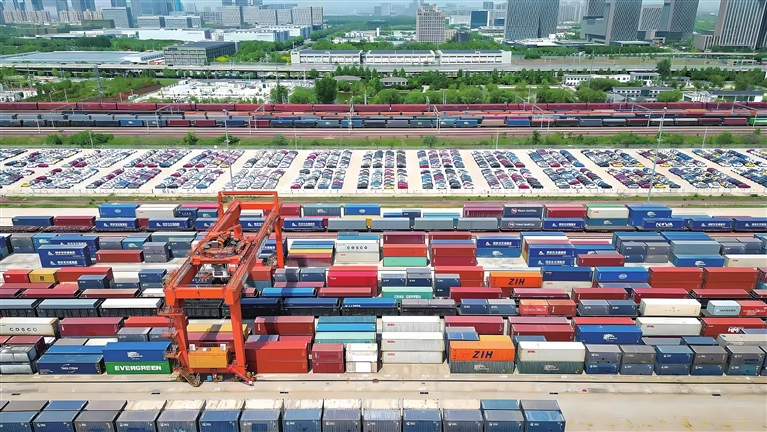
Core Insights - Zhengzhou is emerging as a significant hub for international trade and commerce, showcasing rapid growth in cross-border e-commerce and foreign trade, with a projected total trade volume exceeding 605 billion yuan in 2025 [4][10] - The city is actively enhancing its open economy through innovative policies and infrastructure improvements, positioning itself as a leader in the central region of China [4][8] Group 1: Open Economy and Trade Growth - Zhengzhou's cross-border e-commerce transaction volume is expected to reach 160 billion yuan in 2025, with an annual growth rate of 11.5% during the 14th Five-Year Plan period [4] - The city's foreign trade import and export total reached 508.6 billion yuan from January to October 2025, marking an 18% year-on-year increase, significantly outpacing the national average [4] - Zhengzhou has established itself as a key player in the "Digital Silk Road," with innovative customs practices and a robust logistics network supporting its trade ambitions [4][9] Group 2: Investment and Business Environment - From January to October 2025, Zhengzhou signed new investment projects totaling 733.98 billion yuan, with expectations to reach 840 billion yuan by year-end [10] - The city is shifting its investment strategy from broad outreach to targeted efforts, focusing on advanced manufacturing and modern services [10][11] - Zhengzhou has implemented reforms to create a stable and transparent business environment, enhancing its attractiveness for foreign investment [11][12] Group 3: Consumer Market and Economic Activity - The retail sales of consumer goods in Zhengzhou are projected to exceed 2.8 trillion yuan during the 14th Five-Year Plan, with a growth rate of approximately 4.1% [14] - The city has seen a significant increase in high-quality commercial developments, enhancing its retail landscape and attracting regional consumers [15] - Various promotional activities have been organized to stimulate consumption, resulting in a direct boost of 3 billion yuan to the local economy [17] Group 4: Logistics and Infrastructure Development - Zhengzhou has added 14 new A-level logistics companies in 2025, positioning itself among the top ten cities in China for logistics efficiency [18] - The city has developed a comprehensive logistics network that supports rapid delivery and supply chain stability, ensuring the availability of essential goods [18] - The establishment of the Central Plains International Convention and Exhibition Center has bolstered Zhengzhou's position in the domestic exhibition industry, hosting numerous events and generating significant economic activity [22]
Teen brands win over wary Black Friday shoppers while other deals disappoint
Fortune· 2025-11-30 22:31
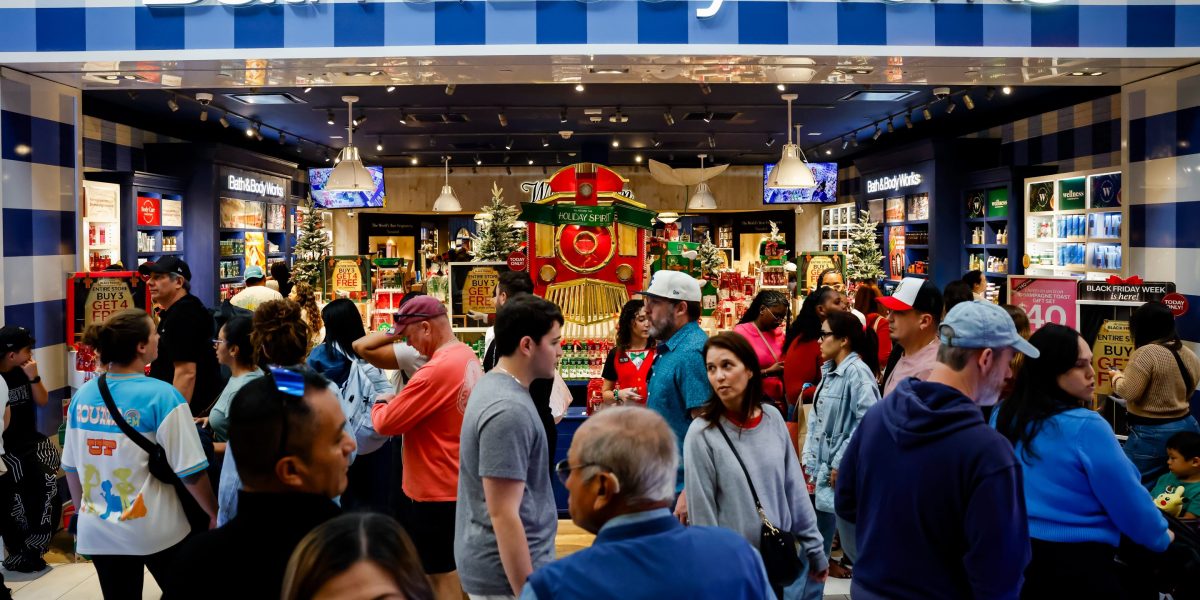
Core Insights - Teen brands have successfully attracted shoppers during Black Friday despite economic challenges, with stores like Edikted, Kendra Scott, and Bath & Body Works seeing significant foot traffic [1][4][6] - Other retailers, particularly high-end brands, experienced disappointing turnout and customer dissatisfaction due to perceived lack of substantial discounts [2][8][9] Retail Performance - Stores targeting younger consumers, such as Alo Yoga and Brandy Melville, reported busy shopping environments, indicating a shift in consumer preferences towards brands popular on social media platforms like TikTok [4][5] - Bath & Body Works offered compelling promotions, such as a buy three, get four free deal, which drew large crowds [6] Consumer Behavior - Shoppers are increasingly focused on maximizing deals, with many seeking essential items rather than indulging in luxury purchases [7][14] - The overall sentiment among consumers suggests a more cautious approach to spending, with expectations of lower unit sales despite stable overall spending [13][14] Economic Context - The holiday shopping season is influenced by economic factors such as inflation, stagnant wages, and a cooling job market, leading to a more restrained consumer outlook [12][15] - Retailers are facing challenges in providing significant discounts due to tariffs and reduced seasonal hiring, impacting the overall shopping experience [15]

Costco Is on Track for Its Worst Performance Relative to the S&P 500 in 23 Years. Is The Blue-Chip Dividend Stock a No-Brainer Buy for 2026?
The Motley Fool· 2025-11-30 16:15
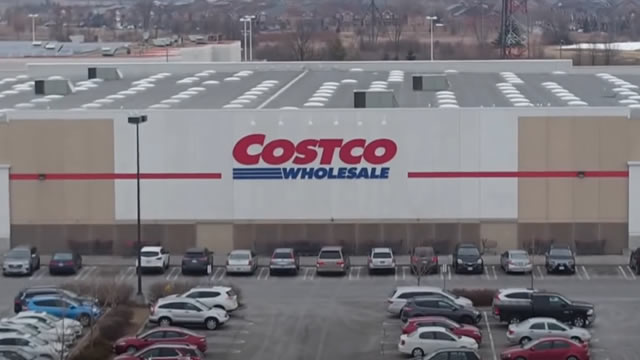
Core Viewpoint - Investors are becoming less favorable towards Costco due to rising concerns about consumer spending, despite the broader stock market performing well [1][2]. Company Performance - Costco's stock is down 3.3% year-to-date, marking its underperformance relative to the S&P 500, a trend not seen since 2002 [2]. - The company has been navigating a challenging operating environment effectively, with moderate sales and earnings growth, while other retailers are struggling [3]. - Costco's operating income from merchandise is less than 2% of its revenue, indicating strong value offerings that contribute to high customer loyalty and membership renewal rates [4]. Financial Metrics - Costco's earnings increased after raising membership fees, but its latest same-store sales growth fell slightly below expectations [5]. - The company maintains an efficient supply chain and benefits from its private label, Kirkland Signature, which enhances margins across product categories [6]. - Costco's gross margin stands at 12.84%, and it has a market capitalization of $405 billion [8]. Valuation Concerns - Despite delivering solid results, Costco's stock is considered overvalued, with a price-to-earnings (P/E) ratio significantly higher than its 10-year median of 36.4 [10]. - The stock's forward earnings multiple exceeds that of high-growth AI stocks like Nvidia and Broadcom, indicating a premium valuation [12]. - Given its high valuation and low dividend yield of 0.55%, Costco may not be an attractive buy for investors looking for passive income [13]. Investment Alternatives - Investors are advised to consider other growth stocks with reasonable valuations or value stocks like Coca-Cola and PepsiCo, which have strong dividend histories and better yield prospects [14].

US job cuts surged 183% in October to a record 153K. Is this the end of America's ‘no hire, no fire’ landscape?
Yahoo Finance· 2025-11-30 12:30
Core Insights - The U.S. labor market is experiencing a shift from a "no-hire, no-fire" environment, with significant job cuts announced by major corporations, indicating a potential change in hiring dynamics [1][2]. Job Cuts Overview - In October, U.S.-based employers announced 153,074 job cuts, marking a 183% increase from September and a 175% increase from October 2024, the highest total for October in over 20 years [2]. - The total job cuts for the year reached 1,099,500, up 65% from the same period last year, the highest year-to-date total since 2020 [5]. Affected Industries - The technology, retail, and services sectors are leading in job cuts, with significant layoffs announced by Amazon (approximately 14,000 positions) and UPS (around 48,000 positions) [3]. Factors Driving Job Cuts - The integration of AI and automation is reshaping white-collar roles, leading to workforce reductions as companies adapt to new technologies [5]. - Many firms overhired during the COVID-19 pandemic, and as consumer demand normalizes, they are reducing staff to pre-pandemic levels [5]. - Economic uncertainty, including higher input costs and trade tariffs, is causing businesses to adopt a cautious approach to hiring [5]. Market Implications - Despite healthy profit margins across the S&P 500, the current wave of layoffs may signal a new phase in the labor market characterized by caution, cost-cutting, and a focus on AI-driven efficiency [4].


Best retail stocks to own heading into the 2025 holiday season
Invezz· 2025-11-30 10:00
Core Insights - Consumer discretionary stocks have underperformed compared to the broader market this year, but there are signs of increasing momentum as the holiday season approaches [1] Group 1: Market Performance - Consumer discretionary stocks have lagged behind the broader market in 2023 [1] - The upcoming holiday season is expected to drive a shift in momentum for these stocks [1] Group 2: Consumer Behavior - Shoppers are increasingly focused on value and brand engagement as they prepare for the holiday season [1]


X @The Economist
The Economist· 2025-11-29 10:20
AI agents are redefining the shopping experience. On “Money Talks” this week, we explain why that may be bad news for retailers https://t.co/Nw9DCZ2kdU ...
[DowJonesToday]Dow Jones Closes Higher on Rate Cut Hopes, Economic Optimism
Stock Market News· 2025-11-28 22:09
Market Overview - The Dow Jones Industrial Average closed higher by 289.30 points (0.61%), ending at 47716.42, marking the fifth consecutive day of gains for Wall Street [1] - The market's positive momentum was driven by increasing expectations for a Federal Reserve interest rate cut next month, supported by comments from Fed officials and stronger-than-expected economic data [1] Economic Sentiment - The broader market managed to recover much of its mid-month losses, which were initially driven by concerns over an "AI bubble" and high valuations in certain tech stocks [2] - The rally indicates a resilient market responding positively to the potential for monetary easing and a generally favorable economic outlook [2] Stock Performance - Among the Dow's components, notable gainers included: - JPMorgan Chase & Co. (JPM) up 1.77% - IBM (IBM) with a 1.74% increase - Amazon (AMZN) rising 1.72% - Walmart (WMT) climbing 1.37% - Microsoft (MSFT) advancing 1.33% [3] - Conversely, Nvidia (NVDA) was the largest decliner, down 2.04%, continuing its struggles amid valuation concerns [4] - Other decliners included: - Travelers Companies Inc. (TRV) down 0.56% - Johnson & Johnson (JNJ) falling 0.31% - McDonald's (MCD) with a slight dip of 0.13% [4]
[DowJonesToday]Dow Jones Advances on Black Friday Optimism
Stock Market News· 2025-11-28 21:09
Market Overview - The Dow Jones Industrial Average closed higher on November 28, 2025, gaining 289.30 points (0.61%) in a shortened Black Friday trading session, reflecting strong optimism around the holiday retail season [1] - Dow Futures also showed positive sentiment, rising 253.00 points (0.5327%) [1] - The primary narrative driving the market was robust consumer spending expectations during the Black Friday shopping period [1] Key Performers - JPMorgan Chase (JPM) led the gains among Dow components with an increase of 1.77% [2] - Other notable performers included IBM (1.74%), Amazon (1.72%), Walmart (1.37%), and Microsoft (1.33%), all contributing to the positive sentiment around holiday sales [2] Underperformers - Nvidia (NVDA) was the biggest laggard, declining by 2.04%, potentially due to profit-taking or sector rotation [3] - Other notable declines included Travelers Companies (TRV) down 0.56%, Johnson & Johnson (JNJ) down 0.31%, and McDonald's (MCD) down 0.13% [3] - Despite these individual declines, overall market sentiment remained positive, extending a week of gains for major indexes [3]



U.S. Markets Conclude Shortened Black Friday Session with Gains, Rate Cut Hopes Fueling Optimism
Stock Market News· 2025-11-28 21:07
Market Overview - U.S. stock markets closed higher on November 28, 2025, with all three major indexes extending a multi-day rally, driven by hopes for future interest rate cuts and positive economic data [1][12] - The Dow Jones Industrial Average (DJIA) rose 0.6% to 47,427.12, the Nasdaq Composite (IXIC) increased by 0.7% to 23,214.69, and the S&P 500 (SPX) gained 0.5% to 6,812.61, marking the fifth consecutive session of increases for all three benchmarks [2] Weekly Performance - For the week, the Nasdaq surged 4.9%, the S&P 500 was up approximately 3.7%, and the Dow gained about 3.2% [3] - November was mixed; while the S&P 500 and Dow extended their winning streaks to seven months, the Nasdaq ended down 1.5%, attributed to reassessment of profitability timelines for major AI companies [3] Economic Data - Initial jobless claims decreased by 6,000 to 216,000, below the consensus estimate of 229,000, indicating a strong labor market [5] - Orders for durable goods rose by 0.5% in September, missing estimates, while non-defense capital goods orders increased by 0.9%, a key indicator for business spending [5] Upcoming Events - Market participants are monitoring the potential for another interest rate cut by the Federal Reserve next month, which is a significant driver of market optimism [4] - Kevin Hassett is a key contender for the next Fed Chairman, with an announcement expected from President Trump before Christmas, which could influence monetary policy expectations [4] Individual Stock Performance - Intel (INTC) surged 10.2%, leading the S&P 500, following speculation it could become a foundry supplier for Apple (AAPL) processors [7] - Eli Lilly (LLY) shares slipped 2.6%, giving back some recent gains despite a market cap exceeding $1 trillion due to sales of weight-loss drugs [8] - Nvidia (NVDA) shares slid 1.8% amid competitive concerns, while other tech stocks like Microsoft (MSFT) and Amazon (AMZN) saw gains of 1.3% and 1.8%, respectively [9] Sector Performance - Retailers performed well on Black Friday, with Walmart (WMT), Target (TGT), and Amazon (AMZN) finishing up roughly 1% to 2% [10] - Cryptocurrency-related stocks rose as Bitcoin moved above $90,000, with Marathon Digital Holdings (MARA), MicroStrategy (MSTR), and Coinbase Global (COIN) up by 7%, 5%, and 5%, respectively [11]