脑机接口

Search documents
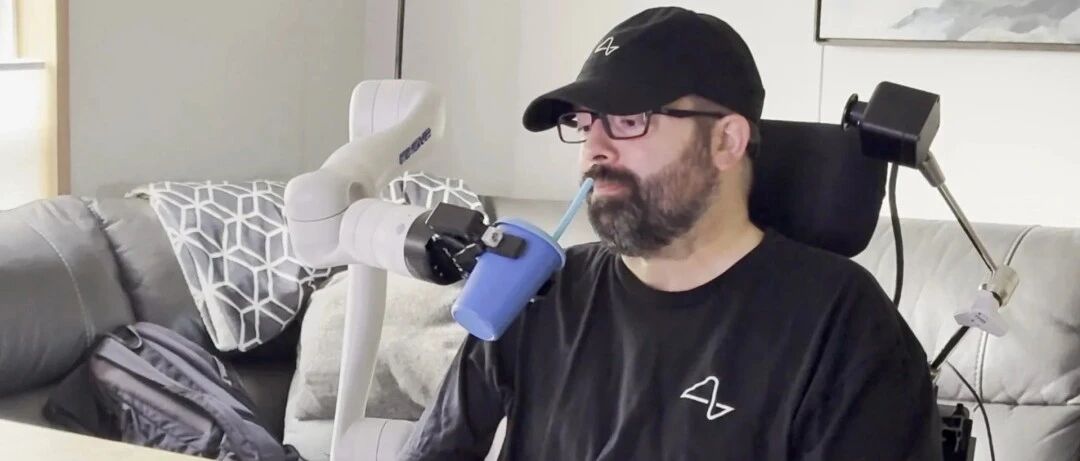
渐冻症患者首次独立进食、喝水,Neuralink公布新进展
财联社· 2025-10-12 07:14
Core Viewpoint - Neuralink, a brain-machine interface company founded by Elon Musk, has demonstrated significant advancements in enabling patients with neurodegenerative diseases, such as ALS, to control robotic arms using their thoughts, showcasing the potential of brain-machine interface technology [2][5]. Group 1: Patient Demonstration - Nick Wray, a patient with ALS, successfully controlled a robotic arm to perform daily tasks such as drinking water and using a microwave, marking a significant milestone in his independence [5]. - Wray set new records by moving 39 cylinders and flipping the most screws in a standard flexibility test within five minutes, highlighting the effectiveness of the technology [7]. Group 2: Research and Development - The demonstration is part of Neuralink's CONVOY study, which aims to explore the feasibility of using brain-machine interfaces to assist patients with limited mobility due to neurodegenerative diseases [7]. - Neuralink has implanted its N1 chip in 12 patients globally, who have collectively used the device for over 15,000 hours, indicating a growing interest and application of this technology [8]. Group 3: Technology Overview - The N1 chip, approximately the size of a 10-pence coin, contains 128 ultra-fine wires connecting to about 1,000 electrodes that interface directly with the brain, allowing for precise detection and transmission of neural signals [8]. - The technology aims to enable real-time conversion of thoughts into actions, with future aspirations to expand its applications to controlling humanoid robots and addressing other neurological conditions [8].

Neuralink新进展:渐冻症患者首次独立进食、喝水
3 6 Ke· 2025-10-12 03:53
Core Viewpoint - Neuralink has demonstrated the potential of its brain-machine interface technology by showcasing Nick Wray, a patient with ALS, controlling a robotic arm to perform daily tasks, marking a significant advancement in assistive technology for neurodegenerative diseases [1][3][5]. Group 1: Technology and Implementation - Nick Wray successfully controlled a robotic arm using only his thoughts, performing actions such as drinking water and heating food, highlighting the practical applications of Neuralink's technology [3][5]. - The N1 chip, implanted in Wray's brain, is part of the CONVOY research project approved by the FDA, aimed at exploring the feasibility of brain-machine interfaces for assisting patients with limited mobility [5][6]. - The N1 chip is approximately the size of a 10 pence coin and contains 128 ultra-fine wires connected to about 1,000 electrodes, which capture neural signals and convert them into digital commands for controlling external devices [6]. Group 2: Clinical Research and Patient Outcomes - As of now, 12 patients have undergone the N1 chip implantation, collectively using the device for over 15,000 hours, demonstrating its potential for long-term use [6]. - Wray has set records in various tasks, such as moving 39 cylinders in five minutes, showcasing the chip's effectiveness in enhancing motor functions [5][6]. Group 3: Future Prospects and Challenges - Elon Musk has expressed ambitions for the technology to eventually control humanoid robots, but acknowledges that challenges related to long-term stability and safety must be addressed before widespread commercialization, which may take 5-10 years [7].
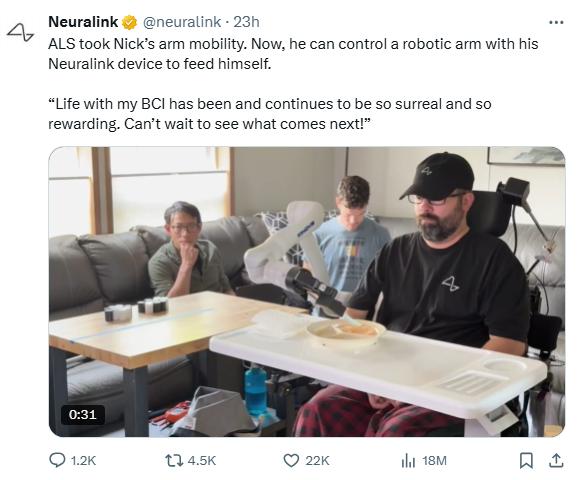
马斯克 Neuralink 脑机接口技术新突破:ALS 患者仅凭意念操控机械臂
Sou Hu Cai Jing· 2025-10-12 00:25
10 月 12 日消息,埃隆・马斯克(Elon Musk)旗下脑机接口公司 Neuralink 声称,其在脑机接口技术领域取得了一项新突破:一名患有肌萎缩侧索硬化症 (ALS)的患者已成功仅凭意念控制机械臂。 近日,该公司在线发布的一段演示视频显示,患者尼克・雷(Nick Wray)利用该机械臂拿起水杯并饮水。这一成果标志着在帮助严重行动受限患者恢复自 主能力方面迈出了重要一步。 植入其大脑的芯片可将神经信号转化为蓝牙指令,使他仅凭思维即可控制外部设备。据《PC Magazine》报道,雷成功实现了诸如抓取水杯、戴帽子、用微 波炉加热食物以及打开冰箱等任务。 在一次演示中,机械臂将水杯举至他的嘴边,使其得以饮用。此外,他在用于中风患者的灵巧性测试中创下纪录:五分钟内在桌面上移动了 39 个圆柱体, 并在另一项测试中翻转了五个类似拼图的插销。 据报道,雷甚至完成了一次他称之为"荒谬的花式投篮",相关画面预计将在未来发布的视频中呈现。据《达拉斯快报》(The Dallas Express)报道,在另一 次试验中,他还首次通过脑机接口成功操控了自己的电动轮椅。 这款名为 N1 的植入式芯片大小约等于一枚 10 便士 ...
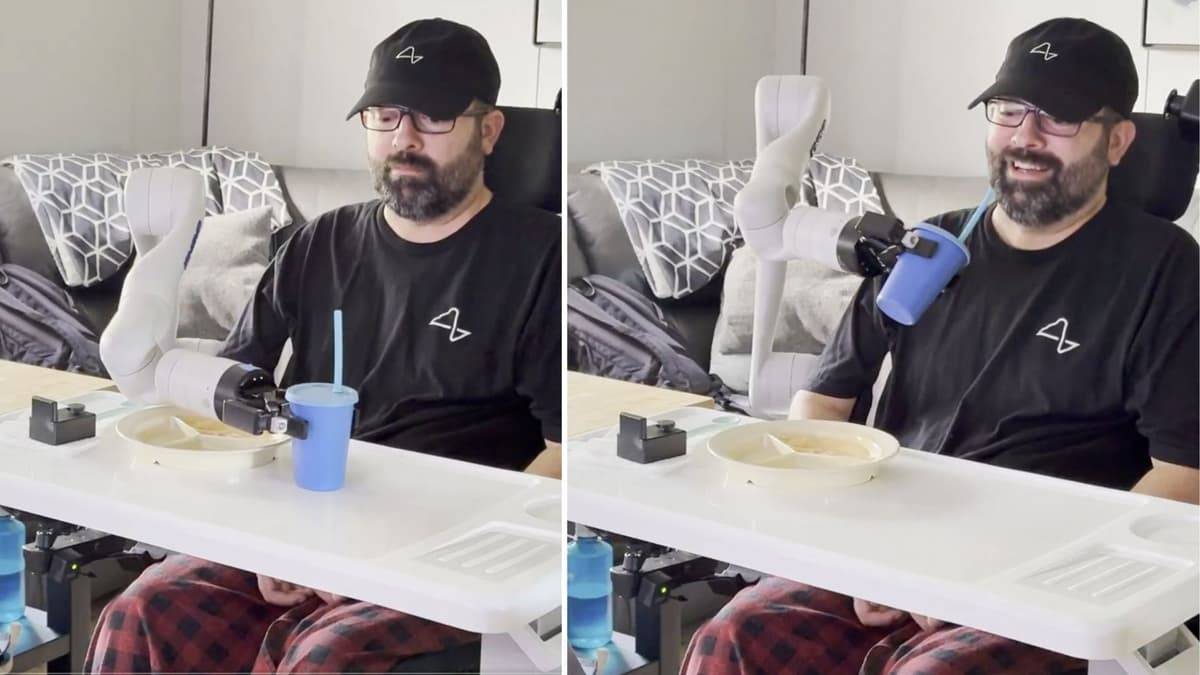
Neuralink展示“脑机接口+机器人”应用
Xin Lang Cai Jing· 2025-10-11 15:49
Core Viewpoint - Neuralink has demonstrated a significant advancement in brain-machine interface technology by showcasing a patient with ALS controlling a robotic arm to perform daily tasks [1] Group 1: Company Developments - Neuralink presented a demonstration featuring Nick Wray, an ALS patient, successfully using a brain-machine interface to control a robotic arm for eating [1] - This demonstration is part of Neuralink's CONVOY research project, which has received FDA approval [1] - Nick Wray is the eighth patient to undergo the brain-machine implant surgery, indicating ongoing clinical trials and patient engagement [1] Group 2: Technological Achievements - The brain-machine interface enabled Wray to perform various tasks, including grasping a cup, wearing a hat, microwaving food, and opening a refrigerator [1] - These tasks highlight the practical applications of Neuralink's technology in improving the quality of life for patients with severe mobility impairments [1]

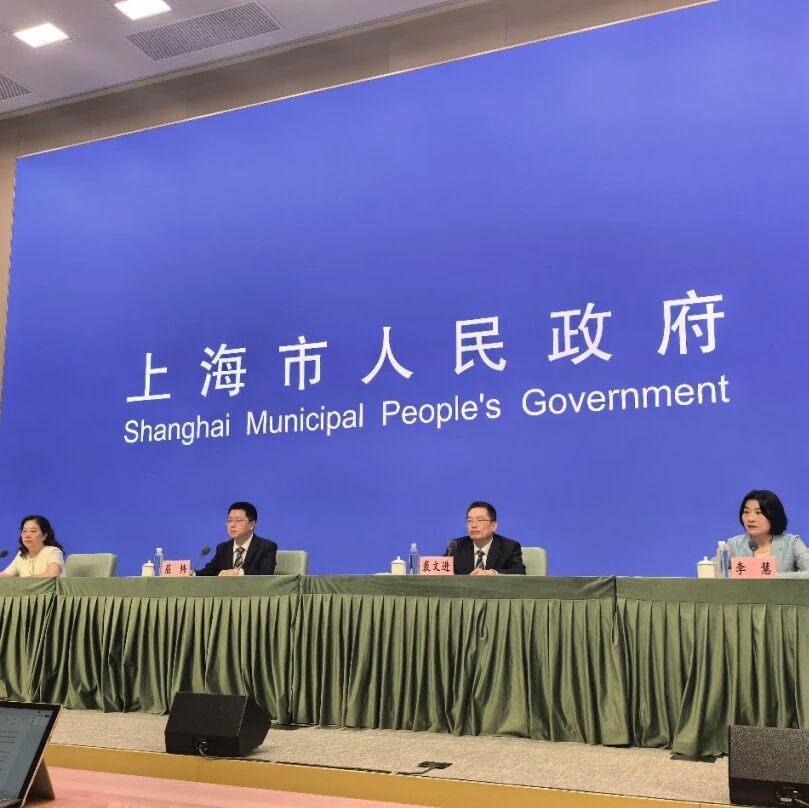
上海出台《关于加快推动前沿技术创新与未来产业培育的若干措施》
智通财经网· 2025-10-11 05:31
Core Viewpoint - Shanghai's government has introduced measures to accelerate the innovation of cutting-edge technologies and the cultivation of future industries, aiming to establish Shanghai as a globally influential hub for future industries by 2030 [1][4]. Group 1: Key Development Areas - The measures focus on future manufacturing, information, materials, energy, space, and health, with an emphasis on supporting sectors like cell and gene therapy, brain-machine interfaces, and biomanufacturing [5]. - Specific goals include nurturing around 20 ecosystem-leading enterprises by 2027 and establishing a world-class future industry hub by 2030 [1][4]. Group 2: Support for Key Processes - The initiative aims to accelerate breakthroughs in disruptive technologies by focusing on high-risk, high-value scientific challenges and enhancing support for cross-disciplinary innovation [6]. - It emphasizes the importance of project management teams to guide the development of core technologies and implement milestone-based project management [6][7]. Group 3: Stimulating Corporate Innovation - The measures encourage the growth of technology innovation enterprises by providing targeted support for those with significant innovation investments and industry influence [8]. - A structured support system for startups and high-growth technology companies is being established, including financial incentives for research and development [8]. Group 4: Building Industry Clusters - The government plans to create future industry clusters that are resource-rich and have a well-developed innovation ecosystem, with financial support for qualifying projects [9]. - There is a focus on establishing national-level pilot zones for future industries, which will receive comprehensive support for technology breakthroughs and talent development [9]. Group 5: Optimizing Core Element Support - The measures include promoting the application of innovative products through government procurement policies and supporting the development of demonstration application scenarios [10]. - Financial support mechanisms are being enhanced to create a multi-layered funding system that encourages investment in future industries [11]. Group 6: Talent Development and Global Cooperation - The initiative aims to attract and cultivate a diverse talent pool, including scientists and entrepreneurs, to foster innovation [12]. - It encourages international collaboration in future industries, including the establishment of international innovation alliances and participation in global industry standards [12]. Group 7: Dynamic Cultivation System - A dynamic assessment mechanism will be established to regularly evaluate and adjust the focus of future industry development based on global technological advancements [13]. - The measures will implement a comprehensive cultivation mechanism that integrates project management, funding, and industry cluster support [14].
上海,重磅发布!
证券时报· 2025-10-11 04:50
Core Viewpoint - Shanghai aims to accelerate the cultivation of future industries and breakthrough disruptive technologies by 2027, with a goal of establishing around 20 leading enterprises in future industry ecosystems by 2030 [1][3]. Summary by Relevant Sections Future Industry Development - Shanghai will focus on developing fields such as cell and gene therapy, brain-machine interfaces, biomanufacturing, and embodied intelligence, while also accelerating the cultivation of fourth-generation semiconductors, silicon photonics, 6G, and brain-like intelligence [3][7]. - The city plans to systematically layout and build future industry clusters, with a focus on six major directions: future manufacturing, future information, future materials, future energy, future space, and future health [7]. Measures and Support - The "Several Measures" document outlines 15 initiatives across six areas to enhance future industry cultivation, including financial support for innovative products and scene construction tasks, with funding up to 30% of contract amounts and a maximum of 2 million yuan [7][9]. - Shanghai has already launched several cultivation plans in areas like brain-machine interfaces and quantum computing, establishing high-quality incubators and a future industry fund with a total scale of approximately 15 billion yuan [9][14]. Investment and Financial Ecosystem - The future industry fund aims to create a multi-source investment system led by government funding, supported by enterprises and financial institutions, with a focus on early-stage quality projects and long-term value [14][15]. - As of October 10, 2023, the future industry fund has made investment decisions on 18 strategic sub-funds, with a proposed investment amount of 2.215 billion yuan, and has focused on nine key strategic projects with an investment of 399 million yuan [15]. Cluster Development - Shanghai is planning to create national-level future industry pilot zones and has initiated the construction of several future industry clusters in areas like Pudong and Minhang, with support of up to 2 million yuan for qualifying cluster construction entities [11][12]. - The brain-machine interface future industry cluster is being developed to become a global innovation hub, focusing on clinical trials and incubation of disruptive technologies [12].
利好来了,上海重磅发布
Zheng Quan Shi Bao· 2025-10-11 04:32
Core Insights - Shanghai Municipal Government has issued measures to accelerate the innovation of frontier technologies and the cultivation of future industries, focusing on areas such as brain-machine interfaces, embodied intelligence, and fourth-generation semiconductors [1][2][3] Group 1: Future Industry Development - The measures emphasize the development of future manufacturing, information, materials, energy, space, and health sectors, aiming to rationally plan and cultivate future industries based on industrial foundations and resource endowments [2][3] - Key areas for support include cell and gene therapy, brain-machine interfaces, biological manufacturing, and embodied intelligence, with a focus on reducing costs, improving accessibility, and building industrial ecosystems [2][4] Group 2: Technological Innovation and Research - The initiative aims to accelerate the cultivation of fourth-generation semiconductors, silicon-based optoelectronics, sixth-generation mobile communications, and brain-like intelligence, emphasizing product design optimization and market value verification [2][3] - There is a focus on quantum technology, controllable nuclear fusion, and regenerative medicine, with support for tackling technical challenges and validating the feasibility of product development [2][3] Group 3: Financial Support and Investment - The measures propose a multi-level financial support system, leveraging government funding to guide enterprise investment and support from financial institutions [6] - Future industry funds will play a guiding role, utilizing a "direct investment + sub-fund investment" model to create an investment incubation ecosystem for disruptive technology innovation [6] Group 4: Ecosystem and Enterprise Support - The initiative supports the cultivation of leading technology enterprises that focus on future industries, providing special support for those with significant innovation input and industry influence [4] - A gradient cultivation system for innovative enterprises will be established, supporting small and medium-sized technology enterprises and high-growth technology companies [4] Group 5: Application and Demonstration - The measures encourage the development of experimental verification scenarios and demonstration applications to drive future technology iterations and product maturity [5] - Government procurement policies will support the large-scale application of innovative products, with financial backing for eligible projects [5]
5000万元重奖重大产品研发 武汉光谷出台“脑机接口11条”
Xin Lang Cai Jing· 2025-10-10 04:33
Core Viewpoint - The Wuhan East Lake High-tech Zone has introduced a policy to support the innovation and development of the brain-computer interface (BCI) industry, making it a pioneer in this field within China [1] Group 1: Policy Measures - The policy includes 11 specific measures aimed at five key areas: technological breakthroughs, application of results, innovation entities, and industrial ecology [1] - Significant support is provided for the research and development of major BCI products, with funding covering up to 30% of R&D expenses, capped at a maximum of 50 million yuan [1] - The establishment of an international BCI innovation center is supported, with annual operational funding of up to 10 million yuan available after recognition [1] Group 2: Talent Development - The policy emphasizes the cultivation of high-level talent from both domestic and international sources, with recognized entrepreneurial talents eligible for continuous funding support of up to 10 million yuan [1]
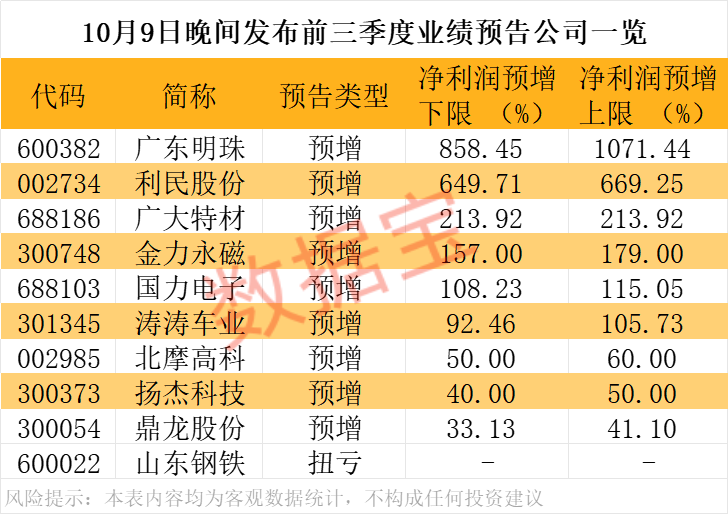
600382,预增上限超10倍!脑机接口,利好来了,最高5000万元支持研发
Zheng Quan Shi Bao· 2025-10-10 02:59
Core Insights - The brain-computer interface (BCI) industry is receiving significant policy support, with various local and national initiatives aimed at promoting innovation and clinical application [1][3][4] Group 1: Company Performance - Several listed companies have announced substantial profit increases for the third quarter, with Guangdong Mingzhu and Limin Co. expected to see net profit growth of over 600% [1] - Guangdong Mingzhu anticipates a net profit of 215 million to 263 million yuan, representing a year-on-year increase of 858.45% to 1071.44% [1] - Limin Co. expects a net profit of 384 million to 394 million yuan, reflecting a growth of 649.71% to 669.25% [1] Group 2: Policy Support for BCI - The East Lake High-tech Zone has introduced measures to support BCI technology development, including funding for R&D and operational support for innovation centers [2] - The measures include a maximum of 30% support for project R&D expenses and up to 50 million yuan in funding [2] - The establishment of the Hubei BCI Industry Innovation Development Alliance aims to accelerate innovation through collaboration among clinical resources, leading enterprises, and research teams [2] Group 3: Market Potential and Growth - The global BCI market is projected to grow from 2.62 billion USD in 2024 to 2.94 billion USD in 2025, with significant potential in the medical field [5] - McKinsey forecasts that the global market for BCI in the medical sector could reach 40 billion USD between 2030 and 2040, with a compound annual growth rate exceeding 10% [5] - Several BCI-related stocks have seen significant price increases, with some doubling in value, indicating strong investor interest [5][6] Group 4: Institutional Research and Investment - Multiple BCI concept stocks have undergone intensive institutional research, with companies like Xiangyu Medical and Zhongke Information receiving multiple inquiries [5][6] - Xiangyu Medical highlighted its integrated product advantages in BCI technology and rehabilitation equipment during recent research discussions [5] - Companies such as Senwo Medical are focusing on BCI as a strategic direction, indicating a broader industry trend towards embracing new technologies [6]
600382,预增上限超10倍!脑机接口,利好来了,最高5000万元支持研发
Zheng Quan Shi Bao· 2025-10-09 23:44
Group 1: Company Earnings Forecasts - Several listed companies announced significant profit increases for the third quarter, with Guangdong Mingzhu (600382) and Limin Co., Ltd. (002734) expecting net profit growth of over 600% [1][2] - Guangdong Mingzhu forecasts a net profit of 215 million to 263 million yuan, representing a year-on-year increase of 858.45% to 1071.44%, primarily driven by its subsidiary's performance [1][2] - Limin Co., Ltd. anticipates a net profit of 384 million to 394 million yuan, reflecting a growth of 649.71% to 669.25%, supported by increased sales and prices of its main products [1][2] Group 2: Brain-Computer Interface (BCI) Policy Support - The Wuhan East Lake High-tech Zone has introduced measures to support the development of the brain-computer interface industry, including funding for key technology research and product development [3][4] - The measures include a maximum of 30% support for R&D expenses and up to 50 million yuan for project investments, as well as annual operational funding for innovation centers [3][4] - The region is also promoting the establishment of an industrial cluster for brain-computer interfaces, with a focus on collaboration between enterprises and research institutions [4] Group 3: National and Local Policy Initiatives - Nationally, policies have been implemented to promote the brain-computer interface industry, including the goal of cultivating 2-3 globally influential companies by 2030 [5][6] - Local governments have also released action plans to support the commercialization of brain-computer interface products across various sectors by 2030 [5][6] - Specific plans from cities like Shanghai and Sichuan outline targets for clinical applications and large-scale production of brain-computer interface products [6] Group 4: Market Opportunities and Stock Performance - The brain-computer interface market is projected to grow significantly, with estimates of reaching 2.62 billion USD in 2024 and 2.94 billion USD in 2025 [7] - Stocks related to brain-computer interfaces have seen substantial price increases, with several companies experiencing over 100% growth this year [7][8] - Multiple companies in the sector have received institutional research attention, indicating strong investor interest and potential for future growth [8][9]