前沿技术创新

Search documents
上海 锚定这六大未来产业
Guo Ji Jin Rong Bao· 2025-10-20 12:21
Core Insights - Shanghai has issued measures to accelerate the innovation of frontier technologies and the cultivation of future industries, aiming to establish a systematic and forward-looking policy framework for the next decade [1] Group 1: Future Industry Development - By 2027, Shanghai aims to break through several disruptive technologies and establish future industry clusters, nurturing around 20 leading enterprises in future industry ecosystems [1] - The city plans to cultivate a number of strategic emerging industries by 2030, positioning itself as a globally influential leader in future industries [1] Group 2: Focus Areas and Initiatives - Shanghai is focusing on six key areas: future manufacturing, future information, future materials, future energy, future space, and future health, with a structured approach to planning and nurturing these sectors [2] - The city has launched multiple cultivation plans in areas such as brain-computer interfaces, quantum computing, silicon photonics, and 6G, and is establishing various proof-of-concept platforms [3] Group 3: Investment and Funding - A future industry fund with a total scale of approximately 15 billion yuan has been established to focus on disruptive innovation and interdisciplinary collaboration in future industries [3] - The fund will adopt a model of "direct investment + sub-fund investment" to create an investment incubation ecosystem that aligns with cutting-edge technological innovations [3] Group 4: Industry Clusters and Support - Shanghai is creating several future industry clusters in locations such as Pudong (silicon photonics), Minhang (brain-computer interfaces), and Yangpu (brain-like intelligence), with plans to establish national-level pilot zones for future industries [5][6] - The city is providing financial support of up to 20 million yuan for qualifying future industry cluster projects to promote high-quality development [5] Group 5: Community and Ecosystem Development - The "Shanghai Future Point Community" is being developed to serve as a hub for top talent and innovation resources, focusing on disruptive innovation and the cultivation of a supportive ecosystem [7] - The community aims to integrate talent, cognition, connection, and paradigms to reshape the foundational models of disruptive innovation [7] Group 6: Strategic Goals - By 2030, Shanghai aims to form several world-leading future industry clusters, leveraging open perspectives and pragmatic measures to implement the outlined initiatives [8]
四川大决策投顾 :市场或还有反复 操作宜避高就低
Sou Hu Cai Jing· 2025-10-15 02:38
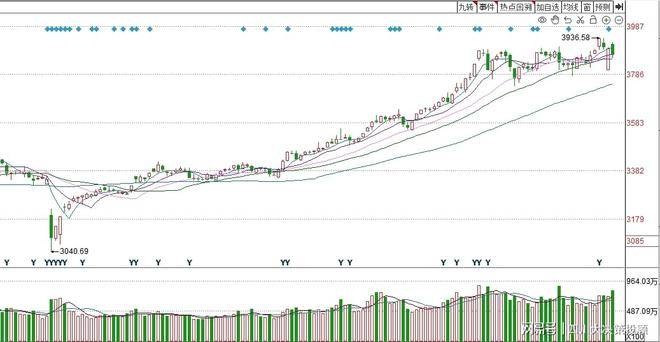
Market Overview - The U.S. stock market showed mixed results with the Dow Jones up by 0.44%, while the Nasdaq and S&P 500 fell by 0.76% and 0.16% respectively. The Nasdaq China Golden Dragon Index dropped by 1.95% [1] - In the A-share market, major indices experienced declines, with the Shanghai Composite Index down by 0.62%, the Shenzhen Component down by 2.54%, and the ChiNext Index down by 4.26%. Over 3,500 stocks fell, indicating a bearish sentiment [1] - The trading volume in the A-share market reached 2.58 trillion yuan, an increase of 221.5 billion yuan compared to the previous trading day [4] Sector Performance - The diamond cultivation sector saw significant inflows due to new export controls on synthetic diamond products announced by the Ministry of Commerce and the General Administration of Customs, highlighting the material's importance in semiconductor applications [1] - High dividend sectors such as banking, insurance, and coal mining showed positive performance, while semiconductor equipment and related sectors faced significant outflows [5][8] Investment Strategy - The market is expected to experience fluctuations, with a recommendation to focus on undervalued high-dividend assets and sectors benefiting from domestic consumption recovery [6][9] - The recent market adjustments are viewed as technical corrections rather than a shift in the overall bullish trend, with a focus on maintaining positions above 3,800 points in the Shanghai Composite Index [7] - Investors are advised to reduce positions gradually during any rebounds to manage risk effectively [7] Technical Analysis - The Shanghai Composite Index is currently in a strong oscillating pattern, having tested the 20-day moving average support, while the ChiNext Index has shown weakness, failing to break above its 20-day moving average [11]

城市24小时 | 经济第一城,又一个万亿产业来了
Mei Ri Jing Ji Xin Wen· 2025-10-13 16:19
Core Insights - The Shanghai biopharmaceutical industry is projected to grow from 761.71 billion yuan in 2021 to 984.70 billion yuan by 2024, with an average annual growth rate of 8.94% [1] - The biopharmaceutical manufacturing output is expected to increase from 171.20 billion yuan in 2021 to 201.17 billion yuan in 2024, reflecting a compound annual growth rate of 6.9% [1] - By the end of 2024, Shanghai will have 2,183 biopharmaceutical enterprises, with 19 of the top 20 global pharmaceutical and medical device companies having established headquarters or centers in the city [1] Industry Growth and Development - Shanghai has been a pioneer in the biopharmaceutical sector since 1993, emphasizing modern biotechnology and pharmaceuticals as key high-tech industries [2] - The "14th Five-Year Plan" for Shanghai aims to double the scale of three leading industries, including biopharmaceuticals, with a total fund of 100 billion yuan allocated for these sectors [2] - The biopharmaceutical industry accounted for a significant portion of the 1.8 trillion yuan combined scale of Shanghai's three leading industries in the previous year [3] Innovation and Market Position - Shanghai has established a complete biopharmaceutical industry chain with over 80,000 related enterprises, leading the nation with 30 companies listed on the Sci-Tech Innovation Board [4] - In 2024, Shanghai approved 7 first-class innovative drugs and 15 third-class innovative medical devices, representing 17.5% and 32.6% of the national total, respectively [4] - The city also leads in overseas licensing transactions, with 15 projects exceeding 500 million USD, totaling 19.83 billion USD, marking a 30.5% year-on-year increase [4] Future Prospects - Shanghai is on the verge of surpassing the 1 trillion yuan mark in its biopharmaceutical industry, with plans to enhance the entire value chain from basic research to application [5] - The city aims to become a world-class biopharmaceutical innovation hub and industrial cluster, focusing on accelerating technological innovation and high-end industry leadership [5]
10月13日投资早报|上纬新材核查完成今日复牌,北方稀土前三季度净利同比预增272.54%到287.34%,今日一只新股申购
Xin Lang Cai Jing· 2025-10-13 00:35
Market Overview - On October 10, 2025, the A-share market saw all three major indices decline, with the Shanghai Composite Index closing at 3897.03 points, down 0.94%, and the Shenzhen Component Index down 2.7% at 13355.42 points. The ChiNext Index fell 4.55% to 3113.26 points. Despite the overall decline, over 2700 stocks rose, with total trading volume in the Shanghai and Shenzhen markets at 2.52 trillion yuan, a decrease of 130 billion yuan from the previous trading day [1] - The Hong Kong stock market also experienced declines, with the Hang Seng Index dropping 1.73% to 26290.32 points, marking five consecutive days of losses. The total trading volume was 333.74 billion HKD, with the Hang Seng China Enterprises Index down 1.8% and the Hang Seng Tech Index down 3.27%. For the week, the Hang Seng Index fell 3.13% [1] - In the U.S. market, major indices faced significant drops due to comments from President Trump and a government shutdown crisis, with the Dow Jones falling 1.9%, the Nasdaq plummeting 3.56%, and the S&P 500 down 2.71%. All three indices recorded weekly declines exceeding 2.4% [1] New Stock Subscription - A new stock, Marco Polo (stock code 001386), is available for subscription at an issuance price of 13.75 yuan per share, with a price-to-earnings ratio of 14.27. The company is a leading manufacturer and seller of building ceramics in China, with major brands including "Marco Polo Tiles" and "Weimei L&D Ceramics." It operates five production bases in China and the U.S., offering a comprehensive range of products including glazed and unglazed tiles [2] Important News - On October 11, 2025, the Shanghai Municipal Government issued measures to accelerate the innovation of frontier technologies and the cultivation of future industries. The measures focus on six key development areas: future manufacturing, future information, future materials, future energy, future space, and future health. The plan includes support for reducing costs and improving accessibility in fields like cell and gene therapy, brain-machine interfaces, and biological manufacturing [2] Regulatory Actions - The China Securities Regulatory Commission (CSRC) announced administrative penalties against *ST Yuancheng for serious financial fraud, proposing a fine of 37.45 million yuan for the company and a total of 42 million yuan for five responsible individuals. The company was found to have inflated revenue and profits for three consecutive years, violating securities laws. The CSRC will initiate delisting procedures due to significant violations, and potential criminal evidence will be referred to law enforcement [4]

城记 | 一周聚焦:抢抓新兴赛道,长三角未来产业布局“快马加鞭”
Xin Hua Cai Jing· 2025-10-11 09:25
Core Insights - The article emphasizes the importance of cultivating "future industries" as a strategic pivot for leading technological innovation and reshaping industrial patterns, particularly in the context of the ongoing technological revolution and industrial transformation [1] Group 1: Future Industries Development - The Yangtze River Delta region has emerged as a leader in technological innovation in China over the past decade, with a collaborative development model among the three provinces and one city laying a unique foundation for future industry cultivation [1] - Shanghai has introduced several measures to accelerate the innovation of frontier technologies and the cultivation of future industries, aiming to establish itself as a globally influential hub for future industries [5][6] Group 2: Key Technological Advancements - The successful delivery of the ring-shaped magnetic coil box for the CRAFT project marks a significant step towards the commercialization of fusion energy, with the component being the largest of its kind globally, measuring 21m x 12m and weighing 400 tons [2] - The launch of the Kexin Computing Power Scheduling Platform in Wuxi, which manages approximately 7000P of operational computing resources, aims to provide standardized and efficient computing power services to enterprises [3][4] Group 3: Strategic Initiatives and Goals - Shanghai's "Several Measures" aim to systematically and proactively cultivate future industries, targeting the establishment of around 20 leading enterprises in future industry ecosystems by 2027 and fostering several strategic emerging industries by 2030 [6] - The focus areas for development include future manufacturing, information, materials, energy, space, and health, with specific support for technologies such as brain-computer interfaces, quantum computing, and 6G [6]
系列新举措出炉 上海加快推动前沿技术创新与未来产业培育
Zhong Guo Xin Wen Wang· 2025-10-11 07:35
Core Insights - Shanghai aims to break through a number of frontier disruptive technologies by 2027 and establish future industry clusters, targeting the cultivation of around 20 leading enterprises in future industries [1][2] - By 2030, Shanghai plans to foster a group of future industries and form several strategic emerging industries, positioning itself as a globally influential leader in future industries [1] Summary by Categories Measures and Initiatives - The newly released measures include six aspects, focusing on high-risk, high-value scientific issues and accelerating the implementation of frontier disruptive technology projects [1] - Support will be provided for the establishment of specialized service platforms such as concept verification platforms, pilot testing platforms, and common technology research and development platforms [1] Future Industry Development - Future industries are defined as emerging industries in the early stages of development, characterized by significant disruptive and forward-looking potential [1] - The cultivation of future industries is seen as a strategic pivot for leading technological innovation and reshaping the industrial landscape [1] Investment and Infrastructure - Shanghai has launched several future industry cultivation plans in fields such as brain-computer interfaces, quantum computing, silicon photonics, and 6G, along with the establishment of a future industry fund totaling approximately 15 billion yuan [2] - The city is developing future industry clusters in areas like Pudong, Minhang, Yangpu, and Lingang, supported by specific policies to promote development [2]
上海选定六大方向发展未来产业,还要重点培育20家企业
Di Yi Cai Jing· 2025-10-11 05:41
Core Viewpoint - Shanghai government has introduced measures to accelerate the innovation of frontier technologies and cultivate future industries, aiming to establish a systematic layout by 2027 and nurture around 20 leading enterprises in future industry ecosystems by 2030 [1] Group 1: Key Development Areas - The focus is on six major directions: future manufacturing, future information, future materials, future energy, future space, and future health [2] - Emphasis on developing cell and gene therapy, brain-machine interfaces, biomanufacturing, and embodied intelligence, while also supporting the optimization of product design and market validation in semiconductor and AI fields [2][3] - The strategy is based on global technology trends and Shanghai's technological advantages, aiming for a systematic approach to advance these fields [2][3] Group 2: Investment Mechanism - A "four-in-one" cultivation mechanism has been proposed, integrating project management teams, task lists, future industry funds, and support for industry clusters [5] - The future industry fund is positioned as a city-level "functional mother fund" focusing on disruptive innovation and interdisciplinary technologies, with a total scale of approximately 15 billion yuan [6] - As of October 10, 2025, the fund has made investment decisions for 18 sub-funds, with a planned investment amount of 2.215 billion yuan, targeting key sectors such as controlled nuclear fusion and AI [6] Group 3: Industry Cluster Development - The measures support the establishment of future industry clusters in areas like brain-machine interfaces and silicon photonics, with investments in high-quality incubators and concept validation platforms [7] - The city aims to create a dynamic nurturing system for future industries, continuously monitoring and adjusting strategies based on technological trends [12][14] - The focus is on enhancing the innovation ecosystem, ensuring a high concentration of industry elements, and fostering collaboration between various stakeholders [10][11]

上海出台《关于加快推动前沿技术创新与未来产业培育的若干措施》
智通财经网· 2025-10-11 05:31
Core Viewpoint - Shanghai's government has introduced measures to accelerate the innovation of cutting-edge technologies and the cultivation of future industries, aiming to establish Shanghai as a globally influential hub for future industries by 2030 [1][4]. Group 1: Key Development Areas - The measures focus on future manufacturing, information, materials, energy, space, and health, with an emphasis on supporting sectors like cell and gene therapy, brain-machine interfaces, and biomanufacturing [5]. - Specific goals include nurturing around 20 ecosystem-leading enterprises by 2027 and establishing a world-class future industry hub by 2030 [1][4]. Group 2: Support for Key Processes - The initiative aims to accelerate breakthroughs in disruptive technologies by focusing on high-risk, high-value scientific challenges and enhancing support for cross-disciplinary innovation [6]. - It emphasizes the importance of project management teams to guide the development of core technologies and implement milestone-based project management [6][7]. Group 3: Stimulating Corporate Innovation - The measures encourage the growth of technology innovation enterprises by providing targeted support for those with significant innovation investments and industry influence [8]. - A structured support system for startups and high-growth technology companies is being established, including financial incentives for research and development [8]. Group 4: Building Industry Clusters - The government plans to create future industry clusters that are resource-rich and have a well-developed innovation ecosystem, with financial support for qualifying projects [9]. - There is a focus on establishing national-level pilot zones for future industries, which will receive comprehensive support for technology breakthroughs and talent development [9]. Group 5: Optimizing Core Element Support - The measures include promoting the application of innovative products through government procurement policies and supporting the development of demonstration application scenarios [10]. - Financial support mechanisms are being enhanced to create a multi-layered funding system that encourages investment in future industries [11]. Group 6: Talent Development and Global Cooperation - The initiative aims to attract and cultivate a diverse talent pool, including scientists and entrepreneurs, to foster innovation [12]. - It encourages international collaboration in future industries, including the establishment of international innovation alliances and participation in global industry standards [12]. Group 7: Dynamic Cultivation System - A dynamic assessment mechanism will be established to regularly evaluate and adjust the focus of future industry development based on global technological advancements [13]. - The measures will implement a comprehensive cultivation mechanism that integrates project management, funding, and industry cluster support [14].
利好来了,上海重磅发布
Zheng Quan Shi Bao· 2025-10-11 04:32
Core Insights - Shanghai Municipal Government has issued measures to accelerate the innovation of frontier technologies and the cultivation of future industries, focusing on areas such as brain-machine interfaces, embodied intelligence, and fourth-generation semiconductors [1][2][3] Group 1: Future Industry Development - The measures emphasize the development of future manufacturing, information, materials, energy, space, and health sectors, aiming to rationally plan and cultivate future industries based on industrial foundations and resource endowments [2][3] - Key areas for support include cell and gene therapy, brain-machine interfaces, biological manufacturing, and embodied intelligence, with a focus on reducing costs, improving accessibility, and building industrial ecosystems [2][4] Group 2: Technological Innovation and Research - The initiative aims to accelerate the cultivation of fourth-generation semiconductors, silicon-based optoelectronics, sixth-generation mobile communications, and brain-like intelligence, emphasizing product design optimization and market value verification [2][3] - There is a focus on quantum technology, controllable nuclear fusion, and regenerative medicine, with support for tackling technical challenges and validating the feasibility of product development [2][3] Group 3: Financial Support and Investment - The measures propose a multi-level financial support system, leveraging government funding to guide enterprise investment and support from financial institutions [6] - Future industry funds will play a guiding role, utilizing a "direct investment + sub-fund investment" model to create an investment incubation ecosystem for disruptive technology innovation [6] Group 4: Ecosystem and Enterprise Support - The initiative supports the cultivation of leading technology enterprises that focus on future industries, providing special support for those with significant innovation input and industry influence [4] - A gradient cultivation system for innovative enterprises will be established, supporting small and medium-sized technology enterprises and high-growth technology companies [4] Group 5: Application and Demonstration - The measures encourage the development of experimental verification scenarios and demonstration applications to drive future technology iterations and product maturity [5] - Government procurement policies will support the large-scale application of innovative products, with financial backing for eligible projects [5]
利好来了!上海,重磅发布!
券商中国· 2025-10-11 03:53
Core Viewpoint - Shanghai government has released significant measures to accelerate the innovation of frontier technologies and the cultivation of future industries, focusing on areas such as brain-machine interfaces, embodied intelligence, and quantum technology [1][3]. Group 1: Policy Measures - The measures aim to develop and strengthen fields like cell and gene therapy, brain-machine interfaces, and biological manufacturing, with a focus on reducing costs and improving accessibility [3][4]. - Emphasis is placed on cultivating fourth-generation semiconductors, silicon-based optoelectronics, sixth-generation mobile communications, and brain-like intelligence, supporting product design optimization and market value verification [3][4]. - The government plans to accelerate the layout of quantum technology, controllable nuclear fusion, and regenerative medicine, focusing on tackling technical challenges and validating the feasibility of technology solutions [3][4]. Group 2: Support for Enterprises - The measures support technology enterprises that lead future industry ecosystems, providing targeted support for those with significant innovation investments and industry influence [5]. - A gradient cultivation system for innovative enterprises will be established, supporting small and medium-sized technology enterprises and high-growth technology companies [5]. - Financial support will be provided for enterprises that increase R&D investment and expand production scale, with one-time rewards of up to 50 million yuan for qualifying companies [5]. Group 3: Financial and Resource Support - The government will enhance multi-level financial support, leveraging fiscal funds to create a diverse investment system involving government, enterprises, and financial institutions [6]. - Future industry funds will play a guiding role, adopting a model of "direct investment + sub-fund investment" to foster an investment incubation ecosystem [6]. - Policies will be implemented to support the application of innovative products in various fields, with financial backing of up to 30% of contract amounts, capped at 20 million yuan for qualifying innovations [6].