
具身智能等

Search documents
国家发展改革委:综合整治“内卷式”竞争,实现从卷价格向优价值转变
Qi Huo Ri Bao· 2026-01-20 04:36
Core Viewpoint - The Chinese government is focusing on expanding domestic demand and optimizing supply to achieve a dynamic balance and virtuous cycle in the economy, emphasizing the need for a new economic development model driven by domestic demand and consumption [2][3][4]. Group 1: Economic Strategy - The National Development and Reform Commission (NDRC) is developing a strategic plan for expanding domestic demand from 2026 to 2030, addressing the current issues of insufficient demand and supply [2]. - The strategy aims to strengthen the domestic circulation of the economy, adapting to the trend of demand upgrading and aligning with the new technological revolution and industrial transformation [2]. Group 2: Focus on Real Economy - The emphasis is placed on developing the real economy and constructing a modern industrial system, which is seen as the foundation of China's economic development [3]. - The approach includes fostering new supply through innovation and creating new job opportunities, with a focus on intelligent, green, and integrated development [3]. Group 3: Market Regulation and Competition - The government aims to enhance market vitality by advancing the construction of a unified national market and addressing issues of "involution" in competition [3]. - Measures will be taken to improve market access, ensure fair competition, and regulate prices in key industries to promote a healthy market order [3]. Group 4: Innovation and Development Potential - By 2026, China's economic structure is expected to continue improving, with new productive forces developing steadily and significant potential being released across consumption, investment, technology, and regional development [4]. - New economic growth points are emerging in sectors such as renewable energy, aerospace, and quantum technology, with new energy storage capacity exceeding 100 million kilowatts, accounting for over 40% of the global total [4][5]. Group 5: Regional Innovation and Investment - China has 24 global top 100 innovation clusters, leading the world for three consecutive years, with plans to establish major international technology innovation centers in key regions [5]. - The establishment of national venture capital funds aims to enhance regional investment and innovation, contributing to the creation of a global technology innovation hub [5].
国有企业质量效益全面提升
Sou Hu Cai Jing· 2026-01-19 23:16
Core Viewpoint - The meeting held by the State-owned Assets Supervision and Administration Commission (SASAC) highlighted the significant improvements in the quality and efficiency of state-owned enterprises (SOEs) during the 14th Five-Year Plan period, with total assets of regulated enterprises increasing from 235 trillion yuan to 387 trillion yuan, reflecting an average annual growth of 10.5% [1] Group 1: Enhancements in Enterprise Competitiveness - By November 2025, local regulated enterprises achieved a value-added of 6.9 trillion yuan and completed fixed asset investments of 5.3 trillion yuan, contributing positively to economic growth and public welfare [2] - SASAC Director Zhang Yuzhuo emphasized the continuous strengthening of technological innovation within SOEs, with 16 local SASACs establishing evaluation systems for R&D input and output [2] - Traditional industries are undergoing quality upgrades while emerging industries are being nurtured, with provinces like Henan and Shandong implementing strategic plans for transformation and development [2] Group 2: Reform and Governance Improvements - The deepening of SOE reforms has led to optimized governance structures and improved market mechanisms, with local governments actively promoting reform initiatives [3] - The effectiveness of state asset supervision has been enhanced, with the establishment of a national property information database and comprehensive coverage of property registration systems [3] - Over the past five years, SOEs have seen increased vitality and competitiveness, contributing significantly to national strategies and infrastructure development [3] Group 3: Focus on Quality and Efficiency - The quality and efficiency of SOEs are crucial for the overall economic and social development of China, with a focus on creating value and improving operational metrics [4] - Key objectives for the 15th Five-Year Plan include enhancing value creation, technological innovation, and industrial upgrading capabilities [4][5] - Emphasis is placed on reform breakthroughs, strengthening party leadership, and ensuring effective governance to support high-quality development [5] Group 4: Future Development Directions - For 2026, SOEs are expected to focus on quality enhancement and steady growth, with initiatives to create new consumption scenarios and implement key projects to stimulate demand [6] - Strengthening the role of SOEs in technological innovation and optimizing the economic layout and structure are prioritized [6][7] - Local SASACs are urged to implement further reforms and improve market-oriented operational mechanisms while preventing systemic risks [7]
财经聚焦丨2026年地方国企改革发展路线图明确
Xin Hua Wang· 2026-01-16 10:22
Group 1 - The core focus of the meeting held by the State-owned Assets Supervision and Administration Commission (SASAC) is to enhance the technological innovation capabilities of state-owned enterprises (SOEs) and deepen the reform of state-owned assets and enterprises [1][3] - Local SOEs are increasingly strengthening technological innovation through various initiatives, such as establishing public welfare funds for research and forming partnerships with educational institutions [1][3] - SASAC emphasizes the need for SOEs to improve their innovation capabilities, particularly in the context of rapid technological changes and shorter industry iteration cycles [1][3] Group 2 - SASAC Director Zhang Yuzhuo highlighted the importance of creating high-value application scenarios and enhancing the procurement of first-time equipment and materials to accelerate the iteration of new technologies and products [3][5] - There is a strong push for optimizing the layout and structure of state-owned enterprises, with examples including the establishment of intelligent coal mines and the development of strategic emerging industries [3][4] - The focus on traditional industries includes promoting high-end, intelligent, and green development, with a particular emphasis on artificial intelligence as a key variable [5][6] Group 3 - The meeting outlined the key tasks for 2026, which include improving the modern enterprise system with Chinese characteristics and clarifying the responsibilities of governance bodies [8] - There is a call for deepening market-oriented operational mechanisms and enhancing the effectiveness of incentive policies for technology-driven enterprises [8][9] - The transformation of organizational structures is encouraged, with a focus on creating agile and efficient innovative organizations to adapt to the knowledge economy [9]


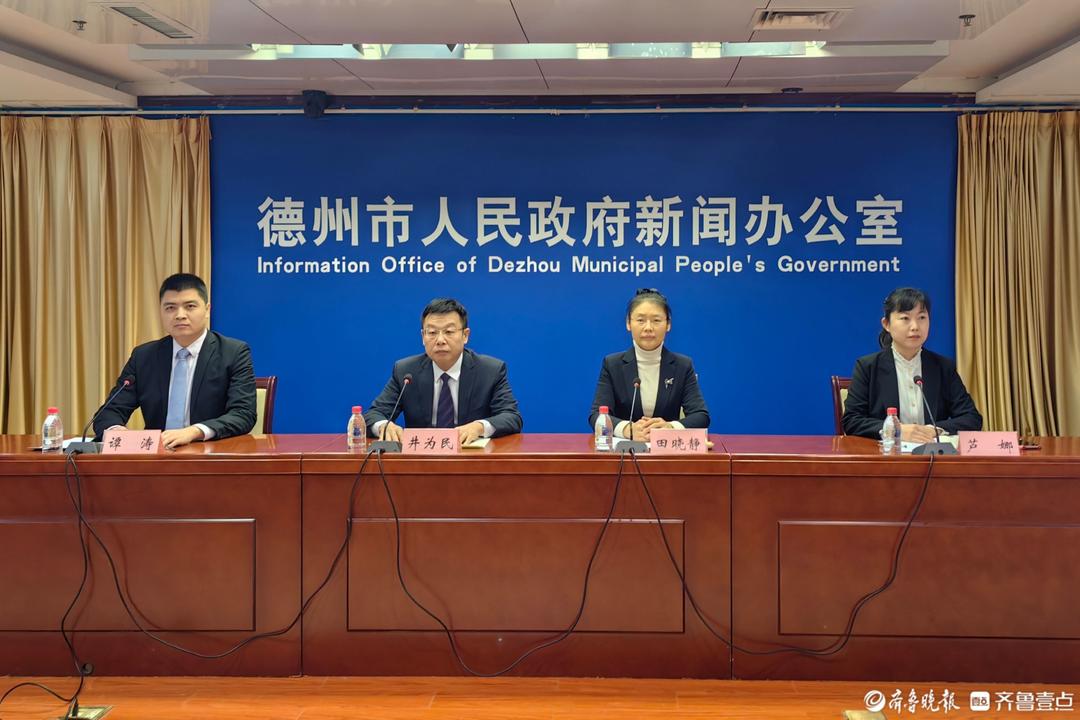
2025年,德州市科技局新布局市级科技创新平台144家
Qi Lu Wan Bao· 2026-01-14 10:11
Core Viewpoint - Dezhou City is focusing on enhancing its technological capabilities and innovation platforms to support traditional industries' transformation and the growth of emerging sectors, aiming for a significant leap from manufacturing to intelligent manufacturing by 2025 [3][4]. Group 1: Traditional Industry Transformation - The city is encouraging the application of new technologies and processes in traditional industries such as food processing and light textile to boost efficiency and innovation [3]. - A total of 144 new city-level technology innovation platforms have been established, including 72 key laboratories and 60 enterprise technology innovation workstations, to support the transformation of traditional industries [3]. Group 2: Emerging Industry Support - Dezhou is accelerating its layout in emerging industries like new-generation information technology, new energy, and new materials, focusing on areas such as carbon fiber composites and graphene [3][4]. - The city is also supporting critical components in integrated circuits and intelligent network security, aligning platform distribution with the needs of industrial transformation [4]. Group 3: Future Industry Layout - The city is proactively establishing platforms for future industries such as biomanufacturing and hydrogen energy, which are expected to drive disruptive innovation [4]. - Notable initiatives include the establishment of the "Dezhou City Bile Acid Synthesis Biomanufacturing Technology Innovation Center" to build a competitive edge in synthetic biology [4]. Group 4: Platform Functionality and Management - The platforms are categorized into basic research and technology development, focusing on long-term scientific support and addressing key industry challenges [4]. - Future efforts will include enhancing existing platforms, managing performance dynamically, and ensuring alignment with industry needs to stimulate innovation [5].
海南自贸港高水平开放锚定“八新”目标
Xin Lang Cai Jing· 2025-12-25 05:03
Core Insights - The official launch of the Hainan Free Trade Port's full island closure operation on December 18, 2025, marks a significant milestone in China's high-level opening-up strategy and the development of the Hainan Free Trade Port [1] Institutional Developments - The full island closure will implement a new institutional arrangement of "one line open, two lines controlled, and free flow within the island," enhancing the free movement of goods, capital, personnel, and information [1] - This arrangement aims to position Hainan as a high-level open gateway for international trade, investment, and talent flow, while also providing practical experience for domestic free trade port construction [1] Policy Enhancements - The "zero tariff" policy will expand significantly to cover approximately 6,600 tax items, accounting for 74% of all goods, thereby reducing operational costs for enterprises and facilitating industrial restructuring [2] - The policy will also lower market access thresholds for all eligible market entities on the island, creating a more free and convenient production and trading environment [2] - A comprehensive policy system characterized by "zero tariffs, low tax rates, and simplified tax systems" will be optimized, including tax reductions and simplified tax administration [2] Economic and Industrial Growth - Hainan Free Trade Port aims to enhance its policy system to align with high-level free trade standards, improving trade and investment liberalization and facilitating a globally leading business environment [3] - The port will focus on optimizing its economic structure, promoting the development of tourism, modern services, high-tech industries, and tropical agriculture towards clustering and high-end directions [3] Technological Innovation - Hainan will establish a multi-level technological innovation system, focusing on key areas such as seed industry, deep sea, and aerospace, to integrate technological innovation with industrial development [4] Regional Development - The port will integrate deeply with major national regional strategies, promoting urban coordination and balanced regional development, injecting new momentum into the comprehensive development of the island [4] Environmental and Social Progress - Hainan will advance green development and ecological civilization, aiming to become an international model for ecological protection and sustainable development [5] - The port will enhance public service systems to improve residents' income and quality of life, ensuring that all citizens benefit from the development of the free trade port [5] Security and Future Industries - Hainan will strengthen risk prevention and social governance to ensure a stable environment for the construction of the free trade port, which is essential for industrial upgrades and high-quality development [5] - The port will strategically position itself in emerging industries such as biomanufacturing, hydrogen energy, and brain-computer interfaces, aiming to secure a competitive edge in global markets [5]
上海出台《关于加快推动前沿技术创新与未来产业培育的若干措施》
智通财经网· 2025-10-11 05:31
Core Viewpoint - Shanghai's government has introduced measures to accelerate the innovation of cutting-edge technologies and the cultivation of future industries, aiming to establish Shanghai as a globally influential hub for future industries by 2030 [1][4]. Group 1: Key Development Areas - The measures focus on future manufacturing, information, materials, energy, space, and health, with an emphasis on supporting sectors like cell and gene therapy, brain-machine interfaces, and biomanufacturing [5]. - Specific goals include nurturing around 20 ecosystem-leading enterprises by 2027 and establishing a world-class future industry hub by 2030 [1][4]. Group 2: Support for Key Processes - The initiative aims to accelerate breakthroughs in disruptive technologies by focusing on high-risk, high-value scientific challenges and enhancing support for cross-disciplinary innovation [6]. - It emphasizes the importance of project management teams to guide the development of core technologies and implement milestone-based project management [6][7]. Group 3: Stimulating Corporate Innovation - The measures encourage the growth of technology innovation enterprises by providing targeted support for those with significant innovation investments and industry influence [8]. - A structured support system for startups and high-growth technology companies is being established, including financial incentives for research and development [8]. Group 4: Building Industry Clusters - The government plans to create future industry clusters that are resource-rich and have a well-developed innovation ecosystem, with financial support for qualifying projects [9]. - There is a focus on establishing national-level pilot zones for future industries, which will receive comprehensive support for technology breakthroughs and talent development [9]. Group 5: Optimizing Core Element Support - The measures include promoting the application of innovative products through government procurement policies and supporting the development of demonstration application scenarios [10]. - Financial support mechanisms are being enhanced to create a multi-layered funding system that encourages investment in future industries [11]. Group 6: Talent Development and Global Cooperation - The initiative aims to attract and cultivate a diverse talent pool, including scientists and entrepreneurs, to foster innovation [12]. - It encourages international collaboration in future industries, including the establishment of international innovation alliances and participation in global industry standards [12]. Group 7: Dynamic Cultivation System - A dynamic assessment mechanism will be established to regularly evaluate and adjust the focus of future industry development based on global technological advancements [13]. - The measures will implement a comprehensive cultivation mechanism that integrates project management, funding, and industry cluster support [14].