
Telecommunications Equipment

Search documents
中兴通讯崔丽:AI应用触及产业深水区,价值闭环走向完备
2 1 Shi Ji Jing Ji Bao Dao· 2025-12-30 10:25
Core Insights - The rapid development of AI large models is becoming a key factor in the new round of technological competition, with a belief that the number of foundational large models will converge to a single-digit figure, while numerous specialized models and applications will emerge across various industries [2] - Physical AI is highlighted as a significant area of focus, accelerating advancements in fields like embodied intelligence and autonomous driving, which are expected to profoundly change societal operations [2][3] - The transition from generative models to world models and visual language models (VLA) represents a paradigm shift in AI, moving from mere prediction to simulation and physical alignment [3][4] Industry Trends - The emergence of Sora has sparked discussions about world models, indicating a shift in AI capabilities from being mere predictors to becoming simulators [3] - The divergence in world model approaches has led to the classification of models into "generative" and "representational" camps, with each having distinct applications and strengths [4][5] - The integration of VLA and world models is seen as a trend, with VLA focusing on sequence modeling for robot control and world models emphasizing internal environmental modeling for efficient learning [5] Challenges and Solutions - Three major challenges remain for world models: understanding causality, building effective simulators, and addressing data scarcity issues [6] - The competition for high-quality synthetic data is crucial for the next phase of AI development, particularly in data-driven AI applications like autonomous driving [6] - The timeline for the realization of world models is projected to span from 2024-2025 for visual simulation to 2028-2030 for general embodied intelligence [6] Technological Evolution - The network architecture is evolving from "cloud-native" to "AI-native," necessitating a focus on performance and collaboration between computing and networking [7] - ZTE has been progressively advancing its hardware and software integration from 2G to 5G, now incorporating large models into its development paradigm [8] - The integration of AI into core business processes is expected to transform industries, with a shift from content generation to autonomous action [9] Implementation and Applications - ZTE's "Co-Sight Intelligent Agent Factory" aims to enhance reasoning capabilities and ensure decision-making reliability through advanced verification mechanisms [11][12] - The successful application of AI requires a combination of robust infrastructure, effective methodologies, and deep industry engagement [17] - Industries such as education, healthcare, software development, and smart manufacturing are identified as likely candidates for early AI value realization due to their structured data environments and feedback mechanisms [14][13] Future Directions - The hybrid approach of "cloud-edge collaboration" is recommended for integrating general foundational models with industry-specific enhancements [15] - The need for specialized models in non-natural language data scenarios is emphasized, particularly in high-stakes environments like finance [16] - The overarching narrative of AI is shifting towards practical applications in various sectors, moving away from mere technological showcases to tangible value creation [18]


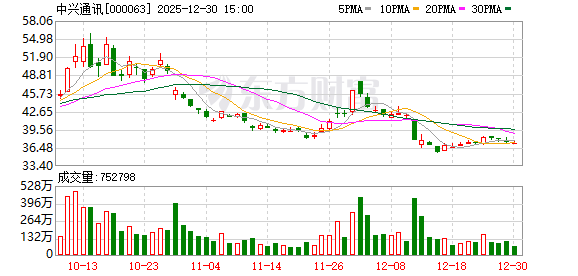
中兴通讯:2025年家庭终端年发货量再超1亿台,全球市场份额连续5年第一
Xin Lang Cai Jing· 2025-12-30 08:55
Core Viewpoint - ZTE Corporation aims to exceed 100 million units in annual shipments of home terminals by 2025, maintaining the number one global market share for five consecutive years [1] Group 1 - ZTE's target for home terminal shipments is set at over 100 million units annually by 2025 [1] - The company has achieved the number one global market share in the home terminal sector for five consecutive years [1]
中兴通讯:2025年家庭终端年发货量再超1亿台,全球市场份额连续5年第一。
Xin Lang Cai Jing· 2025-12-30 08:28
Group 1 - The core viewpoint of the article highlights that ZTE Corporation aims to exceed 100 million units in annual shipments of home terminals by 2025, maintaining its position as the global market leader for five consecutive years [1] Group 2 - ZTE's strategy focuses on expanding its market share in the home terminal segment, which has shown consistent growth and demand [1] - The company has successfully achieved the number one global market share in this sector for the past five years, indicating strong competitive advantages and brand recognition [1]
华为轮值董事长孟晚舟发声:智能时代新征程已经开启
Zheng Quan Ri Bao Zhi Sheng· 2025-12-30 07:40
Core Viewpoint - Huawei's 2026 New Year message emphasizes the company's commitment to enhancing 5G-A networks and expanding its ecosystem, while focusing on industry-specific solutions and AI capabilities [1] Group 1: 5G and Network Development - In 2026, Huawei assisted operators in building 5G-A networks, providing high-speed network connectivity to 60 million users [1] - The company aims to strengthen its industry vertical operations and leverage its diverse capabilities to facilitate intelligent transformation across various sectors [1] Group 2: Ecosystem and Technology Advancements - The HarmonyOS ecosystem has accelerated from "usable" to "user-friendly," with over 36 million devices running HarmonyOS 5.0 and above [1] - Huawei plans to build an open-source Kunpeng and Ascend ecosystem, promoting cluster and super-node technologies to establish a robust AI computing foundation [1] Group 3: Strategic Focus and Organizational Strength - The company acknowledges the challenges ahead but is determined to face them head-on, focusing on strategic direction and achieving success in value-driven markets [1] - Huawei will concentrate on enhancing organizational capabilities and achieving victory through quality in its operations [1]
华为发布2026年新年致辞!华为副董事长孟晚舟:鸿蒙5.0以上终端设备超过3600万,鲲鹏已发展380万开发者
Ge Long Hui· 2025-12-30 02:38
Core Viewpoint - Huawei's New Year address highlights significant advancements in 5G-A network construction and ecosystem development, showcasing the company's commitment to enhancing user experience and expanding its partnerships in various sectors [1] Group 1: 5G Network Development - Huawei has assisted operators in building 5G-A networks, providing high-speed network connectivity to 60 million users [1] Group 2: Ecosystem Growth - The HarmonyOS ecosystem has progressed from "usable" to "user-friendly," with over 36 million devices running HarmonyOS 5.0 and above [1] Group 3: Partnerships and Developer Engagement - The Kunpeng platform has developed over 6,800 partners and 3.8 million developers, while the openEuler operating system has achieved a cumulative installation of over 16 million units [1] - The Ascend platform has established over 3,000 partners and 4 million developers, with the Atlas 900 super node serving various industries including internet, finance, telecommunications, and electricity [1]
华为轮值董事长孟晚舟,最新发声
第一财经· 2025-12-30 02:26
Core Viewpoint - The core message emphasizes the transformative impact of artificial intelligence (AI) on business operations, shifting from efficiency improvements to a comprehensive value reconstruction of core business processes [1][7]. Group 1: Strategic Focus for 2026 - The company will concentrate on vertical industry operations, building an open-source ecosystem for Kunpeng and Ascend, and enhancing the HarmonyOS ecosystem while reconstructing AI data centers [1][8]. - The journey towards strategic goals is acknowledged to be fraught with challenges, but the company is committed to facing these difficulties head-on [1][8]. Group 2: Achievements in 2025 - The company has supported operators in building 5G-A networks, providing high-speed connectivity to 60 million users [5]. - The HarmonyOS ecosystem has seen over 36 million devices with versions above Harmony 5.0, indicating significant user experience improvements [5]. - Collaborations with automotive partners have led to the installation of smart systems in over 1.4 million vehicles, contributing to nearly 7 billion kilometers of assisted driving [5]. - The Kunpeng ecosystem has expanded to over 6,800 partners and 3.8 million developers, while the openEuler operating system has reached an installation base of over 16 million [5]. Group 3: Future Opportunities - The ongoing wave of intelligent transformation presents a long-term strategic opportunity for the company [6]. - The integration of AI into various sectors is expected to enhance operational efficiency and create new value across industries [7]. - The company aims to leverage its strengths in AI and connectivity to drive innovation and improve consumer experiences [7].

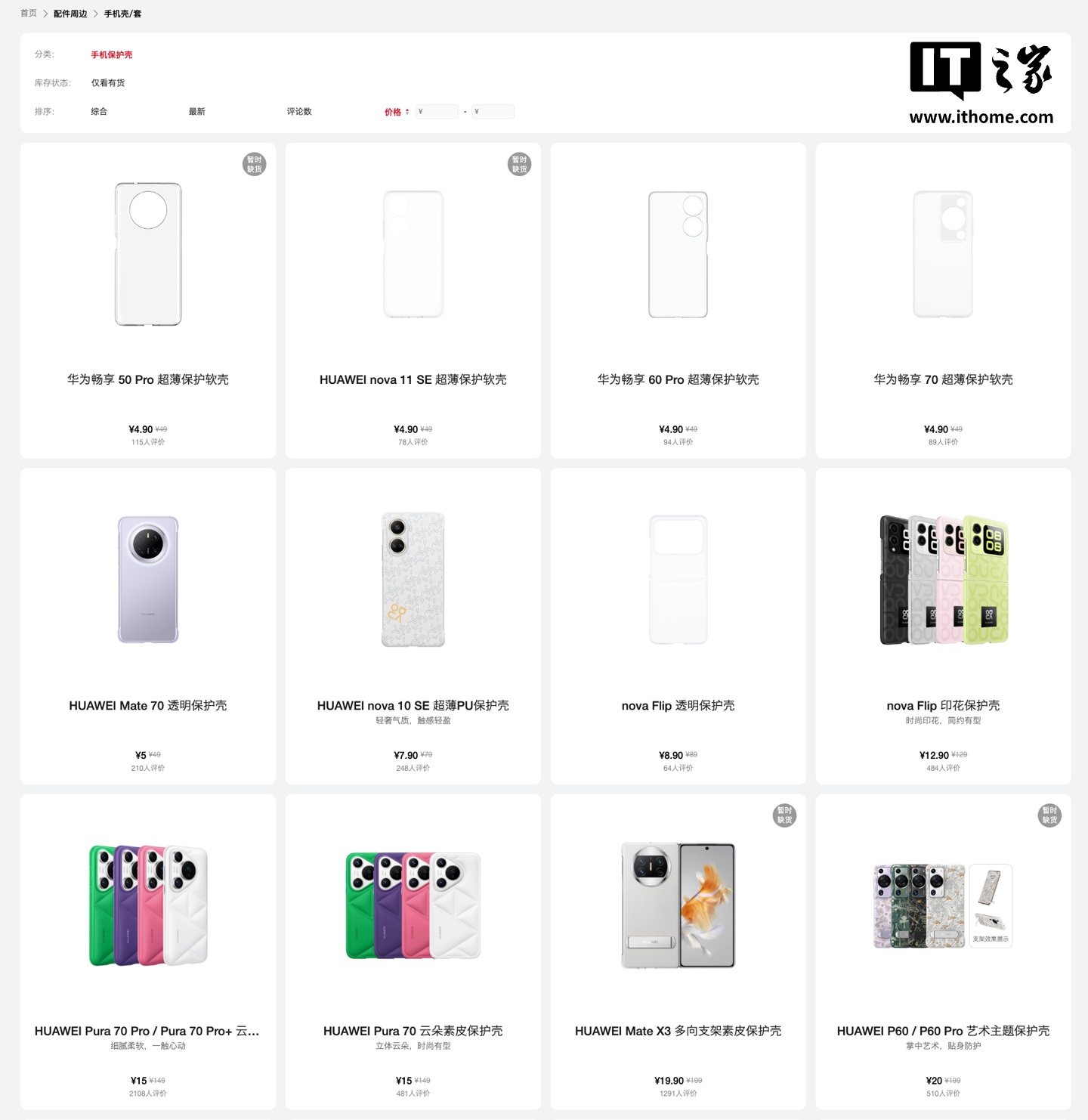
低至 1 折:华为商城多款旧款机型手机壳配件迎促销,4.9 元起售
Xin Lang Cai Jing· 2025-12-29 13:44
IT之家 12 月 29 日消息,华为商城目前多款旧款机型的手机壳迎来 1 折促销,部分产品价格低至 4.9 元,IT之家整理价格如下: 华为 Mate X5 微泵液冷壳:原价 399 元,现 40 元 华为 Pocket 2 时尚手提保护壳:原价 399 元,现 40 元 华为 Mate X6 微泵液冷壳:原价 399 元,现 40 元 华为 Mate Xs 2 皮革支架保护壳:原价 299 元,现 30 元 华为 Pura 70 标准版 / Pro / Pro + / Ultra 微泵液冷壳:原价 299 元,现 30 元 华为 Mate 50 环闪保护壳:原价 299 元,现 30 元 华为 P50 Pro 环闪保护壳:原价 299 元,现 30 元 华为 Mate 60 智能视窗保护套:原价 229 元,现 29.9 元 华为 P50 Pro 艺术主题保护壳:原价 199 元,现 20 元 华为 Mate 50 手带支架保护壳:原价 199 元,现 20 元 华为 P50/P50E 艺术主题保护壳:原价 199 元,现 20 元 华为 P50 Pocket / Pocket S 智能主题保护壳:原价 ...
Ai 死了吗?
小熊跑的快· 2025-12-29 06:27
周末华为云 确定不再扩张,降低一等定位。准备用市场换芯片出货。这么大的变革,今天市场 好像也不怎么热烈。 950还有那么大出货。它支持FP4,FP 8,完全符合现在大模型推理方向,降本降本降本!这么大的边际变化!市场居然这鬼样子 xx卫星真的要一个字1000亿。 ai已死,有事烧纸! 数据来源:华为白皮书 950机架出货,把电链接密度翻了一倍多,市场也反应不行。 ...

全球悬赏!华为重磅出手!两大主攻方向 破解AI数据困局
Zheng Quan Shi Bao Wang· 2025-12-27 06:29
Core Insights - Huawei has launched the 2025 Olympus Mons Awards with a total prize pool of 3 million yuan, aimed at addressing fundamental challenges in data storage and processing amid the AI wave [1][6] - The awards focus on two main directions to systematically build future data infrastructure, from hardware to software [2] Group 1: Focus Areas - Direction One: Innovative medium technologies for the AI era, addressing the transformation of data access patterns and the need for high-performance, cost-effective storage systems [3] - Direction Two: Developing a data foundation for Agentic AI, transitioning storage systems from passive data warehouses to proactive data platforms [4] Group 2: Technical Challenges - The first direction emphasizes overcoming three technical challenges: SSD-based storage-computing integration, high-density storage channel modulation coding, and hierarchical large memory network protocols [3] - The second direction focuses on two key goals: knowledge extraction and multimodal data representation, as well as semantic information refinement for efficient reasoning in large models [4] Group 3: Incentives and Impact - The Olympus Mons Awards will recognize two winners and five pioneers, providing not only monetary rewards but also opportunities for deep technical collaboration with Huawei [6] - Since its inception in 2019, the awards have attracted over 320 top scholars from 12 countries, highlighting their significant impact on the data storage industry [8]

全球悬赏!华为,重磅出手!
Zheng Quan Shi Bao Wang· 2025-12-27 04:52
Core Insights - Huawei has launched the 2025 Olympus Mons Awards with a total prize of 3 million yuan to address fundamental challenges in data storage and processing amid the AI wave [1][6] - The awards aim to gather global intelligence to tackle the increasing complexity and costs associated with traditional data storage systems [1] Group 1: Focus Areas - The 2025 Olympus Mons Awards focus on two main directions: innovative medium technologies for the AI era and the development of a data foundation for Agentic AI [2] - The first direction emphasizes the need for new paradigms such as "storage-based computation" and "storage-to-computation" to create high-performance, large-capacity storage systems [3] - The second direction aims to evolve storage systems from passive data warehouses to proactive, intelligent data platforms, focusing on knowledge extraction and semantic information refinement [4] Group 2: Incentives and Impact - The awards will recognize two Olympus Awards and five Olympus Pioneer Awards, providing not only monetary rewards but also opportunities for deep technical collaboration with Huawei [5] - Since its inception in 2019, the Olympus Mons Awards have attracted over 320 top scholars from 12 countries, significantly impacting the data storage industry [5]