
医疗保险

Search documents
热点问题权威解答来了
Xi An Ri Bao· 2025-11-11 02:33
Core Points - The personal payment standard for urban and rural residents' medical insurance in Xi'an for 2025 remains unchanged at 400 yuan per person per year, while the government subsidy increases by 30 yuan to no less than 700 yuan per person per year, enhancing support for medical treatment [1] - Participation in the residents' medical insurance provides comprehensive coverage from outpatient services to major illnesses, effectively reducing the economic burden of medical expenses through basic insurance, major illness insurance, and medical assistance [1] - Continuous participation in the residents' medical insurance for four years allows for an increase in the annual major illness insurance payment limit, and those who do not use the insurance fund in a year can enjoy reimbursement incentives the following year [2] Summary by Sections - **Insurance Payment Standards** - The personal payment standard for 2025 is 400 yuan per person per year, with a government subsidy of at least 700 yuan per person per year, reflecting a 30 yuan increase from 2024 [1] - **Benefits of Participation** - Coverage includes outpatient services, chronic disease medications, hospitalization, major illness insurance, and maternity medical expenses, providing a safety net against high medical costs [1] - **Continuous Participation Incentives** - Continuous participation for four years allows for increased major illness insurance limits, and non-utilization of funds in a year leads to reimbursement incentives for the next year [2] - **Impact of Insurance Lapse** - A lapse in insurance coverage will result in a three-month waiting period for benefits, during which medical expenses will not be reimbursed [2]
美国医保股盘前暴跌! 特朗普炮轰“奥巴马医保”! 高呼“把钱给人而不是保险公司”
智通财经网· 2025-11-10 13:30
Core Viewpoint - The stock prices of U.S. health insurance companies, particularly those heavily involved in the Affordable Care Act (Obamacare), have declined significantly following former President Donald Trump's statements advocating for direct federal funding to be given to individuals rather than insurance companies [1][2]. Group 1: Impact on Health Insurance Companies - Centene and Oscar Health led the decline in the U.S. healthcare sector, with stock prices dropping over 10% in pre-market trading, while other major insurers like Elevance Health and Molina Healthcare also experienced significant losses [2]. - Trump's comments suggest a shift in funding strategy that could severely impact the profitability of health insurance companies operating under the ACA framework, as federal funds may no longer support insurance premiums [1][4]. Group 2: Political Context and Proposals - A Republican proposal aims to redirect federal funds into flexible spending accounts for families instead of providing subsidies to insurance companies, potentially breaking the deadlock in the Senate regarding healthcare funding [3]. - Trump's rhetoric emphasizes a populist approach, advocating for direct financial support to citizens, which could undermine the Democratic Party's signature healthcare policy [4].




全国与省份医保基金、商业健康险月度跟踪专题-20251110
Tianfeng Securities· 2025-11-10 01:52
Investment Rating - The industry investment rating is "Outperform the Market," indicating an expected industry index increase of over 5% in the next six months [39]. Core Insights - From January to September 2025, the national medical insurance fund accumulated revenue of 21,086 billion yuan, a year-on-year increase of 5%, while expenditures totaled 17,280 billion yuan, a decrease of 2% [2][5]. - The commercial health insurance sector reported a cumulative premium income of 8,427 billion yuan during the same period, reflecting a year-on-year growth of 2% [32]. Summary by Sections National Medical Insurance Fund Tracking - Cumulative revenue for the national medical insurance fund from January to September 2025 was 21,086 billion yuan, with a year-on-year growth of 5%. Monthly revenue in September was 2,276 billion yuan, down 11% year-on-year [2][5]. - Cumulative expenditures for the same period were 17,280 billion yuan, showing a decrease of 2% year-on-year, with September expenditures at 1,847 billion yuan, down 1% year-on-year [5]. Provincial Medical Insurance Fund Tracking - In Hunan Province, the employee medical insurance fund accumulated revenue of 340.04 billion yuan (up 4% year-on-year) and expenditures of 221.49 billion yuan (down 6% year-on-year) from January to September 2025 [15][18]. - Guizhou Province reported a cumulative revenue of 573.99 billion yuan (up 12% year-on-year) and expenditures of 474.71 billion yuan (down 1% year-on-year) during the same period [23][26]. - Guangdong Province's employee medical insurance fund had a cumulative revenue of 1,368.41 billion yuan (up 5% year-on-year) and expenditures of 1,072.85 billion yuan (up 4% year-on-year) [27][30]. Commercial Health Insurance Tracking - The national commercial health insurance sector's cumulative premium income reached 8,427 billion yuan from January to September 2025, marking a year-on-year increase of 2% [32].
2025年医保目录调整“上新” 满足群众多层次、多元化用药需求
Yang Shi Wang· 2025-11-05 07:01
Core Points - The National Healthcare Security Administration (NHSA) announced that the new basic medical insurance drug list and the first commercial insurance innovative drug list will be released online and offline in Guangzhou on the first weekend of December, with implementation starting January 1, 2024 [1] - The recent negotiations involved 120 domestic and foreign enterprises, with 127 drugs outside the basic medical insurance drug list and 24 drugs for the commercial insurance innovative drug list participating in price negotiations [3] - The commercial insurance innovative drug list was established to better meet the diverse medication needs of the public, with 121 high-value drugs approved through this new list [7] Industry Insights - The commercial health insurance market in China is experiencing rapid growth, with the original insurance premium income reaching 977.3 billion yuan in 2024, an increase of 8.2% year-on-year [7] - The total expenditure of the basic medical insurance fund is projected to reach 2.97 trillion yuan in 2024, providing solid support for healthcare services [7] - The NHSA is exploring solutions to synchronize settlements between basic medical insurance and commercial health insurance, with several regions already implementing one-stop payment platforms [9]

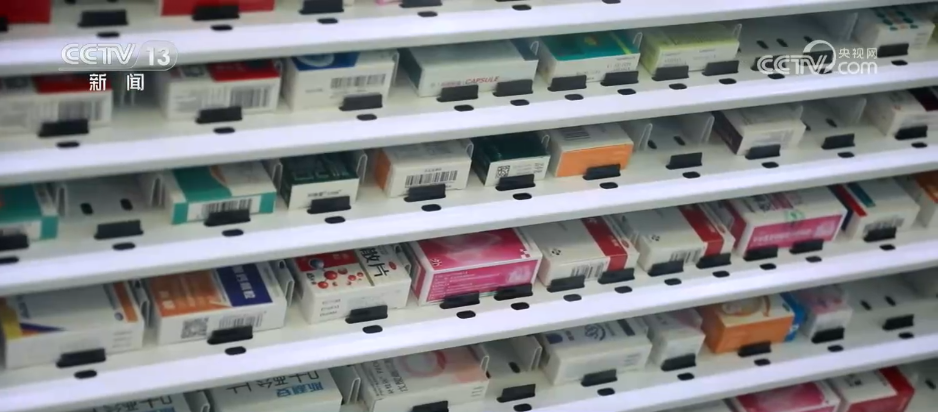
首版商保创新药目录拟于12月第一个周末发布
Bei Jing Shang Bao· 2025-11-05 02:08
Core Insights - The National Healthcare Security Administration announced that the negotiation for the 2025 drug list will conclude successfully, with the new basic medical insurance drug list and the first version of the commercial insurance innovative drug list expected to be released online and offline in Guangzhou on the first weekend of December [1] Group 1 - The new drug lists will officially take effect on January 1 of the following year [1]

推进医保商保同步结算 国家医保局首次制定商保创新药目录
Yang Shi Xin Wen· 2025-11-05 01:59
Core Points - The National Healthcare Security Administration (NHSA) is organizing negotiations for the 2025 National Basic Medical Insurance Drug List and the Commercial Insurance Innovative Drug List, with participation from 120 domestic and foreign companies [1] - The new Basic Medical Insurance Drug List and the first Commercial Insurance Innovative Drug List are set to be released online and offline in Guangzhou on the first weekend of December, with implementation starting January 1, 2025 [1] - The introduction of the Commercial Insurance Innovative Drug List aims to promote more innovative drugs into commercial insurance [3] Group 1 - The NHSA has established a Commercial Insurance Innovative Drug List for the first time, allowing companies to apply for inclusion in either the Basic Medical Insurance Drug List or the Commercial Insurance Innovative Drug List, or both [2][3] - The Commercial Insurance Innovative Drug List will respect the market position of commercial insurance companies, differing from the Basic Medical Insurance Drug List adjustments [3] - In 2024, the total expenditure of the Basic Medical Insurance Fund reached 2.97 trillion yuan, with a coverage rate of 95% among 1.326 billion insured individuals [5] Group 2 - The commercial health insurance market in China has been growing rapidly, with original insurance premium income reaching 977.3 billion yuan in 2024, a year-on-year increase of 8.2% [5] - There is significant room for improvement in the effectiveness and coverage of commercial health insurance compared to the over 95% utilization rate of basic medical insurance funds [5] - The NHSA is exploring the integration of commercial health insurance with basic medical insurance to address issues such as overlapping coverage and gaps in protection [7] Group 3 - The NHSA has initiated a one-stop settlement platform for commercial insurance and basic medical insurance in several provinces, allowing for automatic recognition of patient information and streamlined claims processes [7][8] - As of August this year, over 36 million transactions have been settled through the synchronized settlement platform in Shandong, totaling over 2.1 billion yuan [7] - A national "Insurance + Commercial Insurance" clearing and settlement center has been launched in Beijing to facilitate one-stop settlements for patients seeking care outside their home provinces [8]
医保新政实行,2025年这6种费用将不予报销,大家要做好准备
Sou Hu Cai Jing· 2025-10-31 11:58
Core Points - The article discusses recent adjustments to the medical insurance reimbursement policy in China, which aims to enhance the sustainability and efficiency of the medical insurance fund while addressing the medical needs of insured individuals [1][3][4]. Summary by Categories Medical Examination Costs - Certain non-essential medical examination costs will no longer be covered by insurance, including routine health check-ups and high-end imaging tests without clear clinical indications. This change is expected to save approximately 10-15% of the medical insurance fund, which currently spends around 50 billion yuan annually on these "excessive examinations" [3][4]. Pharmaceutical Adjustments - The national medical insurance drug list will see a reduction of about 150 drugs, bringing the total to approximately 2,800. The removed drugs mainly include those with low clinical value or high prices, such as certain vitamins and non-prescription cold medications [4][6]. Medical Consumables - The reimbursement for certain high-value and non-essential medical consumables will be restricted. This includes expensive artificial joints and cosmetic materials, which, while not a large percentage of total spending, can cost tens of thousands of yuan each [6][9]. Aesthetic and Rehabilitation Services - Purely cosmetic medical services and some non-essential rehabilitation services will face stricter reimbursement policies. Services like skin beauty treatments and elective dental surgeries will not be reimbursed, while necessary rehabilitation services related to medical conditions will still be covered [7][10]. High-End Medical Services - High-end medical services, such as those provided in special outpatient departments and VIP wards, will largely be excluded from reimbursement. This adjustment aims to promote equitable access to medical resources and improve the quality of general outpatient services [10][11]. Long-Term Hospitalization and Care - Reimbursement for long-term hospitalization and care services will be limited, with caps on time and expenditure for stable patients. This is expected to save around 20 billion yuan annually by reducing unnecessary hospital stays [12][14]. Recommendations for Insured Individuals - Insured individuals are encouraged to enhance health management awareness, rationalize medical usage, consider supplementary commercial health insurance, and stay informed about policy changes to better manage their medical expenses [13][14][15].

Government shutdown could cost U.S. economy up to $14 billion, CBO says
CNBC· 2025-10-29 17:31
Economic Impact of Government Shutdown - The U.S. federal government shutdown could cost the economy up to $14 billion, depending on its duration [1][2] - A six-week shutdown is projected to cost $11 billion, while an eight-week shutdown could escalate the cost to $14 billion [2] - By the end of 2026, the shutdown is expected to result in a loss of at least $7 billion in gross domestic product due to furloughed federal employees working fewer weeks [1] Political Dynamics - Senators express pessimism regarding the likelihood of reaching a bipartisan deal to reopen the government, despite the increasing economic pain for Americans [2] - The shutdown commenced on October 1 after Senate Republicans and Democrats failed to agree on a short-term funding measure [3] - Democratic senators are demanding that Republicans extend enhanced Affordable Care Act health insurance subsidies as a condition for their support in funding to reopen the government [4]

康西哥(CNC.US)涨超8.9% Q3财报数据超市场预期
Zhi Tong Cai Jing· 2025-10-29 14:49
周三,医疗保险公司康西哥(CNC.US)股价走高,截至发稿,该股涨超8.9%,报36.16美元。消息面上, 公司Q3营收496.9亿美元,调整后每股收益为0.5美元,均高于市场预期。 ...
盐城东台“查、改、治”协同发力,守牢群众“救命钱”
Yang Zi Wan Bao Wang· 2025-10-29 08:10
Core Points - The East Tai City Medical Insurance Bureau is intensifying regulatory measures to safeguard the medical insurance fund, focusing on punishing violations by medical institutions [1][2] - The city is addressing prominent issues in medical insurance fund management, including fraud and illegal practices, through a collaborative approach involving multiple departments [1][2] Group 1 - The East Tai City Discipline Inspection Commission is actively supervising the management of the medical insurance fund, emphasizing the importance of protecting public funds for healthcare [1] - A total of 388 medical institutions have been inspected, with various penalties applied to those found violating regulations, including suspension of payments and administrative penalties [1] - The commission is implementing a "zero tolerance" policy towards violations in the medical insurance sector to ensure the safety of the fund [2] Group 2 - The commission is promoting improvements in complaint handling mechanisms and refined management of the medical insurance system to address systemic shortcomings [2] - Initiatives such as "zero application enjoyment" for medical insurance transfer and expansion of long-term care insurance are being introduced to enhance public service [2] - The focus is on increasing public satisfaction and trust in the medical insurance system while achieving effective regulation and social outcomes [2]