
支付

Search documents
预付卡系统“故障”尚未恢复,开联通支付被罚没超3843万元,注册资本仍未达标
Bei Jing Shang Bao· 2026-01-22 12:36
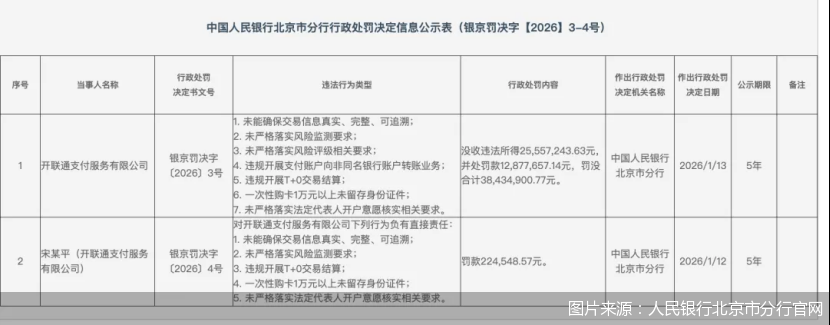
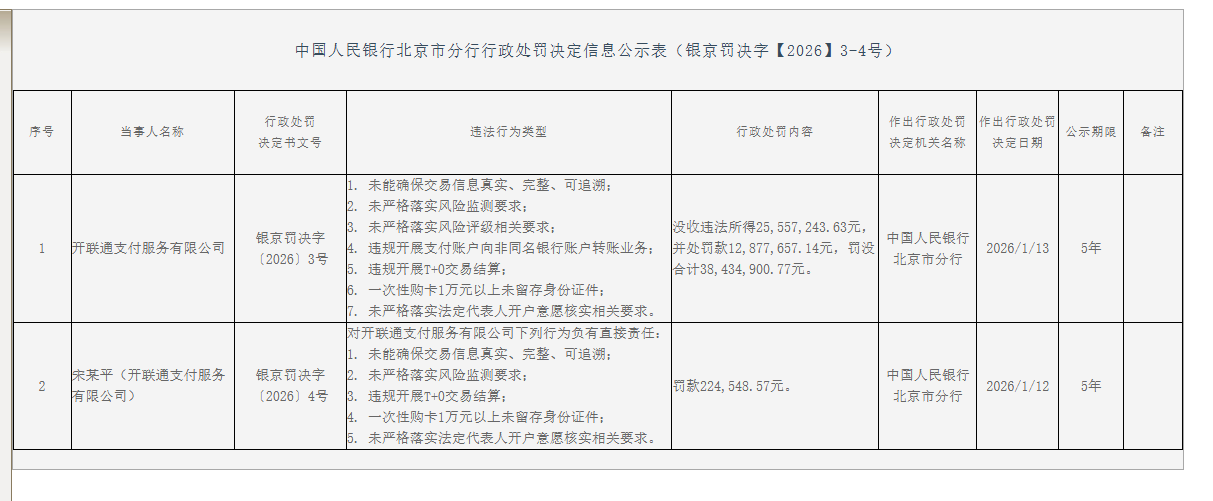
开年不足一个月,支付行业再现一张千万级别罚单。就在1月21日,人民银行北京市分行发布的行政处罚决定信息显 示,开联通支付服务有限公司(以下简称"开联通支付")因七项业务违规,被没收违法所得2555.72万元,并处罚款 1287.77万元,罚没合计3843.49万元。 而在千万级别的巨额罚单之外,开联通支付业务许可将在2026年5月2日到期,在不足四个月的过渡期内,开联通支付 还需要将公司注册资本从1亿元增加至不低于3亿元。同时,从2026年1月6日宣告预付卡业务"系统故障"至今,该公司 仍未恢复交易。分析人士指出,支付行业监管强化信号明确,千万级别的罚单也为其他支付机构敲响警钟:行业合规 无小事。 | | | | 中国人民银行北京市分行行政处罚决定信息公示表(银京罚决字【2026】3-4号) | | | | | | | --- | --- | --- | --- | --- | --- | --- | --- | --- | | 序号 | 当事人名称 | 行政处罚 决定书文号 | 违法行为英型 | 行政处罚内容 | 作出行政处罚 决定机关名称 | 作出行政处罚 决定日期 | 公示期限 | 备注 | | | 开 ...

又一家在韩国落子!跨境支付服务机构加速海外拿牌
Guo Ji Jin Rong Bao· 2026-01-22 10:17
上海交通大学安泰经济与管理学院副教授胥莉告诉记者,跨境支付机构收购当地支付牌照,一方面 是合规运营的需要,另一方面是借此构建境内外一站式支付结算服务体系。收购后,如何快速促进境内 支付业务与境外支付业务产生协同效应是关键。首先技术和数据要在合规下实现快速整合,在实现技术 与数据资源合规共享的基础上,提供数据增值服务,发现市场趋势,不断优化产品和服务。 2026年开年以来,第三方支付机构延续了在海外"拿牌"的热潮。现代化企业金融服务平台Airwallex 空中云汇 (下称"空中云汇") 近日宣布,已收购韩国持牌支付公司Paynuri Co. Ltd.,成功获得韩国支付网 关、预付费电子支付工具及外汇业务相关资质。 跨境支付市场近年来迎来新一轮争夺浪潮,包括连连数字、PingPong、派安盈(Payoneer)、空中 云汇、万里汇、贝宝支付(PayPal)、XTransfer、寻汇SUNRATE在内的跨境支付玩家均已在国内取得 支付牌照。同时,Payoneer、蚂蚁国际、PingPong、寻汇、移卡、空中云汇、新大陆等支付机构积极在 海外拿牌。 "在政策支持鼓励与全球经济日益深化背景下,跨境支付市场已成为支付机构 ...
开联通支付被罚款3843万元 涉违规开展T+0交易结算等7项违法行为
Feng Huang Wang Cai Jing· 2026-01-22 09:44
Core Viewpoint - Kailiantong Payment has been penalized for multiple violations, resulting in a total fine and confiscation amounting to approximately 38.43 million yuan [1][2][3]. Group 1: Violations and Penalties - The company was found guilty of seven types of violations, including failure to ensure transaction information is true, complete, and traceable, and not strictly implementing risk monitoring requirements [1][2]. - The total amount confiscated from the company was 25.557 million yuan, with an additional fine of 12.878 million yuan, leading to a combined penalty of 38.43 million yuan [1][2]. - A specific individual, Song Mou Ping, was held directly responsible for five of these violations and fined 224,548.57 yuan [1][2]. Group 2: Previous Penalties - This incident marks the second penalty for Kailiantong Payment since last year, with a previous fine of 1.1885 million yuan imposed on February 8, 2025, for three violations related to customer identity verification and reporting obligations [3]. Group 3: Company Background - Kailiantong Payment was established in 2010 with a registered capital of 100 million yuan and is one of the first 27 non-bank payment institutions to receive a payment business license from the People's Bank of China [2]. - The company's main services include prepaid card issuance and acceptance, internet payment, cross-border payment, and customized enterprise payment solutions [2].
推进二维码互联互通 银联以“支付互联”赋能“全球协同”
Ren Min Wang· 2026-01-22 01:34
Core Insights - China UnionPay is actively participating in the World Economic Forum, showcasing its role as a global payment service provider and emphasizing its new "four-party model" for building a collaborative global payment network [1] Group 1: Market Trends and Innovations - The demand for efficient, convenient, and secure cross-border payment services is increasing due to the rise in global cross-border trade and tourism [1] - QR code payment systems are becoming a mainstream payment method globally, driven by low costs and ease of promotion, with significant adoption in Southeast Asia, Brazil, and Turkey [2] - The "top-down standardization and bottom-up application" approach in various countries aligns with UnionPay's strategy of "technical adaptation + rule collaboration" [2] Group 2: Cross-Border Payment Cooperation - UnionPay is innovating with a dual-track mechanism of government-to-government (G2G) and network-to-network (N2N) cooperation to enhance cross-border payment connectivity [3] - The G2G model is being implemented in countries like Indonesia and Vietnam, while the N2N model is being utilized in Singapore and South Korea to quickly respond to market needs [3] Group 3: Expansion and Performance - UnionPay has established or is advancing QR code interoperability in approximately 50 countries, creating a broad and efficient cross-border payment network [4] - By 2025, UnionPay aims to launch QR code interoperability in seven overseas markets, with projected increases in QR code transaction volumes of 124% and 100% for domestic and foreign users, respectively [4] Group 4: Future Strategies - UnionPay plans to strengthen its global acceptance network to facilitate both outbound and inbound exchanges, focusing on regions like Southeast Asia, Central Asia, the Middle East, Africa, and Latin America [5] - The company aims to construct a new "four-party model" for cross-border payments, integrating quality resources across the payment industry to build an open and collaborative global payment ecosystem [6]
富友支付,再度递表香港联交所,收入依赖单一业务
Zhong Guo Zheng Quan Bao· 2026-01-21 23:24
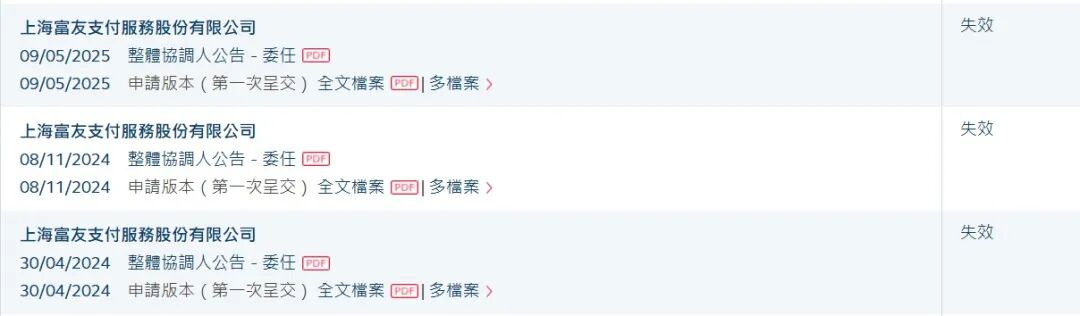
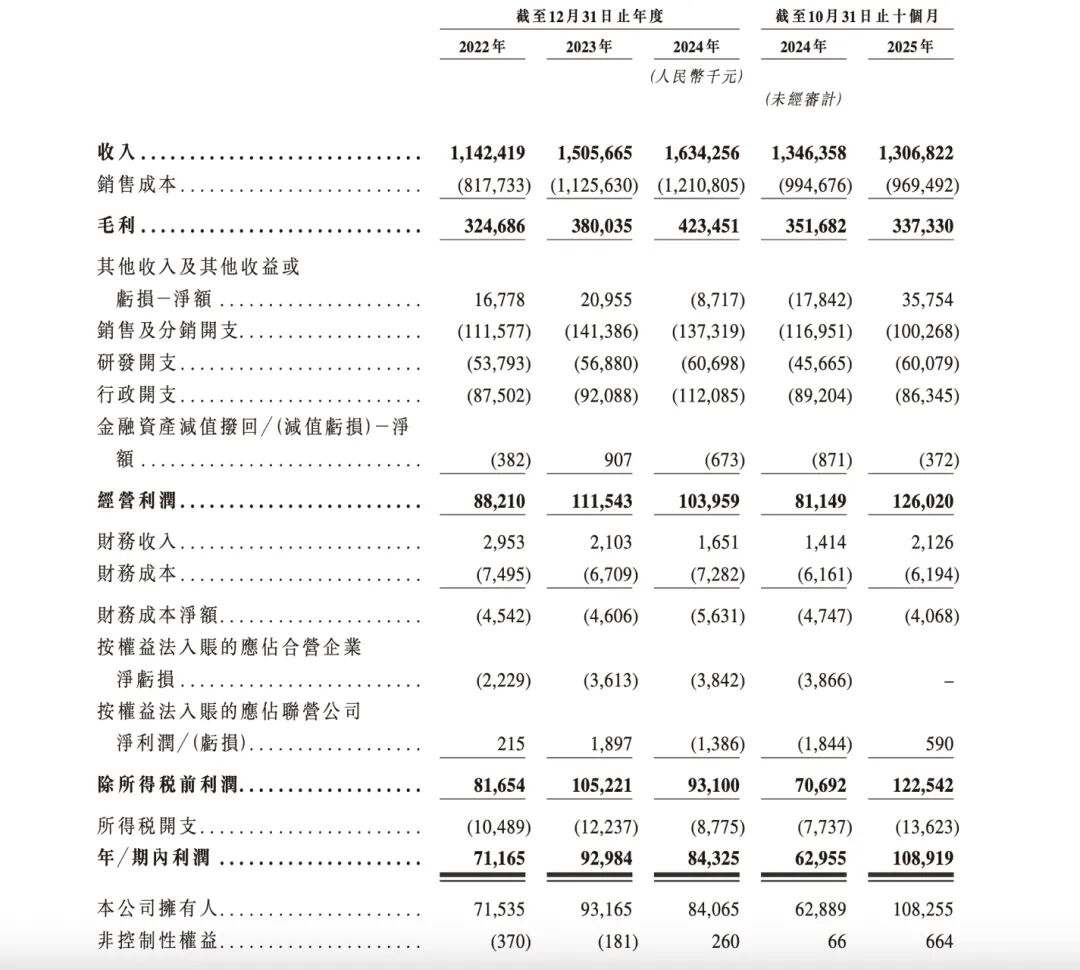
Core Viewpoint - Shanghai Fuyou Payment Service Co., Ltd. has submitted its IPO application to the Hong Kong Stock Exchange, marking its fourth attempt to go public in Hong Kong after previous applications in 2024 and 2025 failed to materialize [1][5]. Company Overview - Fuyou Payment, established in 2011, is a versatile digital payment technology platform in China, providing multi-channel payment services and value-added services across various business scenarios [3][5]. - The company has previously sought to list on the A-share market but faced challenges, including regulatory scrutiny and the termination of advisory agreements with brokers [5]. Financial Performance - The company's revenue for the years 2022, 2023, 2024, and the first ten months of 2025 were RMB 1.142 billion, RMB 1.506 billion, RMB 1.634 billion, and RMB 1.307 billion, respectively [8][9]. - The income from merchant acquiring services consistently accounted for over 80% of total revenue, with specific figures of RMB 931 million, RMB 1.290 billion, RMB 1.342 billion, and RMB 1.096 billion for the same periods [9][10]. Market Position - In 2024, the total payment volume (TPV) of China's digital payment service market was RMB 268.6 trillion, with Fuyou Payment holding an 0.8% market share, ranking eighth among comprehensive digital payment service providers [11]. - As an independent provider, Fuyou Payment ranked fourth in the market with a 4.5% share based on TPV [11]. Competitive Landscape - The payment industry is characterized by high competition and regulatory pressures, with existing and new competitors continuously enhancing their services [12]. - Fuyou Payment operates in a highly regulated environment, holding multiple payment licenses, including those for prepaid cards, internet payments, and cross-border payments [12].
开年首张千万元罚单落地 支付行业持续洗牌
Xin Lang Cai Jing· 2026-01-21 20:32
事实上,在严监管政策和行业转型等因素影响下,近年来,行业罚单频现。根据央行相关数据显示, 2025年全年,央行及分支机构开出137张支付行业罚单,合计罚没金额超2.93亿元,其中不乏千万元级 别。 在严监管政策和行业转型等因素影响下,第三方支付行业洗牌仍在持续。日前,银盛支付服务股份有限 公司(以下简称"银盛支付")因多项违规成为2026年首个第三方支付机构"吃单"者。而2025年全年,央 行及分支机构开出137张支付行业罚单,合计罚没金额超2.93亿元,其中千万元级别罚单频现。 1月14日,根据央行深圳市分行行政处罚决定信息公示表显示,银盛支付因"违反商户管理规定、违反清 算管理规定、违反账户管理规定",被合计罚没约1584万元。同时,时任该公司董事长陈某对上述三项 违法行为负有责任,被予以警告,并处罚款61万元。 这并非银盛支付首次收到大额罚单。2025年3月份,该公司因违反商户管理规定、违反清算管理规定、 未对外包服务商开展尽职调查、与身份不明客户进行交易,被罚没约324万元;2022年3月份,银盛支付 因未按规定履行客户身份识别义务、未按规定保存客户身份资料和交易记录、未按规定报送大额交易报 告或可疑 ...
富友支付第四次向港交所递表,十年IPO之路能否圆梦?
Guo Ji Jin Rong Bao· 2026-01-21 15:10
Core Viewpoint - Fuyou Payment has submitted its listing application to the Hong Kong Stock Exchange (HKEX) for the fourth time, indicating ongoing efforts to secure a public listing despite previous failures [1][2]. Group 1: Listing Attempts - Fuyou Payment has attempted to list on the HKEX multiple times since 2024, following unsuccessful attempts to go public in the A-share market since 2015 [2][4]. - The company has faced three previous failures of its IPO prospectus due to not completing hearings or listings within the required six-month period [4]. - The company emphasizes that multiple submissions to the HKEX are common and that it is following relevant laws and regulations in its listing process [2][5]. Group 2: Financial Performance - Fuyou Payment's revenue has shown a steady increase from RMB 1.14 billion in 2022 to RMB 1.63 billion in 2024, with a projected revenue of RMB 1.31 billion for the first ten months of 2025 [3][7]. - The gross profit for the same periods has also increased, from RMB 324.7 million in 2022 to RMB 423.5 million in 2024, with a gross profit of RMB 337.3 million reported for the first ten months of 2025 [3][7]. - The adjusted net profit has remained stable, with a net profit margin fluctuating between 7.1% and 9.5% in recent years [7][8]. Group 3: Business Challenges - Fuyou Payment's cross-border payment service has seen a decline in total payment volume (TPV), dropping from RMB 84.9 billion in 2022 to RMB 53.9 billion in the first ten months of 2025 [7]. - The company faces significant compliance pressures due to its involvement in prepaid card issuance and bank card acquiring services, which have led to multiple regulatory penalties over the years [10][11]. - The competitive landscape in the domestic payment service market has resulted in a decrease in gross margins, with the gross margin dropping from 28.4% in 2022 to 25.2% in 2023 [8][9]. Group 4: Future Outlook - The company aims to enhance its technology platform, expand cross-border business, and improve its ecosystem, which requires sufficient funding that could be obtained through the IPO [6][9]. - Analysts suggest that Fuyou Payment's ongoing listing efforts reflect a dual need for shareholder returns and business development, especially in a competitive industry environment [5][9]. - The company must address its compliance issues and improve its risk management capabilities to alleviate concerns from the HKEX regarding its operational stability and future growth potential [12].
7项行为违法违规,开联通支付收大额罚单
Xin Lang Cai Jing· 2026-01-21 13:43
具体来看,开联通支付主要违法违规行为类型包括:未能确保交易信息真实、完整、可追溯;未严格落 实风险监测要求;未严格落实风险评级相关要求;违规开展支付账户向非同名银行账户转账业务;违规 开展T+0交易结算;一次性购卡1万元以上未留存身份证件;未严格落实法定代表人开户意愿核实相关 要求。 1月21日,中国人民银行北京市分行行政处罚决定信息显示,开联通支付服务有限公司(以下简称"开联 通支付")因7项违法违规行为被中国人民银行北京市分行没收违法所得2555.72万元,并处罚款1287.77 万元,罚没合计3843.49万元。 具体来看,开联通支付主要违法违规行为类型包括:未能确保交易信息真实、完整、可追溯;未严格落 实风险监测要求;未严格落实风险评级相关要求;违规开展支付账户向非同名银行账户转账业务;违规 开展T+0交易结算;一次性购卡1万元以上未留存身份证件;未严格落实法定代表人开户意愿核实相关 要求。 当事人宋某平(开联通支付服务有限公司)因对上述多项行为负有直接责任,被罚款22.45万元。 据了解,开联通支付成立于2010年,注册资金1亿元,是国内首批27家获得中国人民银行颁发《支付业 务许可证》的非银行支付 ...
人民银行:严格实施支付机构穿透式监管和支付业务功能监管
Bei Jing Shang Bao· 2026-01-21 13:39
Core Viewpoint - The People's Bank of China (PBOC) held a meeting on January 15, 2026, to summarize the payment settlement work in 2025 and outline key tasks for 2026, emphasizing the need for high-quality development in the payment system and cross-border payment capabilities [1] Group 1: Payment System Development - Since 2025, the regulatory framework for the payment sector has been continuously improved, and the level of payment supervision and services has steadily increased [1] - Significant progress has been made in building a safe and efficient cross-border payment system, with important breakthroughs in domestic and international payment connectivity [1] - The payment industry is entering a new stage of high-quality development [1] Group 2: 2026 Work Focus - The 2026 payment settlement work will closely align with the "14th Five-Year Plan" and the goals of building a strong financial nation [1] - There will be an accelerated construction of the RMB cross-border payment system, promoting connectivity and diversification in cross-border payment systems [1] - Strict implementation of transparent supervision and functional regulation of payment institutions will be enforced to foster a compliant and healthy industry ecosystem [1] Group 3: Service Optimization - Continuous efforts will be made to optimize payment services, ensuring convenient and secure payment options [1] - The quality and efficiency of payment system services will be enhanced, with innovation driving the upgrade of the industry [1]
七项业务违规,开联通支付被罚没超3843万元
Bei Jing Shang Bao· 2026-01-21 10:08
北京商报讯(记者 廖蒙)1月21日,人民银行北京市分行发布行政处罚决定信息显示,开联通支付服务 有限公司(以下简称"开联通支付")因七项业务违规,被没收违法所得25557243.63元,并处罚款 12877657.14元,罚没合计38434900.77元。 具体来看,开联通支付违规行为包括:未能确保交易信息真实、完整、可追溯;未严格落实风险监测要 求;未严格落实风险评级相关要求;违规开展支付账户向非同名银行账户转账业务;违规开展T+0交易 结算;一次性购卡1万元以上未留存身份证件;未严格落实法定代表人开户意愿核实相关要求。 同时,宋某平对其中部分违法行为负有直接责任,被罚款224548.57元。 ...