Securities

Search documents
A股公告精选 | 天风证券(601162.SH)被罚1500万 两人拟被采取终身市场禁入措施
智通财经网· 2026-02-13 12:23
Group 1 - Tianfeng Securities received an administrative penalty notice from the China Securities Regulatory Commission (CSRC) for violations including undisclosed related party transactions and significant omissions in annual reports, with a proposed fine of 15 million yuan [1] - Zongshen Power plans to swap its motorcycle engine business assets with Longxin General's general machinery business assets to resolve competition issues and promote clearer business development, which is expected to constitute a major asset restructuring [2] - Quantum Leap, the third-largest shareholder of Zhangyue Technology, reduced its holdings by 4.3125 million shares, bringing its ownership below 5% [3] Group 2 - Southwest Securities plans to raise up to 6 billion yuan through a private placement to supplement its capital, with funds allocated for various business areas including wealth management and debt repayment [4][7] - ST Quanwei announced a risk of being subject to "delisting risk warning" due to projected negative net profit and revenue below 100 million yuan for 2025 [5] - ST Yigou's shareholder, Hangzhou Haoyue, plans to reduce its stake by up to 2.5% within three months [6] Group 3 - Gaode Infrared signed a contract worth 1.851 billion yuan for a complete equipment system, which is expected to significantly impact its Q1 2026 performance [9] - Jialinjie announced that its actual controller, Li Zhaoting, has been detained by the police, but this will not affect the company's operations [10] - Zhengyuan Wisdom's actual controller, Chen Jian, was sentenced to three years in prison for manipulating the securities market, but the company’s operations remain unaffected [11] Group 4 - Yongtai Technology terminated its plan to purchase a 25% stake in Yongtai High-tech from CATL due to a lack of consensus among parties involved, with no significant impact on operations [12] - Yingjixin is under investigation by the CSRC for suspected information disclosure violations, but its business activities continue normally [13] Group 5 - SF Holding reported a revenue of 26.86 billion yuan in January, a year-on-year increase of 2.22% [14] - China Shenhua's coal sales volume in January reached 33.2 million tons, up 9.9% year-on-year [14] - China Eastern Airlines and China Southern Airlines reported a year-on-year decline in passenger turnover of 1.03% and 2.86% respectively in January [14]

7年蛰伏终成主将!浙商证券迎56岁新总裁
Xin Lang Cai Jing· 2026-02-13 11:37
Core Viewpoint - Zhejiang Securities is undergoing a significant top-down restructuring of its core management team, with the recent appointment of Cheng Jingdong as president following the new chairman's arrival just three months prior [1][17]. Management Changes - Cheng Jingdong, a veteran in the investment banking sector, has been promoted to president after serving as vice president for nearly seven years, indicating a typical internal promotion [1][17]. - The company has seen a series of high-level personnel changes since 2025, including shifts in key positions such as vice president, chief risk officer, and financial director, indicating a comprehensive personnel adjustment [1][17]. - The new leadership aims to leverage the recovery of the capital market to enhance internal growth and achieve the goal of becoming a top-tier investment bank [1][17]. Performance Overview - Zhejiang Securities reported a nearly 50% year-on-year increase in net profit attributable to shareholders for the first three quarters of 2025, driven by strong growth in brokerage and proprietary trading businesses [1][17]. - The company's operating expenses were significantly reduced, with a 60.36% year-on-year decrease, contributing to the profit growth [1][17]. - Despite the overall profit increase, the growth rate is positioned in the middle to lower range among listed brokerages, highlighting the challenge of sustaining growth amid market fluctuations [1][17]. Investment Banking Business - Cheng Jingdong's leadership has seen explosive growth in underwriting business, particularly in bond underwriting, which ranked in the top ten of the industry for five consecutive years until recently [1][17]. - However, the company has faced a decline in both equity and bond underwriting activities, with bond underwriting dropping to 12th in the industry by the first half of 2025 [1][17]. - The net income from investment banking fees has decreased from over 10 billion yuan in 2020-2021 to 7.2 billion yuan in 2024, although there was a 12.6% year-on-year recovery in the first half of 2025 [1][17]. Analyst Departures and Organizational Changes - The research department has experienced a wave of analyst departures, with 12 analysts leaving in a short period, raising concerns about internal governance and compliance issues [1][17]. - The restructuring of the organization and internal governance upgrades are ongoing, indicating that the changes within the company are not yet complete [1][17]. Financial Performance and Market Position - As of the first three quarters of 2025, Zhejiang Securities achieved a net profit of 1.892 billion yuan, reflecting a 49.57% year-on-year increase, slightly below the industry average [1][17]. - The company’s operating revenue for the first three quarters was 6.789 billion yuan, marking a 66.73% increase compared to the adjusted figures from the previous year [1][17]. - The strategic goal set by the new chairman is to position Zhejiang Securities among the top 15 brokerages in the industry, emphasizing the need for effective integration and performance improvement following the acquisition of Guodu Securities [1][17].



涉债券内控把关不严等问题,财通证券、太平洋证券、中天国富被证监会点名
Sou Hu Cai Jing· 2026-02-13 10:32
Group 1 - The China Securities Regulatory Commission (CSRC) has issued warning letters to Zhongtian Guofu Securities, Caitong Securities, and Pacific Securities due to regulatory violations [1][2] - Zhongtian Guofu Securities has three main violations: inadequate internal control over bonds, non-compliance in underwriting, and insufficient performance in entrusted management [1] - Caitong Securities' violations include ineffective execution of internal control mechanisms, inadequate due diligence in underwriting, and lack of attention to the issuer's information disclosure obligations [1][2] - Pacific Securities has been found to have poor internal control over bonds, inadequate responses to quality control feedback, and insufficient tracking of core enterprises' operational conditions [2][3] Group 2 - Zhongtian Guofu Securities was established in 2004 and is primarily owned by Zhongtian Financial Group with a 94.919% stake [1] - Caitong Securities, founded in 1993 and officially established in 2003, has Zhejiang Provincial Innovation Investment Group as its major shareholder with a 29.16% stake [1] - Pacific Securities, also founded in 2004, has Beijing Jiayu Investment Co., Ltd. as its largest shareholder with a 10.92% stake [3] Group 3 - The compliance and internal control levels of the three securities firms are reflected in the evaluation results from the China Securities Association, with Pacific Securities and Caitong Securities rated B and Zhongtian Guofu Securities rated C in December 2023 [4] - In the 2024 evaluation results, all three firms received a C rating [4]


天风证券党委:深刻反思历史教训 巩固改革成果 全力加快推进“六新天风”建设
Xin Lang Cai Jing· 2026-02-13 09:17
Core Viewpoint - The China Securities Regulatory Commission (CSRC) has imposed a fine of 25 million on Tianfeng Securities and its parent company, reflecting serious violations and prompting the company to undertake significant reforms in governance and compliance [1][8]. Group 1: Administrative Penalties and Company Response - Tianfeng Securities held a special meeting to discuss the administrative penalties and regulatory measures received, emphasizing the need to treat this as an opportunity for reform and improvement [1][2]. - The company acknowledged past issues such as weak leadership, inadequate systems, and poor compliance awareness, committing to enhance governance and risk management [2][9]. Group 2: Governance and Compliance Enhancements - Over the past three years, the company has strengthened its governance by establishing clear decision-making processes and enhancing internal controls, resulting in improved governance effectiveness [3][10]. - The company aims to deepen reforms and improve internal governance structures under the leadership of its new controlling shareholder, Hongtai Group [3][11]. Group 3: Future Work Plans - The company has outlined four key areas for future work: 1. Establishing a leadership group to oversee compliance and rectify historical issues [4][12]. 2. Conducting a comprehensive review of the internal control system to ensure robust governance and compliance [5][13]. 3. Implementing strict supervision and accountability measures to prevent future violations [6][14]. 4. Focusing on business development and leveraging market opportunities to enhance operational performance [6][15]. Group 4: Cultural and Strategic Shifts - The company is committed to fostering a culture of compliance and responsibility among employees, aligning with the principles of Chinese financial culture [2][9]. - The ongoing reforms are seen as a turning point for the company, aiming to achieve a new phase of development characterized by improved governance and operational excellence [7][15].
A股开盘速递 | 三大指数低开 AI审核概念活跃
智通财经网· 2026-02-13 02:02
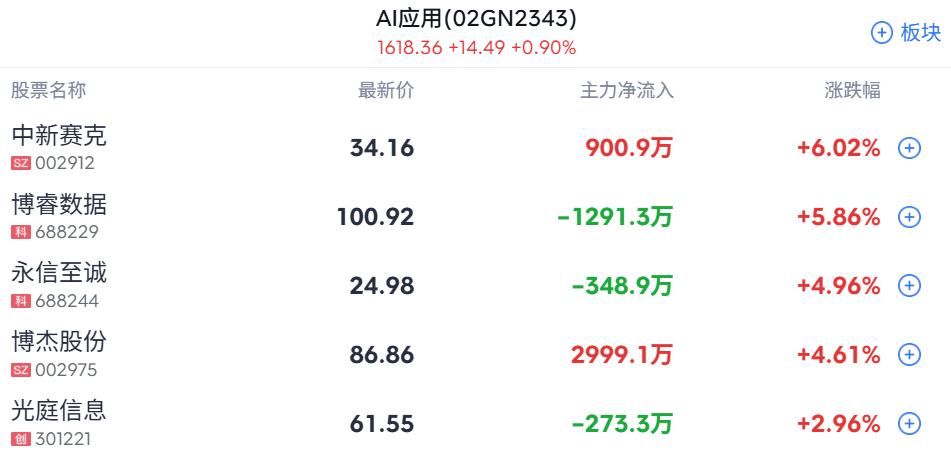
Market Overview - The A-share market opened lower on February 13, with the Shanghai Composite Index down 0.44%, the Shenzhen Component down 0.66%, and the ChiNext Index down 0.56% [1] Active Sectors - The AI review concept sector showed strong performance, with People's Daily hitting the daily limit, Haohan Deep rising over 10%, and Guotou Intelligent increasing over 8%. Other companies like Sanwei Xinan, Jida Zhengyuan, and Zhongxin Saike also saw gains [2][4] Declining Sectors - The non-ferrous metals, optical modules, and film and television media sectors experienced declines [3] Market Sentiment and Predictions - According to Everbright Securities, the market is expected to remain relatively flat due to profit-taking tendencies and a preference for holding cash ahead of the holiday. A narrow range of fluctuations is anticipated for the Shanghai and Shenzhen indices [3][10] Institutional Insights - Minsheng Securities noted that the market may experience differentiation after the holiday, with a potential shift in investment styles. They suggest prioritizing cyclical dividend assets (coal), technology growth, and sectors with high recovery potential like pharmaceuticals, military, and automotive [9] - Everbright Securities highlighted a decrease in trading activity before the holiday, with structural hotspots continuing. They expect the market to maintain a narrow range of fluctuations due to a defensive approach from investors [10] - Xinhua Asset Fund's investment manager expressed optimism for the A-share market by 2026, citing improvements in China's international competitiveness, a shift from investment-driven to innovation-driven growth, and favorable macroeconomic policies as key factors [11]
浙商证券股份有限公司 2025年度第四期短期融资券兑付 完成公告
Zhong Guo Zheng Quan Bao - Zhong Zheng Wang· 2026-02-12 22:57
Core Viewpoint - Zhejiang Securities successfully issued its fourth short-term financing bond for 2025, with a total issuance scale of RMB 1.5 billion and a maturity date set for February 11, 2026 [1]. Group 1 - The company issued the short-term financing bond on May 14, 2025, with a coupon rate of 1.68% and a term of 273 days [1]. - The total amount paid on the maturity date, February 11, 2026, was RMB 1,518,848,219.18, which includes both principal and interest [1].
国泰基金管理有限公司关于旗下部分交易型开放式基金新增国联民生证券股份有限公司为一级交易商的公告
Zhong Guo Zheng Quan Bao - Zhong Zheng Wang· 2026-02-12 22:57
Group 1 - The announcement states that Guotai Fund Management Co., Ltd. will add Guolian Minsheng Securities Co., Ltd. as a primary trading dealer for certain exchange-traded open-end funds starting from February 13, 2026 [1] - Investors can conduct subscription and redemption transactions for the relevant funds through Guolian Minsheng Securities [1] - The announcement includes the contact information for both Guolian Minsheng Securities and Guotai Fund Management Co., Ltd. [1] Group 2 - The Guotai Fund Management Co., Ltd. has issued a risk warning regarding the Nasdaq 100 Exchange-Traded Fund (ETF), indicating that its secondary market trading price is significantly higher than the reference net asset value, leading to a substantial premium [3] - The fund management company warns that if the premium persists, it may take measures such as applying for a temporary trading halt on the Shanghai Stock Exchange to alert the market about the risks [3] - The fund is currently operating normally with no undisclosed significant information, and the management will adhere to legal regulations and fund contracts in its investment operations [4]

浙商证券股份有限公司2025年度第四期短期融资券兑付完成公告
Shang Hai Zheng Quan Bao· 2026-02-12 18:46
Core Viewpoint - Zhejiang Securities successfully issued its fourth short-term financing bond for 2025, with a total issuance scale of RMB 1.5 billion and a coupon rate of 1.68% [1] Group 1 - The short-term financing bond has a maturity period of 273 days, with the repayment date set for February 11, 2026 [1] - On February 11, 2026, the company repaid the principal and interest of the short-term financing bond, totaling RMB 1,518,848,219.18 [2]
国泰海通 · 晨报260213|宏观、固收
国泰海通证券研究· 2026-02-12 14:02
Group 1: Macro Analysis - The structure of the U.S. balance sheet shows a healthy private sector, particularly after the QE phase post-2020, leading to a significant accumulation of net assets among high-net-worth individuals, primarily in real estate and equities [3] - The refinancing loans available to the high-net-worth group support consumer resilience and liquidity in the U.S. stock market, while the new borrowing group is more sensitive to cash flow and debt for asset acquisition [4] - The U.S. economy appears to be transitioning from "K-shaped divergence" to "re-inflation," with the high-net-worth group stabilizing economic expectations and asset prices, thereby creating favorable conditions for the new borrowing group [5] Group 2: Inflation Expectations - Demand-driven inflation expectations exhibit a self-reinforcing mechanism, where heightened inflation expectations can lower actual interest rates and compress credit spreads [6] - Currently, the actual mortgage rates in the U.S. are at their lowest in three years, despite rising long-term U.S. Treasury yields, indicating a recovery in the housing sector [6] Group 3: Liquidity Trends - The global liquidity environment is shifting from easing to tightening, with Bitcoin serving as a barometer for this transition, impacting liquidity-sensitive assets like the Nasdaq and A-shares [7] - The anticipated policy combination of "rate cuts + balance sheet reduction" suggests a non-typical re-inflation trade, resembling stagflation dynamics [7] Group 4: Industry Analysis of Perpetual Bonds - The issuance of industrial perpetual bonds aims to reduce corporate leverage, with significant peaks in issuance observed during 2018-2020 and ongoing demand from high-leverage state-owned enterprises [9] - The proportion of 5+N maturity bonds has increased, reflecting a shift in issuance trends, with expectations for record issuance in 2025 [10] - The inclusion of equity-like clauses in perpetual bonds has risen, with over 60% of recent issuances containing such features, driven by stricter accounting standards [11] Group 5: Investment Strategies - The recommendation for industrial perpetual bonds includes a yield strategy focusing on coal and steel sectors with high asset quality and a duration strategy for public utilities and transportation state-owned enterprises [12]


国泰海通|固收:产业永续债分析框架和机会挖掘
国泰海通证券研究· 2026-02-12 14:02
Core Viewpoint - The issuance of industrial perpetual bonds primarily aims to reduce corporate leverage, with significant peaks in net financing observed during two previous issuance cycles [1] Group 1: Issuance Trends - From 2018 to 2020, the implementation of guidelines to strengthen the asset-liability constraints of state-owned enterprises led to a reduction in average asset-liability ratios by approximately 2 percentage points by the end of 2020 compared to the end of 2017, with annual net financing around 400 billion [1] - In 2023, high-leverage central state-owned enterprises still have a demand for debt reduction, with annual net financing between 200 billion to 300 billion, alongside an increase in the scale of perpetual bond repayments, indicating a continuous expansion in issuance scale, expected to reach a new high in 2025 [1] Group 2: Issuance Duration - The proportion of 5+N maturities has increased in the past two years, with the issuance duration evolving through three phases: 1. From 2018 to 2020, 3+N maturities dominated, accounting for over 70% for three consecutive years [2] 2. From 2021 to 2023, while 3+N remained predominant, the share of 2+N maturities significantly increased due to credit bond sentiment shifts [2] 3. Since 2024, under debt resolution expectations, the overall credit and duration spreads have narrowed, leading to longer issuance durations, with 5+N proportions at 31.5% and 20.3% for 2024 and 2025 respectively [2] Group 3: Terms and Conditions - The terms of industrial perpetual bonds reflect a balance between debt-like and equity-like characteristics, with over 60% of perpetual bonds containing subordinated clauses in recent years [3] - Stricter accounting standards have led to an increase in equity-like terms to meet planning requirements, with the 2019 regulations clarifying repayment order and interest rate escalation mechanisms [3] - Since 2023, subordinated perpetual bonds have consistently made up over 60% of all perpetual bonds, with debt-like terms designed to protect investor interests, as the yield on perpetual bonds is generally lower than that of dividend stocks [3] Group 4: Investment Strategies - The proportion of industrial perpetual bond spreads has reached a recent high, indicating stronger resilience against downturns, with historical spread proportions fluctuating between 10% and 60% [4] - Two recommended investment strategies for industrial perpetual bonds include: 1. Yield strategy, focusing on coal and steel industry entities with a remaining term of less than 2 years, prioritizing larger local state-owned enterprises while monitoring profitability and fundamental conditions to avoid tail risks [4] 2. Duration strategy, recommending central state-owned enterprises in public utilities and transportation sectors with around 5-year maturities, as these entities are in high-leverage industries with a need for debt reduction but possess good qualifications, suggesting a lower likelihood of becoming "true perpetuals" [4]