Autos

Search documents
百年难遇!外国汽车扎堆进攻日本市场
汽车商业评论· 2026-02-07 23:07
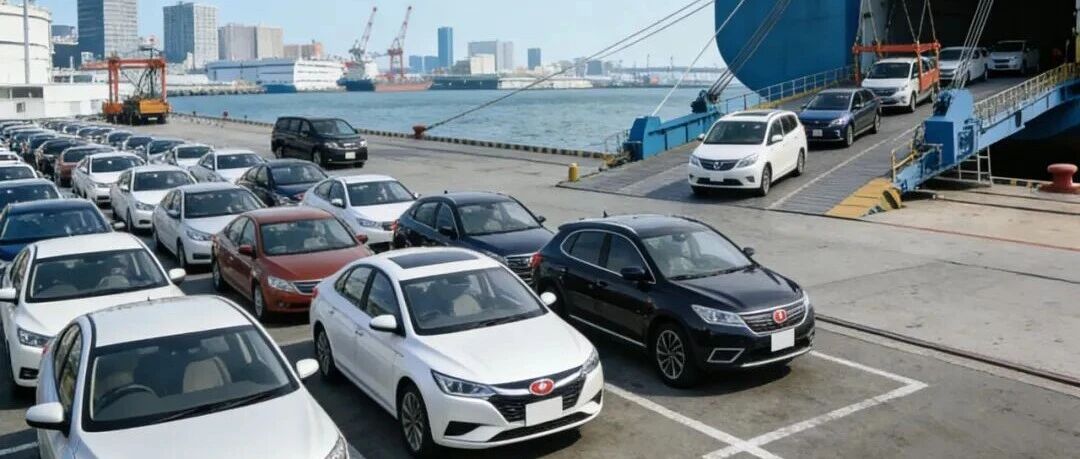
Core Viewpoint - The Japanese automotive market, historically dominated by local brands, is witnessing a significant shift as foreign electric vehicle (EV) manufacturers are beginning to penetrate this previously closed market, driven by the slow electrification of domestic brands and changing consumer preferences [4][5][6]. Group 1: Market Overview - Japan's automotive market has long been considered one of the most challenging for foreign brands, with local manufacturers holding over 90% market share [4]. - In 2025, Japan's total new car sales are projected to reach 4.5658 million units, with a 3.3% year-on-year increase, while foreign brands are starting to gain traction [5]. - The electric vehicle market in Japan is still in its infancy, with only 60,677 EVs sold in 2025, representing a mere 1.6% of total vehicle sales [5]. Group 2: Foreign Brands' Entry - The Japanese Imported Automobile Association reported a 7% increase in non-local brand vehicle sales in 2025, totaling 243,129 units, with pure electric imports surging by 26% to a record 30,513 units [6]. - Hyundai is making a comeback in Japan, with a 89% increase in sales in 2025, reaching 1,169 units, driven by the introduction of several electric models [8][10]. - Tesla's sales in Japan saw a remarkable 90% increase in 2025, reaching approximately 10,600 units, attributed to a shift in sales strategy towards physical stores [12][14]. Group 3: Chinese Brands' Expansion - BYD entered the Japanese market in 2023 and aims to establish 100 dedicated stores by 2025, achieving a 62% sales increase to 3,870 units in 2025 [15][18]. - Other Chinese brands, such as Zeekr and GAC, are also planning to enter the Japanese market, with unique offerings tailored to local consumer preferences [19][21]. Group 4: Domestic Brands' Response - Japanese automakers are not standing still; Toyota's new EV model bZ4X received over 10,000 orders within three months of its launch in late 2025, becoming the top-selling EV in Japan [24][27]. - Nissan and Honda are also launching new EV models to compete with foreign brands, with Nissan's new LEAF and Honda's N-ONE e: entering the market [27][28].




'Stay Long Detroit, Short Davos': Why BofA's Hartnett Sees A Main Street Boom Ahead Of The Midterms
Yahoo Finance· 2026-02-07 23:01
Core Message - Bank of America's top investment strategist Michael Hartnett advocates for a shift in investment strategy, favoring Main Street over global elites as market dynamics change due to cooling inflation, AI disruption, and political pressures ahead of the U.S. midterms [1][2] Investment Strategy - Hartnett suggests investors should "stay long Detroit, short Davos," indicating a preference for U.S. small and mid-cap stocks, banks, REITs, emerging markets, and international equities over major tech companies [1][2] - The "Bro Billionaire" basket, which includes companies like Nvidia, Meta, and Tesla, has only increased by approximately 6% since January 2025, while U.S. small caps have risen closer to 13% [4] Market Dynamics - A quiet rotation is occurring in the market, with assets that were previously underperforming during the bond bear market now starting to outperform elite "Davos" trades [3] - The divergence in performance between small caps and big tech may seem modest but historically indicates the beginning of regime changes in the market [5] Economic and Political Context - Hartnett highlights that macroeconomic and political shifts are driving this rotation, with inflation surprises trending downward and AI adoption impacting the labor market, leading to increased affordability pressures in various sectors [5] - The focus on affordability in energy, healthcare, credit, housing, and electricity is becoming a significant political issue [5] Future Outlook - The investment strategy remains long on Main Street and short on Wall Street until there is an improvement in Trump's approval rating regarding affordability-focused policies [6] - There is a potential risk for former market leaders as a shift from asset-light to asset-heavy business models is anticipated [6]
Tesla Puts Its Money Where Its Mouth Is in the Biggest Way Possible
The Motley Fool· 2026-02-07 21:30
Core Viewpoint - Tesla is shifting its focus from traditional automotive production to new ventures, specifically humanoid robots and AI, leading to the discontinuation of the Model S and Model X [2][4]. Group 1: Company Strategy - Tesla will end production of the Model S and Model X in Q2, reallocating resources to produce the Optimus robot, as stated by CEO Elon Musk [4]. - The decision reflects Tesla's ambition to transition towards autonomy and advanced technologies beyond electric vehicles [4][10]. Group 2: Market Response - Investors may have anticipated this move, as Tesla had already ceased new orders for the Model S and X in China due to high tariffs and low demand in Europe [6]. - In 2025, combined deliveries of the Model S, Model X, and Cybertruck accounted for only 50,850 units, representing just over 3% of Tesla's total 1.6 million deliveries [8]. Group 3: Financial Overview - Tesla's current market capitalization stands at $1.4 trillion, with a gross margin of 18.03% [9]. - The stock price has seen fluctuations, with a recent change of +3.47%, indicating investor interest amidst strategic shifts [9]. Group 4: Future Outlook - Tesla's future is characterized by uncertainty as it aims to produce a million Optimus robots annually, marking a significant pivot in its business model [10]. - Investors are encouraged to reassess their positions in Tesla, considering the company's evolving identity beyond just an electric vehicle manufacturer [9][10].
Toyota makes seismic leadership change as tariffs eat into profits
Yahoo Finance· 2026-02-07 19:33
Core Insights - American consumers show a strong preference for Japanese cars, with nearly 20% of U.S. auto import spending in 2024 directed towards Japanese manufacturers, second only to Mexico [1][10] - Toyota's recent fiscal results indicate a successful first three quarters, but the company faces challenges that may have led to a leadership change [2][5] Financial Performance - Toyota reported an operating income of nearly $21 billion for the first three quarters of the fiscal year, projecting a full-year operating profit of over $24 billion, which is $3 billion less than the previous year [5] - The company anticipates a $9.23 billion cost due to tariffs in fiscal 2025, with potential for higher costs had recent tariff negotiations not occurred [5][6] Market Position - In the U.S. market, Toyota sold 2.52 million vehicles, reflecting an 8.4% year-over-year increase, capturing a 15.5% market share [6] - The overall automotive market is competitive, with GM leading at 2.83 million vehicles sold (+5.1% YoY) and a 17.3% market share, followed by Ford and Hyundai [6] Leadership Changes - Toyota announced the demotion of CEO Koji Sato, who will be replaced by CFO Kenta Kon effective April 1, with Sato transitioning to a new role as chief industry officer and vice chairman [7][9] - Kenta Kon is recognized for his cost management skills and has a close relationship with Toyota Chairman Akio Toyoda [7][9]
蔚来终于盈利!预计四季度经营利润7-12亿元
Sou Hu Cai Jing· 2026-02-07 18:46
公告显示,主要受以下因素综合影响,2025年第四季度销量持续增长,有利的产品组合推动汽车毛利率优化,持续推行全面降本增效措施。 首度实现盈利! 其中,2025年第四季度销量持续增长有力推动蔚来盈利。数据显示,2025年四季度,蔚来累计交付124807辆,达成12万至12.5万辆的交付指引,三品牌协同 效应逐步显现。蔚来全新ES8大幅热销形成有力驱动,1月18日,蔚来宣布全新ES8开启交付后的第120天,交付量突破5万辆。 近日,根据蔚来在港交所发布公告显示,公司预计2025年第四季度首次实现单季度经调整经营利润(非公认会计准则),盈利区间为人民币7亿元至12亿 元,同比去年实现大幅扭亏为盈。同时,按公认会计准则计量,蔚来预计2025年第四季度经营利润为人民币2亿至7亿元(约0.29亿美元至1亿美元),同样 实现盈利。 蔚来汽车董事长李斌表示,2026年的经营目标是整年盈利,结合供应链持续降本,销售、研发、管理费用控制持续优化,2026年综合毛利率有望达到20%。 南方+记者 拱千舒 ...


Is This Once-Hyped EV Stock Finally Worth Considering?
Yahoo Finance· 2026-02-07 17:35
Group 1 - Rivian Automotive's share price has decreased approximately 82% from its IPO price since its initial public offering in November 2021 [1] - The company is expected to achieve a gross profit for the full year of 2025, having already reported gross profits in two of the first three quarters of that year [2] - Rivian's significant goal for 2026 is to launch the mass-market electric vehicle, the R2, which is crucial for its long-term profitability [4] Group 2 - Achieving a gross profit does not equate to positive earnings, as Rivian still incurs additional costs beyond production [5] - The successful launch and reception of the R2 is essential for Rivian to spread its costs over a larger number of vehicles and move towards sustainable profitability [6] - With around $7 billion in cash and short-term investments, the likelihood of the R2 launch is high, making it an attractive option for aggressive investors [7]

Should You Buy Uber Stock Now for a ‘Multitrillion-Dollar’ Opportunity in Robotaxis?
Yahoo Finance· 2026-02-07 16:32
Core Insights - Uber is expanding its focus on autonomous vehicles (AVs), viewing it as a significant growth opportunity that could unlock a "multitrillion-dollar opportunity" over time [3][4] - The company aims to have robotaxis operating in 15 cities by the end of the year, indicating a strong commitment to leading in the autonomous sector [3][4] - Despite recent earnings misses, Uber's long-term strategy in autonomy is seen as a key factor shaping its future outlook [4][8] Company Performance - Uber has completed over 72 billion trips since its launch in 2010, evolving from a ride-hailing service to a global platform that includes food delivery and freight services [2] - In the fourth quarter of fiscal 2025, Uber reported a revenue increase of 20% year-over-year to $14.37 billion, slightly exceeding Wall Street's expectations [10] - The mobility segment generated $8.2 billion, up 19% year-over-year, while delivery revenue surged 30% year-over-year to $4.9 billion [11] Financial Metrics - Adjusted EPS for the fourth quarter was $0.71, a 27% increase year-over-year but below the expected $0.79 [11] - On a GAAP basis, net income was $296 million, significantly down from $6.88 billion the previous year, impacted by a $1.6 billion net pre-tax headwind [12] - Total trips increased by 22% year-over-year to 3.8 billion, with gross bookings rising 22% to $54.1 billion [13] Future Outlook - For the first quarter of fiscal 2026, Uber forecasts gross bookings between $52 billion and $53.5 billion, representing 17% to 21% year-over-year growth [14] - The company anticipates non-GAAP EPS of $0.65 to $0.72, implying a 37% year-over-year growth at the midpoint [14] Analyst Sentiment - Despite recent quarterly results disappointing some investors, Wall Street maintains an optimistic view on Uber, with a consensus "Strong Buy" rating [15] - Out of 51 analysts, 37 rate it a "Strong Buy," with an average price target of $107.07, suggesting a potential upside of approximately 43% [16]

Tesla rival inspires Ford CEO Jim Farley's push for EV profitability
Yahoo Finance· 2026-02-07 16:30
Core Insights - Sentiment towards Ford's Model e division has fluctuated significantly, culminating in a record sales month in 2025 due to the $7,500 EV tax credit expiring in September [1] Financial Performance - Ford's Model e division incurred a loss of $1.4 billion in Q3, contributing to a total loss of $3.6 billion for the year, primarily from first-generation EV products [2][3] - The company initially projected a loss of $5 billion for Model e in 2023, with actual losses exceeding expectations [3][7] Strategic Shifts - CEO Jim Farley aims to make Model e profitable by 2029, drawing inspiration from BYD's cost structure [4][5] - Ford is transitioning its EV strategy to focus on lower-priced models to enhance competitiveness [6][8] Market Context - EV sales in the U.S. reached a peak of 12% market share in the first three quarters of the year but dropped to 5% in Q4 [3] - Global EV sales figures indicate that China leads with 6.4 million units sold, followed by Europe with 2.2 million, and the U.S. with 1.2 million [10]

Exclusive: We Took A Ride in Rivian’s Most Important SUV
CNBC· 2026-02-07 16:00
We're here at Rivian's engineering labs in Palo Alto, and right behind me was their first product, the R1T. Rivian makes high end electric vehicles. The trouble is they start above $70,000.They want to change that. They're making now a vehicle that hits right at the center of the market, the R2, which starts at $45,000. This is what Rivian says will take it from being a niche automaker of high end vehicles to a truly mainstream and profitable company.The R2 is a test to show Wall Street that they can actual ...

India-US trade deal gives tariff-free access to Harley bikes, no reprieve for Tesla
Reuters· 2026-02-07 15:57
Core Viewpoint - India is set to reduce tariffs on high-end American cars to 30% from previous rates as high as 110% and will eliminate duties on Harley-Davidson motorcycles under an interim trade agreement [1] Group 1: Tariff Reductions - The tariff on high-end American cars will be slashed to 30% from a maximum of 110% [1] - Duties on Harley-Davidson bikes will be completely eliminated as part of the trade pact [1] Group 2: Trade Agreement Context - The changes are part of an interim trade agreement aimed at improving trade relations between India and the United States [1] - The official announcement indicates that while tariffs are being reduced, no further concessions will be made by India in this context [1]