
水果种植

Search documents
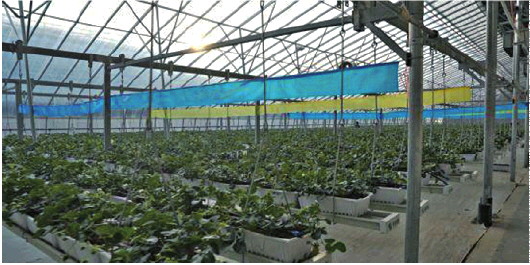
科技破壁草莓时令,365天鲜果不断供
Qi Lu Wan Bao· 2026-01-11 17:06
Core Viewpoint - The article highlights a revolutionary technology in strawberry cultivation that enables year-round production, significantly altering traditional seasonal farming practices in the industry [3][4]. Group 1: Technological Innovation - The use of an intelligent control system allows for real-time monitoring of temperature and humidity, facilitating continuous strawberry production throughout the year [3][4]. - The integration of industrial waste heat for energy conversion and precise environmental control has enabled strawberries to grow independently of seasonal changes [4][5]. Group 2: Crop Management - The "Miaoxiang 7" strawberry variety, developed over 20 years, is key to the success of year-round production due to its large size and strong disease resistance [5]. - A precision nutrition management system customizes nutrient delivery to each plant, ensuring optimal growth conditions [5][6]. Group 3: Economic Impact - The year-round production technology significantly reduces costs, with savings of several tens of thousands of yuan per acre due to less frequent replacement of seedlings and substrates [6]. - Current yield per strawberry plant reaches 1.5 to 1.7 pounds, surpassing traditional farming methods, and fills the summer market gap, potentially doubling fruit prices during that period [6]. Group 4: Industry Implications - The successful implementation of this technology represents a fruitful collaboration between Shandong Agricultural University and Xinfeng Agriculture, showcasing the potential of modern agricultural innovations [6]. - This advancement not only provides consumers with off-season strawberries but also serves as a model for the innovative development of modern agriculture, redefining traditional seasonal concepts [6].

农产品踏上“碳足迹” 这个新标尺让柑橘“甜”上加“值”
Yang Shi Xin Wen· 2026-01-11 06:32
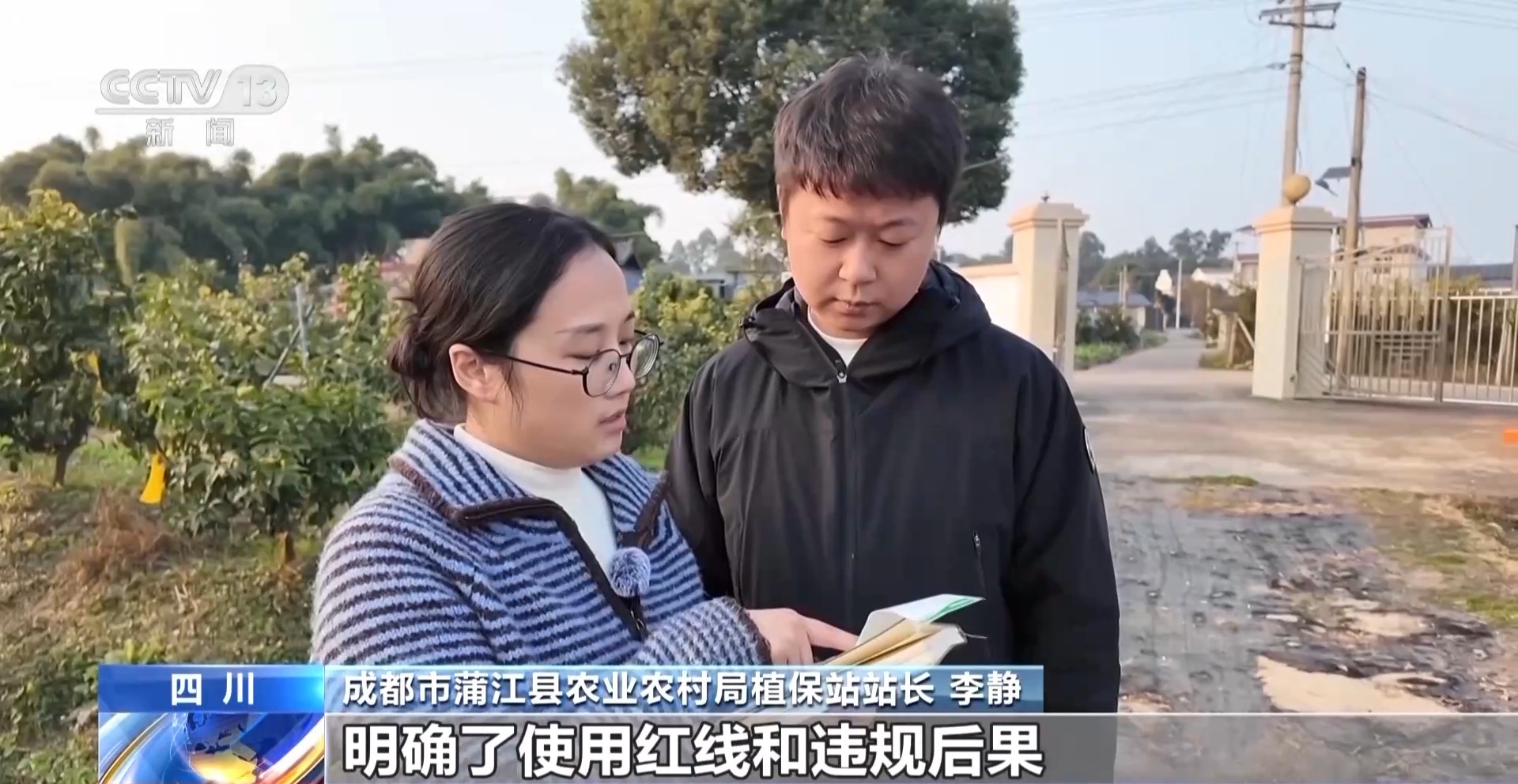
Core Viewpoint - The article highlights the emergence of "carbon footprint" as a new standard for green agricultural products, emphasizing its importance in the market and the competitive advantage it provides to products like citrus from Pujin County, Sichuan, which are now able to command prices 10% to 30% higher than similar products due to their carbon labeling [1][2]. Group 1: Carbon Footprint and Certification - The carbon footprint of Pujin citrus is calculated at 0.2956 kg of CO2 equivalent per fruit, which is nearly half of that of ordinary citrus, showcasing the environmental benefits of the carbon label [2][7]. - Pujin County has successfully obtained carbon label certification for its citrus products, allowing for a transition from quantity-based sales to quality-based branding, enhancing the marketability of these products [7][13]. Group 2: Agricultural Practices and Innovations - The county has implemented a "two replacements" project, leading to a citrus planting area of 450,000 mu (approximately 30,000 hectares) and an expected total output of 1.1 million tons with a direct output value of 7.2 billion yuan, contributing to a total industry chain value of 10 billion yuan [2][13]. - Strict regulations are in place regarding the use of fertilizers and pesticides, with a negative list prohibiting harmful substances and ensuring compliance through a certification system [3][5]. Group 3: Market Expansion and International Trade - The carbon label has become a universal code for agricultural products in international trade, enabling Pujin citrus varieties like the Iyo jelly orange and Yaba gan to enter markets in Europe, North America, and Southeast Asia [8][9]. - The packaging and storage processes for Pujin citrus have been upgraded to meet green and low-carbon standards, significantly reducing the carbon footprint during distribution [11][14]. Group 4: Future Developments in Carbon Footprint Measurement - China is developing the first carbon footprint factor benchmark database for agricultural products, which will include 50 core products by 2027 and aim for comprehensive coverage by 2035 [16][18]. - The database will facilitate precise measurement of greenhouse gas emissions from various agricultural practices, aiding in the transition to low-carbon agriculture [14][16].

“十五五”开好局起好步丨奋发进取 绘就乡村振兴新图景
Yang Shi Xin Wen Ke Hu Duan· 2026-01-11 01:45
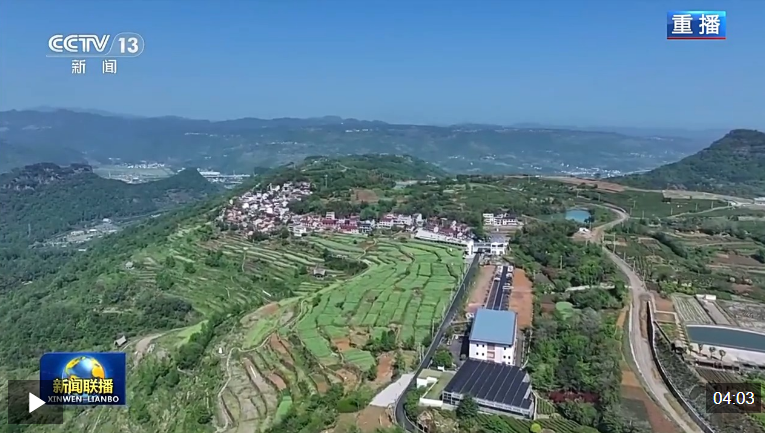
Core Viewpoint - The article emphasizes the importance of rural revitalization in China, highlighting the development of industries that enrich farmers as a key focus for achieving modernization [1][8]. Group 1: Agricultural Development - In Hubei's Jiyu County, the annual output value of vegetable planting has surpassed 6.5 billion yuan, with plans to promote high-yield, resilient cabbage varieties in collaboration with the Chinese Academy of Agricultural Sciences [3]. - The local farmer, Ye Xiangsong, reported an annual income of over 200,000 yuan from cabbage farming, indicating a positive trend in rural income generation [4]. - The agricultural bureau in Hubei plans to enhance vegetable product quality and extend the industrial chain to increase farmers' income [6]. Group 2: Modern Agricultural Practices - In Chongqing's Wanzhou National Modern Agricultural Industrial Park, the citrus harvest spans 100,000 acres, with a target to exceed 10 billion yuan in total output value through green processing and ecological branding [11]. - The total output value of modern agricultural industrial parks in China has exceeded 3 trillion yuan, showcasing significant growth in the sector [13]. Group 3: Tourism and Employment - In Xinjiang's Xuedu Village, the introduction of new tourism products has attracted more visitors, with over half of the village's 700 residents now engaged in the tourism industry [15]. - In Heilongjiang's Beiji Village, over 300 unique hotels and guesthouses have been established, with the area receiving over 700,000 tourists since winter began [18]. Group 4: Talent Development - Yunnan plans to train over 500,000 individuals in various skills to support rural revitalization, while Zhejiang has introduced a local standard for modern "new farmers" to meet the talent needs in rural development [20][22].
“十五五”开好局 起好步丨小果子撬动大产业 万亩沃柑迎丰收
Xin Lang Cai Jing· 2026-01-10 11:13
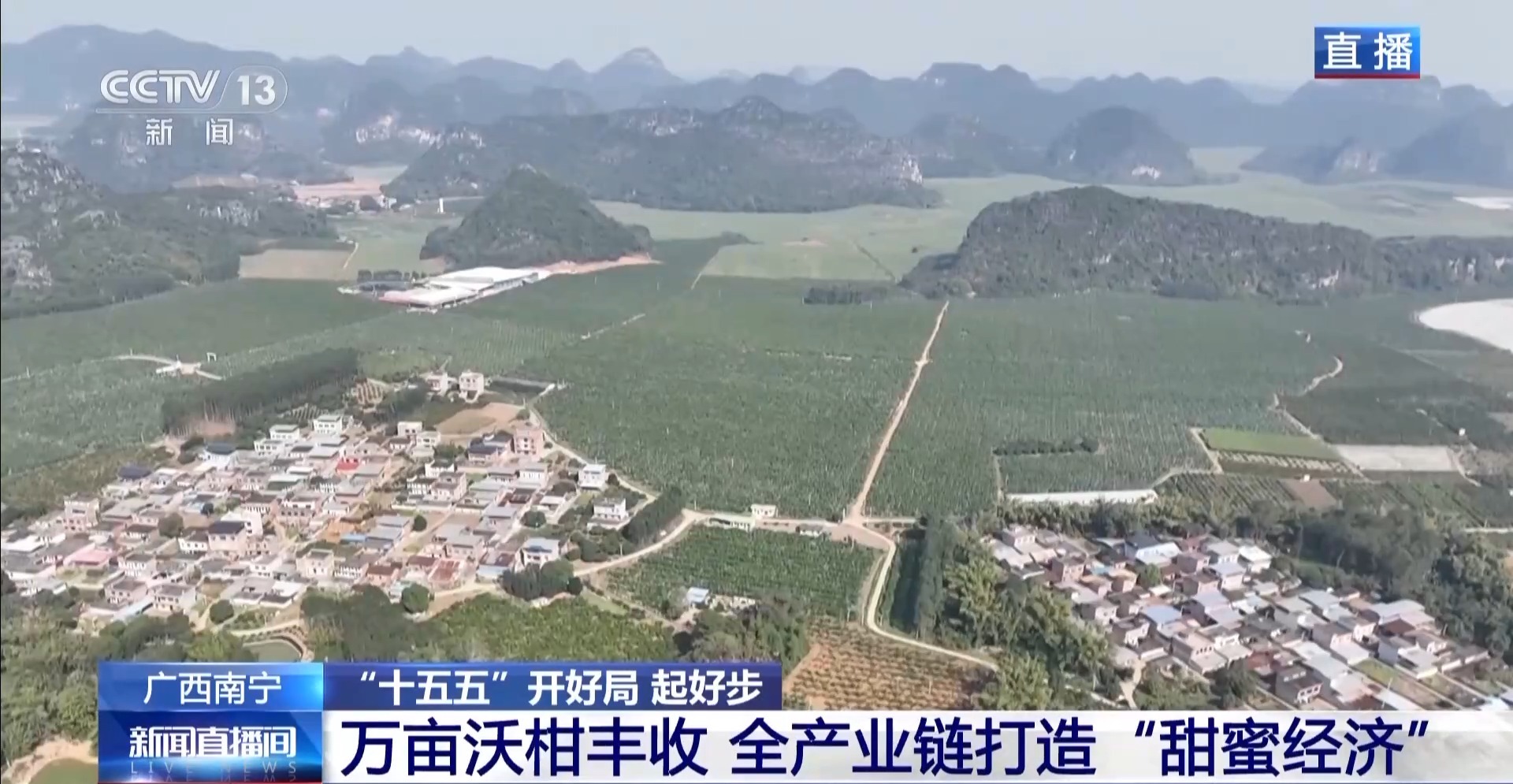
Core Insights - The article highlights the successful harvest season of Wokan oranges in Wuming District, Nanning, Guangxi, which accounts for approximately one-fifth of the national production [1][3]. Group 1: Production and Management - The planting area for Wokan oranges in Wuming District exceeds 460,000 acres, with an expected total yield of 1.56 million tons this year [3]. - Scientific management practices are implemented, including strict control of tree spacing and manual thinning, allowing each tree to retain only 400-500 fruits for better nutrient concentration and quality [5]. Group 2: Harvesting and Sorting Technology - Wokan oranges are treated with a "sunscreen" made of lime powder to protect the fruit from sunburn and reduce the risk of bacterial invasion [7]. - After harvesting, the oranges undergo a cleaning process followed by a thorough inspection using automated sorting machines that assess size, color, and surface defects, significantly enhancing sorting efficiency [9][11]. Group 3: Market Expansion and Product Diversification - The local industry is expanding by processing Wokan oranges into juice, essential oils, and desserts, as well as innovative products like Wokan coffee and themed dishes [13]. - For the 2024/2025 sales season, Wuming's Wokan oranges are expected to be exported to over 20 countries and regions, with an export volume exceeding 200,000 tons, generating over 1.5 billion yuan in foreign exchange [13].
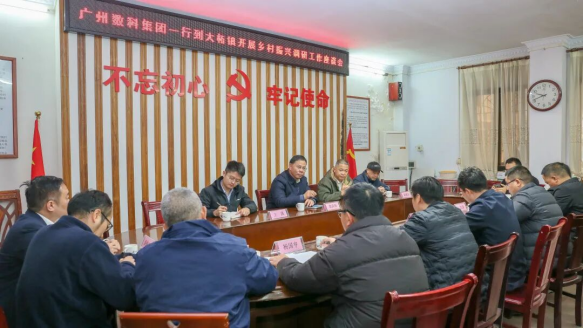
广州数科集团赴平远县大柘镇调研驻镇帮镇扶村工作
Nan Fang Nong Cun Bao· 2026-01-10 06:53
Group 1 - The core focus of the news is the implementation of rural revitalization initiatives through the "Hundred Million Thousand Project" and the support for towns and villages by Guangzhou Digital Technology Group [1] - The research team conducted a meeting at the Dazhe Town government to discuss the progress of the rural support work, highlighting the importance of local government support and the work team's achievements [3] - The work team is encouraged to develop replicable and promotable industrial support models, enhance the connection between farmers and the market, and shift from short-term assistance to long-term win-win strategies [3] Group 2 - The research team visited the blueberry planting base in Tianxing Village to assess the scale of cultivation and discuss industry planning and yield with the base manager [5] - The team emphasized the importance of standardized and large-scale planting to improve the quality and brand value of blueberries, aiming to make them a key product for rural revitalization and farmer income increase [5] - During the visit, the team also provided support and encouragement to the members of the rural support work team [6]
诺普信:在海南布局了红心火龙果和燕窝果
Ge Long Hui· 2026-01-09 01:23
格隆汇1月9日丨诺普信(002215.SZ)在投资者互动平台表示,公司在海南布局了红心火龙果和燕窝果, 由独立子公司来运营。 ...

诺普信(002215.SZ):在海南布局了红心火龙果和燕窝果
Ge Long Hui· 2026-01-09 01:22
格隆汇1月9日丨诺普信(002215.SZ)在投资者互动平台表示,公司在海南布局了红心火龙果和燕窝果, 由独立子公司来运营。 ...
重庆垫江:柑橘迎丰收
Xin Lang Cai Jing· 2026-01-08 19:02
近日,重庆市垫江县包家镇万亩柑橘迎来丰收。近年来,包家镇重点发展柑橘产业,引进优良品种,建 成电商直播孵化基地和仓储冷链物流中心,配备智能洗选设备,并借助新媒体平台,推广柑橘产品远销 全国。新华社记者 唐奕 摄 (来源:工人日报) 1月6日,种植户在柑橘园通过网络直播推介柑橘。 ...
武鸣沃柑开市揽金近亿元,百亿产业书写乡村振兴甜蜜答卷
Nan Fang Nong Cun Bao· 2026-01-08 13:34
Core Viewpoint - The Wuming Wokan citrus industry has achieved significant growth, generating nearly 900 million yuan in sales during its opening season, marking a successful start for the new sales period and contributing to rural revitalization efforts [4][8]. Group 1: Sales and Market Expansion - On January 8, the Wuming Wokan sales season for 2025/2026 officially commenced, with three trucks loaded with Wokan heading to international markets such as Russia, Canada, and India [3][4]. - The total procurement agreements signed at the event amounted to nearly 90 million yuan, indicating strong demand for the "golden fruit" of the Tropic of Cancer [4][6]. - The Wuming Wokan brand has a market value of 8.717 billion yuan and has been recognized as one of China's top regional brands for four consecutive years [18]. Group 2: Technological Advancements - The Wuming Wokan industry has transitioned from traditional agriculture to modern practices, incorporating smart planting, brand marketing, and cross-border trade into a billion-yuan industry chain [8][12]. - The use of technology has led to a 15% increase in yield and over a 20% improvement in fruit quality, showcasing the benefits of data-driven agricultural practices [12][13]. - The establishment of a high-standard citrus seedling breeding center ensures the supply of over 1 million quality seedlings annually, enhancing product quality from the source [17]. Group 3: Export Growth - In the 2024/2025 sales season, Wuming Wokan's export volume is expected to exceed 200,000 tons, generating over 1.5 billion yuan in foreign exchange, with products reaching over 20 countries and regions [22][24]. - Efficient customs processes, including "5+2" appointment inspections and "cloud issuance," facilitate rapid clearance for Wokan exports, ensuring optimal product condition upon arrival in international markets [26][28]. Group 4: E-commerce and Marketing - The integration of e-commerce has transformed local sales, with Wuming Wokan's online sales expected to surpass 600 million yuan in 2025, reflecting a growth of over 30% [40]. - Local training programs have developed a "village broadcasting alliance," connecting producers directly with consumers through live streaming and online sales platforms [39][41]. Group 5: Diversification and Cultural Integration - The Wuming Wokan industry is expanding beyond fresh fruit to include processed products such as juice and essential oils, with an expected processing capacity of 300,000 tons and a value exceeding 2 billion yuan by 2026 [49]. - The establishment of cultural and tourism experiences related to Wokan, such as themed photography exhibitions and local cuisine, enhances the overall value chain and promotes rural tourism [45][50]. Group 6: Overall Impact - Over the past decade, the Wuming Wokan industry has grown from 800 acres of trial planting to 460,000 acres, evolving from a local specialty to a globally recognized product [54][56].

普兰店区:大棚樱桃花满枝 科技种出“早春果”
Zhong Guo Xin Wen Wang· 2026-01-08 05:03
Core Viewpoint - The article highlights the transformation of cherry farming in Dalian's Pulandian District through the adoption of smart agricultural technologies, enabling farmers to achieve stable growing conditions and increase production efficiency [1][2]. Group 1: Smart Agriculture Implementation - Farmers in the Siping Street of Pulandian District are utilizing smart devices for temperature and humidity control, allowing cherry blossoms to thrive even in winter conditions [1]. - The indoor temperature of the greenhouses is maintained at around 24°C, creating an optimal environment for cherry flowering despite outdoor temperatures dropping below zero [1]. Group 2: Production and Economic Impact - The area has over 3,750 cherry greenhouses, producing approximately 9 million pounds of cherries annually, with a total output value of around 500 million yuan [1]. - The introduction of smart farming techniques has transformed the agricultural landscape, allowing for year-round productivity and filling the market gap for fresh fruits in early spring [1]. Group 3: Future Development Plans - The Pulandian District plans to further promote smart agricultural systems, engage experts for training, and develop integrated online and offline sales channels to enhance the marketing of agricultural products [2]. - The focus is on achieving high-quality development through technology-driven agriculture and improving the livelihoods of farmers [2].