现代农业

Search documents
院士专家“智”援广西 共促现代农业高质量发展
Zhong Guo Xin Wen Wang· 2025-10-30 08:54
Core Insights - The article highlights the collaboration between academicians and experts to promote high-quality development in modern agriculture in Guangxi, showcasing various technological advancements and their impact on agricultural efficiency and productivity [1][2][5]. Group 1: Technological Advancements - The introduction of centimeter-level precision agricultural machinery in sugarcane farms and AI systems in rice farms has significantly reduced costs, with an average cost reduction of 250 RMB per mu [1][2]. - The establishment of two major scientific innovation platforms and five national research projects aims to transform advanced technologies, such as the full genome map of sugarcane and digital breeding of pigs, into practical applications for enhancing agricultural quality and efficiency [2][3]. Group 2: Economic Impact - By 2024, the primary industry value in Guangxi is projected to exceed 475 billion RMB, with per capita income for farmers nearing 20,000 RMB and record-high grain yields [3]. - The collaboration has led to the signing of seven cooperative projects in key areas like fruits, vegetables, and agricultural machinery, with a targeted research investment of 258 million RMB [2]. Group 3: Regional Cooperation and Development - The partnership with academicians has enhanced Guangxi's agricultural openness, with smart sugarcane farms serving as a model for intelligent processes in the sugar industry, and technology being shared with Vietnam through cooperative projects [5]. - Upcoming events, such as the "Wisdom Gathering in Eight桂: High-Quality Development of Characteristic Agriculture" from November 4-8, will further engage academicians and experts in advancing smart agriculture in Guangxi [6].

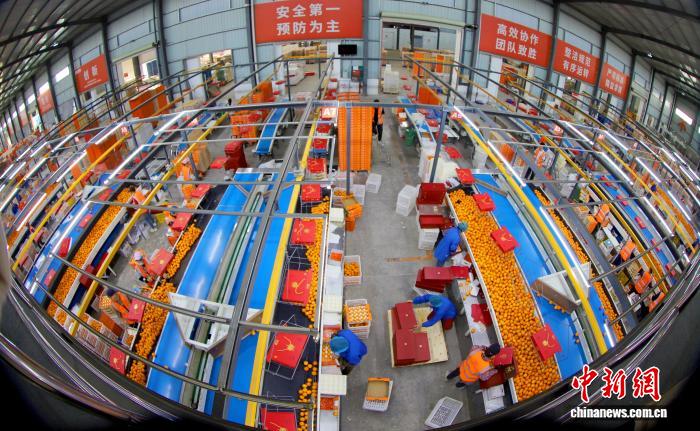
新质生产力驱动产业变革 价值创造路径渐明
Zhong Guo Zheng Quan Bao· 2025-10-29 21:09
Core Insights - The concept of "new quality productivity" is emerging as a core engine driving industrial transformation and value creation in the context of high-quality development [1] - The forum highlighted the importance of technological innovation, industrial upgrading, and international competition among various sectors, including lithium battery materials, pharmaceuticals, semiconductor equipment, medical devices, and modern agriculture [1] Group 1: Technological Innovation and Systemic Capability - Rapid technological iteration is reshaping industry landscapes, with product iteration cycles in lithium battery materials reduced to 1.5 to 2 years [2] - Effective innovation requires a systematic approach that integrates research, production, supply, and sales, transforming sporadic technological successes into sustainable organizational capabilities [2] - The semiconductor equipment sector exemplifies collaborative innovation, where breakthroughs result from the synergy of equipment, processes, and materials [2] Group 2: Focus on R&D Investment and Long-term Value - Balancing high R&D investment with short-term profit pressures is a significant challenge for companies, particularly in high-end medical devices [3] - Companies must maintain industry leadership through continuous technological investment, as demonstrated by advancements in agricultural practices that significantly increase productivity [3] - A phased and focused R&D strategy can help manage risks associated with innovation, ensuring resources are directed toward the most commercially viable areas [3] Group 3: New Growth Drivers in Transformation - Companies are transitioning from technology followers to innovators and leaders, focusing on material system innovation and resource integration to explore growth opportunities [4] - The sustainability of strategic execution and organizational culture transformation is crucial for achieving steady growth under dual-driven strategies [4] Group 4: Impact on Industry Value Distribution - The shift towards "new quality productivity" has profound implications for value distribution across the industrial chain, necessitating continuous elevation within the value chain to remain competitive globally [5] - Companies in the semiconductor industry must evolve from being mere equipment suppliers to becoming process solution partners, emphasizing deep technical expertise and platform capabilities [5]



19500万元资金支持!广东省级现代农业产业“补改投”试点项目名单公示
Nan Fang Nong Cun Bao· 2025-10-28 03:05
Core Points - The Guangdong Provincial Department of Agriculture and Rural Affairs has announced the proposed list of pilot projects for the "Compensation, Modification, and Investment" initiative in modern agriculture for 2024-2025, with a public notice period from October 24 to October 30, 2025 [2][10] - A total of 8 pilot projects have been proposed, covering 7 cities in the province, with a total financial support of 19,500 million yuan from the provincial government [3][4] Summary by Category - **Project Overview** - The pilot projects aim to enhance the modern agricultural industry in Guangdong Province through financial support and development initiatives [2][10] - The public notice allows for feedback and objections from the public during the specified period [10] - **Financial Support** - The total provincial financial support for the pilot projects amounts to 19,500 million yuan [4] - **Project Details** - The specific projects and their respective funding are as follows: 1. Shaoguan City: 2024 Edible Fungus Development Project - 3,000 million yuan [7] 2. Huizhou City: 2024 Poultry Egg and Chicken Deep Processing Project - 3,000 million yuan [7] 3. Jiangmen City: 2025 Hakka Food Processing Project - 3,000 million yuan [7] 4. Maoming City: 2024 Livestock Processing Base Project - 3,000 million yuan [7] 5. Zhaoqing City: 2024 Waterfowl Industry Chain Project - 2,000 million yuan [7] 6. Zhaoqing City: 2024 Waterfowl Slaughterhouse Project - 1,000 million yuan [7] 7. Qingyuan City: 2024 Qingyuan Chicken Processing Project - 1,500 million yuan [7] 8. Yunfu City: 2024 Aquatic Products Processing Project - 3,000 million yuan [7]

第六届海峡两岸(陕西)经贸科技合作大会在西安开幕
Shan Xi Ri Bao· 2025-10-27 23:18
10月27日,第六届海峡两岸(陕西)经贸科技合作大会在西安开幕。 许舒博表示,陕台在经贸、旅游、文化、科技等产业保持着长期而广泛的合作,逐渐在农业、旅 游、新能源、跨境电商及贸易物流等领域形成特色交流。我们愿意继续扮演两岸企业对接的平台与桥 梁,推动台湾企业与陕西本地优势产业开展交流合作。 李政宏说,台商台企是大陆经济腾飞的见证者,更是两岸经济高度融合发展的践行者与受益者,陕 台两地的经贸合作与密切交流,不仅渊源深、层面广,更早已跨越时间与空间,成为体现两岸融合发展 的缩影。 本届海峡两岸(陕西)经贸科技合作大会聚焦我省重点产业链举办开幕式暨陕台经贸合作推介会、 两岸半导体产业科技创新研讨会、汽车产业生态大会、台湾青年创新创业交流会等11场活动。(记者: 郑斐) 赵刚在致辞中说,和平发展、交流合作是两岸同胞的共同心声和热切期盼。陕台两地虽然相隔千 里,但互补优势明显、合作基础深厚,双方在半导体、现代农业、装备制造等领域合作日益深化,结出 累累硕果。本届大会以"加快开放平台建设,促进陕台融合发展"为主题,必将为陕台两地深化经贸科技 合作带来新机遇、注入新动能。当前,陕西正深入学习贯彻习近平总书记历次来陕考察重要 ...
“乡村振兴 闽宁模式——现代农文旅融合发展创新基地”在银川启动
Zhong Guo Jing Ji Wang· 2025-10-27 14:58
Core Insights - The launch of the "Rural Revitalization Min-Ning Model - Modern Agricultural and Cultural Tourism Integration Development Innovation Base" and the "China-Arab Modern Agriculture and Cultural Tourism Industry Innovation Center" signifies a strategic initiative to enhance rural development and promote agricultural modernization in Ningxia [1][2] Group 1: Project Overview - The "Rural Revitalization Min-Ning Model" covers approximately 700 acres, focusing on the construction of "rural industrial greenhouses" and "soil industrial greenhouses," aimed at upgrading rural industries and integrating agriculture with cultural tourism [1] - The "China-Arab Modern Agriculture and Cultural Tourism Industry Innovation Center" spans about 15,000 acres, emphasizing the establishment of "super industrial greenhouses" for large-scale production of forage, fruits, vegetables, and flowers [1] Group 2: Economic Impact - The projects are expected to inject sustainable industrial momentum into Min-Ning Town, enhancing employment and income generation, which is crucial for high-quality development [2] - The initiatives will also facilitate the integration of modern agriculture, manufacturing, and cultural tourism, promoting the development of a collaborative industrial community along the Belt and Road with Arab regions [1][2]
共建边疆高质量发展新格局研讨大会召开 塔城高质量产业投资基金正式发布
Zheng Quan Ri Bao Wang· 2025-10-26 11:17
Core Insights - The conference themed "Financial Empowerment of Industries, Innovation Leading the Future" was held in Beijing, focusing on high-quality development in the Xinjiang region [1] - The event aimed to create a high-end platform for policy alignment, capital aggregation, central-local cooperation, and communication among financial institutions, injecting strong financial and innovative vitality into Xinjiang's development [1] Group 1: Financial and Investment Opportunities - The conference emphasized the importance of precise alignment between financial resources and the unique industries in border regions to activate regional economic potential [1] - Key discussions included directing capital into local advantageous industries such as mining development, renewable energy, synthetic biology, modern agriculture, and cross-border trade to build a modern industrial system [1] - The launch of the Tachen High-Quality Industrial Investment Fund was a significant highlight, aimed at mobilizing social capital for border area development through a market-oriented and professional operational model [1] Group 2: Regional Development and Collaboration - Local leaders presented a comprehensive overview of central support policies, unique local resources, and the development of a "5+2" modern industrial system, which includes mineral resources and textile industries [2] - Representative local enterprises showcased their projects, demonstrating significant market potential and collaboration opportunities, leading to multiple preliminary cooperation intentions with investment institutions [2] - The successful hosting of the conference opened a window for various stakeholders to understand development opportunities in Tachen, fostering a long-term cooperative ecosystem characterized by industry-finance complementarity and resource sharing [2]
2025上海合作组织现代农业发展圆桌会议召开
Shan Xi Ri Bao· 2025-10-26 05:26
Core Points - The 2025 Shanghai Cooperation Organization (SCO) Modern Agriculture Development Roundtable Conference was held in Yangling Demonstration Zone, emphasizing the importance of agricultural and food security cooperation among member states [1][2] - The conference highlighted the role of agricultural technology exchange and training demonstration bases within the SCO framework to enhance agricultural modernization and sustainability [1][2] Group 1 - The Tianjin Declaration from the SCO member states' summit in September 2023 emphasized strengthening agricultural cooperation and food security as a key focus [1] - The conference aimed to promote sustainable agricultural development models and enhance agricultural quality, efficiency, and competitiveness through technological innovation and collaboration [1] - The Chinese government is committed to advancing agricultural technology innovation and green development to support high-quality agricultural growth in the SCO region [1][2] Group 2 - The July 2023 joint statement from the 10th SCO Agricultural Ministers' Meeting called for enhanced cooperation in agricultural trade and technology, focusing on mechanization, digitalization, and eco-friendly technologies [2] - Representatives from several SCO member countries, including Belarus, Iran, Pakistan, Russia, Tajikistan, and Uzbekistan, participated in discussions, indicating a collaborative approach to sustainable agriculture [2] - The conference included the unveiling of the SCO Agricultural Base Training Academy and the release of a list of agricultural base construction achievements for 2024-2025 [2]
第三届东北亚金融大会开幕
Liao Ning Ri Bao· 2025-10-24 01:01
Core Insights - The Third Northeast Asia Financial Conference opened on October 23, focusing on new opportunities for industrial and financial cooperation in the Northeast Asia region to support high-quality regional economic development [1] - The conference theme was "Strengthening Openness and Achieving Win-Win Cooperation," featuring keynote speeches, parallel sessions, and site visits [1] - Discussions included topics such as collaborative development of industry and finance in Northeast Asia, investment attraction in development zones, modern agricultural technology innovation, capital empowerment for innovation enterprises in Shenyang, and a "incubation plan" for listed companies in Northeast China [1] Industry Developments - Shenyang city promoted the financial sector's role in supporting high-quality industrial development and released a development outlook for the Shenyang Financial and Trade Economic Technology Development Zone [1] - The results of the "Financial Prosperity in Liaoning" excellent case collection activity for 2025 and the core area index for the 2025 China (Northeast) Regional Financial Center were also announced [1] - On October 24, participants will visit key industrial parks and enterprises in Shenyang to gain insights into financing needs [1]
山东省发展改革委发布民营经济高质量发展典型案例之济南:强化企业科创主体地位 激发民营经济创新动能
Zhong Guo Fa Zhan Wang· 2025-10-22 15:00
Core Insights - Jinan City has focused on key aspects of the innovation chain, enhancing the role of enterprises as innovation subjects, and has been recognized as a "National Technology Achievement Transfer and Transformation Demonstration Zone" and a pilot city for "Science and Technology Innovation China" [1] Group 1: Strengthening Technological Innovation - The city aims to enhance the sensitivity of enterprises to technological revolutions and industrial changes, guiding them to focus on R&D tasks [2] - A total of 115 incubation platforms have been established, including 15 national-level technology business incubators, with 9,165 technology-based SMEs currently in the city [3] - In 2024, the city plans to secure provincial financial support of 15.135 million yuan for "small to high" initiatives and 24.918 million yuan for enterprise R&D [3] Group 2: Addressing Enterprise Needs - The city has created a demand list for key technology issues, successfully addressing 78 out of 91 technology innovation demands in 2024 [4] - Collaboration among industry, academia, and research institutions has led to the successful implementation of 8 provincial major technology demonstration projects and 75 major technology innovation projects [5] Group 3: Supporting Enterprises as Key Players - The city encourages leading technology enterprises to establish high-level R&D institutions, resulting in 20 national key laboratories and 126 provincial key laboratories [7] - A total of 894 industry innovation platforms have been cultivated, with 6,412 technology innovation projects implemented in Shandong Province [8] - The city has initiated pilot projects for technology brokers, leading to the establishment of 10 broker teams and 20 industrialization projects [9] Group 4: Enhancing the Innovation Ecosystem - Jinan City is promoting the integration of technology, finance, and industry, with a focus on technology transfer, enterprise financing, and industrial promotion [10] - The city has organized 9 technology transfer events, resulting in 106 signed technology transfer projects and 69 roadshow projects [11] - In 2024, the total value of technology contracts reached 926.08 billion yuan, maintaining the highest total in the province for six consecutive years [11] Group 5: Promoting Industrial Transformation - The city has developed three major industries: new generation information technology (650 billion yuan), intelligent manufacturing and high-end equipment (500 billion yuan), and biomedicine (170 billion yuan) [13] - High-tech industries account for over 59% of the total industrial output value, indicating a dual enhancement of enterprise innovation and industrial development quality [13]
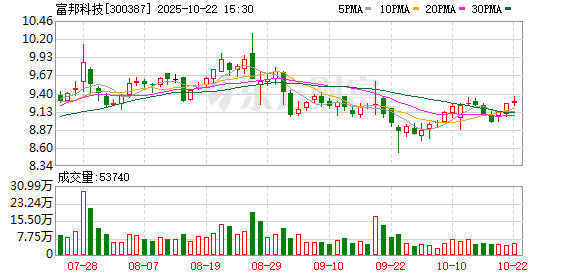
富邦科技:公司成功构建了“菌种选育”到“制剂产品”的全产业链闭环
Zheng Quan Ri Bao· 2025-10-22 07:43
Group 1 - The core viewpoint of the article highlights Fubon Technology's commitment to modern agriculture, leveraging its platforms to create a comprehensive industry chain from "strain breeding" to "formulation products" [2] Group 2 - Fubon Technology emphasizes collaboration between its two platforms, Fubon Xiangyu and Kangxin Biology, to enhance research and development, marketing, and resource utilization [2] - The company has successfully established a closed-loop system in the agricultural sector, indicating a strong focus on innovation and market integration [2]