电力

Search documents
市场分析:有色电力行业领涨,A股震荡上行
Zhongyuan Securities· 2026-03-24 11:25
Investment Rating - The industry is rated as "outperforming the market," indicating an expected increase of over 10% in the industry index relative to the CSI 300 index over the next six months [14]. Core Insights - The A-share market experienced a rebound after an initial decline, with significant support at 3807 points for the Shanghai Composite Index, which closed at 3881.28 points, up 1.78% [3][7]. - Key sectors showing strong performance include non-ferrous metals, communication equipment, electricity, and power grid equipment, while sectors like rare earths, insurance, oil and petrochemicals, and coal showed weaker performance [3][7]. - The average price-to-earnings ratios for the Shanghai Composite and ChiNext indices are 15.79 times and 45.41 times, respectively, indicating a favorable environment for medium to long-term investments [3][13]. - The total trading volume for both markets was 20,962 billion, above the median of the past three years, suggesting robust market activity [3][13]. Summary by Sections A-share Market Overview - On March 24, the A-share market showed a pattern of initial decline followed by recovery, with the Shanghai Composite Index gaining support around 3807 points and ultimately closing at 3881.28 points [7]. - The trading day saw over 90% of stocks rising, with notable gains in sectors such as ground equipment, electricity, trade, environmental protection, and medical services [7]. Future Market Outlook and Investment Recommendations - The market is expected to maintain a volatile consolidation phase, with a focus on macroeconomic data, overseas liquidity changes, and policy developments [3][13]. - Short-term investment opportunities are recommended in sectors such as non-ferrous metals, electricity, communication equipment, and power grid equipment [3][13].

中国电力(02380):清洁能源板块表现偏弱,火电改善缓解业绩压力
Changjiang Securities· 2026-03-24 11:10
Investment Rating - The investment rating for the company is "Buy" and is maintained [8]. Core Views - The clean energy sector is underperforming, while thermal power improvements alleviate performance pressure. In 2025, the hydropower segment's net profit decreased by 41.65% to 300 million yuan due to increased tax expenses from asset restructuring. Although the new energy segment saw rapid growth in electricity generation, profits from wind and solar power fell by 7.50% and 43.32%, respectively. The thermal power segment, however, showed a significant improvement with a net profit of 2.269 billion yuan, up 45.76% year-on-year. Overall, the company's profit attributable to ordinary shareholders decreased by 13.50% year-on-year [5][9]. Summary by Relevant Sections Financial Performance - In 2025, the company achieved revenue of 49.029 billion yuan, a decrease of 9.56% year-on-year. The profit attributable to equity holders was 3.404 billion yuan, down 11.85%. After excluding perpetual bond impacts, the profit attributable to ordinary shareholders was 2.910 billion yuan, a decline of 13.50% [5][9]. Hydropower Segment - The hydropower segment's electricity sales volume was 18.282 billion kWh, a decrease of 1.02% year-on-year. The average on-grid electricity price for hydropower was 261.16 yuan/MWh, a slight increase of 0.94 yuan/MWh. The segment's revenue fell by 0.66% year-on-year, and operating profit decreased by 3.88% to 1.425 billion yuan. Due to increased tax expenses from asset restructuring, the net profit for the hydropower segment was 300 million yuan, down 41.65% [5][9]. New Energy Segment - The new energy segment benefited from the commissioning of new projects and acquisitions, with wind and solar electricity sales volumes increasing by 17.38% and 12.62%, respectively. However, the average on-grid electricity prices for wind and solar power fell by 36.59 yuan/MWh and 33.70 yuan/MWh, respectively. The net profits for wind and solar power were 2.944 billion yuan and 975 million yuan, down 7.50% and 43.32% year-on-year [5][9]. Thermal Power Segment - The thermal power segment's electricity sales volume decreased by 14.97% year-on-year. The coal-fired electricity price was 368.57 yuan/MWh, down 23.88 yuan/MWh. Despite lower sales volume and price, the unit fuel cost for coal-fired power dropped to 0.233 yuan/kWh, a decrease of 0.038 yuan/kWh. The net profit for the thermal power segment was 2.269 billion yuan, an increase of 45.76% year-on-year [5][9]. Dividend and Valuation - The company announced a final dividend of 0.168 yuan per share for 2025, with a payout ratio of 70%, resulting in a dividend yield of 5.79% based on the closing price on March 20. The estimated profits for 2026-2028 are projected to be 3.048 billion, 3.425 billion, and 3.842 billion yuan, with corresponding EPS of 0.25, 0.28, and 0.31 yuan, and PE ratios of 11.67, 10.38, and 9.26, respectively [5][9].

四家顶级游资聚焦韶能股份, 量化资金、游资集体抢筹汉缆股份
摩尔投研精选· 2026-03-24 10:13
Core Viewpoint - The article highlights the trading activities in the Shanghai and Shenzhen stock markets, focusing on the top traded stocks, sector performances, and significant capital flows, indicating potential investment opportunities and trends in the market [1][2][5]. Trading Activities - The total trading volume of the Shanghai and Shenzhen Stock Connect reached 289.29 billion, with Zijin Mining and CATL leading in trading volume for Shanghai and Shenzhen respectively [1][2]. - The top ten stocks by trading volume on the Shanghai Stock Connect included Zijin Mining (3.70 billion), WuXi AppTec (1.95 billion), and Baidu Storage (1.25 billion) [2][3]. - On the Shenzhen Stock Connect, CATL topped the list with 4.49 billion, followed by NewEase (3.96 billion) and Zhongji Xuchuang (3.47 billion) [2][4]. Sector Performance - The non-ferrous metals sector saw the highest net inflow of capital, amounting to 6.32 billion, with a net inflow rate of 4.32% [6][7]. - Other sectors with significant net inflows included communications (3.68 billion) and industrial metals (2.84 billion) [6]. - Conversely, the power equipment sector experienced the largest net outflow, totaling -3.77 billion, with a net outflow rate of -3.38% [7][8]. Individual Stock Capital Flows - Zijin Mining led individual stock net inflows with 1.40 billion, followed by Demingli (1.10 billion) and Hanlan Co. (0.95 billion) [9]. - The stocks with the highest net outflows included Yangmi Power (-1.36 billion) and Huagong Technology (-0.75 billion) [10][11]. ETF Trading - The top traded ETF was the Energy Chemical ETF (159981) with a trading volume of 13.85 billion, followed by the Gold ETF (518880) at 13.72 billion [13]. - The Brazilian ETF from E Fund (520870) saw a remarkable increase in trading volume, growing by 190% compared to the previous trading day [14]. Market Sentiment and Activity - The article notes that the green energy concept stocks continued to show strength, with the popular stock Shaoneng Co. achieving a five-day four-board streak, attracting significant capital from top-tier funds [1][18]. - Hanlan Co. also saw a strong performance, hitting the daily limit, with substantial purchases from leading funds [1][18].




2026年建筑春季投资策略:寻找科技产业链中高价值/高通胀/高壁垒环节的高弹性引领者
GUOTAI HAITONG SECURITIES· 2026-03-24 08:27
Investment Rating - The report provides a positive investment rating for the AI industry, indicating strong growth potential and opportunities for investment [12][28]. Core Insights - The AI industry is projected to grow significantly, with an expected market size of 1.2 trillion by 2030, reflecting a compound annual growth rate (CAGR) of 19% from 2026 [5][12]. - The report highlights the increasing demand for AI chips, servers, and related infrastructure, driven by advancements in AI applications across various sectors such as finance, telecommunications, and healthcare [6][20]. - The integration of AI technologies in industries like autonomous driving, smart logistics, and entertainment is expected to enhance operational efficiencies and create new revenue streams [6][20]. Summary by Sections Industry Overview - The AI industry is characterized by a robust supply chain, including upstream components like AI chips and servers, midstream infrastructure such as data centers, and downstream applications across multiple sectors [6][20]. - The report emphasizes the importance of IT infrastructure and cooling systems in supporting AI operations, which are critical for maintaining performance and efficiency [6]. Market Trends - The AI market is witnessing a shift towards more energy-efficient solutions, with a focus on reducing power consumption in AI operations, projected to decrease from 8 kW to 5 kW by 2026 [5][12]. - The report notes a significant increase in the adoption of AI technologies, with IDC services expected to grow by 149.1% by 2025, indicating a strong market demand [12]. Financial Projections - The report forecasts substantial revenue growth for key players in the AI sector, with some companies expected to achieve net profit margins exceeding 30% by 2025 [12][28]. - Specific companies within the AI industry are highlighted for their strong financial performance, with projected revenues reaching billions, showcasing the lucrative nature of the market [12][28].
霍尔木兹:达摩克里斯之剑的拷问
新财富· 2026-03-24 08:10
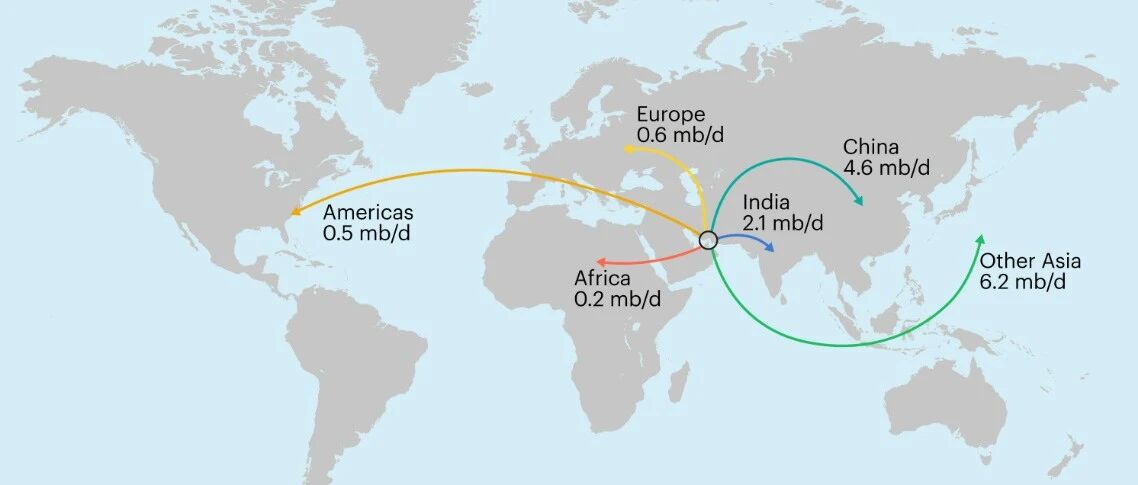
Core Viewpoint - The article discusses the increasing energy vulnerability of countries in the context of geopolitical conflicts and the need for a resilient energy system to withstand uncertainties [2]. Group 1: Energy Vulnerability Assessment - Energy vulnerability should be assessed through three dimensions: import dependency, source concentration, and transportation path reliance [3]. - Japan's energy self-sufficiency rate was only 12.6% in 2022, with fossil fuels making up 80.8% of its energy mix, leading to high external dependency [3]. - Germany's reliance on Russia for energy was significant before the Ukraine conflict, with 55% of its natural gas and 35% of its oil sourced from Russia [8]. - Transportation path reliance is critical, as exemplified by the Strait of Hormuz, which handles 20 million barrels of oil daily, accounting for about 25% of global maritime oil trade [10]. - Countries with high import dependency, source concentration, and transportation reliance, like Japan and South Korea, face severe supply uncertainties during conflicts [12]. - Mid-risk countries, such as China and India, have diversified sources but still face significant external dependencies [12]. - Low-risk countries, like the U.S. and Middle Eastern resource-rich nations, can ensure energy security and benefit from energy exports during crises [13]. - The essence of energy vulnerability lies in structural dependencies rather than isolated metrics [14]. Group 2: Changes in Energy Systems - Geopolitical turmoil leads to a phased adjustment in energy policies: short-term supply assurance, mid-term diversification, and long-term restructuring [16]. - In the short term, countries prioritize energy supply stability, as seen in Europe’s response to the Ukraine conflict, which included reviving coal power and extending nuclear power lifespans [17]. - Mid-term strategies focus on diversifying energy sources to reduce systemic risks, with the EU increasing LNG imports from 22% to over 40% between 2021 and 2023 [20]. - Long-term restructuring aims to redefine the roles of renewable energy and nuclear power, emphasizing controllability over low carbon emissions [22]. - The shift in energy policy reflects a move towards ensuring stable and controllable energy supplies in uncertain environments [22]. Group 3: Power Generation Types - The energy generation landscape is categorized into three types based on stability and controllability: high stability/high controllability (e.g., U.S. natural gas), medium stability/strong controllability (e.g., nuclear power), and low stability/strong controllability (e.g., wind and solar) [28]. - Countries with favorable geographic conditions, like Austria, rely heavily on hydropower, which offers high utilization hours and local resource dependence [30]. - Nuclear power is increasingly viewed as a universal solution for countries lacking resource endowments, with nations like France maintaining a nuclear share above 60% [31]. - Wind and solar power are seen as supplementary sources, with offshore wind in regions like the UK approaching stable baseload generation [35]. - The current energy landscape indicates a preference for stable energy sources like gas, coal, hydropower, and nuclear, while solar and wind are important complements [36].
Token→算力→数据中心→电力→储能全产业链解析
私募排排网· 2026-03-24 07:43
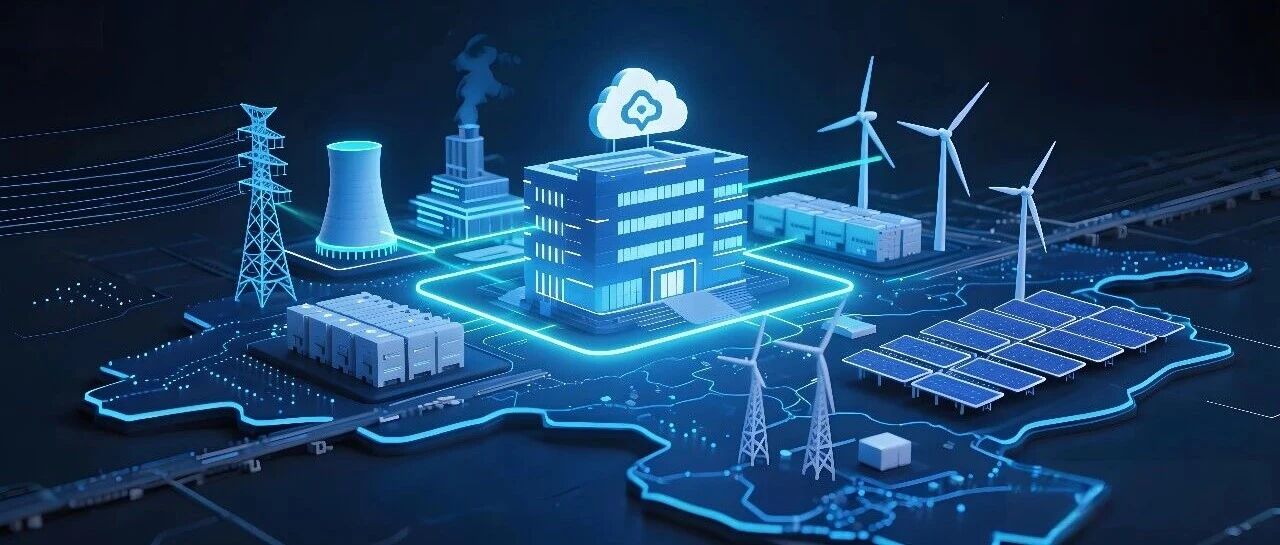
Core Viewpoint - The article emphasizes that in 2026, the global AI industry is undergoing a significant paradigm shift, with "Token Economics" becoming the central theme, as Token demand is reshaping the entire hard technology industry chain, driving new investment opportunities in the A-share market [2][3]. Token as the New Oil - Token is defined as the smallest semantic unit for processing text in large models, acting as the "basic particle" in the AI world, with every interaction generating and consuming Tokens [2]. - The daily average Token consumption in China is projected to surge from the trillion level in early 2024 to the hundred trillion level by early 2026, driven by the proliferation of AI dialogues and the evolution of AI applications [3][5]. AI Application Evolution - Early AI applications were primarily generative, leading to linear Token consumption. However, the emergence of AI Agents since the second half of 2025 has drastically changed this, with single tasks now consuming Tokens geometrically due to multiple model inferences [5]. - Over 60% of enterprises have integrated AI applications into their operations, indicating that Token consumption has shifted from experimental spending to a fixed cost [5]. Supply and Demand Dynamics - The sudden steep demand curve for Tokens has exposed rigidities on the supply side, leading major cloud providers to raise AI computing service prices significantly in March 2026, marking a fundamental shift in industry logic [8]. - The demand for computing power is rising sharply, necessitating a transformation of traditional data centers into AI Data Centers (AIDC) to support the increasing Token consumption [8]. Energy and Computing Synergy - The concept of "Computing and Electricity Synergy" has emerged, highlighting the deep integration of digital economy and energy transition, especially after being included in government work reports as a national strategy [10][14]. - The recent performance of the electricity-related sector has shown resilience, with equipment for power grids leading the charge due to the increasing demand for data center infrastructure [16]. Storage as the Power Bank of AI - Storage systems are becoming critical in the AI era, with their cost per kilowatt-hour serving as a benchmark for Token pricing [22]. - Storage is essential for ensuring continuous power supply to computing centers, smoothing out electricity price fluctuations, and enabling green electricity connections [23][24][25]. - The storage market is witnessing robust growth driven by AI computing demands, with a consensus forming around the idea that "Storage equals Token" [25]. A-share Related Companies - Companies involved in Token production, circulation, and application are highlighted, with significant year-to-date stock performance noted for several firms, such as Guanghui New Network and Keda Xunfei [9][12][26]. - The storage sector is also represented, with companies like Jinkai New Energy and Banmu Energy showing strong growth in their respective markets [26].
华润电力(00836):煤电提振业绩风光补贴核查短暂影响盈利:华润电力(00836):
Shenwan Hongyuan Securities· 2026-03-24 07:01
Investment Rating - The report maintains a "Buy" rating for China Resources Power (00836) [3][4] Core Insights - The company's performance in 2025 aligns with expectations, with a net profit attributable to shareholders of HKD 14.519 billion, reflecting a year-on-year increase of 0.9% [4] - The coal-fired power business is identified as the core driver of profit growth, with a significant reduction in coal costs contributing to a 64.7% increase in core business profit from this segment [4] - The renewable energy segment continues to expand, although profit was impacted by accounting adjustments related to subsidy audits [4] - The company is focusing on a multi-business strategy aimed at high-quality development and low-carbon transition, with plans for significant capital expenditure in clean energy [4] Financial Data and Profit Forecast - Revenue projections for the company are as follows: - 2024: HKD 105.284 billion - 2025: HKD 102.010 billion - 2026: HKD 116.184 billion - 2027: HKD 123.216 billion - 2028: HKD 126.235 billion - Net profit attributable to shareholders is forecasted to be: - 2026: HKD 13.024 billion - 2027: HKD 14.115 billion - 2028: HKD 14.975 billion - The report indicates a decrease in earnings per share (EPS) for 2026 to HKD 2.52, with a projected PE ratio of 7.4 for that year [2][5]

华润电力(00836):煤电提振业绩,风光补贴核查短暂影响盈利
Shenwan Hongyuan Securities· 2026-03-24 05:42
Investment Rating - The report maintains a "Buy" rating for China Resources Power (00836) [3][4] Core Insights - The company's performance in 2025 aligns with expectations, with a net profit attributable to shareholders of HKD 14.519 billion, reflecting a year-on-year increase of 0.9% [4] - The coal-fired power business is identified as the core driver of profit growth, with a significant reduction in average coal prices contributing to improved margins [4] - The renewable energy segment continues to expand, although profit was impacted by accounting adjustments related to subsidy audits [4] - The company is focusing on a multi-business strategy aimed at high-quality development and low-carbon transition, with plans for significant capital expenditure in clean energy [4] Financial Data and Profit Forecast - Revenue projections for the upcoming years are as follows: - 2024: HKD 105.284 billion - 2025: HKD 102.010 billion - 2026: HKD 116.184 billion - 2027: HKD 123.216 billion - 2028: HKD 126.235 billion - Net profit attributable to shareholders is forecasted as: - 2024: HKD 14.388 billion - 2025: HKD 14.519 billion - 2026: HKD 13.024 billion - 2027: HKD 14.115 billion - 2028: HKD 14.975 billion - The report indicates a decrease in earnings per share for 2026 to HKD 2.52, with a projected PE ratio of 7.4 for that year [2][5]
伊朗称美以袭击伊两处能源基础设施
证券时报· 2026-03-24 04:33
Group 1 - The article reports that on March 24, Iranian sources stated that the United States and Israel attacked two energy infrastructure sites in Iran, specifically in Isfahan and Khorramshahr [1] - The attack targeted a natural gas company building and a gas pressure reduction station in Isfahan, causing damage to some facilities and surrounding residential areas [1] - Additionally, a gas pipeline at the power plant in Khorramshahr was also targeted, but there were no reported casualties [1]

中期选举如何影响美国战争与外交行为:环球市场动态2026年3月24日
citic securities· 2026-03-24 03:35
Market Overview - Asian stock markets faced significant declines, with the A-share index dropping 3.63% to 3,813.28 points, and over 5,200 stocks falling[16] - The Hang Seng Index fell 3.54% to 24,382.47 points, marking an eight-month low, with the technology sector down 3.28%[12] - U.S. markets showed recovery, with the Dow Jones rising 1.38% to 42,567.12 points, and the S&P 500 up 1.15%[10] Oil and Commodity Markets - Oil prices plummeted, with NYMEX crude oil down 10.28% to $88.13 per barrel, and Brent crude down 10.92% to $99.94 per barrel[27] - Gold prices narrowed their losses, while silver rebounded amid easing market fears[27] - Asian oil prices rebounded over 3% in early trading following reports of U.S. and Israeli attacks on Iranian energy infrastructure[4] Fixed Income Market - U.S. Treasury yields fell by approximately 3-5 basis points, with the 10-year yield at 4.34%[30] - Asian bond markets showed weakness, with spreads widening by 3-10 basis points due to increased selling pressure[30] Political and Economic Factors - Trump's announcement of a five-day pause in attacks on Iranian energy infrastructure aimed to ease market tensions, although Iran denied any negotiations[27] - The upcoming U.S. midterm elections may significantly influence U.S. foreign policy and military actions, particularly regarding Iran[6] Sector Performance - In the A-share market, coal stocks surged due to rising oil prices, with Yunnan Coal Energy and Liaoning Energy hitting their daily limits[16] - The semiconductor and precious metals sectors faced significant declines, with stocks like Chifeng Jilong Gold and Sichuan Gold hitting their daily limits down[16]