储能

Search documents
工商储又变天?别误读 “取消行政分时电价”
行家说储能· 2025-12-19 14:45
Core Viewpoint - The article discusses the recent changes in China's electricity pricing policy, particularly the cancellation of time-of-use pricing in certain regions, and its implications for the energy storage industry. It emphasizes the need for energy storage companies to adapt to a more market-driven environment rather than relying on fixed price arbitrage models [3][4]. Summary by Sections Policy Changes - The National Development and Reform Commission and the Energy Administration have announced that regions should align peak and valley time-of-use pricing with market transaction prices, effectively removing government-mandated time-of-use pricing for market participants [2][3]. Implications for Energy Storage - The cancellation of fixed peak-valley price arbitrage will challenge traditional revenue models for energy storage companies. However, it opens up opportunities for diversified market revenue streams, including active load management and virtual power plant aggregation [4]. - The shift towards a dual-layer operational framework, combining long-term contracts with spot market adjustments, is seen as a significant development in the energy market [3][4]. Market Dynamics - The changes may favor electricity retail companies due to their existing qualifications, customer bases, and trading capabilities, allowing them to quickly capitalize on market opportunities. Energy storage companies are encouraged to either establish their own retail operations or partner with established retail firms to optimize cash flow and gain industry experience [4]. - The industry is expected to see higher entry standards and enhanced information disclosure and stress testing mechanisms, which will help eliminate inefficient players and promote platforms that excel in digital operations and load management [4]. Upcoming Events - The article mentions an upcoming annual conference on January 8, featuring over 30 leading companies in the energy storage sector, where discussions will focus on the implications of the recent electricity market reforms [5][7].

鹏辉能源:目前大储产品基本满产 主要产品排产预计到明年上半年
Xin Lang Cai Jing· 2025-12-19 14:36
Core Viewpoint - The company, Penghui Energy, is currently operating at full capacity for its large storage products, with production schedules for major products expected to continue into the first half of next year [1] Group 1: Production and Capacity - The second phase of the company's factory in Chuzhou has been largely completed, with plans to establish a new 587Ah battery production line next year [1] - The company’s small storage battery products include cylindrical, soft-pack, and square batteries, with capacities ranging from 20-150Ah [1] Group 2: Customer Base and Orders - Major customers for the company include Goodwe, Deye, Sunshine, and Airo [1] - There has been a significant increase in overseas large storage orders compared to previous years, with distribution primarily in North America, India, and Europe, each accounting for approximately one-third of the orders [1] Group 3: Growth Expectations - The company anticipates that domestic growth next year will be similar to this year, while overseas growth is expected to accelerate [1] - There will be an increasing number of user-side energy storage solutions overseas [1]

鹏辉能源:公司大储产品目前基本满产
Xin Lang Cai Jing· 2025-12-19 14:16
Group 1 - The core viewpoint of the article is that Penghui Energy's large storage products are currently operating at full capacity, with production schedules for major products extending into the first half of the next year [1] Group 2 - The company conducted an institutional survey on December 18, indicating strong demand and production capabilities [1] - The production capacity for major products is planned out until mid-next year, reflecting a robust operational outlook [1]
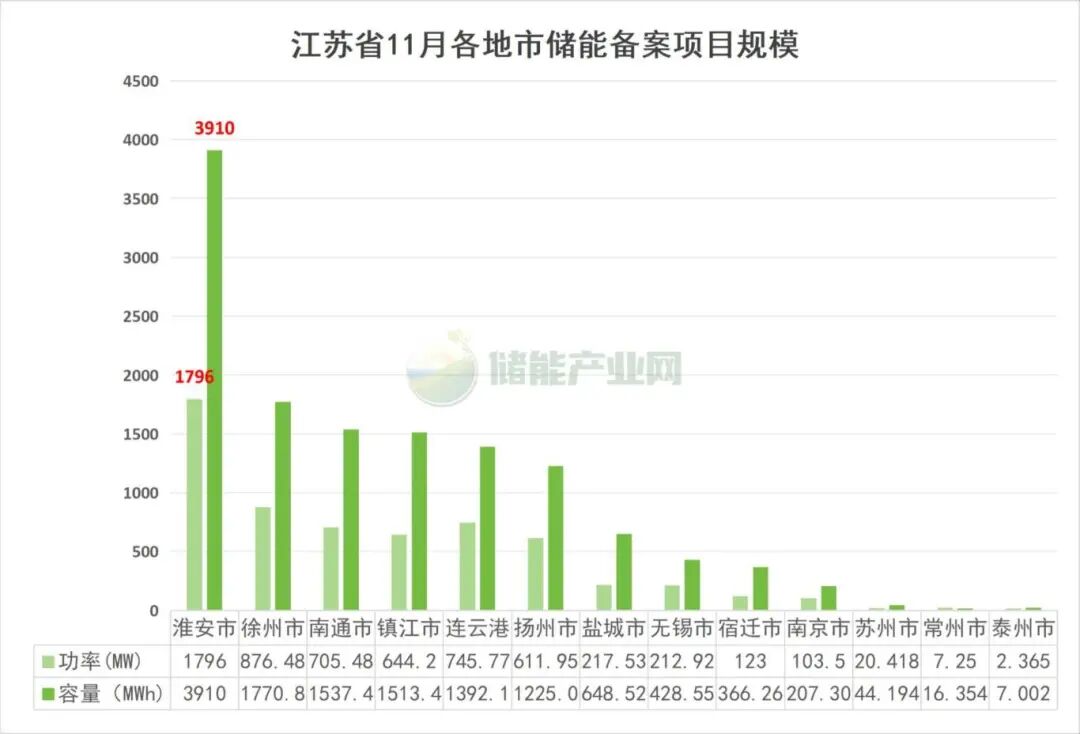
超13GWh!江苏11月180个储能项目备案出炉
Xin Lang Cai Jing· 2025-12-19 12:51
(来源:储能产业网) 另从11月储能备案项目充放电时长来看,82%的项目选择2-3小时标准配置方案,远超10月份。此外,其中1-2小时占比6%,3-4小时占比8%,4小时及以上 占比4%。 据储能产业网统计,11月份江苏省储能备案项目共计有180个,总规模超6GW/13GWh(6066.894MW/13067.074MWh)。从备案规模和备案数量来看,11 月份储能备案整体较10月备案有所增加。 从项目类型看,主要分为用户侧、电网侧、光储充等类型,其中用户侧储能项目仍然占比最多。 从各地市分布情况来看,项目规模从几十千瓦时到几百兆瓦时不等,在备案项目规模上,淮安市凭借超1.796GW/3.91GWh的规模位列第一,随后是徐州 市和南通市,依次约为0.88GW/1.77GWh;0.71GW/1.54GWh; 值得注意的是,11月份镇江市、连云港市、扬州市的备案规模均超过1GWh。 在项目数量上,11月份,盐城市居于首位,共计28个备案项目,其次是苏州市26个、南通市23个、徐州市17个。 众所周知,江苏此前分时电价大调整过后,工商业储能项目收益大打折扣,但综合当前备案情况来看,江苏储能项目投资热度仍然在,只是在 ...
海辰储能 林日:大电芯时代 户用储能直流侧技术重构与成本突破
Xin Lang Cai Jing· 2025-12-19 12:48
Core Viewpoint - The energy storage industry is experiencing significant growth, particularly in residential storage, driven by the increasing demand for large-capacity batteries and favorable policies in regions like North America and Australia [5][13]. Industry Overview - The 2025 User-side Energy Storage and Battery Technology Forum was held in Shenzhen, focusing on commercial, portable, and residential energy storage, as well as AIDC battery technologies, with over 800 attendees [1][9]. - The residential energy storage market is evolving, with batteries transitioning from mere devices to energy assets that can be owned by everyone [5][13]. Market Trends - The demand for large-capacity storage batteries is increasing, particularly in North America due to frequent power outages and fluctuating electricity prices, while Australia benefits from generous subsidy policies [5][13]. - Current battery capacities have evolved from 20Ah and 50Ah to widely used 100Ah, with larger cells like 280Ah and 314Ah being adopted in residential storage [6][14]. Technological Advancements - Large cells offer higher energy density, significantly reducing the cost per watt-hour and overall system costs, making them advantageous for space-sensitive installations [6][14]. - The 314Ah cell has been successfully implemented in residential storage, with future prospects for even larger capacities like 587Ah [6][14]. Cost Reduction Strategies - The cost reduction for the 314Ah cell is attributed to shared materials and production lines, leading to a 30% decrease in cost per watt-hour compared to 100Ah cells [6][14]. - System integration costs are reduced by 32% due to fewer cells and connection points, while user costs decrease by 25% over the lifecycle due to lower maintenance and repair rates [6][14]. Company Initiatives - The company, Haicheng Energy Storage, is actively promoting the application of large cells in residential and portable storage, with products designed for both high-capacity and portable solutions [7][15]. - The company has established four production bases globally and focuses on the development of large-capacity storage cells, with products ranging from 218Ah to over 1000Ah [7][16]. Vision for the Future - The ultimate goal of residential storage is to achieve energy equity, with a call for continuous optimization of costs and technology to enable more users to enjoy energy freedom [8][17].
以第一性原理为锚!海辰储能的全天候8h长时储能战略解码
Xin Lang Cai Jing· 2025-12-19 12:43
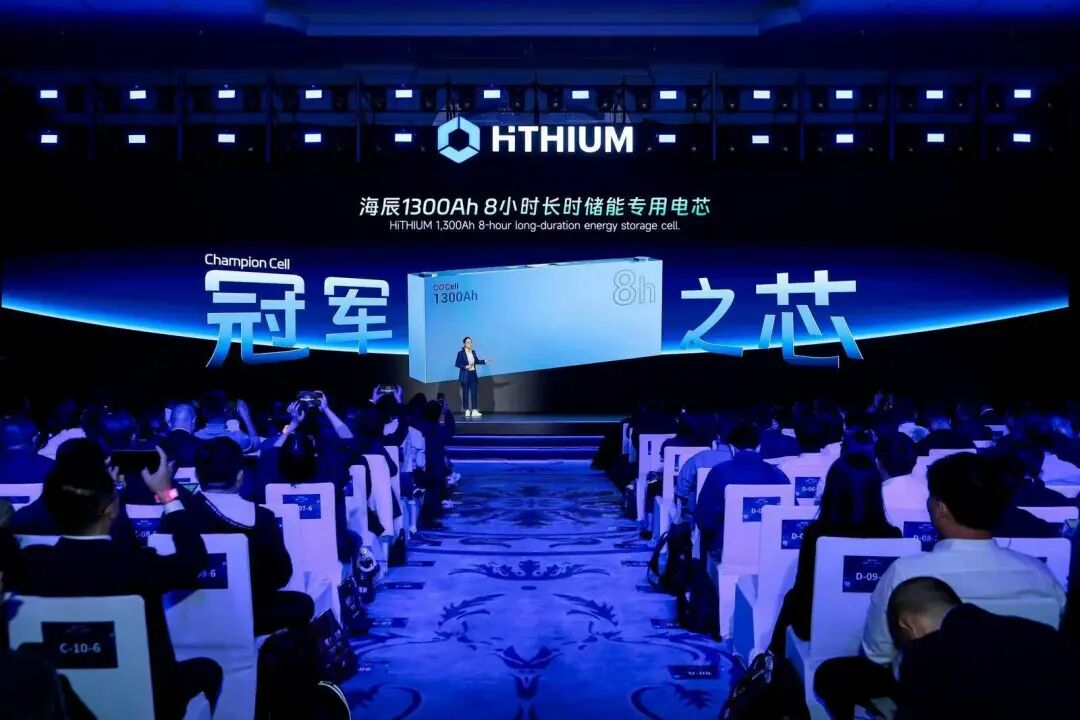
Core Insights - The article emphasizes the critical role of long-duration energy storage technology in addressing the volatility of renewable energy sources and the increasing electricity demand from high-energy scenarios like AI data centers [1][3][4] Group 1: Long-Duration Energy Storage Solutions - On December 12, 2025, the company launched three globally first products, including the world's first native 8-hour long-duration energy storage solution ∞Power8 6.9MW/55.2MWh, the first 8-hour dedicated energy storage cell ∞Cell 1300Ah 8h, and the first lithium-sodium collaborative AIDC full-duration energy storage solution [1][20] - The company aims to provide a "Chinese solution" for the stable supply of green electricity, targeting the core pain points of renewable energy consumption and energy transition for AI data centers [1][20] Group 2: Market Trends and Challenges - The global energy revolution is at a pivotal point, with renewable energy sources like wind and solar expected to account for 40% of China's energy generation and 25%-30% globally by 2030, leading to intermittent issues such as daytime energy surplus and nighttime shortages [2][21] - The rapid growth in electricity demand from electric vehicles and data centers is reshaping the power system's load structure, necessitating long-duration energy storage solutions to meet these increasing demands [3][21] Group 3: Technological Innovations - The company is focused on overcoming the "impossible triangle" of low cost, high efficiency, and high safety in the 8-hour long-duration energy storage scenario, with breakthroughs in energy cell technology being crucial [6][25] - The newly developed ∞Cell 1300Ah 8h cell offers over four times the performance of mainstream products, reduces system component count by over 30%, and supports over 25 years of service life, effectively lowering initial investment costs for energy storage stations [8][27] Group 4: Strategic Initiatives and Collaborations - The company has invested over 13 billion yuan to establish the world's first zero-carbon long-duration energy storage industrial park in Heze, Shandong, with an annual production capacity of 30GWh for energy storage batteries and 20GWh for energy storage systems [33] - A strategic cooperation agreement was signed with El-Mor Renewable Energy to deploy a 1.5GWh long-duration energy storage system project in Israel, marking a significant milestone for the company's overseas deployment [33][34] Group 5: Future Goals and Vision - The company has initiated the "All-Weather Green Power 135 Lighthouse Plan," aiming to reduce energy storage costs to 0.1 yuan per kWh within five years, highlighting its commitment to scaling long-duration energy storage applications [35][37] - The long-duration energy storage solutions are expected to expand from AIDC applications to zero-carbon parks, smart cities, and intelligent microgrids, driving green transformation across various industries [37]
新能安 区域总监 全一斯:中国工商业储能可持续发展(2025-2027):复盘、思考与期待
Xin Lang Cai Jing· 2025-12-19 12:36
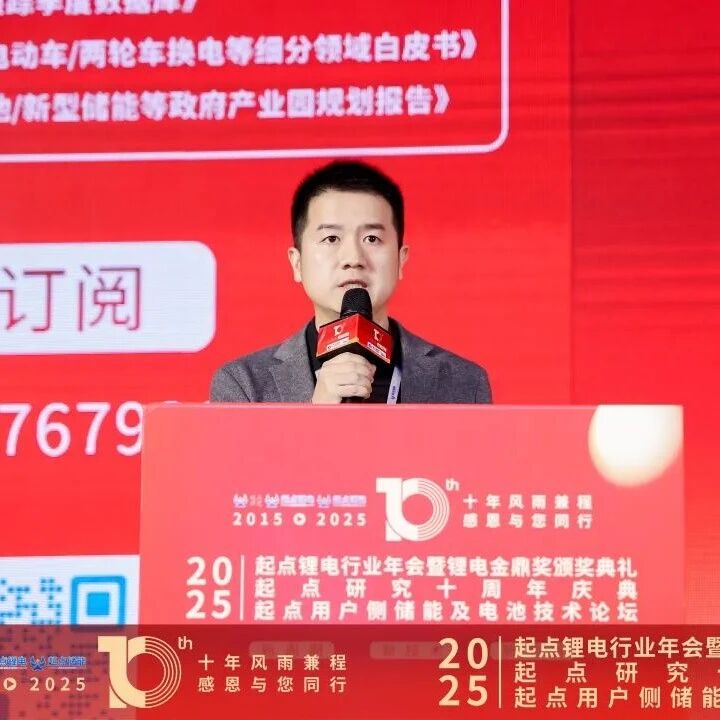
Core Viewpoint - The article discusses the sustainable development of commercial energy storage in China from 2025 to 2027, highlighting the challenges and opportunities in the sector, particularly in light of recent policy changes and market dynamics [2][18]. Group 1: Industry Overview - The 2025-2027 action plan by the National Energy Administration aims to add 100 million kilowatts of new energy storage capacity, potentially reaching 180 million kilowatts by the end of 2027 [18]. - The commercial energy storage market in China has been developing since 2017, with a more defined pricing structure and decreasing system prices driving growth [19][20]. - Different regional markets exhibit varying characteristics, with East China experiencing significant policy impacts leading to reduced overall returns, while markets in Anhui and Guangdong show more favorable conditions [20]. Group 2: Challenges and Considerations - Investment firms face increasing uncertainty in financial models due to factors such as the state of storage equipment and changes in pricing structures, particularly with the diminishing role of administrative time-of-use pricing [21][22]. - The reliance on administrative time-of-use pricing for profit is becoming less viable, as evidenced by a 25% drop in price differentials in Jiangsu following new policies [22][23]. - The transition from fixed to variable pricing structures in retail electricity markets is expected to significantly impact the development of user-side energy storage [22][23]. Group 3: Future Outlook - The integration of commercial energy storage with retail electricity sales and wholesale market strategies is becoming more prevalent, with a focus on managing capacity and demand [25]. - New products with enhanced cycle life, such as those capable of 15,000 cycles without replacement, are being introduced to reduce operational costs and improve efficiency [25]. - The collaboration between energy storage developers, investors, users, and electricity sales companies is crucial for navigating the evolving market landscape [24][25].
北测新能源 事业部总经理 赵庆利:强制性国标GB 44240-2024z专家解读
起点锂电· 2025-12-19 12:17
Core Viewpoint - The article discusses the introduction of China's first mandatory national standard for energy storage batteries, GB 44240-2024, which will be implemented on August 1, 2025, focusing on safety requirements for lithium batteries in energy storage applications [6][5]. Group 1: Overview of the Forum - The 2025 User-Side Energy Storage and Battery Technology Forum was held in Shenzhen, attracting over 800 attendees to discuss key topics such as commercial energy storage, portable energy storage, and safety challenges in the industry [1]. Group 2: Introduction of GB 44240-2024 - GB 44240-2024 is the first mandatory national standard for energy storage batteries in China, differing from previous recommended standards [5][6]. - The standard aligns closely with international standards, with 80% similarity to European standards, and is primarily focused on safety considerations [6]. Group 3: Certification Process - The certification process for GB 44240 involves application, type testing, initial factory inspection, and post-certification supervision, with a certification cycle of five to six weeks, compared to six months for the previous GB/T 36276 standard [7]. - The standard requires different certification units for battery cells, modules, and systems based on their specifications and configurations [7]. Group 4: Testing Requirements - The standard outlines rigorous testing requirements for battery cells, including safety, environmental, and thermal runaway tests, with specific procedures and conditions for each test [11][19]. - Testing includes various conditions such as low pressure, temperature cycling, vibration, and overcharging, ensuring that batteries do not catch fire or explode under stress [13][15][17]. Group 5: Labeling and Documentation - Batteries must have clear labeling indicating safety usage lifespan and unique coding for traceability in case of incidents [22]. - The certification is valid for five years, with annual factory audits required, and any changes in product design or safety parameters must be reported for certification updates [8][26].

鹏辉能源 研发总监 周琰俊:大电芯 大时代:TWh时代大容量储能电芯的技术底色
起点锂电· 2025-12-19 12:17
Core Viewpoint - The energy storage industry is experiencing rapid growth, with a significant increase in lithium battery installations globally, driven by technological advancements and a shift towards high-value, reliable solutions [6][7][10]. Industry Trends - The global installed capacity of lithium batteries reached 170 GWh by the third quarter of 2025, representing a year-on-year growth of 68%, with domestic growth at 61% and overseas growth at 74% [6]. - Chinese companies have expanded their overseas orders to 163 GWh in the first half of the year, marking a staggering increase of 246% year-on-year, covering over 50 countries [6]. - The industry is transitioning from low-cost competition to a focus on the entire lifecycle value, technological innovation, and reliability [6][7]. Evolution of the Energy Storage Industry - The industry has progressed through three stages: 1. Policy-driven and pilot verification (1.0 era) 2. Initial commercialization and pursuit of economic viability (2.0 era) 3. Scalable development focusing on high-value and reliable solutions (3.0 era) [7]. - The core value proposition has shifted from initial investment costs to a comprehensive pursuit of safety, longevity, efficiency, and simplified operations [8]. Technological Innovations - The next generation of battery cells is essential for overcoming the bottlenecks of large-scale development, aiming to create a safer, smarter, and more durable energy storage system [8][9]. - The focus is on developing larger capacity cells, with advancements from 280 Ah to 314 Ah, and future expectations for even larger capacities, enhancing system capacity from 3.44 MWh to over 6 MWh [8]. - The introduction of large cells aims to reduce complexity and potential failure points associated with smaller cells, thereby improving overall system reliability [8][9]. Safety and Reliability Concerns - Thermal runaway risks remain a significant concern as project scales increase, with potential impacts and economic losses growing exponentially [9]. - The market demands high cycle life and efficiency across various extreme environments, necessitating differentiated performance and reliability from traditional battery solutions [10]. Company Innovations - Penghui Energy has developed the "Fengpeng" large cell technology, emphasizing reliability and efficiency as key attributes [11][12]. - The company employs a three-tiered protection strategy for safety, including: 1. Nano-shield technology to prevent thermal runaway [13]. 2. Gel flame-retardant electrolyte technology [14]. 3. Honeycomb carbon cooling technology for efficient heat management [14]. - The Fengpeng 587 Ah battery has been tested for safety and achieved a cycle life of 10,000 cycles at room temperature, setting a new standard for the next generation of energy storage systems [18].
新能安 区域总监 全一斯:中国工商业储能可持续发展(2025-2027):复盘、思考与期待
起点锂电· 2025-12-19 12:17
Core Viewpoint - The article discusses the sustainable development of commercial energy storage in China from 2025 to 2027, highlighting the challenges and opportunities in the industry, particularly in light of recent policy changes and market dynamics [2][5][6]. Group 1: Industry Overview - The 2025-2027 action plan by the National Energy Administration aims to add 100 million kilowatts of new energy storage capacity, potentially reaching 180 million kilowatts by the end of 2027 [5]. - The commercial energy storage market in China has evolved since 2017, with a more defined pricing structure and decreasing system prices, leading to a more complete business model [6]. - Different regional markets exhibit varying characteristics, with East China experiencing significant policy impacts leading to reduced profitability, while markets in Anhui and Guangdong show better performance [6][7]. Group 2: Challenges and Considerations - Investors face increasing uncertainty in financial models due to factors such as energy storage system performance and market price volatility, particularly with the diminishing effectiveness of administrative time-of-use pricing [7][8]. - The shift from fixed time-of-use pricing to market-driven pricing has led to a significant decrease in profitability for projects, as seen in Jiangsu, where the static payback period has increased from 5 years to nearly 11 years due to a 25% drop in peak-valley price differentials [8][9]. - The cancellation of administrative time-of-use pricing in several provinces indicates a broader trend towards market-driven pricing, which poses challenges for energy storage development [9][10]. Group 3: Future Outlook - The integration of energy storage with photovoltaic systems is becoming increasingly common, enhancing project profitability by optimizing discharge timing and increasing the proportion of green energy [12]. - The future of commercial energy storage will likely involve a shift towards collaborative models with electricity retailers and a focus on managing demand capacity, as well as exploring new revenue streams [13]. - New products with extended operational lifespans, such as energy cells capable of 15 years of operation without replacement, are being introduced to reduce costs and improve efficiency in the energy storage sector [13].