农业生产

Search documents
中央财政下达10.15亿元资金 支持受灾地区恢复农业生产
Xin Jing Bao· 2025-08-05 11:52
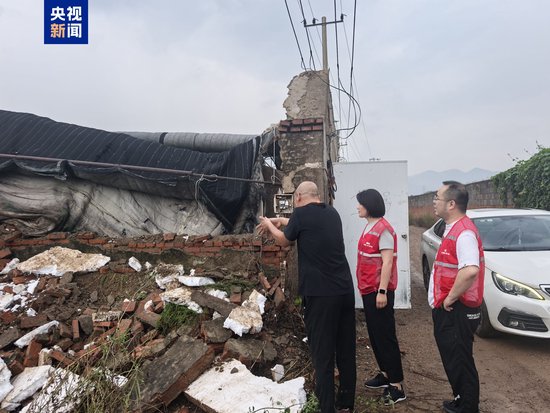
Core Viewpoint - The Ministry of Finance, in collaboration with the Ministry of Agriculture and Rural Affairs and the Ministry of Water Resources, has allocated 1.015 billion yuan to support disaster relief efforts in agriculture and water management in response to flooding and droughts in various regions [1] Group 1: Disaster Relief Funding - A total of 1.015 billion yuan has been allocated for agricultural disaster prevention and reduction, as well as water disaster relief [1] - The funding aims to assist affected areas in recovering agricultural production and managing the impacts of disasters [1] Group 2: Regional Support Initiatives - Support is directed towards regions such as Beijing, Hebei, Inner Mongolia, and Guangdong for flood disaster recovery, focusing on crop replanting, drainage of waterlogged fields, and restoration of agricultural and water infrastructure [1] - Areas like Shandong, Henan, and Hubei will receive assistance for drought relief, emphasizing measures such as fertilization, irrigation, and well drilling [1]
史丹利: 独立董事提名人声明(二)
Zheng Quan Zhi Xing· 2025-08-04 16:47
Core Viewpoint - The nomination of Li Xinzhong as an independent director candidate for the seventh board of directors of Stanley Agricultural Group Co., Ltd. has been officially announced, with the nominee agreeing to the nomination after a thorough review of qualifications and independence [1][2]. Group 1 - The nominee has passed the qualification review by the sixth board's nomination committee and has no relationships that could affect independent performance [1]. - The nominee meets the qualifications and conditions for independent directors as stipulated by the China Securities Regulatory Commission and the Shenzhen Stock Exchange [2]. - The nominee has participated in training and obtained relevant certification recognized by the stock exchange [2]. Group 2 - The nominee does not violate any laws or regulations that prohibit serving as a company director [2][3]. - The nominee has no significant business dealings with the company or its controlling shareholders [7]. - The nominee has not been subject to any public reprimands or significant penalties by the securities exchange in the last thirty-six months [8].

史丹利: 募集资金管理和使用办法(2025年8月)
Zheng Quan Zhi Xing· 2025-08-04 16:47
General Principles - The purpose of the fundraising management and usage guidelines is to enhance and standardize the management of funds raised by the company, improve their usage efficiency, and protect the legitimate interests of all shareholders [1][2] - The funds referred to in these guidelines are those raised through the issuance of stocks or other equity-like securities, excluding funds raised for equity incentive plans [1] Fund Management - The company must use the raised funds prudently, ensuring that their usage aligns with the commitments made in the issuance application documents, and must not arbitrarily change the direction of the funds [2][3] - The company’s directors and senior management are responsible for ensuring the proper use of the raised funds and must not participate in or condone any unauthorized changes to the usage of these funds [2][3] Fund Storage - The company must store the raised funds in a dedicated account to facilitate supervision and management [3][4] - A tripartite supervision agreement must be signed with the underwriter or independent financial advisor and the commercial bank within one month of the funds being in place [3][4] Fund Usage - The raised funds should primarily be used for the company's main business and must not be used for high-risk investments or to provide financial assistance to others [5][6] - The company must ensure the authenticity and fairness of the fund usage, preventing misuse by controlling shareholders or related parties [5][6] Project Management - The company must regularly report on the progress of investment projects to the board and publicly disclose the implementation status [6][7] - If any significant changes occur in the market environment or if the project is delayed, the company must reassess the feasibility and expected returns of the project [6][7] Changes in Fund Usage - Any changes in the usage of raised funds must be approved by the board and disclosed promptly [8][9] - The company must follow specific procedures for using surplus funds, including obtaining board approval and disclosing the reasons for any changes [12][13] Fund Supervision - The board must continuously monitor the actual storage, management, and usage of the raised funds, providing semi-annual reports [16][17] - Independent financial advisors must conduct regular on-site inspections of the fund management and report any irregularities [18][19]
史丹利: 独立董事候选人声明与承诺(李新中 )
Zheng Quan Zhi Xing· 2025-08-04 16:47
Group 1 - The candidate, Li Xinzhong, has been nominated as an independent director for the seventh board of Stanley Agricultural Group Co., Ltd. and confirms no relationships that could affect independence [1][2] - The candidate has passed the qualification review by the nomination committee of the sixth board and has no interests or relationships that could influence independent performance [1][2] - The candidate meets the qualifications and conditions for independent directors as stipulated by the China Securities Regulatory Commission and the Shenzhen Stock Exchange [1][2][3] Group 2 - The candidate has participated in training and obtained relevant certification recognized by the stock exchange [2][3] - The candidate confirms compliance with various regulations regarding independent director qualifications, including those from the Central Commission for Discipline Inspection and the Ministry of Education [3][4] - The candidate has no significant business dealings with the company or its controlling shareholders [6][7] Group 3 - The candidate has not been subject to any disqualifications or penalties that would prevent them from serving as an independent director [8][9] - The candidate has a clear understanding of the responsibilities of an independent director and guarantees the truthfulness and completeness of the provided information [9] - The candidate commits to report any changes in qualifications during their tenure and will not resign to avoid fulfilling responsibilities [9]
史丹利: 关于召开2025年第一次临时股东会的通知
Zheng Quan Zhi Xing· 2025-08-04 16:35
证券代码:002588 证券简称:史丹利 公告编号:2025-026 史丹利农业集团股份有限公司 关于召开 2025 年第一次临时股东会的通知 本公司及董事会全体成员保证公告的内容真实、准确、完整,没有虚假记载、误导性 陈述或重大遗漏。 史丹利农业集团股份有限公司(以下简称"公司")定于 2025 年 8 月 20 日在 公司办公楼会议室召开 2025 年第一次临时股东会,现将本次会议的有关事项通 知如下: 一、股东会召开的基本情况 会第十四次临时会议审议通过了《关于召开 2025 年度第一次临时股东会的议案》 部门规章、规范性文件、深圳证券交易所业务规则和《公司章程》的规定 (1)现场会议召开时间为:2025 年 8 月 20 日(星期三)14:00 (2)网络投票时间为:2025 年 8 月 20 日 其中,通过深圳证券交易所交易系统进行网络投票的具体时间为:2025 年 8 月 20 日 9:15-9:25、9:30-11:30、13:00-15:00;通过深圳证券交易所互联网投票系 统投票的具体时间为:2025 年 8 月 20 日 9:15-15:00 中的任意时间 本次股东会采取现场投票与网络投票 ...
济南莱芜:严把“减损增产”两端,建成“粮安心安”样板
Zhong Guo Shi Pin Wang· 2025-08-04 09:39
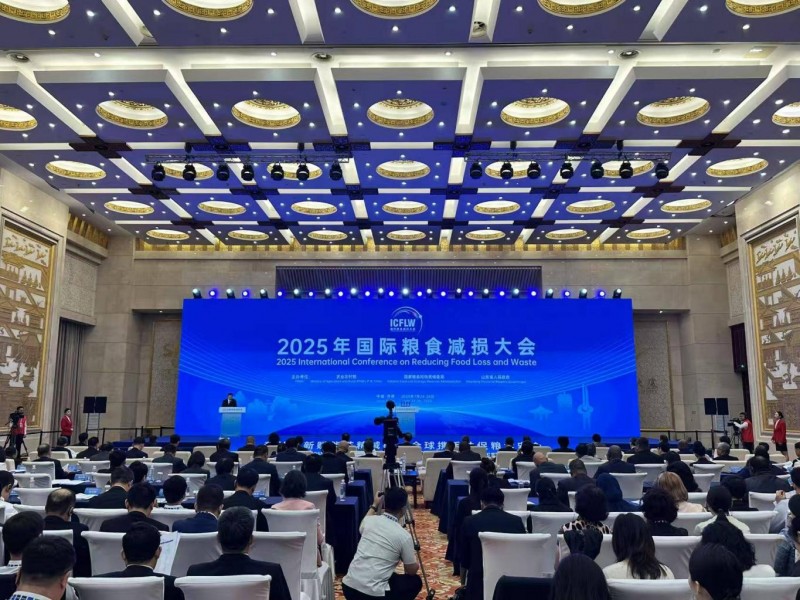
Core Viewpoint - The 2025 International Food Loss Reduction Conference was held in Jinan, focusing on "technological innovation empowering food waste reduction and global cooperation to promote food security" [1][3]. Group 1: Conference Overview - The conference attracted over 300 international guests, including deputy ministers and ambassadors from various countries, emphasizing the importance of food security as a national priority [3]. - The event highlighted the achievements of the Laiwu District in modern agricultural practices, showcasing the integration of technology in food production and management [3][5]. Group 2: Agricultural Practices in Laiwu - Laiwu District has implemented high-standard farmland construction, with 51.77 million acres (72.5% of total farmland) developed, ensuring a continuous 100% safety utilization rate of arable land for five years [5]. - The district has achieved over 92% mechanization in crop farming, with significant investments in agricultural machinery, including 18,000 tractors and 733 combine harvesters [5]. - The average loss rate during the wheat harvest in 2025 is projected to be 0.6%, reflecting effective management and technological application [5]. Group 3: Technological Integration - The "Sky-Earth-Net Integration" agricultural application platform is recognized as one of the most advanced digital agriculture technologies in Shandong Province, enhancing the management of the entire food production chain [8]. - The integration of technology in agriculture is seen as a key driver for future agricultural development, with international representatives expressing optimism about its potential [11]. Group 4: Rural Development and Cultural Integration - Laiwu District is promoting rural revitalization through cultural tourism projects, enhancing the local economy and showcasing the beauty of rural areas [9]. - The district's approach combines agricultural production with cultural and tourism development, aiming to improve the quality of life for residents and attract visitors [11]. Group 5: Future Directions and International Cooperation - The conference serves as a platform for international cooperation, sharing experiences and technologies to address global food security challenges [11]. - The "Laiwu Plan" is positioned as a model for rural revitalization, emphasizing the importance of systematic thinking in reducing food loss and increasing agricultural income [11].

国务院常务会议解读|提升耕地数量质量,国务院常务会议有新部署
Xin Hua Wang· 2025-08-01 00:52
Core Points - The State Council has discussed and approved the draft of the "Law on the Protection and Quality Improvement of Arable Land," which will be submitted to the National People's Congress for review [1] - The meeting emphasized the need to enhance the sense of responsibility for legally protecting arable land, ensuring the integration of quantity, quality, and ecological protection [1][2] - The goal is to maintain the "red line" of 1.8 billion acres of arable land and impose strict penalties for activities that damage arable land, such as illegal excavation [1] - High-standard farmland construction is identified as a key measure to improve arable land quality, with a target of over 1 billion acres of high-standard farmland by the end of 2024 [1] - The implementation plan aims to transform 4.55 million acres of permanent basic farmland into high-standard farmland by 2035, with an additional 1.3 million acres of efficient water-saving irrigation [2] - High-standard farmland is expected to enhance grain production capacity by approximately 10% [2] Summary by Category Legislation and Policy - The draft law aims to enhance the legal framework for arable land protection and quality improvement [1] - The plan includes a long-term goal to convert all eligible permanent basic farmland into high-standard farmland by 2035 [2] Agricultural Development - The construction of high-standard farmland is crucial for improving agricultural productivity and resilience against disasters [2] - The integration of land protection with ecological conservation is emphasized to create a sustainable environment [2] Targets and Goals - The immediate target is to achieve over 1 billion acres of high-standard farmland by the end of 2024 [1] - The long-term goal includes transforming 4.55 million acres of farmland and adding 1.3 million acres of efficient irrigation by 2035 [2]
市委农村工作领导小组(扩大)会议召开
Zhen Jiang Ri Bao· 2025-07-30 22:53
Core Insights - The meeting emphasized the importance of implementing key tasks for rural revitalization and agricultural development in response to challenges faced this year [1] Group 1: Agricultural Development - The agricultural sector has maintained a positive development trend despite facing difficulties and challenges [1] - Focus areas include agricultural production, construction of livable and workable beautiful villages, and key agricultural projects [1] Group 2: Rural Revitalization - The meeting highlighted the need to achieve performance assessment targets for rural revitalization [1] - There is a commitment to deepen the integration of party building and rural revitalization efforts [1] Group 3: Safety and Governance - Ensuring the safety of people's lives and property is a top priority, with specific measures for flood and typhoon prevention being emphasized [1] - Continuous improvement of work style and addressing corruption and misconduct in rural governance are essential for building a distinctive agricultural region [1]
提升数字化技能改善农民生活
Jing Ji Ri Bao· 2025-07-29 22:28
Core Viewpoint - The continuous improvement of farmers' digital skills is essential for the comprehensive revitalization of rural areas, supported by the recent guidelines from the Central Cyberspace Affairs Commission and other departments, which emphasize the need for digital inclusive services in rural education and talent cultivation [1][2]. Group 1: Agricultural Production - The application of technologies such as IoT and big data in agricultural production and circulation is driving the development of smart and precise agriculture, significantly enhancing production efficiency [1]. - Digital skills are enabling farmers to access broader markets, overcoming traditional sales channel limitations through e-commerce and live streaming, allowing them to sell products directly to national and global markets [1]. Group 2: Rural Industry Development - The enhancement of farmers' digital skills is facilitating the integration of rural industries, with digital technology fostering new business models such as rural tourism and agricultural product processing [2]. - Local governments are leveraging the internet to promote rural tourism resources and develop unique agricultural brands, attracting more visitors and consumers, thus invigorating rural economies [2]. Group 3: Public Services and Governance - Improved digital literacy among farmers allows for easier participation in rural affairs and access to quality public services, making governance and public service delivery more efficient and transparent [2]. - An increasing number of farmers are utilizing digital tools to obtain policy information and engage in village decision-making processes [2]. Group 4: Challenges and Support - There are challenges in enhancing digital skills, including the need for better digital training platforms and a shortage of professional digital talent [2]. - Emphasis is placed on strengthening support for professional teams and experts in villages, encouraging digital talent to serve rural areas, and enhancing training for various e-commerce professionals [2].
北京开辟农业保险赔付绿色通道
Yang Shi Xin Wen Ke Hu Duan· 2025-07-28 05:11
Group 1 - The Beijing Municipal Agricultural and Rural Bureau has initiated emergency response procedures due to the impact of rainfall on agricultural production [3][4] - Agricultural experts have been dispatched to guide recovery efforts in areas such as Miyun, with a focus on timely distribution of disaster relief seeds and drainage work [3][4] - A green channel for agricultural insurance claims has been established, allowing for expedited processing and compensation within 24 hours of reporting [3][4] Group 2 - The city has prepared 112,500 kilograms of disaster relief seeds and over 50,000 pieces of animal epidemic prevention materials, along with 1,266 sets of drainage equipment [3][4] - Farmers are advised to monitor weather alerts closely and take necessary precautions against potential geological disasters and flooding [3][4] - Policy-based agricultural insurance providers have activated emergency response mechanisms, simplifying the claims process for quick compensation [4]