Enterprise Software

Search documents
Why Workday, Inc. (WDAY) Continues to Attract Buy Ratings
Yahoo Finance· 2025-12-29 14:15
Core Insights - Workday, Inc. (NASDAQ:WDAY) is considered one of the most undervalued tech giants, with 75% of analysts recommending it as a buy, indicating strong market confidence [1] - The median price target for Workday is set at $280, suggesting an upside potential of 27.38% from current levels, with individual targets ranging from $230 to $326 [1] - The company has shown solid financial performance, with fourth-quarter revenue guidance exceeding investor expectations and operating margins aligning with consensus estimates [3] Analyst Ratings - Siti Panigrahi from Mizuho Securities reiterated a 'Buy' rating for Workday, maintaining a price target of $275, reflecting a 25% upside potential [1] - Freedom Capital Markets adjusted its price target for Workday to $280 from $290 while keeping a 'Buy' rating after the company's third-quarter fiscal 2026 results [2] Financial Performance - Workday enhanced its product offerings through the integration of Paradox and accelerated its AI agent ecosystem, contributing to its strong financial performance [3] - The company raised its full-year 2026 revenue outlook while maintaining its operating margin projections, indicating confidence in future growth [3] Emerging Risks - Freedom Capital Markets identified risks such as the normalization of organic growth, contributions from M&A affecting contracted revenue backlog, and potential integration issues with newly acquired assets [4] - Despite the positive outlook, there are concerns regarding the sustainability of growth and the impact of acquisitions on revenue [4]

VCs predict strong enterprise AI adoption next year — again
Yahoo Finance· 2025-12-29 14:00
Core Insights - 2026 is anticipated to be a pivotal year for AI, particularly in transforming infrastructure, manufacturing, and climate monitoring, moving from reactive to predictive systems [1] - Voice AI is seen as a natural and efficient mode of interaction, with potential for reimagining products and experiences [2] - Many enterprise AI companies are expected to transition from product-focused businesses to AI consulting, leveraging existing customer workflows to create additional use cases [3] Industry Trends - Enterprises are beginning to recognize that large language models (LLMs) are not a one-size-fits-all solution, leading to a focus on custom models and data sovereignty [4] - A significant 95% of enterprises reported not receiving meaningful returns on their AI investments, indicating a struggle in realizing the benefits of AI adoption [5] - The AI landscape has evolved significantly since the launch of ChatGPT, with a surge in enterprise AI startups driven by substantial investments [6] Investment Opportunities - There is a growing interest in how frontier labs are approaching application layers, with expectations for more turnkey applications in sectors like finance and healthcare [7] - Investment focus is shifting towards future data center technologies, emphasizing efficiency and sustainability [10] - Vertical enterprise software is gaining traction, particularly in regulated industries where proprietary workflows create defensibility [11] AI Adoption and Budgeting - Enterprises are expected to increase their AI budgets in 2026, but with a nuanced approach, reallocating labor spend towards AI technologies that demonstrate strong ROI [21] - A bifurcation in spending is anticipated, where a small number of AI vendors will capture a disproportionate share of budgets while others may see revenue decline [22] - CIOs are likely to push back against AI vendor sprawl, rationalizing overlapping tools and focusing on proven AI technologies [24] Startup Growth and Retention - Successful AI startups are those that identify workflow gaps created by generative AI and execute on product-market fit [33] - Companies that provide foundational infrastructure rather than point solutions tend to have higher retention rates, as they become integral to enterprise operations [39] - Retention is strongest in companies that solve problems that grow with AI adoption, making their solutions mission-critical [36]
An Actively Managed AI ETF Put 18% Into Two Chip Giants Just Ahead of Massive Infrastructure Buildout
Yahoo Finance· 2025-12-29 13:21
Core Insights - The iShares AI Innovation and Tech Active ETF (BAI) launched in October 2024, focusing on the AI infrastructure buildout with $8 billion in assets and a 0.55% expense ratio [2][3]. Investment Strategy - BAI employs a full-stack approach to AI exposure, with nearly 60% of its assets in information technology, primarily in companies like NVIDIA (9.5%) and Broadcom (8.8%) [3][4]. - The fund's concentrated holdings include major players in AI infrastructure such as Microsoft, Alphabet, Meta, Snowflake, and Palantir, covering a range from chips to cloud services [3][4]. Market Projections - Goldman Sachs forecasts that AI infrastructure spending will exceed $500 billion in 2026, up from approximately $400 billion in 2025, indicating strong growth potential for BAI's holdings [4][6]. - The spending is driven by hyperscalers like Microsoft, Google, and Amazon, which are significantly investing in data centers and advanced technologies [6]. Performance Monitoring - Investors should closely watch quarterly earnings and capital expenditure guidance from hyperscalers, as any upward revisions in infrastructure spending could signal sustained demand for BAI's semiconductor and hardware holdings [7]. - A slowdown in capex growth below 25% could lead to a rapid compression of valuation premiums on AI infrastructure stocks [7]. Portfolio Management - BAI's active management results in a turnover rate of 56%, allowing for flexibility in rotating between chip makers, cloud platforms, and emerging software as the AI landscape evolves [8]. - Investors can track changes in sector allocation and top holdings through the fund's monthly fact sheet available on iShares' website [8].


新股消息 | 用友网络(600588.SH)港股IPO招股书失效
智通财经网· 2025-12-29 11:24
Group 1 - The core viewpoint of the article is that Yongyou Network Technology Co., Ltd. has submitted its Hong Kong IPO prospectus, which has now expired after six months, with CMB International and CITIC Securities as joint sponsors [1] - Yongyou Network is recognized as a global leader in enterprise software and intelligent services, focusing on the development and innovation of enterprise digital software and intelligent services powered by AI, big data, and cloud computing [1] - According to Frost & Sullivan, based on 2024 revenue, Yongyou Network is the largest market participant in China's enterprise software and services market [1] Group 2 - The company's strategic focus is on leading industry innovation by developing AI intelligent agent clusters tailored for enterprise applications [1]



Hand Enterprise Solutions Co., Ltd.(H0256) - OC Announcement - Appointment
2025-12-28 16:00
The Stock Exchange of Hong Kong Limited and the Securities and Futures Commission take no responsibility for the contents of this announcement, make no representation as to its accuracy or completeness and expressly disclaim any liability whatsoever for any loss howsoever arising from or in reliance upon the whole or any part of the contents of this announcement. Hand Enterprise Solutions Co., Ltd. 上 海 漢 得 信 息 技 術 股 份 有 限 公 司 (A joint stock company incorporated in the People's Republic of China with limited ...
MSFT vs. ORCL: Which Enterprise Cloud & AI Stock Has Better Upside?
ZACKS· 2025-12-26 16:31
Core Insights - Microsoft and Oracle are leading players in the enterprise cloud and AI sectors, investing billions in AI infrastructure to meet rising demand from hyperscalers and enterprise clients [1] - Both companies reported strong fiscal results, with Microsoft achieving 18% revenue growth and Oracle 14% revenue growth in their latest quarters, driven by cloud adoption and AI workload expansion [2] Microsoft (MSFT) Overview - Microsoft Cloud revenues exceeded $49 billion, growing 26% year over year, with Azure and other cloud services increasing approximately 40% [4] - The company announced $23 billion in new AI investments, including significant investments in India and Canada, to enhance its cloud capacity and meet global AI demand [5] - Microsoft’s partnership with Cognizant enhances its AI capabilities across various sectors, and the company plans to increase Microsoft 365 pricing, indicating strong pricing power [6] - Management projects Intelligent Cloud revenues of $32.25 billion to $32.55 billion with 26-27% growth for the second quarter of fiscal 2026 [7] - The Zacks Consensus Estimate for MSFT's fiscal 2026 earnings is $15.61 per share, indicating a 14.44% year-over-year growth [8] Oracle (ORCL) Overview - Oracle's cloud infrastructure grew 68% in the second quarter of fiscal 2026, with total cloud revenues reaching $8 billion, up 34% year over year [9] - Remaining performance obligations surged to $523 billion, driven by contracts with major companies like Meta, NVIDIA, and OpenAI, providing significant revenue visibility [10] - Oracle's multicloud strategy is gaining traction, with a notable increase in its multicloud database business, which surged 817% in the second quarter [11] - The company expects approximately $50 billion in capital expenditures for fiscal 2026, leading to negative free cash flow as it scales its datacenter capacity [13] - The Zacks Consensus Estimate for ORCL's fiscal 2026 earnings is $7.33 per share, suggesting a 21.56% growth over the previous fiscal year [14] Valuation and Performance Comparison - Microsoft trades at a forward P/E ratio of 28.8, while Oracle trades at 25.38, reflecting premium valuations due to AI growth expectations [15] - Microsoft shares have decreased by 5.2% over the past three months, while Oracle shares have experienced a significant decline of 30.2% due to financing concerns [18] Conclusion - Microsoft is positioned as a superior investment choice for exposure to enterprise cloud and AI, with a diversified business model and strong growth prospects [20] - Oracle, while showing impressive growth in cloud infrastructure, faces challenges related to financing and converting its backlog into profitable revenues [20]



What Makes Oracle (ORCL) a Strong Investment?
Yahoo Finance· 2025-12-26 13:07
Harbor Capital Appreciation Fund, an investment management company, released its Q3 2025 investor letter. A copy of the same can be downloaded here. The Harbor Capital Appreciation Fund primarily focuses on investing in equity securities, targeting U.S. companies that have a market capitalization of at least $1 billion at the time of investment. US equities delivered solid results in the third quarter, driven by continued momentum in AI and strong corporate earnings. The Federal Reserve’s interest rate cut ...
2025:中国ToB告别“幻觉时代”
3 6 Ke· 2025-12-26 01:35
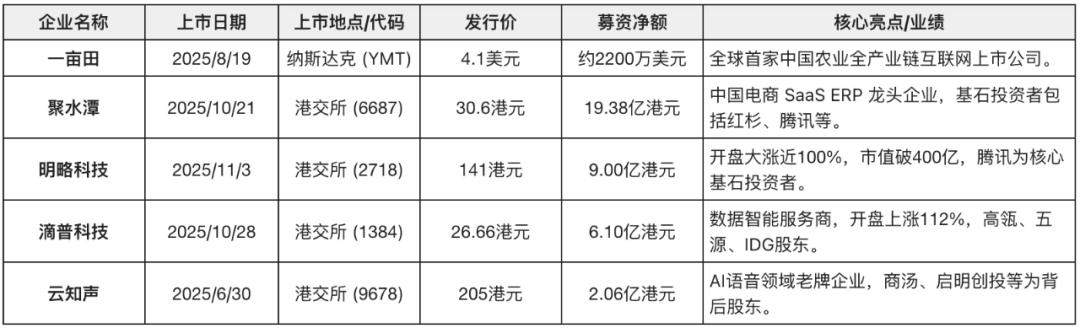
Core Insights - The Chinese ToB industry is undergoing a significant transformation, moving from a phase of "default growth" to a more competitive environment where survival requires proven operational capabilities [1][2][24] - The year 2025 marks a critical turning point, with many companies either successfully listing or facing bankruptcy, highlighting the stark realities of the market [1][4][24] Group 1: Market Dynamics - The ToB sector is experiencing a shift from "story premium" to quality-driven listings, with several companies successfully going public, including Yizhitian and Jushuitan [3][4] - The capital market is no longer rewarding mere narratives; companies must demonstrate self-sustainability and explore various exit strategies to attract investment [2][5] Group 2: Listing Trends - A wave of IPOs and listing preparations is evident in 2025, with companies like Yizhitian and Jushuitan leading the charge, indicating a reconnection with capital markets after years of adjustment [4][5] - The current IPO cycle differs from previous ones, focusing on established revenue models and customer bases rather than just high growth potential [4][5] Group 3: Exit Strategies - New exit pathways are emerging, such as control transfers, which provide alternative options for companies beyond traditional IPOs and mergers [5][6] - The case of Zhenai Meijia illustrates a shift towards control transactions, offering a new model for software companies and their early investors [5][6] Group 4: Strategic Investments - Companies like Pinming Technology are introducing strategic investors while maintaining control, reflecting a trend towards non-control capital infusion in a tightening capital environment [7][8] - This approach allows companies to secure long-term funding without altering governance structures, presenting a viable option for growth [8] Group 5: Mergers and Acquisitions - The focus of mergers is shifting from mere scale expansion to enhancing core capabilities and customer value through strategic integrations [10][11] - Notable acquisitions, such as Beisen's purchase of Cool Academy, demonstrate a trend towards integrating complementary services rather than just expanding product lines [9][10] Group 6: Major Corporate Moves - Tencent's acquisition of a controlling stake in SalesEasy marks a significant shift in its involvement in the SaaS sector, moving from an investor to a direct operational role [11][12] - This move provides SalesEasy with a more stable growth trajectory and access to Tencent's resources, setting a precedent for other SaaS companies [12] Group 7: Financial Performance - Companies like Beisen and Youzan are showing signs of financial recovery, with improved revenue and profitability metrics, indicating a broader trend towards financial health in the sector [15][16] - The industry is witnessing a collective movement towards achieving profitability, with many firms reporting reduced losses and positive cash flow [16][18] Group 8: AI Integration - Manus, an AI-native product, achieved remarkable success with a rapid international expansion and significant annual recurring revenue (ARR) growth, showcasing the potential of AI in the software market [19][21] - The swift transition of Manus from product launch to global market presence exemplifies a new standard for success in the AI sector [21] Group 9: Industry Challenges - The year 2025 has revealed the harsh realities of the industry, where companies must prove their ability to survive amidst tightening capital and increasing operational pressures [13][14][24] - The competitive landscape is forcing companies to reassess their cost structures and customer quality, emphasizing the need for sustainable business practices [14][24]

S&P registers record close as growth stocks advance
The Economic Times· 2025-12-24 01:52
Economic Growth - The U.S. gross domestic product (GDP) increased at a 4.3% annualized rate in the third quarter, the fastest pace since Q3 2023, significantly above the 3.3% estimate by economists [1][9] - Robust consumer spending was a key driver of this growth [1] Market Reactions - Following the GDP data, markets are pricing in a smaller chance of a January rate cut from the Federal Reserve, leading to a rise in shorter-dated bond yields [2][9] - The S&P 500 growth index gained 0.8%, while the value index remained largely unchanged, indicating a preference for growth stocks [5][9] - AI-related stocks rebounded, with Nvidia rising 3%, contributing significantly to the S&P 500 index [5][9] Stock Performance - The Dow Jones Industrial Average rose by 79.73 points (0.16%) to 48,442.41, while the S&P 500 gained 31.30 points (0.46%) to 6,909.79, and the Nasdaq Composite increased by 133.02 points (0.57%) to 23,561.84 [9] - Recent gains in U.S. stocks have led to expectations of a "Santa Claus rally," a seasonal trend where the S&P 500 typically gains in the last five trading days of the year and the first two in January [6][9] Company-Specific Developments - ServiceNow declined by 1.5% after announcing its acquisition of cybersecurity startup Armis for $7.75 billion in cash [9] - Freeport-McMoRan's stock climbed 2.5% to a 15-month high of $52.29, driven by record-high copper prices and an increased price target from Wells Fargo [8][9] - Huntington Ingalls saw a slight increase of 0.3% following President Trump's announcement of plans for a new class of battleships [9]




Dow Jones Today: Major Stock Indexes Rise for 4th Straight Session; S&P 500 Poised for Record-High Close; Delayed Q3 GDP Data Beats Expectations
Investopedia· 2025-12-23 21:01
Wage Garnishments for Defaulted Student Loans - The Department of Education will begin garnishing wages for defaulted federal student loan borrowers starting January 7, with approximately 1,000 borrowers notified initially [2] - Borrowers who default, typically after not making payments for over 270 days, may have up to 15% of their income garnished to cover missed payments [3] - As of September 30, 2025, there are 5.2 million borrowers in default, with nearly 6.6 million more delinquent between one month and one year [4] Economic Growth and Federal Reserve - The U.S. economy grew at an annual rate of 4.3% in the third quarter, surpassing the expected 3.2% growth, driven by a decrease in imports and a 3.5% rise in consumer spending [25][26] - The Federal Reserve is scheduled to meet on January 27 and 28, with expectations to hold interest rates steady after recent cuts aimed at preventing job market slowdown [27][28] - Fed officials face a dilemma between lowering rates to support employment and maintaining higher rates to combat inflation, as both metrics have shown concerning trends [29][30] Novo Nordisk and FDA Approval - Novo Nordisk's stock surged approximately 8% following FDA approval of its Wegovy pill for weight management, expected to launch in early January [31][32] - The approval positions Novo Nordisk favorably against competitors like Eli Lilly, whose weight-loss pill is anticipated for approval in the first quarter of 2026 [33]