
高等教育

Search documents
美国政府对哈佛再下手
Yang Zi Wan Bao Wang· 2025-05-06 14:14
新华社北京5月6日电 近期,特朗普政府与哈佛等美国高校之间龃龉不断。美国教育部5日称,哈佛大学 未能按照此前联邦政府提出的要求进行改革,联邦政府将不再对其提供新的资助。 麦克马洪说,此前联邦政府要求哈佛进行"符合常识的改革",政府的优先事项并未改变。这封信意味着 哈佛大学不会再获得新的联邦资助,哈佛可以成为一所完全依赖私立资金的机构,仰仗其庞大的捐赠基 金运营并从众多富裕校友那里筹集资金。 哈佛大学方面回应说,政府对哈佛大学的要求将对学校形成"前所未有且不正当的控制"。哈佛大学一名 发言人说:"哈佛大学将继续反对政府的非法过度干预,这些干预行为旨在扼杀让美国人更安全、更有 保障的研究和创新。" 哈佛:将继续反对政府"过度干预" 美国教育部长琳达·麦克马洪5日晚在社交媒体平台X上发布一封写给哈佛大学校长艾伦·M·加伯的信。她 在信中说,哈佛大学"系统性"违反联邦法律,"嘲弄"了美国高等教育体系。她指责哈佛大学被左派人士 运营,成为"一个党派的政治倡导组织"。 麦克马洪说,哈佛邀请"参与暴力行为、对美国表现出蔑视"的外国学生到校园里来。她还指出,哈佛财 务状况不佳、管理不善。 包括普林斯顿大学和布朗大学在内的10 ...
麻省理工加入美国名校“发债大军”! 市场对高校偿债能力看法微妙
Di Yi Cai Jing· 2025-05-06 11:41
Core Viewpoint - The recent bond issuance by prestigious universities like Harvard, Stanford, and MIT reflects a shift in their credit risk perception, as their bond trading spreads are now closer to AA-rated corporate bonds rather than AAA-rated levels [1][7]. Group 1: Bond Issuance and Financial Strategy - Several top universities are entering the bond market to enhance liquidity amid increasing operational pressures and uncertainties stemming from federal funding freezes [2][6]. - MIT plans to issue taxable bonds, with the aim of providing additional flexibility to advance its mission [1]. - The issuance of bonds can provide immediate cash for university operations and capital investments, especially in a declining interest rate environment [3]. Group 2: Credit Ratings and Market Concerns - The trading spreads of bonds from Harvard and other elite institutions have widened, indicating a potential downgrade in credit risk perception, despite no current indications from rating agencies to lower their ratings [7]. - The difference between AAA and AA ratings is subtle, with a downgrade potentially leading to higher borrowing costs for these institutions [7]. - Rating agencies have noted an increase in credit risk for these universities, particularly if federal funding pressures continue [7]. Group 3: Government Relations and Funding Challenges - The relationship between the Trump administration and universities has become strained, with federal funding being frozen as a leverage for reform [2][6]. - Harvard has faced significant funding cuts, with approximately $2.26 billion in federal funding frozen, leading to legal actions against the government [6]. - The financial strategies of universities are increasingly focused on enhancing liquidity through various means, including bank credit lines and commercial paper programs [8].

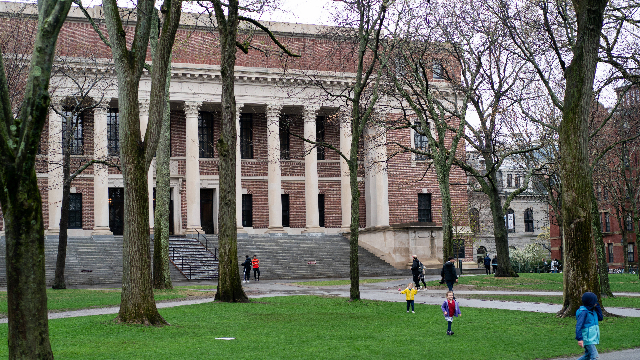
美政府称不再对哈佛大学提供联邦资助
Xin Hua Wang· 2025-05-06 07:44
Core Viewpoint - The U.S. Department of Education has announced that Harvard University will no longer receive new federal funding due to its failure to implement required reforms, which the Secretary of Education, Linda McMahon, claims constitutes a systematic violation of federal law [1][2]. Group 1: Federal Government's Actions - The federal government has accused Harvard of operating as a partisan political advocacy organization and has criticized its management and financial status [1]. - The Trump administration previously demanded meaningful governance reforms from Harvard, threatening to freeze $2.2 billion in federal funding and $60 million in contract funds if the university did not comply [1][2]. - Harvard has filed a lawsuit against the Trump administration, alleging that the government is attempting to manipulate the university's academic decisions through funding freezes [2]. Group 2: Harvard University's Response - Harvard University has rejected the Trump administration's demands for reforms, maintaining its stance against the accusations of systemic violations and mismanagement [1]. - The university's financial model may shift to rely entirely on private funding, leveraging its substantial endowment and wealthy alumni for operational support [1].
特朗普政府,正在将学者“逼离”美国
Hu Xiu· 2025-05-06 05:39
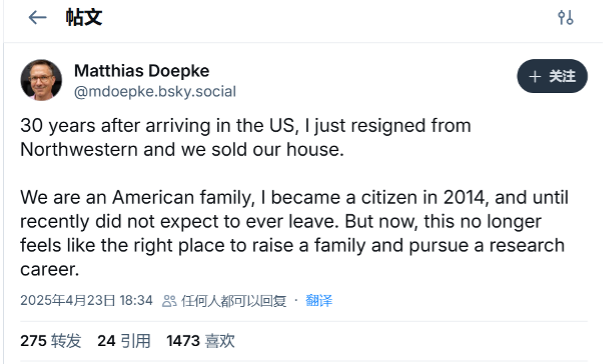
Core Viewpoint - The departure of Matthias Doepke from Northwestern University highlights the growing concerns among academics regarding the current academic environment in the U.S., particularly under the Trump administration's policies that have increasingly targeted international students and scholars [4][9][18]. Group 1: Academic Environment - Doepke expressed that the academic atmosphere in the U.S. has shifted significantly, with a decline in the welcoming nature towards international students and scholars compared to when he first arrived [8][24]. - The tightening of policies under the Trump administration has led to reduced research funding and stricter scrutiny of international students and faculty, resulting in visa revocations and deportations [9][10][17]. - The uncertainty surrounding visa statuses has created a climate of fear among international scholars, making it difficult for them to pursue academic careers in the U.S. [22][31]. Group 2: Personal Experience and Decision - Doepke, who has lived in the U.S. for over 30 years and became a citizen in 2014, decided to leave due to the current environment not being conducive for raising a family and pursuing research [5][3]. - He has taken a position at the London School of Economics (LSE) and has expressed that many scholars are contemplating leaving the U.S., although practical challenges make it difficult for them to do so quickly [12][30]. - The decision to leave was influenced by a combination of factors, including concerns about the safety of his family and the overall academic culture shifting towards a less supportive environment for scientific exploration [11][16][21]. Group 3: Future Implications - The trend of scholars leaving the U.S. could lead to a significant loss of talent, as many may choose to pursue opportunities in Canada, Europe, or other regions with more favorable academic environments [31][34]. - Doepke noted that the current situation may deter future generations of international students from pursuing their studies in the U.S., as the opportunities that once existed are diminishing [24][25]. - The potential rise of other countries, such as China, as new centers for research and development could reshape the global academic landscape if the U.S. continues to lose its appeal [29].
美国教育部官员:联邦政府对哈佛的总投资,包括医疗中心在内,达80亿美元。
news flash· 2025-05-05 22:22
美国教育部官员:联邦政府对哈佛的总投资,包括医疗中心在内,达80亿美元。 ...
美国教育部官员:美国教育部表示哈佛必须与管理部门协商,以证明其符合联邦法律。
news flash· 2025-05-05 22:18
Core Viewpoint - The U.S. Department of Education has stated that Harvard must collaborate with management to demonstrate compliance with federal laws [1] Group 1 - The U.S. Department of Education is emphasizing the need for Harvard to engage in discussions with management [1] - Compliance with federal laws is a critical requirement for Harvard as indicated by the Department of Education [1]
美国教育部官员:美国教育部长致信哈佛大学,表示该校将不再获得联邦资助。哈佛必须改变政策才能恢复联邦资助。
news flash· 2025-05-05 22:18
美国教育部官员:美国教育部长致信哈佛大学,表示该校将不再获得联邦资助。哈佛必须改变政策才能 恢复联邦资助。 ...
日本2025年应届生平均起薪创历史新高,“确保人才”成企业首要考量【附高等教育行业现状分析】
Sou Hu Cai Jing· 2025-05-05 02:39
Group 1 - Japanese companies are increasing starting salaries for new graduates to enhance talent competitiveness amid rising inflation and a fierce talent war [2][3] - In the 2026 recruitment season, the number of companies offering starting salaries above 300,000 yen (approximately 15,323 RMB) has surged to 131, more than doubling from 58 in 2024 [2] - The average starting salary for 2026 graduates is projected to reach 254,228 yen (approximately 13,011 RMB), marking a 4.9% year-on-year increase and setting a historical high [2] Group 2 - A significant 83.4% of surveyed companies prioritize "ensuring talent competitiveness" as the main consideration for salary increases, indicating a structural talent shortage in the Japanese job market [2] - 57.2% of companies are incorporating "inflation" into their salary increase considerations, reflecting the impact of rising prices on human resource costs [3] - 50.8% of companies are implementing "salary system linkage adjustments," connecting starting salaries for new graduates with the salary increases of existing employees, showcasing a dual-track adjustment strategy [3] Group 3 - The global trend emphasizes that talent resources are a core indicator of national comprehensive strength and international competitiveness, with higher education systems playing a crucial role in cultivating strategic talent [3] - As knowledge cycles shorten and disruptive technologies reshape industries, higher education is tasked with developing a multi-level talent training system to supply innovative research talents and professionals for emerging job roles [3]
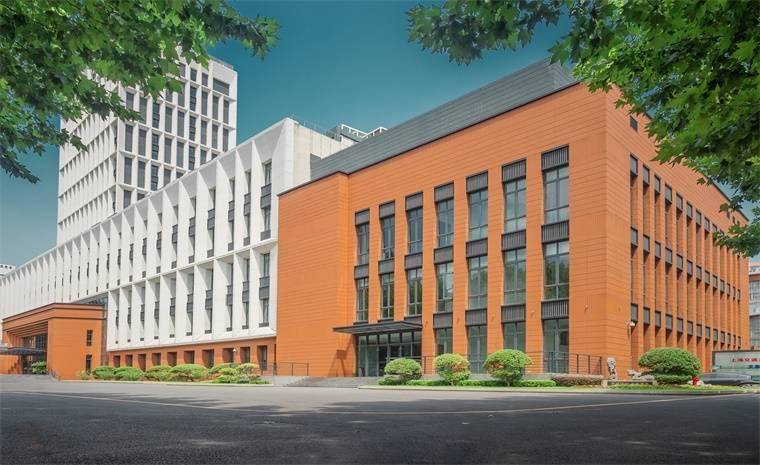
着力提升教育医疗治理效能丨“一站式” 学生社区有啥不一般
He Nan Ri Bao· 2025-05-04 23:15
Core Insights - The article highlights the development of "one-stop" student communities in universities in Henan Province, which serve as important educational platforms beyond the classroom [1][4][11] - These communities aim to enhance student services, streamline administrative processes, and foster a collaborative educational environment [2][3][8] Group 1: Service Optimization - The "one-stop" student service halls significantly reduce the time required for students to complete administrative tasks, allowing them to resolve issues in just a few minutes instead of half a day [2][3] - Over 4000 dormitories and more than 20,000 students are managed effectively through these community services, which include academic support, dormitory services, and employment guidance [3][4] Group 2: Infrastructure and Technology - The implementation of digital infrastructure and the use of big data and artificial intelligence have improved the efficiency of student services, minimizing the need for students to travel for assistance [4][11] - Various universities have transformed old campuses and constructed new ones to create multifunctional spaces that include dining halls, sports facilities, and student supermarkets [4][10] Group 3: Collaborative Education - The "one-stop" student communities encourage collaboration among faculty, staff, and students, creating a supportive environment for innovation and entrepreneurship [5][8] - Initiatives such as peer support programs and community management organizations empower students to take active roles in their educational experience [10][11] Group 4: Comprehensive Coverage - The "one-stop" student community model has achieved full coverage across universities in the province, ensuring that all students have access to essential services [4][11] - The establishment of various functional committees and support systems within these communities aims to address student needs effectively and promote a sense of belonging [9][10]
强基计划第六年有哪些新变化?
Zhong Guo Qing Nian Bao· 2025-05-04 22:42
Group 1 - The core viewpoint of the article highlights that 39 universities in China have released their 2025 Strong Foundation Program admission guidelines, focusing on cultivating high-level talents needed for national strategic emerging fields [1][2] - Many universities are continuing the trend of enrolling in their strong programs while adding new training directions aligned with national strategic needs, such as artificial intelligence and integrated circuits [2][5] - The admission criteria have shifted, with some universities downplaying or removing the requirement for competition achievements, emphasizing high school exam scores instead [1][6] Group 2 - New training directions in the 2025 Strong Foundation Program are closely linked to the universities' advantageous disciplines, with Beijing Institute of Technology adding three new directions related to polymer materials, intelligent science, and electronic science [2][3] - The focus on national strategic frontiers is evident, with programs aimed at cultivating talents in robotics and chip technology [3][4] - Other universities, such as the University of Electronic Science and Technology, have introduced new directions in information and computational science, targeting urgent national needs in artificial intelligence and integrated circuits [5][6] Group 3 - Some universities have refined their admission standards, with specific high school exam score requirements for different majors, such as requiring a score of 145 in mathematics for certain programs [6][7] - The emphasis on selecting students based on their potential and innovative capabilities is becoming more pronounced, with institutions like Tianjin University focusing on the relevance of high school subjects to the chosen major [7][8] - A comprehensive evaluation system is being implemented by universities like Central South University, assessing candidates on various aspects including scientific thinking and innovation [9][10] Group 4 - The Strong Foundation Program emphasizes personalized training paths, utilizing a mentorship system and small class sizes to enhance student development [11][12] - Universities are adopting a "3+1+X" training model, allowing students to transition smoothly from undergraduate to graduate studies, with many students already progressing to doctoral programs [13]