水产养殖

Search documents
从“凭经验”到“靠科技”,虾农拜师博导实现效益飞跃
Xin Lang Cai Jing· 2026-01-08 19:02
Core Viewpoint - The article highlights the successful development of the freshwater shrimp farming industry in Xi Pu Village, Fujian Province, focusing on the cultivation of the Pacific white shrimp (Penaeus vannamei) and the introduction of innovative farming techniques to enhance productivity and profitability [1][3]. Group 1: Farming Practices - The farming area for Pacific white shrimp in Xi Pu Village exceeds 600 acres, contributing an annual output value of approximately 40 million yuan [1]. - Farmers conduct a 24-hour water quality test before introducing shrimp fry, with a survival rate above 95% indicating suitable water conditions for shrimp growth [2]. - Key water quality indicators such as dissolved oxygen, pH, ammonia nitrogen, and nitrite levels are monitored daily to ensure optimal conditions for shrimp farming [2]. Group 2: Technological Integration - A collaboration with Xiamen University’s Fisheries College has led to the establishment of a "Shrimp Technology Academy" in Xi Pu Village, providing technical support and training for local farmers [3]. - Training sessions focus on balanced nutrition in feed selection and the importance of precise feeding to prevent diseases and improve shrimp health [4]. Group 3: New Species Introduction - The introduction of a new shrimp variety, "Su Hu 1," is expected to enhance growth rates and yield, with characteristics that favor meat production over claw development [6]. - The use of bio-feed made from agricultural by-products and beneficial bacteria is being implemented to improve shrimp health and reduce fat-related diseases [6]. Group 4: Market Strategy - Farmers are adopting off-season farming strategies to avoid price drops during peak harvest months, aiming to sell shrimp at significantly higher prices during off-peak periods [7]. - The price of shrimp can increase from approximately 17 yuan per kilogram in the fall to between 28 and 30 yuan during the Chinese New Year, representing a substantial income opportunity for farmers [7].
没有鱼子酱饮食传统的中国,为何成为全球鱼子酱的主要产地? | 声动早咖啡
声动活泼· 2026-01-07 09:03
Core Viewpoint - The article discusses the rise of China as a leading producer of caviar, highlighting the historical significance, production challenges, and market dynamics of the caviar industry, particularly focusing on the company Sturgeon Technology and its upcoming IPO in Hong Kong [3][11]. Group 1: Historical Context and Market Dynamics - Caviar is considered one of the world's top delicacies, alongside foie gras and truffles, often referred to as "black gold" and is commonly found in Michelin-starred restaurants [4]. - The history of caviar dates back to the 10th century in Persia, gaining global prominence due to the preferences of Russian royalty in the 17th century [4]. - The production of caviar has traditionally been concentrated in the Caspian Sea region, particularly in Russia and Iran, where wild sturgeon were heavily fished until regulations were imposed due to declining populations [6]. Group 2: Production Challenges and Shifts - The overfishing of wild sturgeon led to a drastic decline in their populations, with wild caviar production dropping from nearly 2,000 tons in 1977 to 280 tons by 1997 [6]. - By the early 2000s, legislation was enacted globally to ban the trade of wild caviar, prompting a shift towards commercial sturgeon farming, which now accounts for 99% of global production [6][8]. - China has emerged as the largest exporter of caviar, with a projected 44% share of the global market in 2024, significantly higher than Italy's 10% [5]. Group 3: Advantages of Chinese Caviar Production - Chinese caviar production benefits from advancements in sturgeon farming techniques, overcoming challenges in breeding and raising sturgeon for caviar [8]. - The country has abundant suitable water sources, such as Qiandao Lake, which provide optimal conditions for sturgeon growth [9]. - Cost advantages exist for Chinese caviar producers, as they utilize a "company + farmer" model that reduces initial investment costs compared to Western counterparts [10]. Group 4: Company-Specific Insights - Sturgeon Technology, the leading caviar producer, is attempting to list on the Hong Kong stock exchange after unsuccessful attempts in the A-share market [11]. - The company faces challenges, including a perception bias against Chinese-made products in the global caviar market, where many retailers avoid disclosing the origin of their caviar [11][12]. - Sturgeon Technology's revenue is heavily reliant on caviar sales, which account for over 90% of its total income, making it vulnerable to market fluctuations and operational risks [12].


广东湛江新增21家经营主体获批使用地理标志专用标志
Xin Lang Cai Jing· 2026-01-07 06:54
Core Viewpoint - The recent update of the geographical indication (GI) special mark usage directory in Zhanjiang, Guangdong, highlights the city's ongoing efforts in brand building and intellectual property utilization, indicating a growing scale and competitiveness of the GI industry in the region [1] Group 1: Industry Growth - Zhanjiang has added 21 new enterprises approved to use the geographical indication special mark, bringing the total to 151 enterprises [1] - The newly added enterprises cover key geographical indications such as Zhanjiang chicken, Zhanjiang oyster, Zhanjiang shrimp, Zhanjiang sandworm, and Suixi red fragrant rice, showcasing a diversified and clustered development of the GI industry [1] Group 2: Future Initiatives - The Zhanjiang Market Supervision Administration (Intellectual Property Bureau) will guide the Zhanjiang Agricultural, Forestry, Animal Husbandry, and Fishery GI Products Association to enhance management and services related to the use of the GI special mark [1] - There is an encouragement for more eligible enterprises to apply for the use of geographical indications, aiming to transform Zhanjiang's resource advantages into brand and development advantages [1] - The implementation of the GI utilization promotion project will continue, promoting the integration of geographical indications with characteristic industry development, cultural heritage, and rural revitalization [1]
水产概念震荡反弹,中水渔业午后涨停
Mei Ri Jing Ji Xin Wen· 2026-01-07 05:43
Group 1 - The aquaculture sector experienced a rebound on January 7, with notable stocks such as Zhongshui Fisheries hitting the daily limit up [1] - Other companies in the sector, including Guolian Aquatic Products, Kaichuang International, ST Jiawo, Dahu Co., Zhangzidao, and Gais Food, also saw increases in their stock prices [1]

江苏提前完成“十四五”化肥农药减量目标
Yang Zi Wan Bao Wang· 2026-01-07 05:04
Group 1 - Jiangsu Province is advancing agricultural green transformation and the construction of a beautiful Jiangsu, with significant reductions in fertilizer and pesticide usage by 5.9% and 8.5% respectively compared to 2020, achieving the "14th Five-Year" targets ahead of schedule [1] - By 2025, the comprehensive utilization rates of livestock manure and crop straw are expected to reach 95%, with a waste agricultural film recycling rate of 90% [1] Group 2 - The province has established 570 provincial-level fertilizer reduction demonstration zones and 800 provincial-level green and efficient fertilization technology integration promotion zones during the "14th Five-Year" period [2] - The coverage rate of green pest control for crops has reached 65.2%, supported by the establishment of 150 provincial-level green pest control technology demonstration zones [2] Group 3 - Jiangsu is promoting ecological circular agriculture with a focus on managing breeding areas, and has implemented standardized pond renovations covering 1.8 million acres since the beginning of the "14th Five-Year" period [3] - Over 300 breeding entities have received support for updating manure disposal facilities, and projects for resource utilization of livestock manure have been implemented in 17 counties [3] Group 4 - The province has initiated the construction of 3,000 livable and workable beautiful villages, with over 2.15 million rural toilets renovated since 2022 [3] - Future plans include promoting green varieties, technologies, equipment, and models while balancing food security and high-level ecological protection [4]
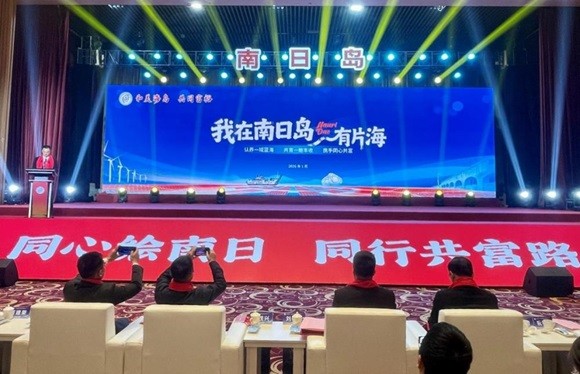
莆田秀屿南日岛推出“我在南日岛有片海”认养计划 激活共富新动能
Xin Hua She· 2026-01-05 05:29
1月3日,在福建莆田市秀屿区南日岛共同富裕发展促进会成立大会上,"我在南日岛有片海"认养计 划正式发布,以300元"共富套餐"为载体,打通"海域养殖-认养消费-渔民增收-集体共富"的发展链路, 为这座国家级"和美海岛"的共同富裕注入新动能。 南日岛地处莆田市海域东南部,坐拥原生态洁净海域,国家地理标志产品"南日鲍"以体肥壳靓、鲜 甜弹糯的特质享誉省内外,承载着海岛渔民世代相传的养殖智慧。 "我在南日岛有片海"认养计划以南日岛核心资源为依托,创新推出"认养一域蓝海,共育一鲍丰 收,携手同心共富"的发展模式。认养者只需花费300元,即可获得"1+6"专属权益:不仅能收获2斤正宗 5头"南日鲍",还能畅享包含全岛星级酒店、民宿、伴手礼馆在内的6大吃住游购专属福利。 "我在南日岛有片海"认养计划发布现场(活动主办方供图) 更具特色的是,认养者可通过溯源系统实时关注鲍鱼养殖动态,深度参与海洋养殖的全过程,直观 感受从海域到餐桌的生态链路。"这不仅是消费者的'品质福利单',更是渔民的'收益保障单'和海岛 的'共富加速器'。"秀屿区副区长吴俊表示,认养模式让渔民提前锁定销售渠道、保障收益稳定,同时 以消费端需求倒逼养殖端升 ...
中国鱼子酱风靡欧洲!改写百年市场格局,现代农业高效生产是关键
Sou Hu Cai Jing· 2026-01-05 05:28
Core Viewpoint - The article discusses how China has become a dominant player in the caviar market, producing two-thirds of the world's caviar and supplying high-end Michelin restaurants in France and Italy, thus reshaping the global perception of this luxury food item [1]. Group 1: Historical Context - Caviar, once considered a food for the poor, gained status as a luxury item in Europe due to historical events, including the migration of Russian elites to France after the October Revolution [3]. - The overfishing of wild sturgeon, driven by European demand, has led to the endangerment of these fish, which is a key reason for the high price of caviar [3]. Group 2: China's Rise in Caviar Production - The international ban on wild caviar exports in 2006 inadvertently created an opportunity for artificial breeding, where China has excelled since the 1990s, becoming the world's leading producer [5]. - China's long-term investment in sturgeon farming, which requires 7 to 15 years for fish to mature, contrasts with Western companies' focus on short-term profits, making it difficult for them to enter this market [5]. Group 3: Government and Industry Support - The Chinese government has provided continuous support for sturgeon breeding research and industry development, leading to significant advancements in production capabilities [7]. - Local governments have also played a role in promoting caviar production, with provinces like Zhejiang and Sichuan leading in global output [8]. Group 4: Business Strategy - Chinese caviar is often rebranded in Europe, sold under European labels at significantly higher prices, which allows China to avoid trade barriers while still profiting from the supply chain [10]. - This strategy of focusing on supply chain management rather than brand ownership is seen as a way to mitigate risks associated with trade protectionism [12]. Group 5: Future Implications - The success of China's caviar industry may lead to a hollowing out of Western high-value food production as they focus on branding rather than manufacturing [14]. - As China continues to replicate this model in other high-end agricultural sectors, it is poised to gain a more significant position in the global market for premium food products [14].

日喂两千公斤,他俩养出爱吃辣椒的鱼
Xin Lang Cai Jing· 2026-01-04 17:59
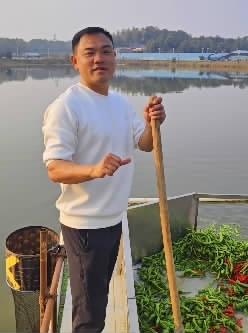
匡科正在向水塘里的鱼投喂辣椒。 受访者 供图 1月4日,湖南长沙郊野的60亩鱼塘边,整车剁碎的辣椒倾泻入塘,翠绿鲜红的辣椒碎落入水中,瞬间激 起层层水花,成群鱼儿争相围拢抢食,场面十分热闹。 这是养殖户匡科与同学姜胜的创新尝试,用残次辣椒喂鱼。不仅化解了周边菜市场残次辣椒的处理难 题,大幅压缩了养殖成本,还养出了无土腥味的优质鲜鱼,凭借垂钓模式打响特色招牌。 ■文/视频 三湘都市报全媒体记者 田甜 困境里的巧思,残次辣椒成鱼食 匡科与姜胜的辣椒养鱼之路并非刻意设计,而是在面对资金困境时灵机一动的选择。2025年1月,两人 怀揣着创业热情正式涉足水产养殖,承包下60亩鱼塘,3月顺利投放第一批鱼苗。 创业初期资金紧张,两人处处精打细算,连购置常规鱼饲料都要反复核算成本,生怕资金链断裂。一 次,他们前往渔场附近的菜市场采购养殖所需物资时,偶然发现多个摊位角落堆积着大量残次辣椒,无 法正常售卖,商贩们正为如何处理这些"废料"犯愁。 "想着能省一点是一点,就以每斤几毛钱的价格收了一批,抱着试试看的心态喂鱼,没想到鱼儿竟抢着 吃。"匡科笑着表示。 此后,他们便固定收购这类破损本地青椒、小米辣,每天清晨先对辣椒进行分拣,剔 ...
水产种苗破1800亿尾,综合产值超100亿元,未来三年九江镇要这样干
Nan Fang Nong Cun Bao· 2026-01-04 09:05
Core Viewpoint - The article discusses the ambitious development plan for the aquaculture industry in Jiujiang Town, aiming to achieve a comprehensive output value exceeding 100 billion yuan within three years, with a focus on enhancing brand recognition and integrating various industry sectors [2][60]. Group 1: Development Goals and Plans - Jiujiang Town aims to become a national benchmark for high-level aquaculture, with a target of producing over 1.8 trillion fish seedlings by 2027, contributing significantly to the national and Guangdong fish seed market [7][9]. - The "Three-Year Development Plan" for the aquaculture industry has been officially released, outlining strategies for industrial upgrading, technological innovation, and the integration of primary, secondary, and tertiary industries [4][6]. - By 2025, Jiujiang is expected to produce approximately 1.7 trillion fish seedlings, accounting for about 10% of the national total and 20% of Guangdong's output [9][10]. Group 2: Brand and Market Strategy - The plan emphasizes building a comprehensive brand system, with a goal of adding at least 10 new freshwater fish trademarks and brands by 2027 [14][66]. - Jiujiang aims to enhance its brand influence by promoting the slogan "World Seedlings Look at Jiujiang," reinforcing its reputation as "China's Freshwater Fish Seedling Capital" [12][17]. - The establishment of a complete industrial chain from quality fish seedlings to branded finished fish products is a key focus, supported by technological advancements and collaboration with academic teams [18][19]. Group 3: Infrastructure and Investment - The Guangdong International (Nanhai) Health Food Industrial Park has attracted 13 enterprises with a total investment exceeding 4 billion yuan, aiming to create a processing hub for aquatic products in the Guangdong-Hong Kong-Macao Greater Bay Area [31][32]. - The modern aquaculture logistics industrial park is expected to handle approximately 250,000 tons of aquatic products by 2025, playing a crucial role in the national aquaculture distribution landscape [40][42]. - Planned investments of over 300 million yuan will support the construction of key projects, including a seafood trading center and cold chain logistics base, targeting an annual circulation of 300,000 tons of aquatic products by 2027 [44][45]. Group 4: Key Industry Elements and Support - The development plan identifies three critical industry elements: promoting seedling research and innovation, modernizing breeding practices, and establishing high-quality standards for fish species [51][68]. - The plan includes initiatives to enhance social participation and government support, ensuring resources flow towards agricultural industries and fostering collaboration among stakeholders [70][71]. - Jiujiang aims to integrate agriculture, cuisine, tourism, and culture to create a new highland for food culture in the Greater Bay Area, with plans for at least 10 cultural dining events annually [59][69].

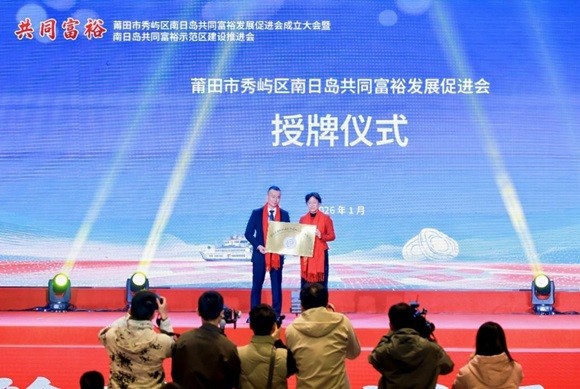
向海问路,踏浪共富!福建南日岛共同富裕发展促进会正式成立
Xin Hua Cai Jing· 2026-01-04 07:58
1月3日,福建省秀屿区南日岛共同富裕发展促进会(以下简称"促进会")成立大会在莆田秀屿区启 幕,此次促进会的成立,是福建省第三大岛、第一离岸大岛南日岛探索共同富裕道路的重要举措。 "南日岛共同富裕发展促进会的成立,是响应莆田市委、市政府'和美莆田、共同富裕'新愿景,推 进秀屿区南日岛共同富裕发展示范区建设的重要举措。"莆田市秀屿区区长朱建阳在大会致辞时表示, 促进会初心在于"共富裕、谋发展",旨在搭建联结党委、政府与岛上父老乡亲的"连心桥",汇聚各地乡 情、人才、技术、项目的"资源桥",以及先富带动后富的"帮衬桥"。 促进会不仅是"朋友圈",更是"同心圆"。朱建阳表示,要将力量拧成一股绳,实实在在投入到环岛 路建设、综合体育馆建设、海岛养老服务等民生实事项目中,让发展的阳光照遍岛上每个角落,让共同 富裕从美好愿景成为岛民触手可及的现实。 南日岛共同富裕发展促进会授牌仪式。(活动主办方供图) 据悉,促进会首批会员涵盖水产养殖、文旅开发、商贸服务、学术研究等多个领域,具有广泛的代 表性和较强的社会影响力。大会选举产生了促进会第一届理事会、监事会成员。 专家代表在发言中纷纷表示,促进会的成立恰逢其时,将为南日岛共同 ...