脑机接口

Search documents
脑机接口概念上扬,创新医疗涨停,翔宇医疗等大涨
Zheng Quan Shi Bao Wang· 2025-08-05 06:32
机构表示,脑机接口已历经五十年发展历程,多国为期十年的前期投入已助力脑机接口技术和产业从应 用萌芽期迈入普及期,有望在十年内实现"应用解决方案效果良好,多类解决方案走向成熟的目标"。脑 机接口是事关经济社会发展的战略性领域,其深化发展有利于我国在未来产业科技竞争中抢占制高点。 消息面上,此前有报道称,苹果公司正在与脑机接口公司合作开发"使用大脑信号操纵苹果设备"的技术 标准。周一公布的一段展示视频,首次演示了这项技术的进展。视频显示,作为这场未知试验的参与 者,患有渐冻症的马克.杰克逊在2023年成为首批植入Stentrode的患者。他现在仅凭意念,就能在iPad的 屏幕上选择目标,打开应用程序并撰写信息。 脑机接口概念5日盘中发力上扬,截至发稿,翔宇医疗涨超16%,创新医疗(002173)涨停,爱朋医疗 (300753)涨超8%,倍益康等涨超5%。 ...




苹果「脑控」iPad 首次公开演示:四肢瘫痪的他,用一个念头重新拥抱世界
3 6 Ke· 2025-08-05 05:38
Core Insights - The article discusses the groundbreaking development of brain-computer interface (BCI) technology by Synchron, which allows ALS patients to control Apple devices using their thoughts, marking a significant advancement in assistive technology [3][4][5]. Group 1: Technology Overview - Synchron's Stentrode is a minimally invasive brain-computer interface that captures neural signals through a micro-stent implanted in the brain's blood vessels, enabling users to control digital devices [3][5][18]. - The BCI HID (Brain-Computer Interface Human Interface Device) protocol introduced by Apple integrates brain signals as a native input method alongside touch, keyboard, and voice, facilitating a new form of interaction with Apple devices [7][11][21]. - The system provides visual feedback to users, allowing them to see the strength of their neural signals and make precise selections on their devices [11][13]. Group 2: User Experience - Mark Jackson, an ALS patient, is one of the first users of Stentrode, and he has reported significant improvements in his ability to interact with technology, including sending messages and controlling applications [9][30]. - The integration of AI, such as GPT-4o, enhances the BCI experience by predicting user needs and providing contextual options, making the interaction more intuitive and efficient [26][29][32]. - Synchron aims to make BCI technology as ubiquitous as keyboards and mice, focusing on improving the quality of life for individuals with severe mobility impairments [9][21][33]. Group 3: Market Potential - There are approximately 150,000 potential users in the U.S. with severe upper limb disabilities who could benefit from BCI technology, highlighting a significant market opportunity for Synchron [33]. - The global prevalence of spinal cord injuries, which affects around 15.4 million people, further underscores the demand for innovative assistive technologies like BCI [33][35]. Group 4: Competitive Landscape - Synchron's approach contrasts with Neuralink's invasive methods, as Stentrode offers a safer, less risky alternative for patients who cannot undergo traditional brain surgery [14][21][22]. - The collaboration between Synchron and Apple is seen as a pivotal moment in the BCI field, emphasizing the importance of safety and user experience in technology development [21][33].

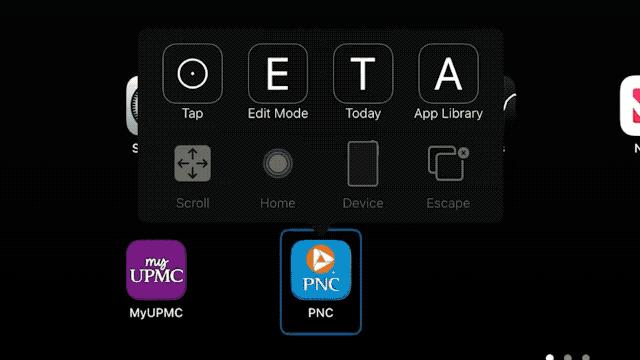
苹果“脑控”iPad 首次公开演示:用一个念头重新拥抱世界
Hu Xiu· 2025-08-05 05:11
Core Insights - The article discusses the groundbreaking demonstration of a brain-computer interface (BCI) technology that allows individuals with severe physical disabilities, such as ALS patients, to control Apple devices using their thoughts [1][3][4]. Group 1: Technology Overview - Mark Jackson, an ALS patient, is among the first to use Synchron's Stentrode, a brain-machine interface that captures neural signals through a minimally invasive procedure [3][6]. - The BCI HID (Brain-Computer Interface Human Interface Device) protocol introduced by Apple integrates brain signals as a native input method alongside touch, keyboard, and voice [4][8]. - Stentrode operates by being implanted in the brain's blood vessels, capturing signals that are then interpreted to control digital devices [6][34]. Group 2: User Experience and Impact - Jackson has successfully learned to perform complex tasks such as launching applications and sending messages using only his thoughts, significantly enhancing his quality of life [12][15]. - The BCI HID provides visual feedback to users, allowing them to see the strength of their neural signals and improve their focus during interactions [19][20]. - Synchron aims to make BCI technology as ubiquitous as keyboards and mice, emphasizing the importance of standardized interaction protocols [17][18]. Group 3: Competitive Landscape - The article contrasts Synchron's approach with Elon Musk's Neuralink, highlighting Synchron's non-invasive method versus Neuralink's invasive techniques [26][41]. - While Neuralink's device has more electrodes for capturing data, Synchron's Stentrode offers a safer and less invasive alternative, which may appeal to a broader audience [39][42]. Group 4: Future Developments - Synchron is working on integrating AI technologies, such as GPT-4o, to enhance the functionality of their BCI systems, allowing for more intuitive user interactions [48][51]. - The company plans to establish BCI HID as a cross-platform standard, enabling seamless integration of BCI devices into the digital ecosystem [24][60]. - As of now, Synchron has implanted Stentrode in several patients, with estimates suggesting a significant potential user base among individuals with severe upper limb disabilities [61][62].
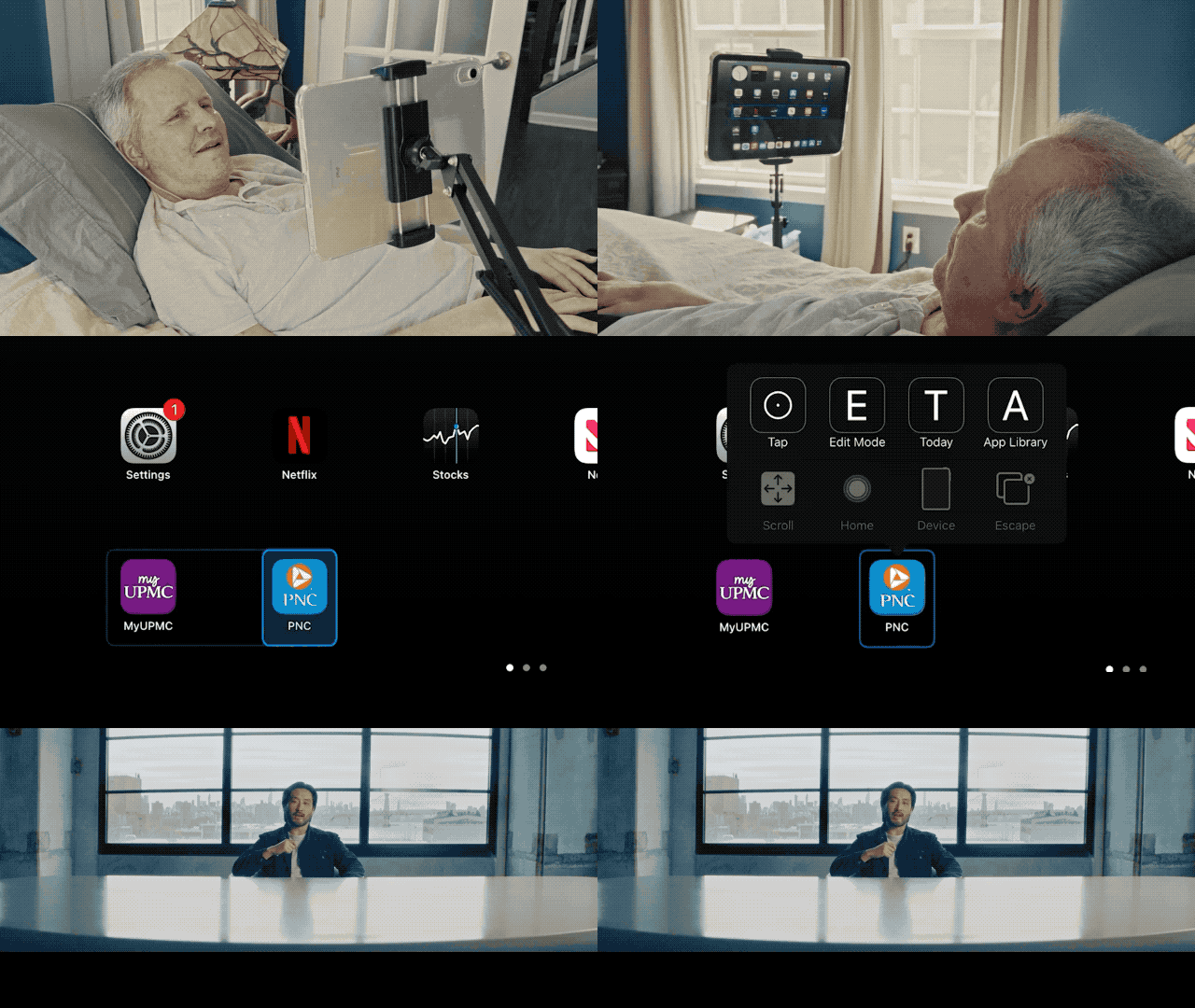
只用意念操控iPad!苹果借助脑机接口首次实现“思维驱动”
Jin Shi Shu Ju· 2025-08-05 03:08
Core Insights - Synchron, a brain-computer interface developer, showcased a video demonstrating a patient with ALS controlling an iPad using thoughts, marking the first native thought-driven control of Apple devices [2][4] - The project utilizes a new device interface protocol introduced by Apple in May, allowing brain input signals from Synchron's Stentrode implant to be converted into operational commands for iPhone, iPad, and Vision Pro [4] - Synchron's CEO, Tom Oxley, emphasized that this technology represents a breakthrough in human-computer interaction, with cognitive input expected to become a mainstream control method in the future [4] Company Developments - Synchron's Stentrode device is implanted via a minimally invasive procedure, avoiding traditional open-brain surgery risks, and reads brain signals to translate them into screen interactions [4] - Earlier reports indicated that Apple was collaborating with Synchron to develop technology enabling users to control devices through brain signals, aimed at assisting individuals with severe spinal injuries or diseases [5] - The anticipated release of new technical standards by Apple later this year is expected to enhance the functionality and accessibility of brain-computer interfaces [5] Market Potential - Morgan Stanley estimated that approximately 150,000 individuals in the U.S. with severe upper limb disabilities could be potential early users of brain-computer interface devices [6] - Synchron has implanted the Stentrode device in at least 10 individuals since 2019, with expectations for commercial approval of such devices by 2030, although Oxley believes Synchron may achieve approval sooner [6]
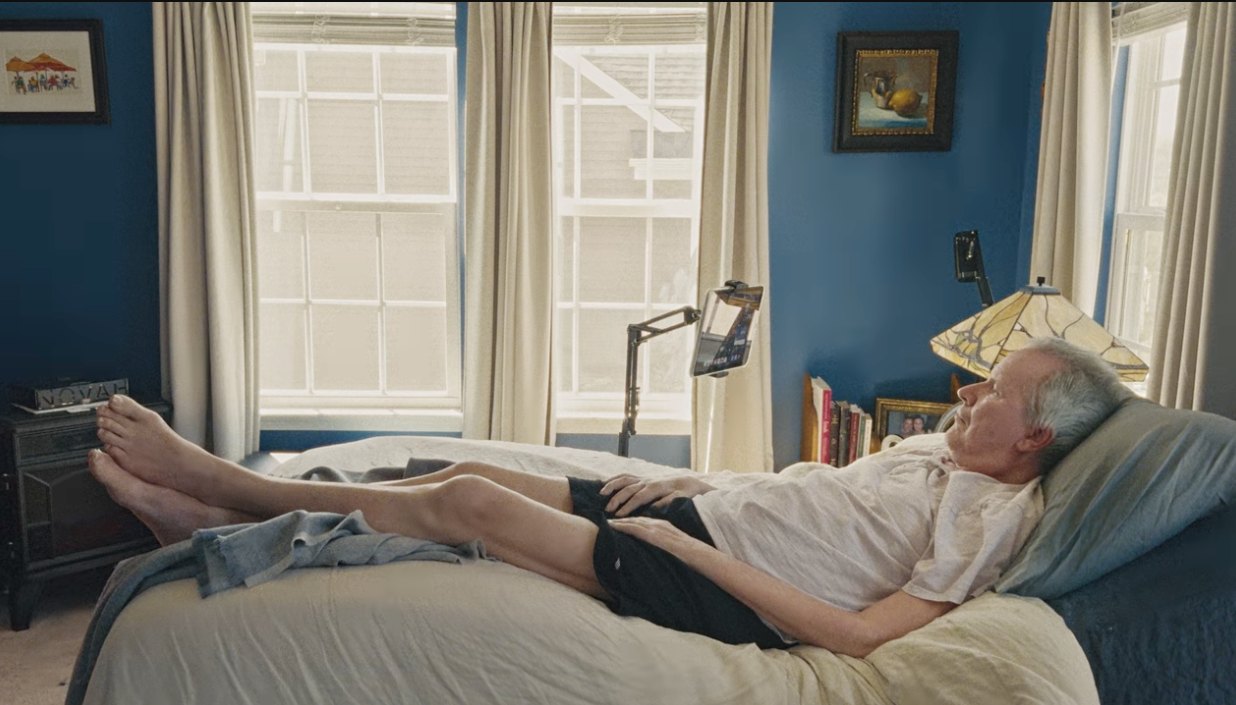
美国女子瘫痪20年后植入马斯克公司脑部芯片,靠意念写下自己名字
Xin Lang Cai Jing· 2025-08-04 18:18
Core Insights - A woman in the U.S. who has been paralyzed for 20 years successfully implanted a brain chip developed by Elon Musk's company, allowing her to write her name using only her thoughts [1] Group 1 - The brain chip technology represents a significant advancement in neurotechnology, showcasing the potential for restoring communication abilities in individuals with severe disabilities [1] - This case highlights the practical applications of brain-computer interfaces (BCIs) in improving the quality of life for patients with paralysis [1] - The successful demonstration of writing through thought could pave the way for further developments in assistive technologies and rehabilitation methods [1]

聚焦新质生产力系列之八:从“心想”到“事成”!中国脑机接口:从技术突破到临床验证的跨越
Huan Qiu Wang· 2025-08-04 09:58
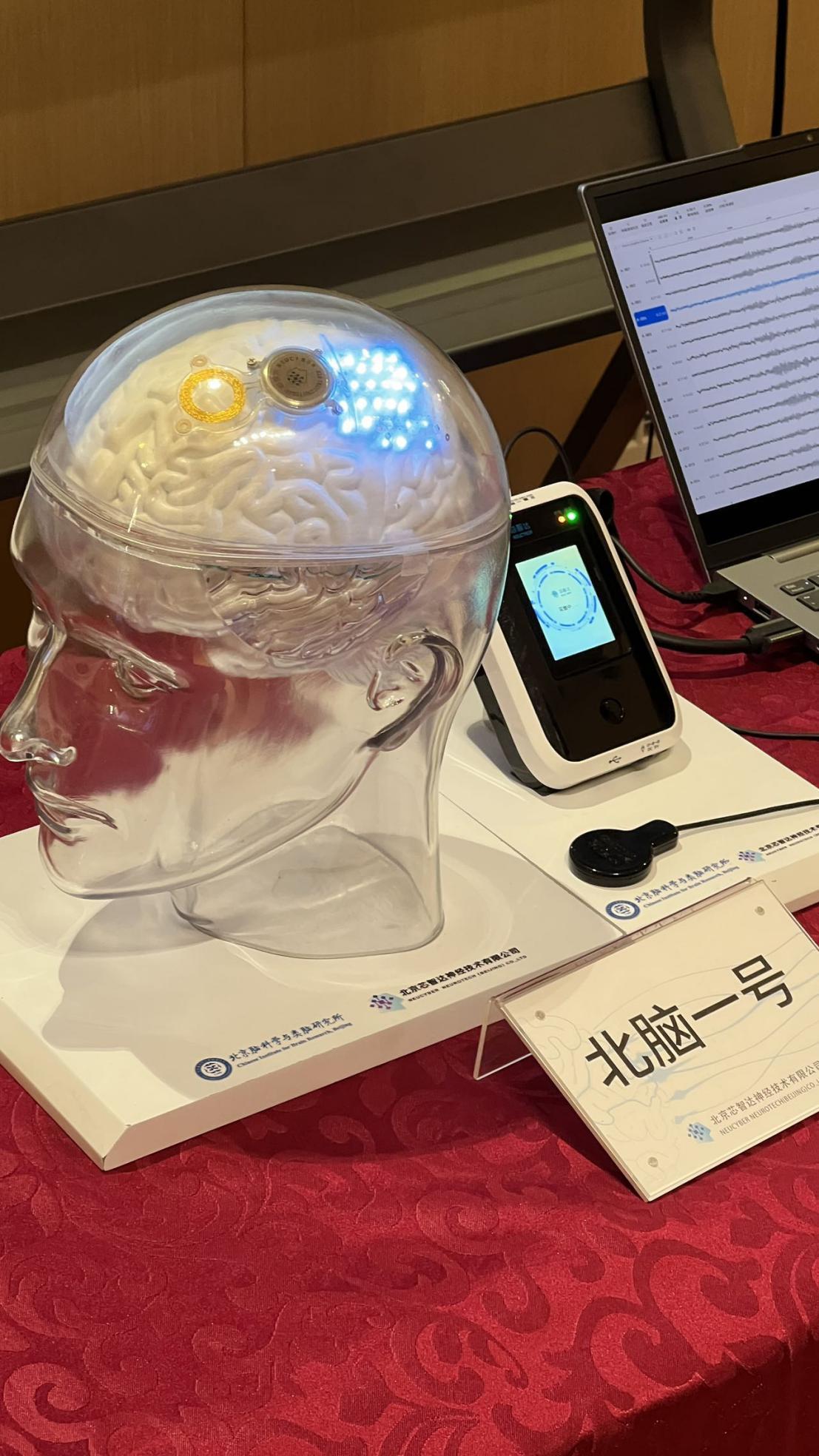
那么,国内脑机技术的发展现状究竟怎样?在实际应用于患者治疗方面又取得了哪些成效?商业落地落地又面临哪些局限?针对这些疑问,环球网记者近日 采访了芯智达业务发展总监李园。 解码脑机接口技术逻辑 作为一项变革性的人机交互技术,脑机接口是在大脑与外部设备之间创建信息通道,实现两者之间直接信息交互。脑机接口技术的持续发展与突破,核心在 于对大脑工作机制的深入探索与研究。 【环球网科技报道 记者 冯超男】日前,马斯克旗下脑机接口公司Neuralink宣布,公司首次在一天之内完成了两位受试者的脑机接口植入手术。"Neuralink最 终将改变数百万甚至数十亿人的生活。"马斯克在Neuralink宣布这一消息的推文下评论道。 事实上,脑机接口技术并非Neuralink一家"独角戏",近年来来在全球范围内得到了蓬勃发展,创新成果频出。在国内,北京脑科学与类脑研究所(CIBR) 与北京芯智达神经技术有限公司(下称"芯智达")联合研发出"北脑一号"已完成5例患者植入。值得一提的是,"北脑一号"是国际上首个百通道以上的高通 量、无线全植入、准实用化半侵入式脑机系统。 人脑是人体最为复杂和精密的器官,由约860亿个神经元和数万亿个神 ...
睡眠科技的脑电突围:从实验室到千亿市场的破壁革命
Zhong Guo Chan Ye Jing Ji Xin Xi Wang· 2025-08-04 06:56
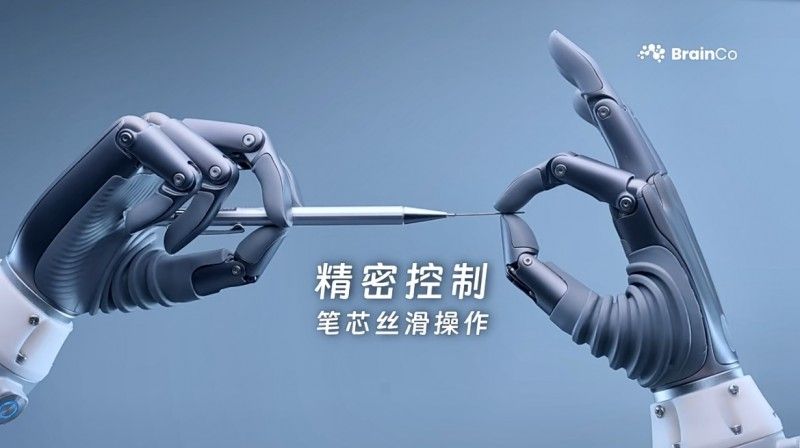
Group 1: Brain-Computer Interface (BCI) Technology - The recent advancements in brain-computer interface technology, particularly by Neuralink, have sparked global interest, showcasing its potential to address significant health issues [1][8] - In China, non-invasive BCI technology is gaining momentum, with applications demonstrated at the 2025 World Artificial Intelligence Conference, highlighting its practical potential [1][3] - Non-invasive BCI technology is expanding from medical rehabilitation to smart home applications, showing unique value in sleep management and other emerging scenarios [3][8] Group 2: Sleep Technology and Market Potential - Sleep issues, especially insomnia, affect millions globally, and traditional solutions often fall short, creating a demand for innovative approaches [4][8] - Non-invasive BCI products can provide precise monitoring of sleep quality by capturing and interpreting brain waves, offering a new pathway for sleep improvement [4][6] - The collaboration between Xilinmen and BrainCo to launch the world's first AI mattress integrating brainwave technology represents a significant product innovation in the sleep technology sector [6][8] Group 3: Future of Sleep Health Management - The integration of brainwave data into various sleep-related products is expected to create personalized sleep solutions across different environments, enhancing user experience [7][8] - The rapid development of BCI technology in China positions it as a leading experimental ground for consumer-level applications, with projections indicating a significant growth in the sleep health industry by 2030 [8][9] - The vision of a fully integrated "neuro-level" smart sleep environment is emerging, where brainwave monitoring can influence various aspects of the sleeping environment for optimal rest [8][9]
诚益通(300430.SZ):公司将持续投入脑机接口核心技术研发,推进严肃医疗与消费级场景的应用落地
Xin Lang Cai Jing· 2025-08-04 02:56
Core Viewpoint - The company expresses confidence in the development of the brain-computer interface (BCI) industry due to supportive policies from the government and clear medical insurance charging mechanisms [1] Group 1: Company Development - The company plans to continue investing in core technology research and development for brain-computer interfaces [1] - The company aims to advance the application of BCI technology in both serious medical and consumer scenarios [1] - The company is actively responding to the national strategy for independent innovation [1] Group 2: Industry Context - The encouragement and support from national and local governments for the BCI industry are expected to drive further development [1] - The clarification of medical insurance charging mechanisms is seen as a catalyst for the growth of the BCI sector [1]

这周聊点啥:昨天梦里的VS今天要买的
Shang Hai Zheng Quan Bao· 2025-08-03 13:01
Group 1 - The World Artificial Intelligence Conference showcased over 3,000 cutting-edge exhibits, with more than 80 robotics companies participating, a significant increase from 18 last year [3] - The AI robots demonstrated various skills, including playing games, cooking, and performing arts, indicating advancements in practical applications of AI technology [3] - The industry categorizes AI intelligence into six levels, with most current robots at levels 1 to 2, while the goal is to achieve Artificial General Intelligence (AGI) in the next 5 to 10 years [3] Group 2 - Neuralink is launching clinical trials in the UK to test brain chip implants, aiming to implant chips in 20,000 people by 2031, with projected revenues of $1 billion [5] - CorTec has successfully completed its first brain-computer interface (BCI) surgery in the US, targeting stroke patients for rehabilitation [5] - A new multi-modal dream brain-computer interface called "Dream Neighbor" was introduced, featuring capabilities like monitoring brain waves and providing customized health advice [5] Group 3 - Nvidia's market capitalization surged to $4.3 trillion, significantly impacting the Nasdaq index [7] - Samsung secured a $16.5 billion chip manufacturing contract with Tesla, aiming to reduce Tesla's reliance on Nvidia and enhance production efficiency [7][8] - This contract, lasting until the end of 2033, could reshape the global semiconductor foundry landscape [8] Group 4 - Food prices in the UK have reached a 17-month high due to supply chain issues, increased transportation costs, and climate anomalies [9] - Japan is experiencing a food price surge, with over 1,000 items expected to increase by an average of 11% in August, driven by rising raw material and logistics costs [9] - Extreme weather conditions have led to significant price hikes in essential food items globally, such as a 50% increase in olive oil prices in Spain and an 89% increase in onion prices in India [9]


马斯克脑机公司Neuralink宣布在英国启动临床研究;本田将投资2000万美元在土耳其新建摩托车生产工厂丨智能制造日报
创业邦· 2025-08-02 03:13
Group 1 - Sichuan Embodied Humanoid Robot Technology Co., Ltd. signed a contract to establish the "Provincial Humanoid Robot Manufacturing Innovation Center," marking the first joint manufacturing innovation center in the province [2] - Honda announced a $20 million investment to build a new motorcycle production facility in Izmir, Turkey, with an initial capacity of 100,000 units per year, aiming to increase to 200,000 units in the future [2] - InnoCare responded to its collaboration with NVIDIA, stating that the partnership is still in the testing phase and has not yet generated substantial orders, despite a significant stock price increase [2] - Neuralink, Elon Musk's brain-machine interface company, announced the launch of clinical research in the UK to test its chip's ability to help severely paralyzed patients control digital and physical tools through thought [2]