
乡村振兴

Search documents
潍坊市召开全市片区化推进乡村振兴现场会议,更大力度推进乡村振兴片区建设
Zhong Guo Fa Zhan Wang· 2025-11-25 05:17
Core Points - The meeting in Weifang City focused on advancing rural revitalization through a district-based approach, aligning with the directives from the 20th Central Committee and President Xi Jinping's visit [1] - The city aims to enhance agricultural modernization and competitiveness while promoting high-quality development in rural areas [1] Group 1 - The Weifang government emphasizes the importance of integrating three innovative models for rural revitalization, which has led to improved industry competitiveness and rural attractiveness [1] - Future efforts will focus on high-level construction and quality development of rural revitalization districts, acting as pioneers in agricultural modernization [1] Group 2 - The city plans to leverage the "Ten Million Project" experience, emphasizing planning, local adaptation, and orderly advancement to create recognizable and replicable rural revitalization districts [2] - Key strategies include enhancing industrial development, improving infrastructure, and fostering collaborative governance to boost rural living conditions and farmer income [2] - The meeting included discussions from representatives of various cities, highlighting practical examples of rural revitalization initiatives [2]
长沙积极探索乡村振兴可持续模式,推介“ 三年百村”整村运营成果
Chang Sha Wan Bao· 2025-11-16 02:03
Core Insights - The event at the 26th Central Agricultural Expo in Changsha focuses on the theme "Rich Soil Hides Gold: Village-Enterprise Win-Win," showcasing the achievements of Changsha's "Three-Year Hundred Villages" integrated operation initiative for 2025, marking significant progress in revitalizing rural resources and exploring new models for rural revitalization [1][2] Group 1: Model Innovation - The core breakthrough of the promotion is in model innovation, moving away from simple resource listing to an integrated model of "resource integration + visual presentation + market operation," providing a comprehensive solution for village-enterprise connections [2] - The Changsha Rural Property Transaction Center has established a standardized evaluation system and a regulated transaction process, transforming scattered resources into clear "investment asset packages" [2] Group 2: Resource Integration - Pilot villages such as Muyun New Village in Tianxin District and Lingchong Village in Wangcheng District have successfully integrated their land, industry, and cultural tourism resources, turning "sleeping assets" into tradable and operational quality targets, significantly enhancing matching efficiency and investment attractiveness [2] Group 3: Technological Application - The innovative use of VR technology in the promotion map allows for three-dimensional visualization and dynamic presentation of rural assets, creating a unique profile for each village [2] - This technology breaks spatial and temporal limitations, enabling investors to conduct preliminary assessments remotely, thus reducing initial investigation costs and improving the accuracy and efficiency of investment decisions [2] Group 4: Market Response - During the expo, the first batch of 20 pilot villages received over 200 interested investors, with preliminary cooperation intentions exceeding 10 million yuan, reflecting positive market feedback and validating the effectiveness of the comprehensive solution model [2]
河南省三八红旗奖揭晓 60个集体200名个人获表彰
He Nan Ri Bao· 2025-09-19 23:45
Group 1 - The Henan Province Women's Federation awarded the "March 8th Red Flag Award" to 60 advanced collectives and 200 outstanding individuals, recognizing their contributions to economic and social development [1][2] - The selection process for the awards adhered to principles of openness, fairness, and justice, involving multiple rounds of review and public announcements at various levels [1] - Awardees represent exemplary women from various sectors, showcasing their significant roles in societal progress and achievements [1][2] Group 2 - Notable awardees include experts from China Petroleum & Chemical Corporation who have made advancements in oil and gas exploration, as well as community leaders who have revitalized rural areas and improved local economies [2] - Other recognized individuals contributed to smart city projects and judicial collaboration, demonstrating a commitment to innovation and community service [2] - The Henan Province Women's Federation encourages awardees to continue their exemplary work and serve as role models in their respective fields [2]
绿维文旅:国务院部署“AI+”,为文旅智能化发展划定新路径
Xin Lang Cai Jing· 2025-09-02 18:13
Core Insights - The State Council has officially issued the "Opinions on Deepening the Implementation of 'Artificial Intelligence +'" which outlines six key actions for accelerating the intelligent upgrade across various sectors of the economy and society [3][4] - The document emphasizes the integration of AI in enhancing consumer quality, improving public welfare, and boosting governance capabilities, aligning closely with the needs of the cultural and tourism industry [3][4] Policy Analysis: Four Key Areas Anchoring Intelligent Development in Cultural and Tourism - **Artificial Intelligence + Consumer Quality**: Focuses on upgrading the hardware foundation for cultural and tourism services, addressing the pain points of insufficient hardware support [4] - **Artificial Intelligence + Public Welfare**: Aims to activate the cultural and wellness core of the tourism sector through content innovation and inclusive services [6] - **Artificial Intelligence + Governance Capability**: Promotes urban-rural balance in tourism development by enhancing urban tourism facilities and extending AI services to rural areas [9] - **Basic Support Capabilities**: Seeks to improve the ecological support system for AI applications in tourism, lowering application barriers and standardizing development environments [10] Practical Implementation: Five Core Scenarios for "Artificial Intelligence + Cultural and Tourism" - **Smart Service Matrix in Scenic Areas**: Establishes AI-driven full-process services in scenic spots, integrating facial recognition and health monitoring [12] - **Digital Experience in Cultural Tourism**: Creates immersive experiences in heritage sites using VR and AI to enhance cultural learning [13] - **Intelligent Wellness Travel Solutions**: Offers customized services in wellness destinations, matching health needs with local offerings [15] - **Smart Upgrades in Rural Tourism**: Implements inclusive services in rural areas, utilizing AI for health assessments and cultural demonstrations [16] - **Integration of Sports and Wellness**: Develops scientific exercise scenarios in outdoor settings, promoting health and wellness through AI [18] Value Significance: Restructuring Service Logic and Development Patterns in Cultural and Tourism Industry - **Service Logic**: Transitions from standardized to personalized services, aligning with the goal of enhancing life service quality [19] - **Business Structure**: Moves from singular to integrated business models, fostering new business opportunities across cultural, sports, and wellness sectors [20] - **Spatial Layout**: Shifts from urban-centric to inclusive urban-rural development, ensuring equal access to intelligent services for rural tourists [21]


南农晨读丨七夕
Nan Fang Nong Cun Bao· 2025-08-29 01:35
Group 1 - The article discusses the strategic initiative of cultivating "typical village areas" in Guangdong to address urban-rural development imbalances and promote high-quality rural revitalization [4][5][6] - A total of 15 cities in Guangdong have announced the results of the "Hundred Million Thousand Typical Village Area Cultivation Project" for 2024-2025, with 20 locations selected, including Wengyuan, Renhua, and Jiaoling [4][5] - The initiative aims to enhance rural development through innovative measures, contributing to the overall goal of rural revitalization and economic growth [5][6] Group 2 - The "Media+" initiative in Yunfu City aims to build a comprehensive agricultural product market system from 2025 to 2027, focusing on increasing agricultural efficiency, rural vitality, and farmers' income [17][18][27] - The action plan emphasizes the development of new business models under the "Media+" framework to promote urban-rural consumption, agricultural tourism, and media transformation [26][27] - The strategy includes leveraging internet thinking and new media advantages to enhance market channels and brand value, as seen in the promotion of Guangdong's Simao rice [29][30][31]

业务聚焦丨协同监督规范乡村振兴资金管理使用
Zhong Yang Ji Wei Guo Jia Jian Wei Wang Zhan· 2025-08-05 23:59
Core Viewpoint - The article emphasizes the importance of effective management and supervision of rural revitalization funds in Jiangsu Province, highlighting the establishment of a collaborative supervision mechanism to ensure proper usage and management of these funds [1][2][3][4][5] Group 1: Collaborative Supervision Mechanism - Jiangsu Province's Zhenjiang City has created a collaborative supervision framework to address the challenges of dispersed supervision and poor information communication [1] - A governance working group has been formed involving multiple departments to identify risks in the management and use of rural revitalization funds [1][2] - A regular consultation model has been established to facilitate information sharing and collaborative handling of significant issues, resulting in 5 joint meetings and 17 problem leads transferred to the disciplinary inspection and supervision authorities [1][2] Group 2: Problem Identification and Data Utilization - The Zhenjiang City disciplinary inspection and supervision authorities have adopted a dual approach of precise problem identification and leveraging big data to enhance the discovery of issues [2] - A comprehensive review of 12 departments involved in rural revitalization funding has been conducted to clarify risk points in various stages such as application, approval, and disbursement [2] - Specific areas with high funding volumes and risks, such as agricultural machinery subsidies and rural toilet renovations, have been targeted for in-depth inspections [2] Group 3: Enforcement and Deterrence - The article stresses a zero-tolerance policy towards actions harming public interests, with a focus on rapid and strict investigations [3] - Key areas of investigation include financial subsidies and project funds, with a particular focus on county-level officials and critical positions [3] - Since the beginning of the year, 89 individuals have been investigated in relation to rural revitalization funds, with 11 placed under detention, signaling a strong commitment to enforcement [3] Group 4: Systematic Governance and Improvement - The article discusses the need for a robust regulatory framework to transition from punishing a few to managing the majority effectively [4][5] - It highlights the importance of addressing systemic issues revealed during investigations and enhancing institutional regulations [4] - The article also mentions the completion of over 20 public welfare projects aimed at improving rural infrastructure and living conditions, ensuring that funds are effectively utilized for community benefit [5]
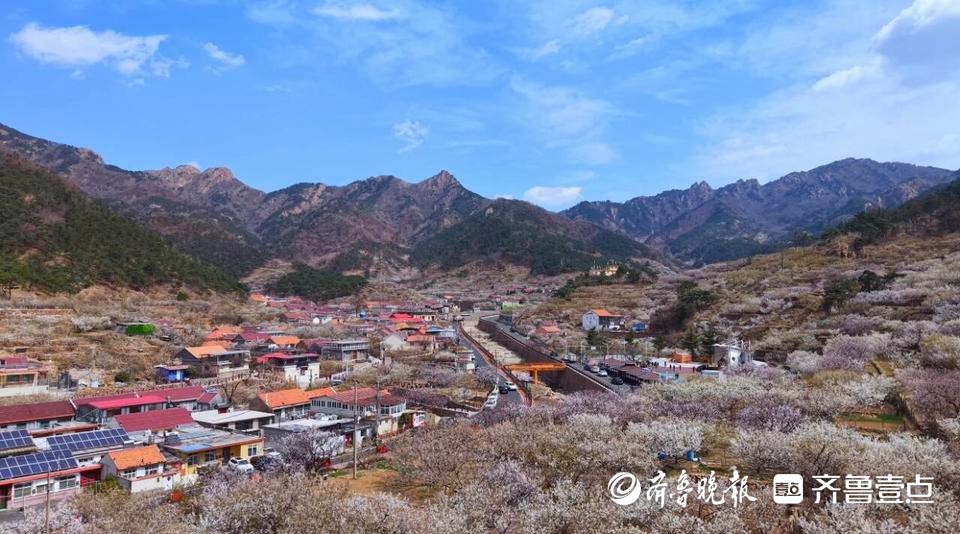
城阳4个乡村振兴片区年接待游客超200万人次
Qi Lu Wan Bao Wang· 2025-07-31 13:13
Core Insights - The article discusses the overall situation of rural revitalization work in Qingdao's Chengyang District, aiming to establish a model for rural revitalization in Shandong Province by implementing the "Three Hundred Projects" [1][3] Group 1: Development Strategy - Chengyang District has established four rural revitalization areas in agricultural streets, effectively promoting high-quality rural development [1] - The district focuses on high-level planning and tailored strategies for each area, avoiding a one-size-fits-all approach [3][5] - The planning includes collaboration with top domestic design firms to ensure comprehensive development in terms of aesthetics, spatial layout, industrial structure, and ecological environment [3][6] Group 2: Infrastructure and Environment - Infrastructure improvements include the construction of a 6-kilometer ring road and a 2.45-kilometer walking path in the Shanshe Valley area, enhancing the local landscape [6] - The district has implemented a series of guidelines to create clean village models, significantly improving the appearance of villages and agricultural landscapes [6][7] Group 3: Economic Development - The district promotes the integration of agriculture, culture, and tourism, with significant investments in projects like a cherry orchard and a smart beekeeping industry [7] - The East Mao West Block has seen an investment of 435 million yuan to enhance local industries, with various tourism and agricultural projects nearing completion [7][8] Group 4: Governance and Collaboration - A collaborative operational model has been established, involving government, enterprises, and local communities, resulting in increased collective income for villages [8] - The district has pioneered a financing model that supports collective economic organizations, enhancing local economic vitality [8] - Partnerships with Qingdao Agricultural University have been formed to establish technology transfer bases, providing intellectual support for rural revitalization [8]
广州举办“百企强百村”集体经济发展专题研训
Zhong Guo Jing Ji Wang· 2025-06-06 15:43
Group 1 - The "Hundred Enterprises Strengthen Hundred Villages" training program aims to enhance the practical capabilities of village and town officials in developing collective economies, addressing the weaknesses in collective economic development in rural areas [3] - The training includes four main modules: resource sorting, project planning, resource revitalization, and village-enterprise cooperation, designed to facilitate hands-on learning and practical application [3] - Participants will collaborate with third-party professional organizations to conduct a comprehensive inventory of rural collective assets, establishing a detailed resource information database and potential project database [3] Group 2 - Village "two committees" leaders are seen as key figures in rural development, responsible for integrating resources, planning projects, facilitating communication, and executing plans effectively [2] - The training emphasizes the importance of transforming "sleeping resources" into "development capital" through effective resource management and project execution [2] - A complete cycle of "theoretical learning - practical transformation - project incubation - resource connection" is established to activate rural development momentum and achieve the goals of strengthening collective economies and increasing income for the community [3]
山西“1+N”人才政策体系扩容升级
Zhong Guo Fa Zhan Wang· 2025-05-07 10:20
Core Viewpoint - Shanxi Province has introduced six new documents aimed at enhancing talent development and integration to support economic growth and modernization efforts, aligning with the directives from the Party's recent congresses and provincial meetings [1][2]. Group 1: Talent Policy Framework - The six new documents include measures to promote the integration of talent with innovation, industry, finance, and education, emphasizing a comprehensive approach to talent development [1][2]. - Specific measures include the implementation of a talent-sharing initiative among schools, research institutions, and enterprises, as well as the establishment of a cooperative platform to support the integration of the four chains [2]. Group 2: Sector-Specific Talent Initiatives - The "Flexible Introduction of High-Level Talent" document outlines a structured approach to attract high-level talent in key sectors such as education, healthcare, and state-owned enterprises, detailing qualifications and management processes [3]. - The "1513 Action Plan for Rural Talent Revitalization" aims to build a robust rural talent pool, focusing on development, governance, and policy support to facilitate rural modernization [3]. Group 3: Cultural and Tourism Talent Development - The measures for strengthening the cultural and tourism talent workforce include 19 specific actions aimed at enhancing talent acquisition, training, and utilization to support the growth of the cultural tourism industry [3]. - The document on reforming the cultural heritage talent development system proposes 16 initiatives to improve talent allocation, attract high-level professionals, and enhance training in the cultural sector [4].
靶向监督护航乡村振兴
Zhong Yang Ji Wei Guo Jia Jian Wei Wang Zhan· 2025-05-06 23:51
Core Viewpoint - The implementation of the rural revitalization strategy is a significant decision by the central government, with a focus on political supervision to ensure high-quality development in rural areas [1] Group 1: Responsibility and Supervision - The "key minority," especially the "first person in charge," plays a crucial role in rural revitalization, and the supervision focuses on their responsibilities and actions [1] - The Huian County Discipline Inspection Commission emphasizes early intervention and problem identification, enhancing supervision over the execution of rural revitalization policies, fund usage, and project advancement [1] - Regular follow-up supervision is conducted on significant matters related to fund usage and project construction, with a focus on political ecology analysis and the creation of a corruption risk list [1] Group 2: Public Concerns and Transparency - The supervision mechanism targets public concerns, particularly regarding rural collective assets, ensuring transparency in asset transactions and project management [2] - A detailed list of 45 items related to small powers at the village level has been established to promote transparency and accountability in rural collective affairs [2] - Since 2024, there have been 17,500 instances of publicizing party and village affairs, along with over 1,900 visits to address community issues and demands [2] Group 3: Efficiency and Collaboration - To enhance supervisory effectiveness, a collaborative mechanism has been established, dividing the county into five cooperative areas for joint supervision and problem-solving [3] - The county has addressed 292 cases of corruption and misconduct affecting the community, while also establishing 140 institutional mechanisms to improve governance [3] - The supervision efforts have extended to grassroots levels, with the establishment of village-level supervisory teams that have resolved over 200 issues since 2024 [4]