
低空经济产业

Search documents
专访中国社科院杜江:建好“四张网” 让低空经济从“能飞”到“飞得更高”
Xin Lang Cai Jing· 2026-01-02 20:34
Core Viewpoint - The development of the low-altitude economy is being emphasized as a new engine for productivity and strategic emerging industries, driven by national policies and technological advancements [1][2][4]. Group 1: Background of Low-Altitude Economy Development - The rapid development of the low-altitude economy in China is supported by four main factors: national strategic planning, technological advancements, changes in social interactions, and the need for new economic drivers [2][3][4]. - National strategy has positioned "low-altitude" as a new space resource and growth point, with policies evolving from transportation planning to industrial strategy [2]. - Key technologies related to low-altitude economy are maturing, enabling commercial viability and supporting automated management systems [2]. - Social changes are creating diverse demands for aerial services, enhancing the efficiency of public services and aligning with consumer preferences for faster, more flexible options [3]. - The transition from traditional economic drivers to new ones is crucial, as traditional sectors like real estate and infrastructure are losing momentum [4]. Group 2: Government and Capital Involvement - Local governments are actively promoting low-altitude economy development by seizing opportunities in rules and infrastructure, aiming to establish local growth hubs [5][6]. - The certainty of policies provides a "window period" for capital investment, although the commercial viability of business models needs time to validate [6]. - There is a significant market potential for the low-altitude economy, but caution is advised regarding overly optimistic assessments and the risk of homogenization in investment strategies [7]. Group 3: Infrastructure Development and Challenges - The construction of low-altitude economy infrastructure requires overcoming systemic barriers and ensuring comprehensive project support [8][9]. - The "four networks" (infrastructure network, air network, flight route network, and service network) are essential for the development of the low-altitude economy, with each network facing specific challenges [8][9][10]. - Establishing a governance loop that integrates construction, approval, management, operation, and compensation is critical for effective infrastructure development [8].
专访中国社科院杜江:建好“四张网”,让低空经济从“能飞”到“飞得更高”
Zhong Guo Jing Ying Bao· 2025-12-29 17:21
Core Viewpoint - The development of the low-altitude economy is being emphasized as a new engine for productivity and strategic emerging industries, driven by national policies and technological advancements [1][3][4]. Group 1: Background and Strategic Importance - The low-altitude economy is recognized as a new space resource and growth point, with national strategies focusing on its development [3][4]. - The rapid development of low-altitude economy is supported by advancements in key technologies, which have crossed the commercialization threshold, enabling scalable operations [4][5]. - Social changes and the demand for real-time services are driving the need for low-altitude services in various sectors, including emergency response and logistics [5][6]. Group 2: Government and Capital Involvement - Local governments are encouraged to take the lead in establishing rules and infrastructure to foster local growth in the low-altitude economy [7]. - The current policy environment provides a "window period" for capital investment, although investors remain cautious about the commercial viability of projects [8][9]. - There is a significant market potential for the low-altitude economy, but assessments often overlook operational realities, leading to potential over-optimism [9]. Group 3: Infrastructure and Operational Challenges - The construction of the low-altitude economy's infrastructure requires overcoming systemic barriers and ensuring comprehensive project support [10][11]. - The "four networks" (infrastructure network, air network, flight route network, and service network) are essential for the development of the low-altitude economy, with specific challenges identified in each area [10][11]. - Establishing a governance framework that integrates construction, approval, management, operation, and compensation is crucial for the successful implementation of low-altitude projects [10][11].

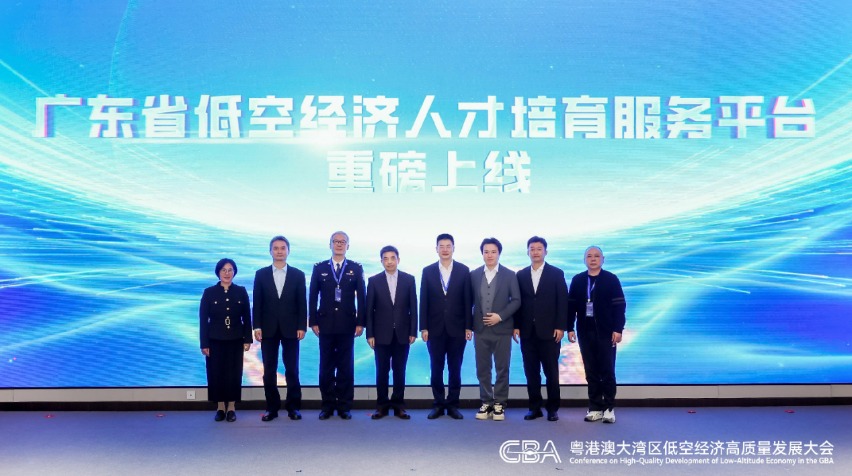
产业人才供需错配?广东上线全国首个低空人才培育服务平台
Nan Fang Du Shi Bao· 2025-12-25 15:09
Core Viewpoint - The Guangdong Province has launched a dedicated talent cultivation service platform for the low-altitude economy, aiming to address the mismatch between talent supply and demand in the industry, thereby supporting high-quality development in the low-altitude economy [1][3]. Group 1: Platform Overview - The platform is the first provincial-level dedicated talent service hub for the low-altitude economy in China, developed with guidance from various provincial departments and built in collaboration with Southern News Network and Guangdong Low-altitude Economy Industry Development Co., Ltd [1]. - The service model is structured as "1+2+5," which includes the establishment of a talent cultivation service platform, two resource databases, and five specialized talent services [3]. Group 2: Talent Service Model - The "1" in the model refers to the creation of a talent cultivation service platform that focuses on the entire career growth pathway, from career planning and skills training to employment matching and personal brand development [3]. - The "2" represents the establishment of two major resource databases: a technical and skilled talent database and an enterprise database, which will collect and catalog local talent and industry resources [3]. - The "5" encompasses five specialized talent services, including research consulting, training, precise employment, brand promotion, and event operation, aimed at meeting the needs of government, enterprises, schools, and individuals [3]. Group 3: Industry Impact - The platform addresses the pain points of supply and demand mismatch between educational institutions and enterprises, facilitating the training of "plug-and-play" low-altitude skilled talents [4]. - Educational institutions are encouraged to join the platform to align their courses and training bases with industry needs, while low-altitude enterprises are invited to publish job requirements and participate in course design [4]. - The platform will continuously evolve and initiate a "benchmark" research project to identify leading institutions and enterprises, thereby guiding industry development through exemplary cases [4].
聚焦大湾区|粤港澳大湾区携手打造低空经济高地
Xin Hua Wang· 2025-12-25 09:02
Core Insights - The Guangdong-Hong Kong-Macao Greater Bay Area is positioning itself as a leader in the low-altitude economy, leveraging its strengths in innovation, market size, and industrial ecosystem [1][2] Group 1: Industry Overview - Guangdong ranks first in China for civil drone production, with a projected output of 6.94 million units in 2024, capturing 95% of the consumer drone market and 54% of the industrial drone market [2] - The region hosts over 15,000 low-altitude industry chain enterprises, accounting for more than 30% of China's total [2] Group 2: Government Initiatives - The Greater Bay Area is actively fostering collaboration among cities like Hong Kong, Macau, Guangzhou, and Zhuhai to develop a comprehensive low-altitude economic ecosystem [1][2] - Hong Kong plans to establish a low-altitude economy working group to formulate development strategies and regulatory frameworks, with a "regulatory sandbox" set to launch in March 2025 [2][3] Group 3: Future Development - The low-altitude economy is seen as a strategic industry for national development and a new engine for integration within the Greater Bay Area [3] - The 2025 Guangdong-Hong Kong-Macao Greater Bay Area Low Altitude Industry Blue Paper emphasizes the importance of collaborative development among core cities and cross-border cooperation [3]
2025国际低空经济贸易博览会在广州开幕
Zhong Guo Xin Wen Wang· 2025-12-13 01:51
Core Insights - The 2025 International Low Altitude Economy Trade Expo (Guangzhou) has opened, showcasing the entire industrial chain of low altitude economy, attracting over 350 enterprises and institutions [1][2] - Guangdong has emerged as a leader in the low altitude economy, with over 15,000 related enterprises, accounting for more than 30% of the national total, and a projected output value exceeding 180 billion yuan in 2024 [1][2] Group 1 - The expo highlights the collaborative development of the low altitude economy across manufacturing, application, and service sectors, demonstrating China's comprehensive strength in this field [1] - Guangdong's production of consumer drones accounts for 70% of the global market, while industrial drones represent 50% [1] - The province has established 64 general airports, over 1,400 takeoff and landing points, and nearly 700 drone flight routes, showcasing significant infrastructure development [2] Group 2 - Local enterprises and institutions from Guangdong make up over 70% of the exhibitors, covering the entire value chain including eVTOL, drone systems, low altitude intelligence, radar countermeasures, and meteorological services [2] - Innovative products such as the "Low Altitude Route Operation Safety Capability Assessment Testing" and integrated safety hubs were showcased for the first time at the expo [2] - A forthcoming conference will focus on innovative applications and support elements in the low altitude economy, gathering experts and industry representatives to discuss logistics, cross-border flights, and public services [3]
呼和浩特市低空经济产教联合体成立
Nei Meng Gu Ri Bao· 2025-12-01 06:41
Core Viewpoint - The establishment of the Hohhot Low-altitude Economy Industry-Education Alliance aims to promote deep integration of industry and education in the low-altitude economy sector, facilitating collaborative development among government, enterprises, and educational institutions [1] Group 1 - The Hohhot Low-altitude Economy Industry-Education Alliance is led by the Hohhot Aerospace Economic Development Zone, Inner Mongolia Electronic Information Vocational Technical College, Low-altitude Intelligent Connection (Inner Mongolia) High-tech Co., Ltd., and related enterprises in the park, with participation from 80 organizations [1] - The alliance will adopt a "low-altitude + N" industrial development model to explore innovative mechanisms, optimize resource allocation, and strengthen collaborative efforts [1] - The initiative aims to create a new benchmark for industry-education integration that serves as a demonstration and leadership model, supporting the high-quality economic and social development of the region through talent cultivation [1]
刚刚,利好来了!万亿市场沸腾!
Sou Hu Cai Jing· 2025-11-23 08:07
Core Insights - The low-altitude economy in China is experiencing robust growth, with projections indicating a market size of 1.5 trillion yuan by 2025 and potentially exceeding 2 trillion yuan by 2030 [1][3]. Group 1: Market Growth and Projections - The low-altitude economy is recognized as a strategic emerging industry, transitioning from a technology catch-up phase to a leading position in certain areas [3]. - The rapid expansion of the industry is supported by significant breakthroughs in low-altitude equipment, with 969 companies registered in the civil unmanned aerial vehicle product information system and over 478,000 aircraft [3][5]. - The low-altitude logistics sector is particularly dynamic, with over 140 new low-altitude logistics routes expected to open in 2024, leading to an estimated 48 billion orders in the instant delivery sector [3]. Group 2: Policy Support and Infrastructure Development - The Ministry of Industry and Information Technology (MIIT) is actively promoting the development of the civil aviation and low-altitude equipment industries, emphasizing the importance of infrastructure and resource utilization [2][6]. - Recent government measures encourage private investment in low-altitude economic infrastructure and aim to optimize policies for satellite communication and commercial space projects [7]. - The MIIT is focusing on enhancing the technological innovation capabilities of the industry and fostering collaboration across the supply chain [6][8]. Group 3: Challenges and Strategic Initiatives - Despite the growth, the low-altitude economy faces challenges related to infrastructure layout, airspace resource utilization, and the need for innovative business models [4]. - The government is implementing a comprehensive approach to address these challenges, including infrastructure development, airspace optimization, and ecosystem integration [4][8]. - The MIIT aims to cultivate specialized enterprises and enhance regional collaboration to strengthen the low-altitude industry's overall capabilities [4][6].
单企最高奖励3000万元!广东东莞启动低空经济资助申报
Zhong Guo Jing Ji Wang· 2025-11-18 11:36
Core Viewpoint - The announcement of the special fund application for the development of the low-altitude economy in Dongguan aims to support high-quality growth in this sector through financial incentives and policy support [1][2] Summary by Relevant Categories Funding Support - The Dongguan Development and Reform Bureau and the Data Management Bureau have launched a special fund application for the low-altitude economy, covering 13 funding directions [1] - The funding aims to enhance infrastructure, technological innovation, application scenarios, and talent development in the low-altitude economy [1] Areas of Funding - The funding covers various aspects including: - Low-altitude takeoff and landing infrastructure - Low-altitude information infrastructure - Low-altitude flight service platforms - Low-altitude demonstration transportation routes - Low-altitude government application scenarios - Low-altitude demonstration application scenarios - Low-altitude equipment manufacturing projects - Low-altitude maintenance and inspection projects - Low-altitude financial and insurance services [1] Incentives for Enterprises - Specific funding incentives include: - A one-time reward of 15 million yuan for eVTOL aircraft - A one-time reward of 5 million yuan for large unmanned aerial vehicles - A one-time reward of 3 million yuan for medium unmanned aerial vehicles - Each enterprise can receive a total reward of up to 30 million yuan per year [1] Market Impact - The initiation of the special fund is expected to provide precise policy support for enterprises in the low-altitude economy, stimulating market vitality and accelerating resource aggregation [2]
四川省低空经济产业研究院成立,系全国首个实体化运营省级低空经济产业研究院 形成“政产学研资用”协同创新合力
Si Chuan Ri Bao· 2025-11-14 01:11
Core Insights - The establishment of the Sichuan Low Altitude Economic Industry Research Institute marks the first provincial-level entity in China focused on low altitude economic development, aiming to integrate innovation and application resources across various sectors [1][2] Group 1: Objectives and Focus Areas - The research institute will focus on key application scenarios such as low altitude logistics, short-distance transportation, cultural tourism, urban governance, and emergency rescue [1][2] - The institute aims to address industry bottlenecks by conducting research on low altitude management, services, airworthiness certification, and safety [2] Group 2: Operational Model and Strategy - The operational model is characterized by government guidance, leadership from key enterprises, participation from advantageous regions, and market-oriented operations [1] - The goal is to promote a collaborative innovation ecosystem involving government, industry, academia, research, and investment to support the development of the low altitude economy [1][2] Group 3: Future Plans and Development - Future initiatives will focus on leveraging Sichuan's comparative advantages in the low altitude economic sector, gathering innovative resources, and addressing gaps in the industry chain [2] - The institute plans to explore unique business models tailored to local conditions and enhance the entire chain from basic research to technology application and industrialization [2]
四川发布供需服务“三张清单” 持续推动低空经济发展
Xin Hua Wang· 2025-11-13 23:59
Core Insights - The 2025 Sichuan Low Altitude Economy Industry Chain Ecological Conference was held in Zigong City, Sichuan Province, where three lists were released: demand for typical application scenarios, product supply, and service supply [1] - The first batch of demand for typical application scenarios includes 100 items, while the product supply list covers 173 enterprises with 408 products across four categories: complete machine manufacturing, materials, systems, and support equipment [1] - The service supply list involves 64 enterprises providing 201 services [1] Industry Development - Sichuan Province's low altitude economy industry ecosystem is accelerating its construction and becoming more complete, with over 50 key enterprises from outside Sichuan entering the market and 40 major projects with a total investment exceeding 50 billion yuan being launched [1] - The provincial development and reform commission plans to continuously update the three lists to facilitate precise resource matching and practical cooperation between supply and demand [1] Product and Service Overview - The conference showcased over 200 "Sichuan-made" products across the entire industry chain, including upstream materials, components, and communication, navigation, and monitoring equipment, as well as midstream drones and electric vertical take-off and landing vehicles, and downstream application scenarios and management services [1] - This comprehensive display highlights Sichuan's full industry chain capabilities from research and development to manufacturing, application, and service in the low altitude economy sector [1]