低空飞行

Search documents
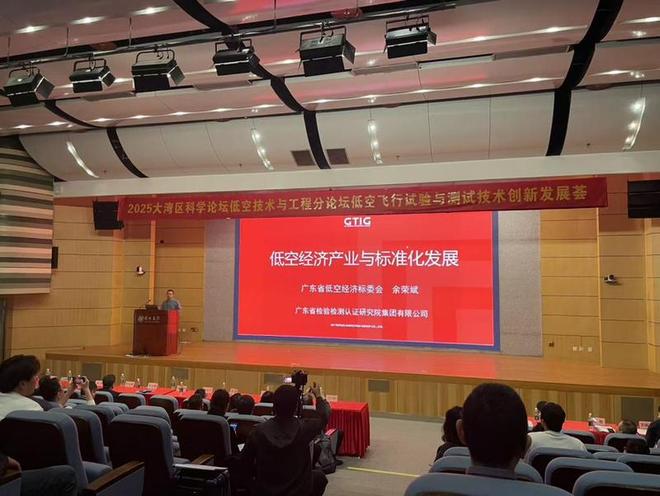
大湾区科学论坛低空技术与工程分论坛在深圳南山举办
Nan Fang Du Shi Bao· 2025-12-09 02:14
Core Insights - The low-altitude economy is recognized as a strategic emerging industry in China, currently experiencing unprecedented development opportunities [1] - The 2025 Greater Bay Area Science Forum focused on low-altitude technology and engineering, emphasizing the importance of flight testing and innovation in the industry [1] Group 1: Event Overview - The forum gathered over 300 experts from government, research institutions, and industry to discuss the core positioning of low-altitude flight testing and technology in industrial development [1] - A closed-door seminar involved over 50 representatives discussing the establishment of safety regulations for low-altitude operations in China, resulting in a proposal to accelerate the construction of a safety system for low-altitude operations [1] Group 2: Key Discussions and Innovations - Experts shared insights on trends in low-altitude equipment technology innovation, the role of industrial software, and the construction of flight testing systems and safety guarantees [2] - The forum established two significant collaborative outcomes: a manufacturing innovation center for vertical take-off and landing vehicles signed agreements with seven strategic partners, and the launch of the "Low-altitude Flight Equipment Safety Design and Manufacturing Technology Innovation Alliance" [4] Group 3: Specialized Forums - The event featured three specialized sub-forums: "Testing," "Design and Manufacturing," and "Safety Protection," each focusing on specific aspects of low-altitude operations [4] - The "Testing" sub-forum discussed verification systems and standardization paths, including methods for drone airworthiness flight testing and the application of simulators in airworthiness certification [5] - The "Design and Manufacturing" sub-forum covered key research areas such as fixed-wing drone design, smart chips, reliability technology, power batteries, and eVTOL composite structures [5] Group 4: Practical Applications - Representatives conducted a site visit to the Shenzhen Longhua District's Deep Thought Laboratory, which features the world's first low-altitude wind tunnel capable of simulating complex urban environments [5] - This facility aims to provide scientific basis for defining safety boundaries for flying vehicles, showcasing innovative practices in controlled and standardized low-altitude testing [5]

广东“十五五”规划建议:建设覆盖全省的低空飞行基础设施和智能网联系统
Cai Jing Wang· 2025-12-08 08:48
Core Viewpoint - The Guangdong Provincial Committee has proposed a development plan for the 15th Five-Year Plan, focusing on low-altitude economy and infrastructure development to enhance airspace resource utilization and regulatory frameworks [1] Group 1: Low-altitude Economy Development - The plan emphasizes the cultivation of a new form of low-altitude economy, driven by high-frequency, low-cost, and highly reliable low-altitude flights across multiple scenarios [1] - Key initiatives include the construction of comprehensive low-altitude flight infrastructure and intelligent network systems throughout the province [1] Group 2: Industry Focus - The development of the low-altitude aircraft manufacturing industry is highlighted as a priority area [1] - The plan aims to normalize low-altitude flights, particularly focusing on urban logistics and cross-river operations in the Pearl River Delta [1]
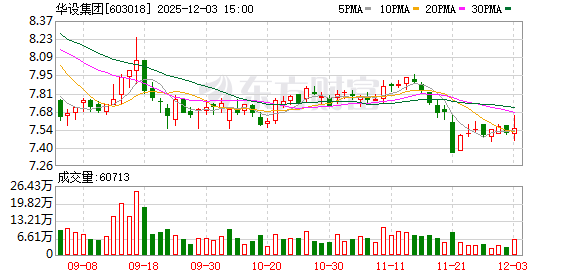
华设集团:公司于2025年3月成立了华设低空科技集团
Zheng Quan Ri Bao· 2025-12-03 11:13
Core Insights - The company has established a strategic partnership with WoFei ChangKong to develop a comprehensive solution for low-altitude flight commercialization and a new integrated transportation network by November 2024 [2] - The company has set up the Anhui Huashe Yunsong Venture Capital Fund to participate in investments related to this initiative [2] - The company is focusing on low-altitude as a key development direction and plans to establish the Huashe Low-altitude Technology Group by March 2025, concentrating on areas such as planning, operation, scenario development, equipment research and manufacturing, and testing [2]

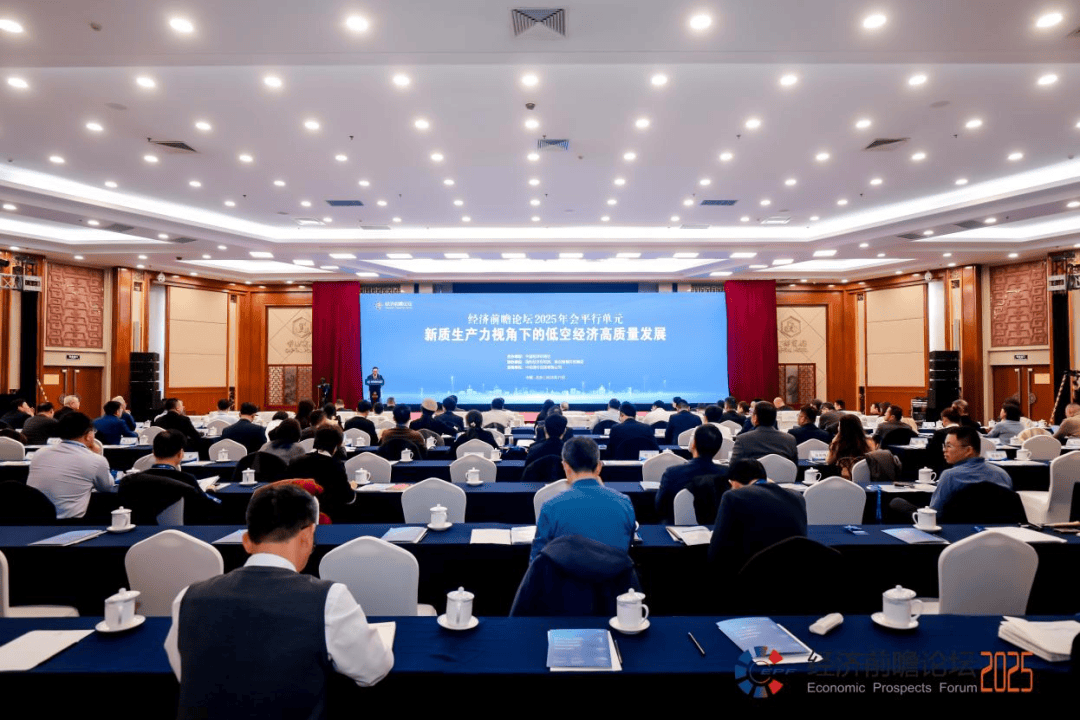
经济前瞻论坛2025丨“多维突破+因地制宜” 低空经济勾勒发展新图景
Sou Hu Cai Jing· 2025-12-01 00:13
Core Insights - The low-altitude economy is transitioning from conceptual exploration to practical implementation, driven by policy incentives and technological innovations, marking a significant growth potential in this emerging field [2][3] Group 1: Policy and Strategic Importance - The development of the low-altitude economy is a key strategic initiative by the Chinese government, with multiple policies introduced to promote its growth [3] - The 20th Central Committee's recent meeting emphasized accelerating the development of strategic emerging industries, including low-altitude economy [3] Group 2: Market Potential and Advantages - China has a strong competitive edge in the low-altitude economy, particularly in drone manufacturing, holding approximately 70% of the global market share for consumer drones [3] - The vast market potential is expanding application scenarios from traditional aviation to areas such as agriculture, tourism, logistics, emergency rescue, and passenger transport [3] Group 3: Challenges and Risks - Despite the potential, the low-altitude economy faces challenges such as underutilized airspace resources, insufficient infrastructure, and a lack of sustainable business models [4] - The rapid increase in low-altitude flying vehicles raises safety risks, necessitating improved regulatory capabilities to manage these challenges effectively [4] Group 4: Development Recommendations - It is recommended to conduct pilot projects in low-risk areas to develop sustainable business models, focusing on applications like agricultural services and tourism [5] - The establishment of a comprehensive planning framework and innovative regulatory mechanisms is essential for the growth of the low-altitude economy [7] Group 5: Technological Integration and Future Directions - The integration of low-altitude economy with emergency rescue services has shown significant progress, with a notable increase in rescue aircraft and drones [6] - Future development should focus on creating a unified network for airspace management and enhancing investment in aviation infrastructure [7][8]
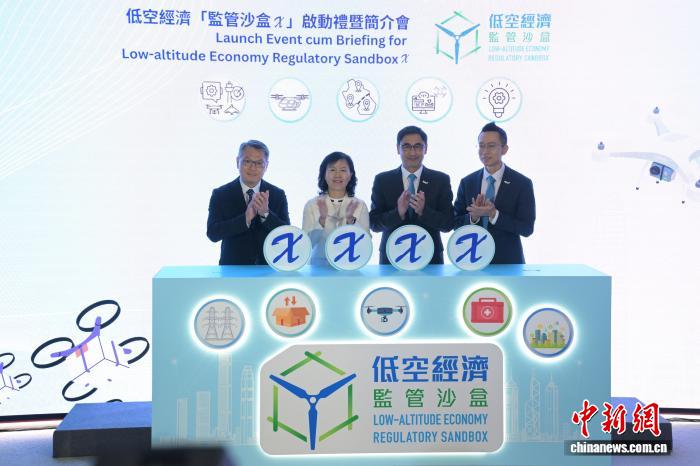
香港低空经济“监管沙盒X”启动 探索复杂应用场景
Zhong Guo Xin Wen Wang· 2025-11-24 23:24
Core Insights - The launch of Hong Kong's low-altitude economy "Regulatory Sandbox X" aims to further develop the low-altitude economy and explore innovative application scenarios [1][3] Group 1: Regulatory Sandbox Overview - The "Regulatory Sandbox X" was inaugurated on November 24, 2023, by the Hong Kong Transport and Logistics Bureau, focusing on advanced applications in the low-altitude economy [3] - The initiative is an upgraded version of the previously launched low-altitude economy "Regulatory Sandbox," which has already implemented 29 out of 38 selected projects covering various fields such as emergency rescue, logistics, maintenance, and safety inspections [4] Group 2: Future Development Plans - The 2025 Policy Address proposed the pilot project for "Regulatory Sandbox X," which will include complex applications like cross-border routes and low-altitude manned aircraft [3] - The Transport and Logistics Bureau aims to draft a development action plan for the low-altitude economy by the end of 2026, providing a clear and forward-looking direction for the industry [3][4] Group 3: Technological Collaboration - The Hong Kong Productivity Council serves as the technical partner for the "Regulatory Sandbox," focusing on high-complexity application scenarios and advancing technology standards through research in new materials, renewable energy, and traffic management systems [4] - The introduction of "Regulatory Sandbox X" is expected to bring more elements of "expansion" and "deep collaboration," elevating the development of the low-altitude economy to new heights [4]
敏实集团(425.HK):获得液冷订单 新兴业务发展潜力巨大
Ge Long Hui· 2025-11-07 19:33
Core Viewpoint - The battery box business of Minth Group is in a high growth phase, driving performance growth and valuation enhancement, with a target price raised from HKD 42 to HKD 50, corresponding to a forecasted P/E ratio of 15.2 times for 2026 [1][2] Group 1: Business Development - Minth Group's liquid cooling products are set for mass production, including immersion cooling cabinets, CDU, cooling plates, and distributors [1] - The subsidiary, Precision Industry, has received orders from a Taiwanese AI server manufacturer for the design, development, and production of immersion cooling cabinets, with deliveries expected to start in mid-November 2025 [1] - Minth Group has also passed technical validation for distributors from another Taiwanese AI server liquid cooling system manufacturer, with the first batch of products expected to be delivered by the end of December 2025 [1] Group 2: Emerging Business Potential - The company is focusing on two main product systems in low-altitude flight, collaborating with several flying car/eVTOL companies, and has signed a strategic agreement with EHang for mass production orders [2] - In the robotics sector, the company is concentrating on integrated joint modules, robotic electronic skin, smart masks, wireless charging systems, and limb structures, having signed a strategic cooperation agreement with Zhiyuan Robotics [2] - The projected net profit for the company is expected to reach CNY 2.76 billion, CNY 3.39 billion, and CNY 4.15 billion for 2025-2027 [2]
涉智能驾驶、机器人 小鹏汽车展现最新成果
财联社· 2025-11-05 14:46
Core Viewpoint - Xiaopeng Motors is leveraging its advancements in AI technology to enhance its product offerings, particularly in smart driving, Robotaxi, robotics, and low-altitude flying vehicles, with clear timelines for mass production and collaboration with major partners [1][2][3][4]. Group 1: Smart Driving Innovations - Xiaopeng Motors introduced the second-generation VLA, which serves as a foundational model for its smart driving capabilities, enabling significant improvements in autonomous driving performance, such as a 13-fold increase in average takeover mileage on complex roads [2]. - The company plans to invite pioneer users to co-create experiences with the second-generation VLA by the end of December 2025, with full deployment of the Ultra model expected in the first quarter of 2026 [2]. Group 2: Robotaxi Development - Xiaopeng Motors aims to launch three Robotaxi models by 2026, featuring L4-level driving experiences and equipped with dual hardware systems and four Turing AI chips, achieving a computing power of 3000 TOPS [3]. - The company will open the Robotaxi SDK for global partners to build an ecosystem, with Gaode being the first global ecological partner [3]. Group 3: Robotics and AI Integration - The new generation of the IRON robot will utilize three Turing AI chips, providing a computing power of 2250 TOPS, and will be integrated with the second-generation VLA model for advanced intelligence [3]. - Xiaopeng Motors is prioritizing commercial applications for its robots, focusing on services such as guiding and shopping assistance, and will collaborate with Baosteel for industrial applications [3]. Group 4: Low-Altitude Flying Vehicles - Xiaopeng Huitian has introduced the "land aircraft carrier" for personal low-altitude travel and the A868, a hybrid flying car for efficient group travel, with over 7,000 global orders for the land aircraft carrier [4]. - The A868 is currently in a critical phase of flight verification [4]. Group 5: Market Position and Future Outlook - Xiaopeng Motors is recognized as the most similar company to Tesla in terms of technology and product offerings, although it acknowledges that Tesla has a more global presence [4]. - As of November 4, Xiaopeng Motors' market capitalization reached 21.629 billion, surpassing competitors like Li Auto and NIO, while the company continues to optimize operational efficiency [4].

促低空经济飞得更稳
Ren Min Ri Bao· 2025-10-30 22:31
Core Viewpoint - The low-altitude economy is rapidly integrating into various sectors, becoming a new driving force for economic growth and reshaping social service models [1][4] Group 1: Development Opportunities - The low-altitude economy enriches consumption scenarios and business formats, enhancing social governance efficiency and improving public services [1][3] - The potential applications of low-altitude technology include drone delivery of fresh produce, agricultural pest control, and emergency medical supply delivery [1][3] Group 2: Challenges and Safety - The development of the low-altitude economy faces challenges such as the need for a new management framework to adapt to high-frequency, high-density, and diverse flight characteristics [1][2] - Safety is a fundamental aspect of low-altitude airspace management, which is crucial for the commercial viability of the low-altitude economy and is closely related to national and public safety [2][3] Group 3: Local Adaptation - The low-altitude economy is still in its early stages, and regions should avoid blindly following trends, instead developing strategies suited to local conditions [3] - Different regions can leverage their unique characteristics, such as using drones for oil and gas inspections in energy-rich areas or for agricultural monitoring in farming regions [3] Group 4: Future Prospects - The low-altitude economy has vast potential as a new industry that can significantly benefit public welfare and improve living standards [4] - Continued reform and innovation in the low-altitude economy are expected to lead to its eventual "take-off," enhancing quality of life [4]
苏州低空飞行可“双通道”审批
Su Zhou Ri Bao· 2025-10-22 00:47
Core Insights - Suzhou's Enterprise Comprehensive Service Center has launched value-added services for low-altitude flight, aiming to reduce costs and improve efficiency for low-altitude economy enterprises [1][2] - The service integrates 12 types of professional services, forming a full-cycle support system from approval consultation to resource matching and policy alignment [1][2] Group 1: Approval Process - The center provides material pre-examination and process guidance for low-altitude flight permits, offering both online application assistance and offline support [1][2] - A dual-channel approach is established for application processes, enhancing accessibility for enterprises [1] Group 2: Resource Matching - The center collaborates with airspace management and test flight sites to help enterprises quickly match necessary resources [2] - This collaboration aims to streamline the operational capabilities of low-altitude economy businesses [2] Group 3: Policy Support - Utilizing an enterprise service database, the center offers precise guidance on applying for subsidies and support policies under the "Suzhou Low-altitude Economy Promotion Regulations" [2] - The service is integrated into a comprehensive enterprise service system, ensuring effective policy implementation [2] Group 4: Service Mechanism - The service framework includes a closed-loop mechanism with front-end acceptance and back-end professional team support, ensuring responsive service to enterprise needs [2] - The center plans to optimize service processes and enhance collaboration with relevant units to strengthen the service chain from policy consultation to operational implementation [2]
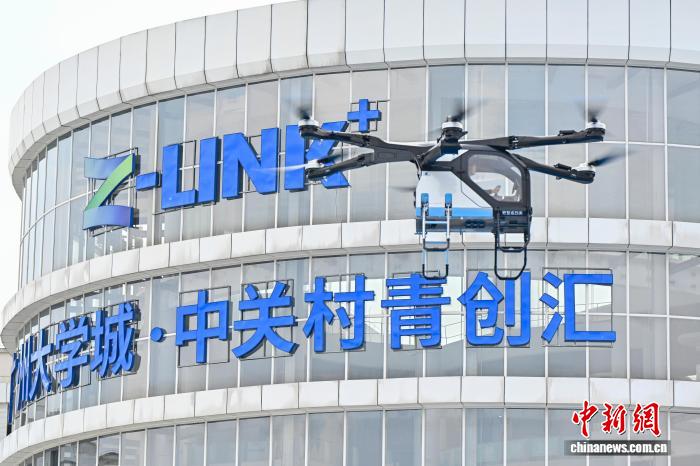
广州首个低空飞行营地正式启用
Zhong Guo Xin Wen Wang· 2025-10-16 13:18
Core Points - Guangzhou has officially launched its first low-altitude flight camp, marking a significant development in the local aviation and aerospace industry [1][5]. Group 1: Event Highlights - The launch event included the official inauguration of the camp, the establishment of a service platform, the release of application scenarios, the unveiling of the industry association, and the signing of strategic cooperation agreements [1]. - Demonstrations were conducted featuring various flying vehicles, including the Guangdong Huitian "land aircraft carrier" X3-F and the SF Express Ark 40 drone [3][5]. Group 2: Industry Development - The establishment of the Guangzhou Low-altitude Economy and Aerospace Industry Association was a key highlight of the event, indicating a structured approach to developing the low-altitude economy in the region [5].