
暖通

Search documents
从传统制造到智能领航:艾芬达20年深耕电热毛巾架,IPO开启发展新篇
Sou Hu Cai Jing· 2025-09-12 07:22
Core Viewpoint - Jiangxi Aifenda Heating Technology Co., Ltd. has officially listed on the Shenzhen Stock Exchange's ChiNext, marking its entry into the smart bathroom sector after 20 years in the heating industry, focusing on electric towel racks and attracting significant market attention [2] Company Overview - Aifenda has transitioned from traditional manufacturing to smart manufacturing since its establishment in 2005, becoming a leading player in the electric towel rack market by setting industry standards and obtaining international certifications [2] - The company has achieved a compound annual growth rate (CAGR) of 17.36% in revenue over the past three years, increasing from 760 million yuan to 1.05 billion yuan, and a nearly 20% CAGR in net profit, rising from 88 million yuan to 128 million yuan [2] - In the first half of 2025, Aifenda reported revenue of 505 million yuan and a net profit of approximately 59.78 million yuan, reflecting year-on-year growth of 7.53% and 35.53%, respectively [2] Research and Development - The company has invested a total of 87.91 million yuan in R&D over the past three years, employing a team of 189 researchers and securing 736 patents, including 87 invention patents [4] - Aifenda has been recognized as a "National Intellectual Property Advantage Enterprise" and a "Jiangxi Province Intelligent Manufacturing Benchmark Enterprise," achieving L7-level certification for its digital factory, indicating industry-leading production capabilities [4] Market Strategy - Aifenda's market strategy focuses on "overseas dominance and domestic breakthroughs," with over 90% of sales revenue coming from international markets between 2022 and 2024, serving major clients like Tsui Fung Group and Kartell UK Limited [4] - The company plans to enhance its domestic market presence post-IPO through ODM brand development and increased promotion of its own brand, targeting specific markets such as humid southern regions and mid-to-high-end hotels [4] Industry Outlook - Analysts note that the demand for smart bathroom products, including electric towel racks, will continue to grow alongside the rapid expansion of the smart home market, positioning Aifenda favorably due to its established advantages in technology, production scale, and customer network [5]


携手设计师,大金中央空气系统如何赋能理想居家空间
Jin Tou Wang· 2025-07-25 08:21
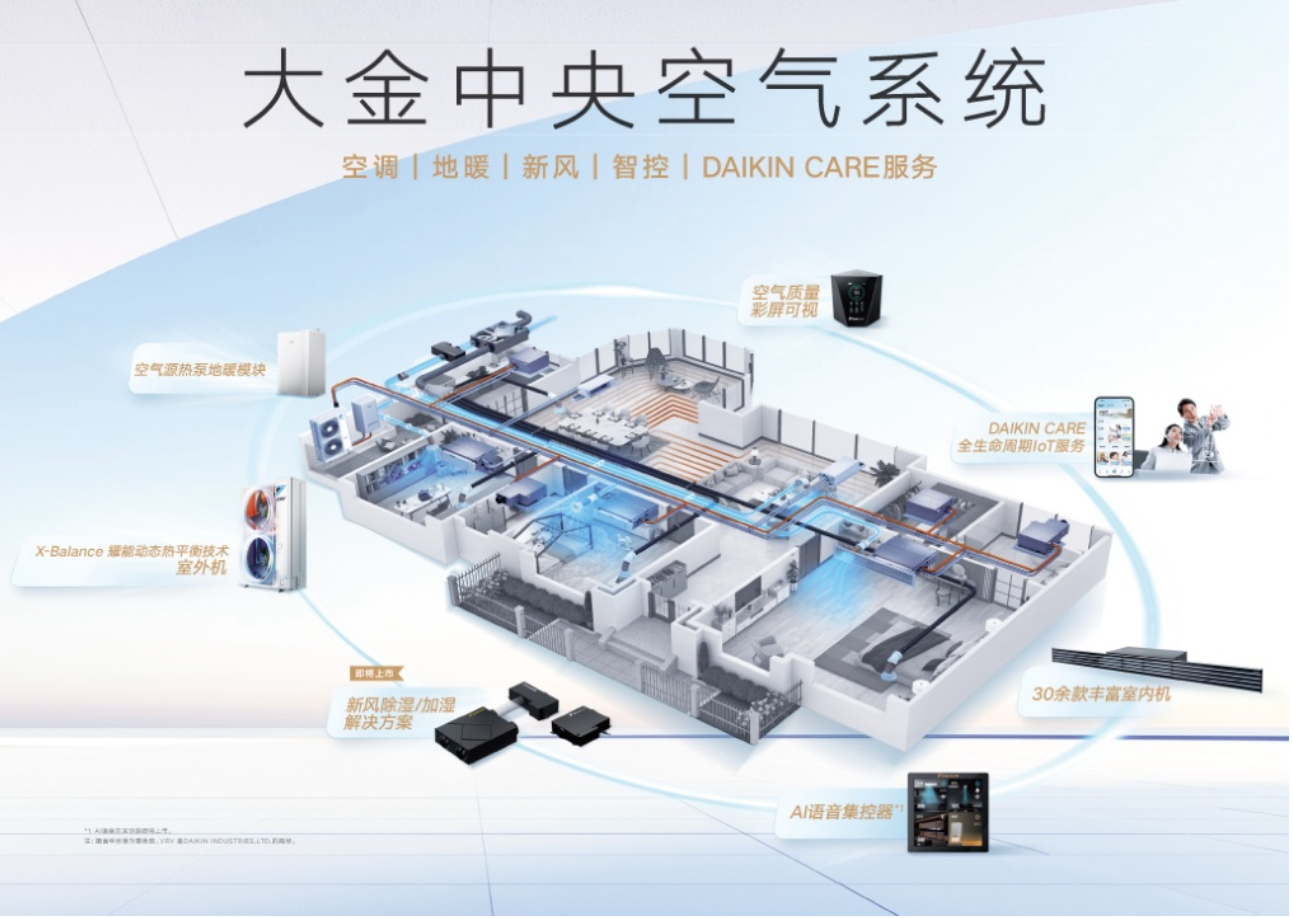
Core Insights - The article emphasizes the importance of collaboration between brands and designers to create ideal living spaces that meet user needs [1][2][10] - Daikin, as a leading brand in the HVAC industry, integrates technological innovation with user-centric services to address diverse user demands [3][5] Group 1: Role of Designers - Designers are the primary responders to user needs, requiring strong communication skills to understand and interpret the preferences of family members [2][10] - They act as a bridge between users and brands, facilitating the exchange of innovative ideas and product values while also gathering user feedback [5][10] Group 2: Daikin's Offerings - Daikin has launched a comprehensive central air system that includes air conditioning, underfloor heating, fresh air systems, smart controls, and Daikin Care services, focusing on user comfort and health [3][5] - The company addresses various user pain points related to temperature, humidity, and air quality, providing personalized settings for indoor environments [3] Group 3: Engagement with Designers - Daikin values communication with designers and has established platforms such as interior design competitions to foster collaboration and share innovative solutions [5][8] - The company also utilizes online channels to educate users about interior design trends and practical renovation tips, enhancing user experience [8] Group 4: User-Centric Approach - Daikin's approach is centered around the entire lifecycle of user experience, ensuring that their products and services meet evolving user needs [3][8] - The integration of Daikin Care services provides users with ongoing support, enhancing the overall value of their home environment [3][8]
证监会:同意艾芬达在创业板上市的注册申请
news flash· 2025-06-13 09:18
Group 1 - The China Securities Regulatory Commission (CSRC) has approved the initial public offering (IPO) registration of Jiangxi Aifenda HVAC Technology Co., Ltd. [1] - The company is set to be listed on the ChiNext board [1]

向“新”而行 艾芬达高质量发展跑出“加速度”
Zheng Quan Ri Bao Wang· 2025-06-13 03:49
Core Viewpoint - New productive forces are becoming a key driver for the transformation and upgrading of China's manufacturing industry, with Jiangxi Aifenda HVAC Technology Co., Ltd. (Aifenda) leading the way in the HVAC sector through intelligent upgrades and the development of new productive forces [1] Group 1: Intelligent Manufacturing - The HVAC industry is entering a new technology-driven era, significantly influenced by the Internet, big data, and artificial intelligence, which are reshaping the industry's landscape [2] - Aifenda has prioritized intelligent upgrades, launching the first intelligent unmanned production line for electric towel racks in the industry as early as 2018, and has established a comprehensive intelligent manufacturing system [2] - Aifenda's production capacity has reached an annual output of 2 million electric towel racks, making it a leading enterprise in the field, with products sold in over 60 countries and regions [2] Group 2: High-Quality Development - By leveraging big data to gain insights into consumer needs, HVAC companies can offer more personalized products and achieve comprehensive intelligent upgrades from design to service, enhancing user experience [3] - Aifenda has obtained a total of 736 national authorized patents, including 87 invention patents, which drive product innovation and industry standards [3] - The company’s IPO review process has resumed, allowing it to leverage capital market strength for further growth and high-quality development [3][4] Group 3: Future Outlook - Aifenda aims to continue its commitment to "intelligent, green, quality" development, using innovative technology to enhance global user experiences with electric towel racks [4]
中金公司 全球研究4Q24业绩回顾:消费篇
中金· 2025-03-25 03:07
Investment Rating - The report indicates a mixed investment outlook for the global consumer market, with strong resilience in high and middle-income consumer categories, while low-income consumers face weakened purchasing power [1][2]. Core Insights - The global consumer market shows significant differentiation, with high and middle-income categories demonstrating strong demand resilience, while low-income consumers are struggling [1][2]. - Essential consumer goods outperformed discretionary goods in Q4, driven by high inflation impacting low-income purchasing power, leading to a preference for cost-effective products [1][3]. - The global beauty market is expected to grow at around 4% in 2025, with emerging markets outperforming developed regions [1][12]. Summary by Sections Global Consumer Market Performance - The performance of global consumer goods companies in Q4 shows significant regional disparities, with North America experiencing flat overall demand and Europe outperforming [2]. - Japan's consumption growth is driven by inflation and inbound tourism, while Southeast Asia and India remain active markets [2]. Essential vs. Discretionary Goods - Essential goods performed better than discretionary goods in Q4 due to macroeconomic uncertainties, with leading companies in various sectors likely to show more pronounced performance [3]. Sportswear and Apparel Trends - The global sportswear industry saw strong growth in outdoor sports segments, while the mass apparel market remains competitive [4]. - U.S. holiday shopping season promotions boosted sales, but a slight decline is expected in 2025 due to macro uncertainties [4]. Beauty Market Dynamics - The beauty market varies significantly across regions, with North America facing pressure in mass cosmetics, while high-end fragrances continue to grow [7]. - The Chinese beauty market is facing challenges, with a projected retail sales decline in 2024 [8]. Food and Beverage Industry Outlook - The global food and beverage industry faces challenges from low-income consumer pressures in developed markets and slowing income growth in emerging markets [10]. - North American food demand is under pressure, while beverage demand remains relatively stable [10][11]. Future Projections - The beauty industry is expected to see a 4% growth rate in 2025, with emerging markets like India and Southeast Asia becoming key performance drivers for overseas beauty companies [12]. - The food and beverage sector is likely to experience a decline in revenue expectations but maintain earnings per share (EPS) stability due to effective cost management [10].
