磷酸铁锂材料

Search documents
磷酸铁锂行业“冰火两重天”:需求井喷下的三年亏损与自救破局
Huan Qiu Wang· 2025-11-20 10:03
Core Viewpoint - The lithium iron phosphate (LFP) materials industry is experiencing a dichotomy of booming demand and severe financial losses, with significant price drops and high debt levels among companies [1][2][5]. Group 1: Market Demand and Performance - China's lithium-ion battery exports reached $55.38 billion from January to September 2025, a year-on-year increase of 26.75%, with domestic new energy vehicle penetration exceeding 45% and energy storage installations surging by 60% [1]. - LFP materials accounted for nearly 74% of cathode material shipments, dominating both power and energy storage batteries, with a 99% market share in domestic energy storage [1]. - Major companies are operating at full capacity, with order backlogs extending to 2026 due to strong demand [1]. Group 2: Industry Challenges - LFP material prices plummeted from 173,000 yuan/ton to 34,000 yuan/ton between late 2022 and August 2025, representing an 80.2% decline, leading to over 36 months of continuous losses across the industry [1][2]. - The average debt-to-asset ratio of six listed companies in the sector rose to 67.81%, indicating financial strain [1]. - The industry faces a "production without profit" dilemma, with companies producing at or below cost, hindering their ability to invest in R&D and maintain production capacity [2][4]. Group 3: Cost and Pricing Issues - The industry is grappling with price inversions and cost pressures, with production costs driven up by rising prices of upstream raw materials like iron and phosphorus, while product prices lag in transmission to downstream customers [5][6]. - The average cost of LFP materials constitutes 35%-40% of total costs, making it a significant variable affecting profitability [5]. Group 4: Pathways to Resolution - The industry consensus emphasizes the need to shift from price wars to value reconstruction, advocating for a cost index as a pricing metric to curb harmful competition [6]. - Technological innovation is identified as a key direction for industry advancement, with high-end products like high-pressure lithium iron manganese phosphate gaining traction [6]. - Collaborative mechanisms among upstream and downstream players are essential to establish shared risks and benefits, moving away from isolated competitive practices [7]. Group 5: Future Outlook - Despite short-term challenges, the long-term growth potential of the LFP industry remains strong, driven by rapid growth in the energy storage market and increasing demand in the electric vehicle sector [8]. - China holds a unique position in the global LFP supply chain, being one of the few countries capable of industrial-scale production of LFP materials, with a technological lead of 1-2 years over competitors like South Korea and India [8]. - The industry must transition from isolated breakthroughs to comprehensive collaboration across the supply chain to enhance sustainable global competitiveness [8].

铁锂“七雄”谋涨价,聚首工信部抗议电芯“霸权”
经济观察报· 2025-11-19 11:11
Core Viewpoint - The lithium iron phosphate (LFP) industry is facing significant challenges, including continuous losses for over three years, rising raw material costs, and pressure from downstream battery manufacturers, leading to a critical need for resolution in the industry [2][3][4]. Industry Challenges - The LFP material prices have plummeted from 173,000 yuan/ton to 34,000 yuan/ton from the end of 2022 to August 2025, a decline of over 80%, while the average debt ratio of six listed companies in the sector is 67.8% [3][4]. - The industry is experiencing a dual squeeze, with upstream raw material prices rising while downstream battery manufacturers refuse to accept price increases, creating a situation where companies face losses regardless of whether they accept orders or not [8][10]. Demand Growth - The core application scenarios for LFP are expanding, with the penetration rate of new energy vehicles exceeding 45% in China, and a projected demand increase of over 30% for LFP materials in the coming year [6][8]. - The energy storage sector is expected to see a 60% year-on-year increase in installed capacity by 2025, with global energy storage battery shipments predicted to grow by 30% in 2026 [6][8]. Competitive Landscape - Chinese LFP products hold a dominant position in the global market due to technological, cost, and supply chain advantages, despite attempts by other countries to reduce reliance on Chinese products [7][8]. - The average cost of LFP production is around 15,600 to 16,200 yuan/ton, while the current market price is approximately 14,770 yuan/ton, leading to losses of nearly 1,000 yuan for every ton sold [9][10]. Industry Response - The establishment of the LFP Materials Subcommittee aims to address industry challenges by auditing costs and providing transparent pricing data to help companies set reasonable prices and curb destructive competition [13][14]. - Companies are exploring collective price increases to counteract the pressure from battery manufacturers, with some firms already controlling production capacity to stabilize prices [14][15]. Future Outlook - The anticipated demand from both domestic and international markets suggests that LFP prices are likely to rise, with projections indicating potential price increases by the end of this year and into the first half of next year [15].





《磷酸铁锂材料行业成本研究》发布 为企业成本管控提供精准参照
Zheng Quan Ri Bao Wang· 2025-11-19 06:06
Core Insights - The lithium battery industry is experiencing strong growth, with China's lithium-ion battery exports reaching $55.38 billion from January to September 2025, a year-on-year increase of 26.75% [1] - The domestic penetration rate of new energy vehicles has surpassed 45%, and energy storage installations have surged by 60% year-on-year, indicating a potential industry output value exceeding 3 trillion yuan [1] - However, the phosphoric iron lithium materials sector is facing structural challenges, including overcapacity and intense homogenization competition, leading to significant pressure on profits [1] Cost Structure Analysis - The average cost range for phosphoric iron lithium materials is estimated to be between 15,714.8 yuan/ton and 16,439.3 yuan/ton (excluding tax), based on a single sintering process and specific density parameters [2] - The cost structure reveals that the main material accounts for 35%-40% of total costs, with energy costs and direct expenses each contributing approximately 19%, while period expenses account for 16% and auxiliary material costs only 5%-6% [2] Strategies for Improvement - Industry participants discussed various strategies for cost reduction and innovation, including establishing long-term procurement partnerships with upstream suppliers and implementing centralized purchasing to lower main material costs [3] - Optimizing sintering processes to enhance energy efficiency and reduce production losses, as well as streamlining management structures to control period expenses, were highlighted as key areas for improvement [3] - Research into alternative materials for carbon sources and binders was suggested to further reduce costs while maintaining performance, addressing the high proportion of main material costs [3]

订单排到明年但利润承压 磷酸铁锂行业探讨“反内卷”
Di Yi Cai Jing· 2025-11-19 04:43
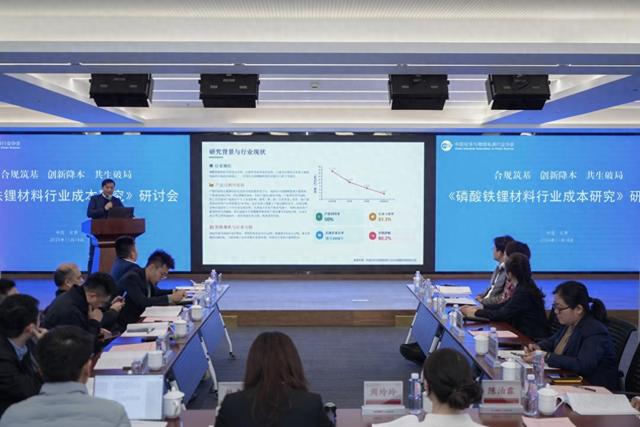
Core Insights - The lithium iron phosphate (LFP) materials industry is facing a "production increase without revenue increase" dilemma, prompting industry associations and leading companies to seek solutions [1] - A recent seminar highlighted the severe competition and profit pressure within the LFP sector, with companies experiencing over 36 months of continuous losses and an average debt ratio of 67.81% among six listed firms [1][3] Industry Challenges - The LFP materials sector is currently experiencing a significant shortage of chemical raw materials, leading to rising prices and a slowdown in production expansion [1] - The industry has been trapped in a cycle of overcapacity and homogenized competition since 2022, resulting in a stark contrast between costs and prices, making it the most profit-pressured segment of the lithium battery supply chain [3] - The average price of LFP materials has plummeted from 173,000 yuan per ton at the end of 2022 to 34,000 yuan per ton by August 2025, marking an 80.2% decline [3] Market Dynamics - Despite a strong growth momentum in the lithium battery industry, with a 26.75% year-on-year increase in lithium-ion battery exports reaching $55.38 billion in the first nine months of 2025, the LFP sector's cost pressures remain unresolved [3][4] - The top five companies in the LFP industry are operating at full capacity, yet only two are profitable, indicating an abnormal market condition [4] - The industry is expected to reach a production capacity of 370,000 tons this year, with the top companies' orders extending to 2026, but high asset-liability ratios hinder external financing for expansion [4] Proposed Solutions - The China Chemical and Physical Power Industry Association has proposed three collaborative action initiatives: 1. Establishing a cost index as a benchmark to rebuild market pricing logic and curb vicious competition [2][6] 2. Focusing on innovation to create new value growth avenues and shift from scale competition to quality competition [2][6] 3. Building a collaborative development ecosystem to balance supply and demand, with a forecasted 30% increase in global energy storage battery shipments by 2026 [2][6] Future Outlook - The association aims to develop a cost database for various segments of the industry to facilitate capacity supply-demand forecasting and promote a consensus on shared risks and benefits across the supply chain [7]
订单排到明年但利润承压,磷酸铁锂行业探讨“反内卷”
Di Yi Cai Jing· 2025-11-19 04:36
Core Insights - The lithium iron phosphate (LFP) materials industry is facing a "production increase without revenue increase" dilemma, prompting industry associations and leading companies to seek solutions [1] - A recent seminar highlighted the severe pressure on the LFP industry due to rising raw material costs and intense competition, leading to significant financial losses [1][3] - The industry has experienced over 36 months of continuous losses, with an average debt ratio of 67.81% among six listed companies [1][3] Group 1: Industry Challenges - The LFP materials sector is currently the most competitive and profit-constrained segment of the lithium battery supply chain, with a notable decline in prices from 173,000 yuan/ton to 34,000 yuan/ton, an 80.2% drop [3] - Despite a strong growth in lithium-ion battery exports, which reached $55.38 billion with a 26.75% year-on-year increase, the LFP industry struggles with overcapacity and low utilization rates, estimated at around 50% [3][4] - The top five companies in the LFP sector are operating at full capacity, yet only two are profitable, indicating an abnormal market condition [4][5] Group 2: Proposed Solutions - The China Chemical and Physical Power Industry Association has proposed three collaborative action initiatives to address the industry's challenges: 1. Establishing a cost index to rebuild market pricing logic and curb unhealthy competition [2][7] 2. Focusing on innovation to create new value growth avenues and shift from scale competition to quality competition [2][7] 3. Building a collaborative development ecosystem to balance supply and demand, with a forecast of a 30% increase in global energy storage battery shipments by 2026 [2][7][8] Group 3: Market Dynamics - The LFP materials market is currently characterized by a significant gap between average selling prices and production costs, with the average transaction price being 9.7% lower than the average cost [6] - The industry is expected to see a demand surge, with projections indicating an additional million-ton demand for LFP materials in the next two years [7][8] - The association aims to create a cost database for various segments of the industry to facilitate better risk management and shared benefits across the supply chain [8]
A股三季报业绩暖意足 电子有色金属等行业增长明显
Zhong Guo Zheng Quan Bao· 2025-10-26 22:23
Core Insights - Nearly 59% of A-share companies reported a year-on-year increase in net profit for the third quarter, with significant growth observed in sectors such as construction materials, steel, electronics, and non-bank financials [1][5] Financial Performance - Out of 1311 companies that disclosed their Q3 reports, 635 companies had a net profit growth exceeding 10%, while 437 companies saw an increase of over 30%, and 183 companies reported a growth exceeding 100% [2] - Notable companies like Baofeng Energy and Tonghuashun reported net profit growth exceeding 50% for the first three quarters of 2025 [2][3] Sector Performance - Industries such as construction materials, steel, electronics, and non-ferrous metals showed remarkable profit growth, with some sectors exceeding 50% year-on-year [5] - Conversely, sectors like real estate, beauty care, media, light manufacturing, coal, and automotive experienced a decline in net profit [6] Sub-sector Highlights - Specific sub-sectors such as rebar, fisheries, animal health, and optical electronics reported net profit growth exceeding 100% [7] - The semiconductor and food processing sectors also demonstrated strong performance [7] Institutional Interest - Following the Q3 reports, several companies attracted significant institutional research interest, focusing on the reasons behind their profit growth and future market prospects [8] - Companies like Chengdu Tianyi and Huagong Technology reported substantial revenue and profit increases, with a focus on enhancing product competitiveness and expanding global operations [9]


ST长园:8月6日召开董事会会议
Mei Ri Jing Ji Xin Wen· 2025-08-06 15:25
Group 1 - The core point of the article is that ST Changyuan announced the convening of its eighth meeting of the ninth board of directors on August 6, 2025, to discuss the proposal for the re-election of independent directors [2] - For the fiscal year 2024, ST Changyuan's revenue composition is as follows: 66.8% from the power industry, 31.46% from consumer electronics and other smart devices, 0.99% from lithium iron phosphate materials, and 0.75% from other businesses [2]

ST长园:公司及控股子公司对外担保总额约为65.56亿元
Mei Ri Jing Ji Xin Wen· 2025-08-06 15:25
Group 1 - The revenue composition of ST Changyuan for the year 2024 is as follows: 66.8% from the power industry, 31.46% from consumer electronics and other smart devices, 0.99% from lithium iron phosphate materials, and 0.75% from other businesses [1] Group 2 - ST Changyuan announced on August 6 that the total external guarantees provided by the company and its subsidiaries amount to approximately 6.556 billion yuan, which is 160.45% of the company's most recent audited net assets and 42.12% of the total audited assets [3] - The balance of external guarantees is approximately 3.681 billion yuan, representing 90.09% of the company's most recent audited net assets and 23.65% of the total audited assets [3]
总投资40亿磷酸铁锂项目落地贵州
起点锂电· 2025-06-24 10:12
Core Viewpoint - The article discusses the upcoming 2025 Fifth Start Two-Wheeled Vehicle Battery Swap Conference and Lightweight Power Battery Technology Summit, highlighting the growth and developments in the lithium iron phosphate (LFP) battery sector, particularly focusing on Guizhou Anda Technology's expansion in LFP precursor production capacity [1][14]. Group 1: Event Details - The conference will take place on July 10-11, 2025, at the International Hall of the Dingshi Road International Hotel in Bao'an, Shenzhen [1]. - Major sponsors and participants include leading companies in the battery and electric vehicle sectors, such as Yadi Technology Group, Tailling Group, and others [1]. Group 2: Anda Technology's Expansion - Guizhou Anda New Energy Materials Co., Ltd. is advancing its 450,000 tons/year LFP precursor project, with an environmental impact assessment recently publicized [3]. - The project consists of two phases: Area A with a capacity of 300,000 tons and Area B with 150,000 tons, with total investments of 14 billion and 10 billion yuan respectively [3]. Group 3: Financial Performance - Anda Technology reported a revenue of 1.511 billion yuan in 2024, a decrease of 49.02% year-on-year, with a net loss of 679.9 million yuan [5]. - The revenue from LFP and its related products accounted for over 81% of total revenue, with specific revenues of 983 million yuan and 245 million yuan respectively [6]. Group 4: Technological Advancements - Anda Technology has achieved a new generation of LFP production methods and plans to launch the fourth generation of LFP products in 2025 [7]. Group 5: Market Position and Competition - As of the end of 2024, Anda Technology's production capacity includes 150,000 tons/year of LFP and 150,000 tons/year of LFP precursor, with ongoing projects expected to increase total production capacity significantly [9][10]. - The company maintains partnerships with major clients like BYD and is working to diversify its customer base, although it faces challenges in expanding its overseas market presence [10][11]. - The demand for LFP materials in China is projected to grow, with a forecasted increase of 36.3% in shipments to reach 3.3 million tons in 2025, favoring companies with technological and overseas production advantages [11].

磷酸铁锂发起涨价反攻潮
鑫椤锂电· 2025-04-22 07:15
Core Viewpoint - The lithium iron phosphate (LFP) industry is experiencing a price increase trend in 2025, with various companies adopting price maintenance strategies despite reduced sales volumes [2][3]. Group 1: Price Maintenance Strategies - Hunan YN has been a leader in price maintenance, announcing price increases for both standard and high-end products [2]. - Leading company A has maintained its price strategy despite a 40% reduction in sales volume, indicating a willingness to cut supply to large customers if they do not agree to price increases [2]. - Leading company B continues to supply high-pressure products at the highest prices in the industry, confident in demand from other customers even if large clients resist price hikes [2]. - Leading company C has been negotiating price increases, with a recent surge in demand from large clients in April reinforcing its determination to maintain prices [2]. - Leading company D has not fully achieved its price increase goals but has adjusted customer supply agreements to mitigate losses [2]. - Leading company E has focused on maintaining supply for two major joint venture clients while halting supply to lower-margin customers [2]. Group 2: Market Dynamics - Central company F successfully raised prices for high-end energy storage cells, halting supply to lower-tier clients to maintain high operational rates [3]. - Central company G, having achieved full production last year, is now reducing supply due to unsuccessful price increases and focusing on upgrading product lines [3]. - Central company H, despite reliance on large clients, has rejected additional volume requests due to unmet price expectations [3]. - Smaller companies I/J are cautious about accepting orders due to strict loss control measures set by their groups, even with existing orders [3]. - The overall market for lithium iron phosphate shows a solid foundation for price increases, supported by ongoing demand and the challenges faced by leading battery companies in negotiating lower prices [3].