全链协同

Search documents
四大渠道协同发力 兔宝宝2026重构家居产业价值生态
Bei Jing Shang Bao· 2026-02-05 06:34
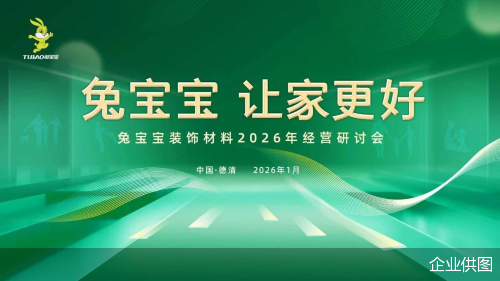
Core Insights - The 2026 Business Seminar of Rabbit Baby Decoration Materials focuses on the theme "Rabbit Baby Makes Home Better," outlining a development blueprint for "full-chain collaboration and high-quality growth" to address challenges in the home furnishing industry [1][16]. Group 1: Strategic Focus - The company emphasizes three strategic pillars: "precise strategic reach, effective experience replication, and channel collaborative growth" to navigate the current challenges of "incremental decline and price competition" in the home furnishing sector [1]. - The "Customized+" channel strategy is identified as the core mission for retail growth, aiming to optimize terminal store operations and enhance profitability through localized customized solutions [3][5]. Group 2: Channel Development - In the furniture factory channel, Rabbit Baby is transitioning from "material supply" to "integrated solution provision," focusing on refined management and a differentiated product matrix to strengthen existing partnerships [5][6]. - The home decoration channel is seen as a second growth curve, with a strategy centered on "deep collaboration" to meet the demand for systematic cooperation from decoration companies [7][9]. Group 3: Sustainability and Innovation - The company is advancing towards becoming a "standard builder" in the construction channel, promoting green material applications and launching initiatives like the "Green Good Board Material" campaign [9][16]. - Rabbit Baby aims to transform into a one-stop home solution service provider by enhancing value-added product innovation and full-channel collaboration [10][12]. Group 4: Future Vision - The company sets a strategic goal of being "domestically leading and globally benchmarked," focusing on brand upgrades and professional team development to solidify its foundation for scale and quality improvements [3][6]. - The emphasis on "value co-existence" and collaboration is intended to drive the industry towards branding, digitalization, and ecological development, ultimately enhancing the quality of home life for millions of families [16].


四大渠道协同发力,兔宝宝2026重构家居产业价值生态
Bei Jing Shang Bao· 2026-02-04 09:13
Core Insights - The 2026 operational seminar of Rabbit Baby Decoration Materials was held in Deqing, Zhejiang, focusing on the theme "Rabbit Baby Makes Home Better" and outlining a development blueprint for "full-chain collaboration and high-quality growth" to address challenges in the home furnishing industry [1][12] Group 1: Strategic Focus - The company proposed three strategic pillars: "precise strategic reach, effective experience replication, and channel collaborative growth" to enhance its market position amid industry challenges [1] - The "customization+" channel strategy is central to Rabbit Baby's retail growth, emphasizing deep customization and broad channel support to optimize store operations and enhance profitability [2][4] Group 2: Channel Development - In the furniture factory channel, Rabbit Baby aims to transition from "material supply" to "integrated solutions," focusing on refined management and a differentiated product matrix to strengthen existing partnerships [5] - The home decoration channel is identified as a second growth curve, with a strategy centered on "deep collaboration" to meet the demand for systematic cooperation from construction enterprises [6][9] Group 3: Industry Positioning - The company is advancing towards becoming a "standard co-builder" in the construction channel, promoting green material applications and focusing on value competition rather than price competition [7][12] - Rabbit Baby emphasizes the importance of "full-channel collaboration" and high-value product innovation to upgrade its brand value system, aiming to transform into a one-stop home solution service provider [8][10]
研判2026!中国磁珠电感器行业产业链、市场现状、重点企业及发展趋势分析:随着下游电磁环境复杂化,行业作为高频噪声抑制关键元件的战略价值持续攀升[图]
Chan Ye Xin Xi Wang· 2026-01-20 01:11
Core Insights - The strategic value of magnetic beads, essential for absorbing high-frequency noise and suppressing electromagnetic interference (EMI), is increasingly recognized in China's electronic information industry, with the market size projected to reach approximately 3.45 billion yuan in 2024, reflecting a year-on-year growth of 5.50% [1][8]. Industry Overview - Magnetic bead inductors are passive components designed to suppress high-frequency noise and EMI, operating based on hysteresis and eddy current losses in ferrite materials, converting high-frequency signal energy into heat rather than reflecting or storing it [3]. - The key applications include signal/power line filtering, RF circuits, and ultra-high-frequency memory circuits, particularly excelling in frequencies above 100 MHz [3]. Market Size - The market for magnetic bead inductors in China is expected to grow significantly, driven by the large-scale deployment of 5G infrastructure, rapid growth in new energy vehicle sales, and the penetration of IoT terminals in both consumer and industrial sectors [1][8]. Key Companies - Leading companies in the magnetic bead inductor industry include: - **Shunluo Electronics**: A leader in the industry, known for its micro magnetic beads and strong presence in high-end applications like AI servers and 5G communications [9][11]. - **Fenghua Advanced Technology**: Maintains a leading position in the general magnetic bead market, focusing on cost-effective products and continuous innovation [9][13]. - **Majie Technology**: Specializes in RF patch magnetic beads and has a strong competitive edge in communication and consumer electronics [9]. Industry Development Trends 1. **Technological Innovation**: The industry is moving towards "high frequency, miniaturization, and integration" to meet the demands of 5G and AI technologies, with a focus on developing high-performance low-loss soft magnetic materials [14]. 2. **Market Demand Shift**: The growth drivers are shifting from consumer electronics to high-end strategic markets, particularly in new energy vehicles and AI infrastructure, which require high reliability and low-loss performance [14]. 3. **Evolving Industry Ecosystem**: Competition is transitioning from product-based to collaborative supply chain competition, with leading companies focusing on vertical integration and collaboration with upstream material suppliers to enhance product performance and stability [15].


“开新局 同增长”2026中原餐饮新消费论坛郑州启幕 河南餐饮食材业协会圆满换届
Sou Hu Cai Jing· 2026-01-14 21:07
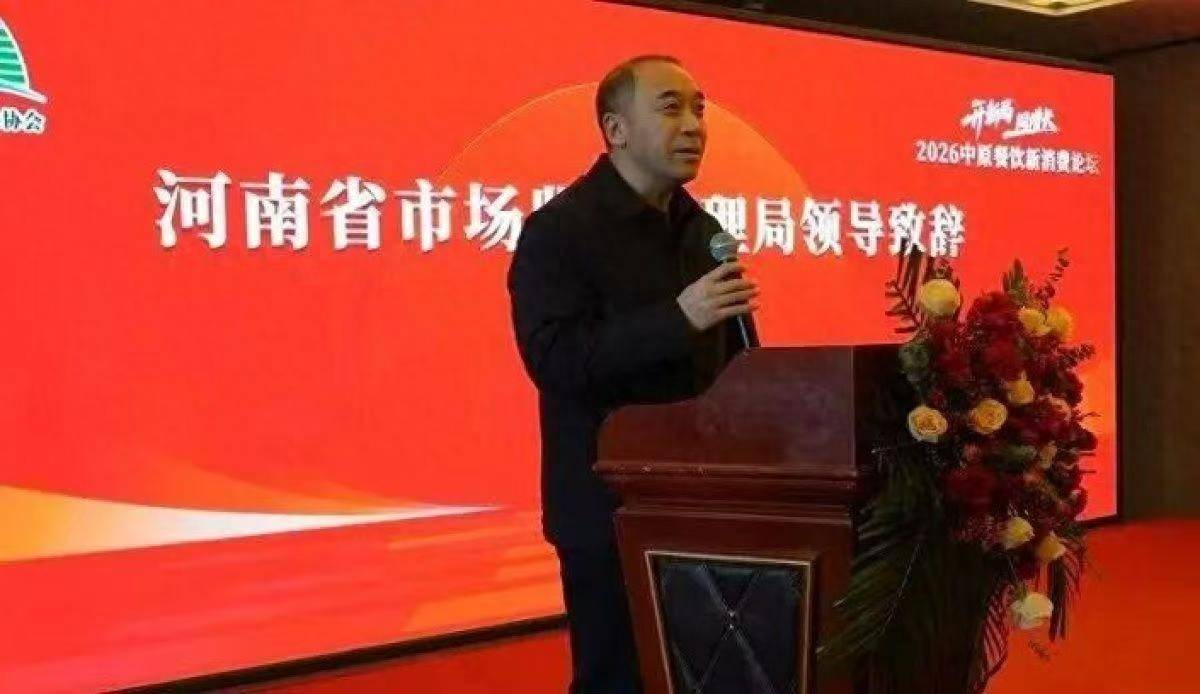
Core Insights - The "2026 Central Plains Catering New Consumption Forum" was successfully held in Zhengzhou, focusing on new growth opportunities in the catering industry during the 14th Five-Year Plan period [1] - The forum gathered industry experts and representatives to explore trends in the new consumption ecosystem of Central Plains catering, aiming to inject new momentum into high-quality industry development [1] Group 1 - The catering industry is currently undergoing a critical phase of transformation and upgrading, with a focus on modernizing and securing the supply chain [2] - Consumer demand is rapidly evolving towards health, personalization, and sustainability [2] - Industry experts highlighted that the dual drivers of policy and market during the 14th Five-Year Plan will usher in a new development phase for the catering industry [5] Group 2 - Companies are encouraged to seize opportunities for full-chain collaboration, digitalization, and green transformation [5] - The need to reconstruct the battlefield, customer base, and scenarios for catering growth was emphasized, with traffic as a strategic focus [5] - Topics such as the integration of food and medicine, scenario innovation, and the innovation of Henan cuisine were hotly debated [5] Group 3 - The Henan Provincial Catering Ingredients Industry Association successfully completed its leadership transition, with Wu Zuxing elected as the new president [7] - The association aims to promote healthy and sustainable industry development through market research, platform building, and technological innovation [7] - Over 160 representatives from local catering and ingredient companies, as well as research institutions, participated in the forum to establish a new foundation for the development of the Central Plains catering industry [7] Group 4 - The forum also launched the "Chinese New Year Dish Festival" industry event, aimed at creating solutions for New Year's Eve dinners targeting young consumers [9]
三大关键词解锁2026商用车市场
Zhong Guo Qi Che Bao Wang· 2025-12-29 03:46
Core Insights - In 2025, China's commercial vehicle industry is expected to complete a critical phase of accumulation driven by policies, technology, and market forces, with a clear transition to a new cycle of value competition in 2026 [1] - The industry will focus on three key themes: "stability domestically and expansion internationally," "acceleration of electrification and intelligence," and "value deepening and ecological collaboration" [1] Group 1: Overall Market "Stability and Expansion" - In the first 11 months of 2025, China's commercial vehicle sales reached 3.87 million units, with an estimated total of 4.25 million units for the year, indicating a stable market expected to maintain similar sales levels in 2026 [2] - The domestic market is characterized by stability, with a consensus that sales will remain around 4.25 million units, supported by the replacement of old vehicles and major investment projects [2] - The heavy truck market is projected to have a capacity of approximately 800,000 units, while the light truck market is expected to be between 700,000 and 740,000 units, with significant growth in new energy penetration rates [2] - The overseas market is anticipated to be a core growth engine, with exports expected to reach 400,000 units in 2026, representing a nearly 19% year-on-year increase [2] Group 2: Acceleration of New Energy and Intelligence - The new energy commercial vehicle sector is entering a high penetration phase, with expectations that the penetration rate will exceed 30% in 2026, potentially matching that of traditional fuel vehicles [3] - In the first 11 months of 2025, domestic new energy commercial vehicle sales reached 750,000 units, a year-on-year increase of 62.4%, with a penetration rate of 25.7% [3] - The growth of new energy vehicles is supported by improved lifecycle cost advantages and advancements in technology, such as fast charging and battery systems [3][4] - The market is witnessing differentiated growth across segments, with light trucks exceeding a 40% penetration rate and new energy heavy trucks expanding into long-distance logistics [4] - Intelligent technology is becoming a key competitive differentiator, with predictions that advanced driver assistance systems will progress towards L3/L4 levels in the next three to five years [5] Group 3: Value Deepening and Ecological Collaboration - The trends of increasing new energy penetration and the practical application of intelligent technology are reshaping the industry landscape, shifting the focus from scale expansion to value deepening [7] - Companies are transitioning from being "single product suppliers" to full value chain solution providers, emphasizing ecological collaboration and compliance as core competitive advantages [7] - To achieve high-quality development, companies need to innovate in new energy and intelligent technologies, enhance lifecycle services, and optimize organizational structures and marketing models [7]
磷酸铁锂行业“冰火两重天”:需求井喷下的三年亏损与自救破局
Huan Qiu Wang· 2025-11-20 10:03
Core Viewpoint - The lithium iron phosphate (LFP) materials industry is experiencing a dichotomy of booming demand and severe financial losses, with significant price drops and high debt levels among companies [1][2][5]. Group 1: Market Demand and Performance - China's lithium-ion battery exports reached $55.38 billion from January to September 2025, a year-on-year increase of 26.75%, with domestic new energy vehicle penetration exceeding 45% and energy storage installations surging by 60% [1]. - LFP materials accounted for nearly 74% of cathode material shipments, dominating both power and energy storage batteries, with a 99% market share in domestic energy storage [1]. - Major companies are operating at full capacity, with order backlogs extending to 2026 due to strong demand [1]. Group 2: Industry Challenges - LFP material prices plummeted from 173,000 yuan/ton to 34,000 yuan/ton between late 2022 and August 2025, representing an 80.2% decline, leading to over 36 months of continuous losses across the industry [1][2]. - The average debt-to-asset ratio of six listed companies in the sector rose to 67.81%, indicating financial strain [1]. - The industry faces a "production without profit" dilemma, with companies producing at or below cost, hindering their ability to invest in R&D and maintain production capacity [2][4]. Group 3: Cost and Pricing Issues - The industry is grappling with price inversions and cost pressures, with production costs driven up by rising prices of upstream raw materials like iron and phosphorus, while product prices lag in transmission to downstream customers [5][6]. - The average cost of LFP materials constitutes 35%-40% of total costs, making it a significant variable affecting profitability [5]. Group 4: Pathways to Resolution - The industry consensus emphasizes the need to shift from price wars to value reconstruction, advocating for a cost index as a pricing metric to curb harmful competition [6]. - Technological innovation is identified as a key direction for industry advancement, with high-end products like high-pressure lithium iron manganese phosphate gaining traction [6]. - Collaborative mechanisms among upstream and downstream players are essential to establish shared risks and benefits, moving away from isolated competitive practices [7]. Group 5: Future Outlook - Despite short-term challenges, the long-term growth potential of the LFP industry remains strong, driven by rapid growth in the energy storage market and increasing demand in the electric vehicle sector [8]. - China holds a unique position in the global LFP supply chain, being one of the few countries capable of industrial-scale production of LFP materials, with a technological lead of 1-2 years over competitors like South Korea and India [8]. - The industry must transition from isolated breakthroughs to comprehensive collaboration across the supply chain to enhance sustainable global competitiveness [8].
“反内卷”是锂电产业链共同挑战 推动行业建立全链协同共识
Zhong Guo Jin Rong Xin Xi Wang· 2025-11-19 23:39
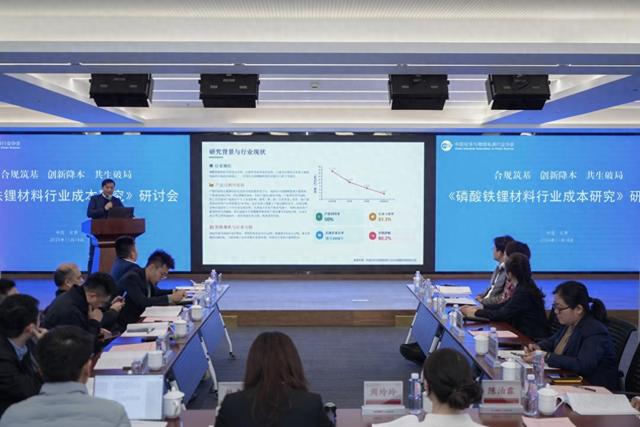
Core Insights - The lithium iron phosphate (LFP) material prices have plummeted from 173,000 yuan/ton to 34,000 yuan/ton between the end of 2022 and August 2025, marking an 80.2% decline, leading to over 36 months of continuous losses in the industry [1] - The LFP industry is experiencing a dual situation of high demand from electric vehicle and energy storage battery sectors, while simultaneously facing significant financial pressures, including an average debt ratio of 67.7% among leading companies [1][2] - The industry is characterized by structural supply-demand imbalances and a lack of bargaining power within the supply chain, with rising raw material costs not being effectively passed down to LFP manufacturers [3] Industry Challenges - The LFP sector is currently the most competitive segment within the lithium battery supply chain, with six out of seven leading companies having an average debt ratio of 67.7% [2] - The core issue causing the industry's predicament is the structural imbalance between supply and demand, compounded by the inability to transfer rising raw material costs to downstream LFP companies [3] - There is a notable contradiction in the industry, where there is an oversupply of low-end products while high-end products with advanced specifications are in short supply [3] Technological Upgrades - The industry faces challenges in technological upgrades, particularly in the context of competition from sodium-ion batteries in low-end storage and solid-state batteries in high-end markets [4] - Key areas for technological iteration include ultra-high density, fast charging capabilities, and low-temperature performance, but funding constraints hinder the industrialization of advanced technologies [4] - The lack of core technological accumulation among some companies, due to low entry barriers, leads to price competition in the low-end market, further eroding overall industry profitability [4] Collaborative Solutions - The LFP industry's "anti-involution" cannot be limited to a single segment; it requires collaborative efforts across the entire supply chain [6] - The China Chemical and Physical Power Industry Association has released a cost index system for the LFP industry to provide transparent value references for companies and support government regulation [6] - A shift from "price wars" to "value wars" is necessary, requiring consensus among mining, material, battery, and end-use companies to share cost pressures and establish a healthy price transmission mechanism [6]
专访中国化学与物理电源行业协会磷酸铁锂材料分会秘书长周波: “反内卷”是锂电产业链共同挑战推动行业建立全链协同共识
Zheng Quan Shi Bao· 2025-11-19 21:56
Core Insights - The lithium iron phosphate (LFP) material prices have plummeted from 173,000 yuan/ton to 34,000 yuan/ton between the end of 2022 and August 2025, marking an 80.2% decline, leading to over 36 months of continuous losses in the industry [1] - The LFP industry is experiencing a dichotomy, with surging demand from electric vehicle batteries and energy storage systems on one side, while facing three consecutive years of losses and an average debt ratio of 67.7% on the other [1][2] - The industry is under pressure from a structural imbalance, where raw material price increases are not being effectively passed down to LFP manufacturers, resulting in compressed profit margins [3] Industry Challenges - The core issues facing the LFP industry stem from a structural supply-demand imbalance and a lack of bargaining power within the supply chain [3] - There is a notable contradiction in the industry characterized by "overall surplus and high-end scarcity," where low-end capacity is expanding chaotically, leading to fierce price competition, while high-end products are in short supply [3] - The industry is also hindered by technological upgrade challenges, with funding bottlenecks limiting the advancement of new technologies [4] Technological and Market Dynamics - The industry is encouraged to focus on technological upgrades, particularly in high-density, fast-charging, and low-temperature performance, but faces significant financial constraints [4] - The lack of core technological accumulation among some companies, due to low entry barriers, has led to a focus on price competition in the low-end market, further eroding overall profitability [4] - Regulatory bodies are urged to raise industry entry thresholds to guide companies towards high-end market technology development and mitigate ongoing price wars [4] Collaborative Solutions - The LFP industry's "anti-involution" requires collaborative efforts across the entire supply chain, rather than isolated actions [6] - The China Chemical and Physical Power Industry Association has released a cost index system for the LFP industry to provide transparent value references and support government regulation [6] - A shift from "price wars" to "value wars" is necessary, with all stakeholders in the lithium battery industry forming a consensus on cost-sharing and risk management to establish a healthy price transmission mechanism [6]

专访中国化学与物理电源行业协会磷酸铁锂材料分会秘书长周波: “反内卷”是锂电产业链共同挑战 推动行业建立全链协同共识
Zheng Quan Shi Bao· 2025-11-19 21:26
Core Insights - The lithium iron phosphate (LFP) material prices have plummeted from 173,000 yuan/ton to 34,000 yuan/ton between the end of 2022 and August 2025, marking an 80.2% decline, leading to over 36 months of continuous losses in the industry [1] - The LFP industry is experiencing a dichotomy, with surging demand from electric vehicle and energy storage batteries on one side, and three consecutive years of losses and an average debt ratio of 67.7% on the other [1][2] - The industry faces a structural supply-demand imbalance and a lack of bargaining power within the supply chain, complicating the cost transmission from raw materials to LFP producers [3] Industry Challenges - The LFP sector is currently the most competitive segment within the lithium battery supply chain, with six out of seven leading companies having an average debt ratio of 67.7% [2] - The core issue causing the industry's predicament is the dual challenge of structural supply-demand imbalance and a lack of bargaining power in the supply chain [3] - There is a significant disparity between excess low-end capacity and a shortage of high-end products, leading to fierce price competition in the low-end market [3] Technological Hurdles - The industry must focus on technological upgrades to maintain its competitive edge against sodium-ion and solid-state batteries [4] - Key areas for technological iteration include ultra-high density, fast charging capabilities, and low-temperature performance, but funding constraints hinder the industrialization of advanced technologies [4] - The low entry barriers in the industry have resulted in some companies lacking core technological capabilities, forcing them to compete on price in the low-end market, which further depresses overall profitability [4] Collaborative Solutions - The "anti-involution" movement in the LFP industry requires collaborative efforts across the entire supply chain [6] - The China Chemical and Physical Power Industry Association has released a cost index system for the LFP industry to provide transparent value references for companies and support government regulation [6] - A shift from price competition to value competition is necessary, requiring consensus among mining, material, battery, and end-use companies to share cost pressures and establish a healthy price transmission mechanism [6]
中大力德亮相大湾区工博会 聚焦全链协同与智能创新
Zheng Quan Ri Bao Wang· 2025-11-10 13:45
Core Insights - Ningbo Zhongdali Intelligent Transmission Co., Ltd. showcased its latest intelligent drive solutions at the 2025 DMP Greater Bay Area Industrial Expo in Shenzhen, which gathered over 1,200 manufacturing enterprises and is expected to attract more than 120,000 professional visitors [1][2] - The company highlighted its advanced products, including DC and AC gear motors, planetary gear reducers, and precision cycloidal pinwheel reducers, which meet industry-leading standards in precision retention, transmission efficiency, and service life [1][2] - The precision cycloidal pinwheel reducer, a representative product, demonstrates significant technological breakthroughs in core processes, featuring optimized tooth shape design and special material treatment processes, meeting the stringent requirements of industrial robots for precision transmission [1][2] Industry Trends - The expo reflected the ongoing progress of domestic enterprises in the core component sector, emphasizing the increasing importance of core components as the manufacturing industry transitions towards intelligent and green development [2] - Zhongdali is committed to continuous technological research and process innovation to enhance product performance and quality stability, providing reliable power transmission solutions for downstream applications [2] - The company plans to strengthen its technical research and process improvements to promote high-quality development in the manufacturing sector [2]