
科学研究

Search documents
国自然放榜信号再升级?系统罕见二次维护!(附近四年资助获批情况分析)
仪器信息网· 2025-08-21 03:56
Core Insights - The article discusses the anticipated announcement of the 2025 National Natural Science Foundation (NSFC) results, highlighting the uncertainty surrounding the exact timing of the release [3][4][6] - It reviews the funding data over the past four years, noting a significant increase in application volume but a decline in approval rates, particularly after policy changes in 2024 [7][10] Application and Funding Trends - The total number of applications for the NSFC in 2024 reached 384,564, a substantial increase of 80,231 applications or 26.36% compared to 2023, marking a historical high [7] - The total number of funded projects slightly increased to 49,805, which is only a marginal rise of 1,020 projects from 2023, resulting in an overall funding rate drop from 16.06% in 2023 to 13.00% in 2024, a decrease of 3 percentage points [7] Project-Specific Funding Data - For the 2024 NSFC, the approval rates for various project types were as follows: - General projects: 11.66% approval rate with 20,758 out of 177,982 applications funded - Youth projects: 15.54% approval rate with 23,226 out of 149,489 applications funded - Excellent Youth projects: 7.79% approval rate with 654 out of 8,394 applications funded - Distinguished Young Scholars projects: 7.08% approval rate with 433 out of 6,117 applications funded - Key projects: 16.50% approval rate with 745 out of 4,514 applications funded [8][9] Future Outlook - The 2025 NSFC is characterized by a dual nature: a potential drop in approval rates for general projects below 10% and a continued decline in youth fund approvals, contrasted with positive developments such as the opening of new funding channels for innovative groups and a significant increase in budgets for interdisciplinary projects [10]


前8月全国吸收外资增16.4% 高技术产业表现突出
Xin Hua Wang· 2025-08-12 06:18
Core Viewpoint - China's foreign investment absorption shows a steady growth trend, with a notable increase in high-tech industries, reflecting the resilience of the Chinese economy and its attractiveness to multinational companies [1][2]. Group 1: Overall Foreign Investment Trends - From January to August 2023, China absorbed 892.74 billion RMB in foreign investment, a year-on-year increase of 16.4% [1]. - The overall foreign investment absorption in China continues to grow rapidly, indicating strong market appeal and the effectiveness of policies aimed at improving the business environment [1][2]. Group 2: Sector-Specific Insights - In the first eight months, the actual foreign investment in the service sector reached 662.13 billion RMB, growing by 8.7% [2]. - High-tech industries saw a significant increase in foreign investment, with a growth rate of 33.6%, including a 43.1% increase in high-tech manufacturing and a 31% increase in high-tech services [2][3]. Group 3: Source of Foreign Investment - Notable increases in foreign investment from specific countries include South Korea (58.9%), Germany (30.3%), Japan (26.8%), and the UK (17.2%) [2]. Group 4: Regional Distribution - Foreign investment in China's eastern, central, and western regions grew by 14.3%, 27.6%, and 43% respectively [3]. Group 5: Strategic Implications - The acceleration of foreign investment in high-tech industries and services indicates a strategic shift towards innovation-driven development, with foreign companies seeking to leverage China's favorable development environment for greater profits and market share [3].
据以色列Calcalist网站报道,位于特拉维夫南部的魏茨曼科学研究院在伊朗的导弹袭击中遭受了约5.72亿美元的损失。
news flash· 2025-06-20 06:22
Group 1 - The Weizmann Institute of Science, located south of Tel Aviv, suffered approximately $572 million in damages due to missile attacks from Iran [1]
【中国青年报】中国科学院学部举办可持续发展与开放合作国际研讨会
Zhong Guo Qing Nian Bao· 2025-06-02 02:54
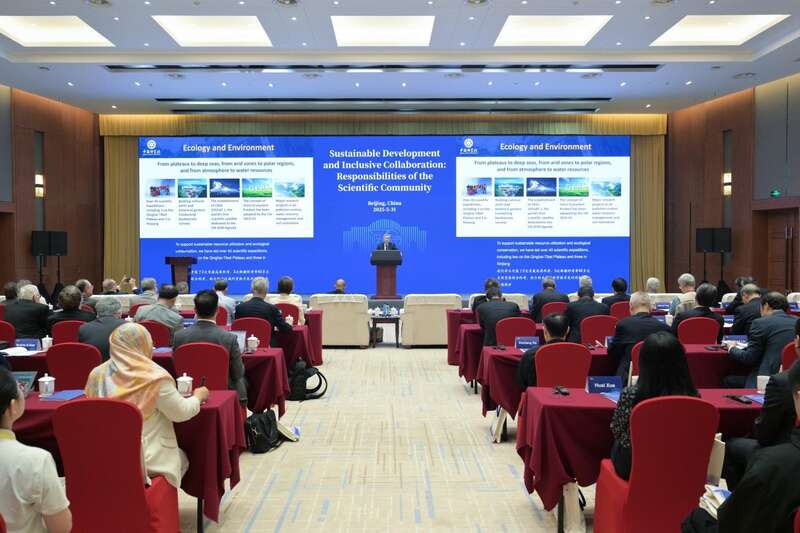
Core Viewpoint - The international seminar on "Sustainable Development and Open Cooperation: Responsibilities of the Scientific Community" highlighted the pressing global challenges such as climate change, environmental pollution, resource scarcity, and food security, emphasizing the need for collaborative efforts in scientific research to address these issues [1][2]. Group 1 - The seminar was attended by over 60 representatives from 14 countries and regions, including leaders from academies of sciences and international scientific organizations [1]. - The Chinese Academy of Sciences (CAS) has been enhancing its research in ecological environment, life health, and energy technology to support sustainable development [1]. - CAS aims to deepen international cooperation in key areas, strengthen talent exchange, and promote open sharing of sustainable development data [1]. Group 2 - Presentations at the seminar covered topics such as big data, climate change, sustainable agriculture, open science, and life health [2]. - Participants agreed that achieving the United Nations' 2030 Sustainable Development Goals involves both challenges and opportunities, calling for a united effort from the global scientific community [2].
科技强国筑梦行精彩继续,专家现场解密真菌世界、人工智能前沿
Xin Jing Bao· 2025-05-30 02:47
Group 1 - The 2025 series of activities to promote the spirit of scientists aims to bridge science and the public, enhancing scientific literacy and innovation awareness in society [2] - The event received strong support from local scientific associations and educational institutions in Beijing [2] Group 2 - The lecture on fungi highlighted their ecological, medical, and agricultural significance, emphasizing their dual roles as both beneficial and harmful [3][4] - The expert discussed the importance of accurate identification of toxic mushrooms and the potential for certain fungal toxins to be used in cancer treatment [4] Group 3 - The history of mycology in China was illustrated through stories of pioneering scientists who contributed to the field, showcasing the evolution from obscurity to international recognition [5][6] - The lecture encouraged students to embody the spirit of scientific inquiry in their daily lives, emphasizing curiosity as a starting point for future scientific exploration [6] Group 4 - The presentation on artificial intelligence covered core technologies and practical applications, including real-time human pose tracking developed for the Beijing 2022 Winter Olympics [7] - The integration of intelligent technology with ideological education was discussed, highlighting successful case studies and platforms that serve educational purposes [7]
于生命长河照见“我是谁”
Ren Min Ri Bao· 2025-05-22 22:02
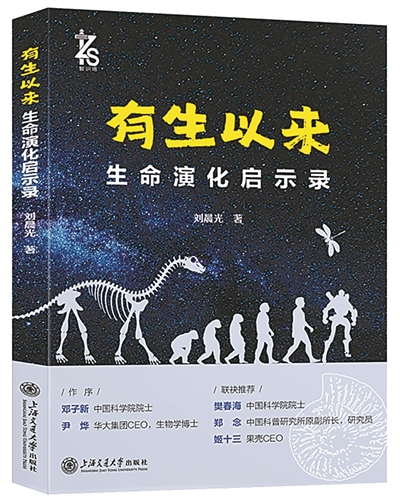
Core Insights - The book "A Life of Its Own: Insights into Evolution" by Liu Chengguang explores the breakthroughs in life sciences, including synthetic biology, gene technology, and artificial intelligence, and their implications for understanding the evolution of life [2] - It presents a comprehensive narrative of life's evolution, from single-celled organisms to complex life forms, and addresses key scientific concepts such as the origin of life, species formation, and human evolution [2] Summary by Sections - **Scientific Knowledge**: The book discusses core theories of evolution, including the development of evolutionary theory, phenotypic and behavioral evolution, and genetic and chromosomal evolution, making complex scientific knowledge accessible through engaging examples [3] - **Human Impact**: It highlights the significant impact of human activities on biological evolution, noting that the current extinction rate of species is 1,000 times higher than before humans appeared, with projections indicating that over 25% of species may face extinction or be endangered by 2050 [4] - **Technological Advances**: The rapid development of biotechnology, including synthetic biology, gene editing, and cloning, raises ethical considerations, prompting discussions on the nature of life and the potential for creating life after resolving technical challenges [5] - **Philosophical Reflections**: The book elevates evolutionary theory from a historical footnote to a methodology for shaping the future, emphasizing that "survival of the fittest" is not only a biological instinct but also a crucial logic for the continuity of civilization [5]
“倒退几十年”:千疮百孔的美国科研能熬过特朗普2.0吗?
Hu Xiu· 2025-05-08 07:13
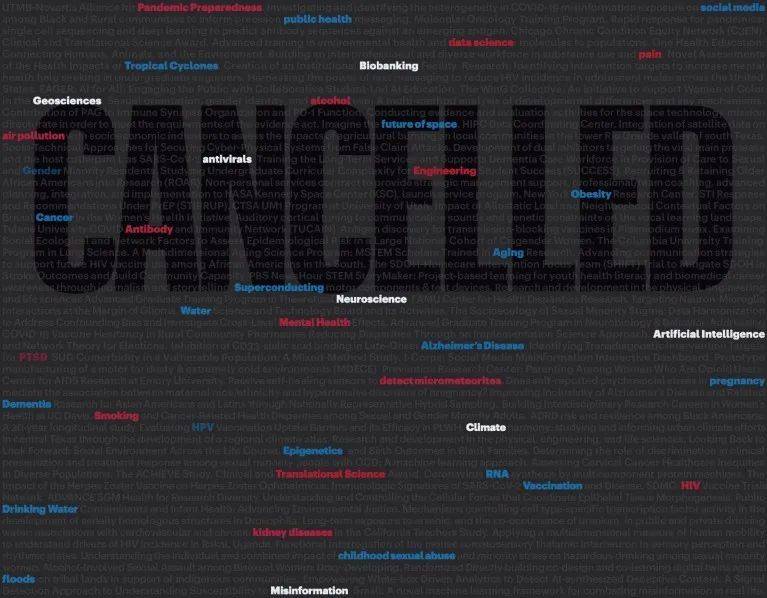
Core Viewpoint - The Trump administration's policies are significantly undermining U.S. scientific research and funding, leading to widespread concerns about the future of science in the country [1][3][11]. Group 1: Impact on Federal Research Funding - The Trump administration has threatened to cut billions in funding for research universities and has already terminated over 1,000 grants in critical areas such as climate change and cancer research [1][20]. - The proposed 2026 budget may drastically reduce federal scientific investments, with potential cuts of 50% to NASA's science budget and 40% to the National Institutes of Health (NIH) [2][22]. - The NIH, which received nearly $48 billion in funding, is crucial for U.S. research, having funded over 99% of drugs approved from 2010 to 2019 [9][31]. Group 2: Scientific Community's Response - A public letter from approximately 1,900 members of the National Academies of Sciences, Engineering, and Medicine expressed alarm over the damage to U.S. science, with 94% of surveyed scientists worried about the future [3][37]. - The scientific community is concerned that the dismantling of federal support will lead to a significant decline in innovation and competitiveness, with many researchers considering opportunities abroad [26][27]. Group 3: Long-term Consequences - Experts warn that the damage inflicted by the Trump administration could take decades to reverse, with a significant loss of knowledge and talent in the scientific workforce [7][19]. - The reduction in federal funding is expected to hinder technological innovation, affecting industries reliant on research and development [31][32]. - The shift towards private funding may not adequately replace government support, particularly for high-cost, large-scale research projects [33][34]. Group 4: University and Research Institution Challenges - U.S. universities are facing unprecedented challenges due to funding cuts and political pressures, with many institutions already tightening graduate admissions and research funding [21][24]. - The Trump administration's stance on federal funding has created a hostile environment for research, leading to fears of a decline in the quality and quantity of scientific output [25][30]. - The potential loss of international talent is a significant concern, as many foreign researchers are reconsidering their plans to study or work in the U.S. due to the current political climate [26][27].
山东119人获全国劳动模范和先进工作者表彰
Da Zhong Ri Bao· 2025-04-29 01:07
Core Points - The event celebrated the 100th anniversary of the All-China Federation of Trade Unions and recognized 119 individuals from Shandong, including 80 national labor models and 39 advanced workers [1] - The recognized individuals represent various sectors, including manufacturing, education, health, scientific research, and government, highlighting the diversity and grassroots focus of the awards [2] - The awards reflect a strong emphasis on the manufacturing sector, with 64.3% of recognized workers coming from this field, and a significant representation of frontline workers and technical professionals [2] Group 1 - A total of 119 individuals from Shandong were honored, including 80 national labor models and 39 advanced workers [1] - The recognized individuals include 99 Communist Party members and 28 women, showcasing political representation and gender diversity [2] - 94.1% of the honorees are from county-level or lower government agencies, state-owned enterprises, and grassroots organizations, emphasizing the focus on ordinary laborers [2] Group 2 - 45.4% of the recognized individuals are from key industries such as new generation information technology, high-end equipment, new energy, and new materials [2] - 23.5% of the honorees have received provincial or higher-level scientific and technological awards, indicating a commitment to technological advancement [2] - Among the 24 farmers recognized, 12.5% are "Qilu Rural Stars," and 25% are leaders of agricultural production organizations, highlighting efforts in rural revitalization [2][3]