科学研究

Search documents
促经济、稳开局 厦门同安围绕新春惠民惠企服务等六大领域出台27条举措
Sou Hu Cai Jing· 2026-01-09 08:52
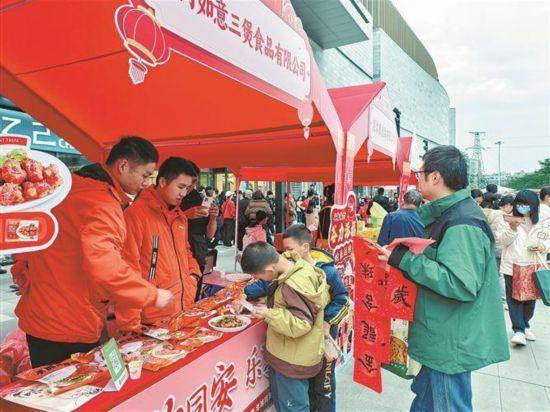
Group 1 - The core focus of the news is the release of 27 practical measures by the Tong'an District of Xiamen City aimed at achieving a good start for economic and social development in the first quarter of 2026, emphasizing high-quality development and various initiatives to boost consumption and investment [2] - The measures include a continuation of policies from 2025, such as incentives for tourism during the Spring Festival and support for key sectors to ensure stable growth [2][3] - The district plans to issue consumption vouchers worth 500,000 yuan, focusing on shopping, dining, and cultural activities, and aims to host over 150 cultural and sports events throughout the year to stimulate consumer enthusiasm [4] Group 2 - The measures also emphasize robust livelihood guarantees, including organizing over 30 recruitment events and providing financial incentives to companies hiring new workers to stabilize employment [5] - The core objective of the 27 measures is to enhance the quality and efficiency of the real economy, with a focus on service sectors such as human resources and software development, while also promoting industrial growth and innovation [6] - The district aims to implement a "dual attack" strategy to boost effective investment, targeting a total investment of over 230 billion yuan in project planning and over 1,800 billion yuan in new signed industrial projects for the year [6] Group 3 - To stabilize foreign trade and attract foreign investment, the district supports local enterprises in participating in important domestic and international exhibitions and offers incentives for companies achieving AEO certification [7] - The district is committed to creating a better environment for investment and enhancing services to attract businesses, thereby injecting more vitality into economic development [7]

今年怀柔发展三个关键词:科学城、现代化产业体系、文旅
Xin Jing Bao· 2026-01-07 12:41
Core Insights - Huairou District is set to establish an internationally leading strategic technology integration development demonstration zone by 2026, focusing on enhancing scientific facilities, innovation ecosystems, and international cooperation [1][2]. Group 1: Scientific Infrastructure and Development - Huairou Science City has 29 scientific facilities fully operational, with 17 facilities offering a total of 1.64 million hours of open time globally [2]. - The district aims to enhance its scientific capabilities by accelerating the construction of major projects and preparing over 30 projects for the 15th Five-Year Plan [2]. - By 2025, Huairou expects to achieve significant technological breakthroughs, including 21 new technologies and 110 major outcomes [2]. Group 2: Cultural and Economic Initiatives - The district plans to promote the development of the International Great Wall Animation Valley and host various cultural events, including the Beijing International Film Festival and an animation industry conference [3]. - Huairou aims to transform into an international film hub, enhancing its creative industry through the establishment of a comprehensive animation ecosystem [3]. Group 3: Ecological and Urban Development - Huairou District maintains a forest coverage rate of 77.57%, the highest in Beijing, and plans to implement ecological projects covering 72,600 acres [4]. - The district will develop an ecological landscape system and improve green corridors, enhancing the integration of nature into urban planning [4]. Group 4: Economic Growth and Industry Focus - Huairou aims for a 4% year-on-year growth in industrial output in Q1 2026 and an 8% increase for the entire year, with a focus on high-end scientific instruments and new materials [7]. - The district will support the growth of specialized and innovative enterprises, aiming to elevate them to high-tech status and promote a vibrant business ecosystem [7]. Group 5: Policy and Infrastructure Enhancements - Huairou will optimize its policy support system to facilitate industrial growth and project implementation, ensuring effective collaboration between local governments and enterprises [8]. - The district plans to enhance urban infrastructure, including the upgrade of key roads and the development of public service projects to improve living conditions [9][10].
宏观专题报告:设备投资,能否“持续高增”?
Shenwan Hongyuan Securities· 2026-01-06 03:41
Group 1: Misconceptions about Equipment Investment Growth - Equipment investment growth is not primarily driven by the "Juga Cycle" but rather by strong infrastructure and service sector investments, with construction industry growth at 65.5% and narrow infrastructure at 46.1% in 2024, contributing an additional 8.2 percentage points to overall equipment investment[2] - The notion that equipment investment strength is influenced by the "Two New" policies is misleading; significant increases in manufacturing investment and equipment purchases occurred as early as February 2024, with equipment purchase investment growth reaching 17%[2] - Manufacturing equipment purchase investment growth was only 6.5% in 2024, significantly lower than the overall equipment investment growth of 15.7%[3] Group 2: Drivers of Equipment Investment Growth - The establishment of a modern industrial system has driven strong digital infrastructure investments, with software industry growth at 53% and computer services at 35%, contributing to overall equipment investment[4] - Public utility equipment investment has surged since the "dual carbon" policy was intensified in 2021, with electricity and heat equipment investment growth at 17.6%[4] - Service sector equipment investment has outpaced construction investment since 2023, with growth rates of 13.9% compared to 2.8% for construction investment in 2024[5] Group 3: Sustainability of Equipment Investment Growth - Equipment investment is expected to continue high growth in 2026, supported by a rebound in narrow infrastructure, particularly in digital infrastructure and hub-related investments[6] - The "dual carbon" policy is anticipated to further enhance investment in carbon reduction technologies, including high-energy-consuming industry upgrades and renewable energy investments[6] - Policies focused on "investing in people" are likely to increase service sector equipment investment, with a projected growth rate of around 6% in 2026, surpassing the overall fixed asset investment growth of 3%[7]
在格桑花海中仰望“宇宙飞船”:科技与田园的诗意交融
Xin Lang Cai Jing· 2026-01-01 11:31
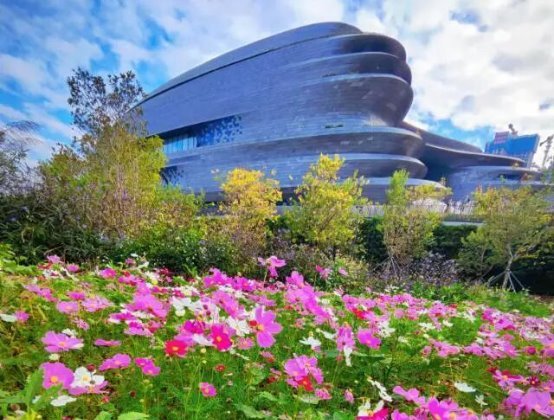
Core Insights - The article discusses the harmonious integration of technology and nature in the Guangming District of Shenzhen, which is being developed as a world-class science city, balancing technological innovation with ecological preservation [1][2][10]. Group 1: Overview of Guangming District - Guangming is one of Shenzhen's youngest administrative districts, characterized by a strategic mission to create a "world-class science city" and a "northern center of Shenzhen" [2][3]. - The district features significant national-level scientific infrastructure, including facilities for synthetic biology and brain research, enhancing its future-oriented capabilities [2][5]. - Guangming's ecological attributes include over 30% forest coverage and notable parks, which contribute to a narrative that transcends mere economic growth, exploring a new urban model where innovation and nature coexist [2][5]. Group 2: The Role of Nature in Urban Development - The presence of seasonal ecological spaces, such as the vast cosmos flower fields, serves as a reminder of humanity's roots in nature, emphasizing the importance of land and agricultural heritage [5][10]. - The juxtaposition of the Shenzhen Science and Technology Museum, described as a "spaceship," with the flower fields symbolizes the aspiration to transcend natural limitations through technology while remaining grounded in human existence [6][10]. - The open accessibility of the area encourages public engagement with science, breaking down barriers between research facilities and the community, making science a part of daily life [6][10]. Group 3: Philosophical Implications of Technology and Nature - The cyclical nature of the cosmos flower fields contrasts with the linear narrative of technological progress, suggesting that successful innovation requires a blend of disruptive ambition and respect for natural processes [9][10]. - The article posits that the "coexistence philosophy" inherent in rural wisdom can provide ethical guidance in advanced fields like genetic editing and artificial intelligence, advocating for progress that enhances rather than disrupts life networks [10][11]. - The vision for Guangming District reflects a new urban development model where technological civilization is nourished by rural values, emphasizing respect for life, sustainability, and the interconnectedness of all living systems [10][11].
重磅文件发布 透露三大变化!加快推出新一批重大外资项目
Shang Hai Zheng Quan Bao· 2025-12-24 07:51
Core Points - The State Development and Reform Commission and the Ministry of Commerce have released the "Encouragement Directory for Foreign Investment Industries (2025 Edition)", effective from February 1, 2026, aimed at attracting and utilizing foreign investment more effectively [1][4][10] - The revised directory includes a total of 1,679 entries, with a net increase of 205 entries and 303 modifications compared to the 2022 version, indicating a significant expansion and optimization of foreign investment encouragement policies [1][8][11] Summary by Categories Background and Purpose - The revision of the "Encouragement Directory" is a response to the central government's emphasis on attracting and utilizing foreign investment, aligning with the decisions made by the Party Central Committee and the State Council [5][6] - The directory serves as a crucial policy for promoting foreign investment and optimizing the industrial structure and regional layout of foreign investment in China [11][12] Key Changes - The new directory encourages foreign investment in advanced manufacturing, modern services, high-tech industries, and energy-saving and environmental protection sectors, particularly in the central and northeastern regions of China [7][10] - Specific areas of expansion include terminal products, components, raw materials in manufacturing, and business services, technical services, scientific research, and consumer services in the modern service sector [2][8] Future Actions - The State Development and Reform Commission and the Ministry of Commerce will enhance guidance and coordination to ensure the effective implementation of the new measures [3][9] - Future initiatives will focus on improving the satisfaction of foreign enterprises, facilitating investment processes, and creating a favorable business environment for foreign investors [9][15]

锦屏深地科学中心揭牌成立
Xin Hua She· 2025-12-24 00:48
Core Insights - The establishment of the Jinping Deep Earth Science Center marks a new phase of institutional operation and high-quality development for the Jinping Underground Laboratory, the world's deepest and largest underground laboratory [1][2] Group 1: Center Establishment and Function - The Jinping Deep Earth Science Center is registered in the Digital Economy Industrial Park of Xichang City, Sichuan Province, and is responsible for the operation and maintenance of the laboratory as well as the construction of the experimental technical team [1] - The center has established a long-term mechanism for school-enterprise cooperation at the national level, providing a clear management structure and model for the laboratory's long-term development [1] - A flexible management mechanism and diversified funding sources will be adopted to inject new vitality and momentum into the laboratory's innovative development [1] Group 2: Laboratory Characteristics and Research Focus - The Jinping Underground Laboratory is located in the middle of the Jinping Mountain Tunnel, buried under 2,400 meters of rock, with cosmic ray flux only one hundred millionth of that at the surface, making it the world's deepest and largest ultra-deep underground laboratory [1] - As an open, shared, multi-institutional, and interdisciplinary research platform, the laboratory provides a first-class experimental environment for cutting-edge topics such as dark matter, neutrinos, and nuclear astrophysics, as well as an excellent research platform for deep rock mechanics and deep medicine [1] - The center will further focus on national strategic needs, strengthen the strategic, forward-looking, and systematic layout of basic research, and continuously attract top experimental projects with diverse disciplinary backgrounds and technological routes [2]
1个中心城市+7个县域,合肥都市圈同城化有3个目标 | 都市圈2.0
Di Yi Cai Jing· 2025-10-15 11:24
Core Viewpoint - The Hefei metropolitan area has undergone significant development, evolving from a small economic circle to a larger urban cluster and now focusing on integrated development with surrounding regions [1][5]. Group 1: Development Process - The Hefei metropolitan area was first proposed in 2006, initially including Hefei, Lu'an, and the former Chao Lake city, and expanded in 2009 to include a central city and four surrounding cities [1]. - In 2024, the National Development and Reform Commission approved the development plan for the Hefei metropolitan area, establishing a one-hour commuting circle that encompasses Hefei and seven surrounding counties, covering an area of 24,900 square kilometers [1]. - The current GDP of the Hefei metropolitan area is 1.66 trillion yuan, with Hefei contributing 1.35 trillion yuan, accounting for 81% of the total [1]. Group 2: Industrial and Technological Collaboration - Hefei is the second national science center in China, focusing on technological innovation and collaboration with surrounding counties to support technology transfer and commercialization [2]. - The city has established 14 sub-markets to promote technology transfer, leveraging the resources of the central city to assist county enterprises [2]. Group 3: Infrastructure and Public Services - Hefei has achieved direct high-speed rail connections with six surrounding counties and has implemented a rapid transit route to Lu'an, enhancing physical connectivity within the metropolitan area [4]. - The city has launched seven customized public transport routes and established a vocational education alliance to improve public service quality in the surrounding counties [4]. Group 4: Future Opportunities and Goals - The Hefei metropolitan area benefits from its strategic geographical location and is positioned to leverage multiple national development strategies, including the Yangtze River Economic Belt and the integration of the Yangtze River Delta [5]. - By 2030, the metropolitan area aims to maintain leading economic growth rates in Anhui province and the Yangtze River Delta, establish a new integrated development pattern, and enhance collaborative development with surrounding cities [5]. - Key initiatives include developing a comprehensive planning system, improving transportation connectivity, and enhancing industrial collaboration and environmental governance [6].
陶哲轩都拿不到暑期工资,被迫给自己和学生筹钱
猿大侠· 2025-09-13 04:11
Core Viewpoint - The article highlights the significant impact of funding cuts on the research ecosystem in the United States, particularly at UCLA, where even top mathematicians like Terence Tao are affected by the inability to secure research funding and salaries [2][4][5]. Funding Cuts and Their Impact - On July 25, 2023, the U.S. government abruptly suspended funding from agencies like the National Science Foundation (NSF) and the National Institutes of Health (NIH) to UCLA, amounting to $500 million [4]. - Although a federal court restored some funding on August 12, the actual disbursement of funds did not occur until early September [5]. - The funding cuts have severely affected graduate students, who rely on these resources for attending academic conferences and advancing their careers [6][21]. Research Ecosystem Disruption - The article discusses how the funding interruptions have led to the cancellation of ongoing research projects and a reduction in scholarships for training the next generation of scientists [12][15]. - The NSF's funding cuts have particularly impacted UCLA, disrupting the research environment and depriving students of essential early career opportunities [15][16]. Personal Experiences and Concerns - Terence Tao expresses concern for his students over his own financial situation, emphasizing the importance of funding for their academic and professional development [6][12]. - The article notes that Tao has had to shift his focus from research to fundraising, which is not a sustainable way to operate a world-class scientific institution [7][17]. Broader Implications - The article reflects on the psychological impact of funding instability on students, who may struggle to focus on their research due to financial uncertainties [23]. - Tao's uncertainty about remaining in the U.S. due to these funding issues indicates a broader concern among academics regarding the future of research in the country [24].
数学界“顶流”陶哲轩缺钱了!美国留不住人,中国这次能捡个大宝贝吗?
首席商业评论· 2025-09-10 09:19
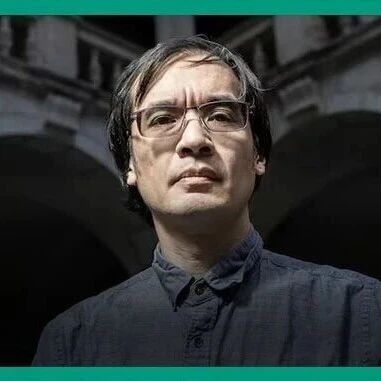
Core Viewpoint - The funding crisis faced by Terence Tao, a renowned mathematician, highlights the increasing politicization of research funding in the United States, which is affecting the stability of the scientific research environment [2][5][6]. Group 1: Funding Crisis - Terence Tao and his research team at UCLA are unable to receive research funding, leading to a situation where they have not even received summer salaries [2][5]. - The funding freeze originated from a political issue, where the U.S. government froze nearly $600 million in federal research funds to UCLA, citing mismanagement of anti-Semitism [6][8]. - The Trump administration plans to cut the National Science Foundation (NSF) budget by half in the 2026 fiscal year, which would severely impact many scientists' funding [6][11]. Group 2: Impact on Researchers - The instability in funding has forced top scientists like Tao to seek sponsorships, shifting their focus from research to fundraising [5][9]. - Other institutions, such as Harvard, have paused doctoral admissions due to reduced NIH funding, and many laboratories are struggling to afford basic supplies [11][12]. - The current political climate has led to a significant increase in the number of researchers leaving the U.S. for more stable environments, with many considering relocating to countries like China [11][12]. Group 3: Opportunities for China - China is emerging as an attractive destination for scientists due to its stable research funding and investment in top-tier research facilities [14][15]. - To retain top talent like Terence Tao, China needs to ensure adequate funding, provide advanced research platforms, minimize administrative interference, and support scientists' personal lives [14][15][16][17]. - The situation presents an opportunity for China to enhance its scientific capabilities by attracting and retaining elite researchers, thereby improving its global standing in scientific research [17].
【科技日报】烽火铸丹心 科学佑山河
Ke Ji Ri Bao· 2025-09-03 04:25
Core Viewpoint - The article commemorates the contributions of Chinese scientists during the Anti-Japanese War, highlighting their innovative spirit and dedication to national survival and development through science and technology [1][2][18]. Group 1: Contributions of Scientists - Chinese scientists mobilized to address national crises, utilizing their expertise in various fields to support the war effort [2][3]. - Notable achievements include the development of a new wireless telegraph frequency stabilizer by physicist Yan Jici, which significantly improved wartime telecommunications [5]. - Chemist Hou Debang invented a new method for soda production that reduced costs by 40% and increased salt utilization to 96%, contributing to industrial development during the war [5]. - The construction and subsequent destruction of the Qiantang River Bridge by engineer Mao Yisheng exemplified the commitment of scientists to national interests [5]. Group 2: Educational Resilience - The migration of Zhejiang University during the war, led by geographer Zhu Kezhen, demonstrated the resilience of educational institutions under duress, maintaining academic activities despite challenging conditions [7][9]. - The establishment of the Yan'an Natural Science Academy by chemist Chen Kangbai marked a significant effort to continue scientific education and research during wartime [11]. Group 3: Agricultural and Medical Innovations - Agricultural scientist Shen Liying's work in wheat breeding resulted in the promotion of over 3 million acres of improved wheat varieties, showcasing the impact of scientific research on food security [15]. - Medical researchers, including virologist Tang Feifan, developed vaccines and conducted nutritional studies to address health crises during the war, highlighting the role of science in public health [17]. Group 4: Legacy and Impact - The scientific advancements made during the war laid the groundwork for post-war technological development in China, influencing various industries such as pharmaceuticals and aviation [20][21]. - The spirit of innovation and dedication exhibited by scientists during the Anti-Japanese War continues to inspire contemporary scientific endeavors in China [23].