谷歌搜索引擎

Search documents
谷歌将测试搜索结果展示规则调整
Di Yi Cai Jing· 2026-02-25 23:17
Core Viewpoint - Google, a subsidiary of Alphabet, is set to test adjustments in search result display rules to enhance the visibility of competitors, aiming to avoid EU fines related to alleged favoritism in hotel, flight, and restaurant searches [1] Group 1: Regulatory Context - Google has been under scrutiny since March of last year for allegedly violating the Digital Markets Act [1] - The company has proposed multiple solutions to appease competitors and EU regulators [1] Group 2: Financial Implications - Violations of the Digital Markets Act could result in fines up to 10% of the company's global annual revenue [1] - Since 2017, Google has faced a total of €9.71 billion (approximately $11.5 billion) in fines for various antitrust violations in Europe [1]

阿里、谷歌接连“出手”,AI购物元年将至?
Feng Huang Wang· 2026-02-12 14:17
Group 1 - The core idea of the articles highlights the contrasting approaches to AI shopping between Google and Alibaba, with Google embedding AI shopping features into its search engine while Alibaba focuses on direct purchasing through its AI platform [1][2] - Google leverages its vast search engine capabilities to integrate transaction processes within user queries, following a model of "AI + advertising" for monetization [2] - Alibaba's approach is more pragmatic, allowing users to directly place orders through AI, exemplified by the success of its Qianwen app during the Spring Festival, where users made over 1.2 billion orders [1][2] Group 2 - The success of Alibaba's Qianwen app is attributed to its comprehensive AI technology and a robust consumption ecosystem, integrating various services from its platforms like Taobao and Tmall [2][3] - The differences in AI shopping strategies stem from Google's lack of checkout capabilities and delivery networks, while Alibaba has transformed its extensive logistics and e-commerce infrastructure into a foundation for AI-driven consumption [3] - The initial surge in user engagement during the Spring Festival is seen as just the beginning, with ongoing efforts to retain users and expand the range of products available through AI [4]

欧洲监管机构重拳整治大型科技企业
Xin Lang Cai Jing· 2026-02-06 13:27
Group 1: Alphabet (Google) - The European Commission has launched an antitrust investigation into Alphabet's Google regarding its use of online content from publishers and YouTube in the AI business [1][11] - Google was fined €2.95 billion (approximately $3.46 billion) by the European Commission on September 5 for anti-competitive behavior in its advertising technology business [1][11] - In September 2024, Google appealed against a €1.49 billion antitrust fine related to hindering competition in online search advertising and won the case [1][11] - Google lost an appeal against a €2.42 billion fine for unfairly benefiting from its own comparison shopping service [1][11] - The UK antitrust regulator preliminarily found Google abusing its dominant position in digital advertising in September 2024 [1][11] - France's competition authority fined Google €25 million for alleged violations of EU intellectual property regulations in March 2024 [1][11] Group 2: Amazon - The German Federal Cartel Office has prohibited Amazon from setting price caps for online retailers on its German e-commerce platform and has reclaimed millions of euros from the company for anti-competitive behavior [2][12] - In November 2024, the EU General Court upheld the classification of Amazon as a platform strictly regulated under EU online content regulations [2][12] Group 3: Apple - Italy's competition authority fined Apple and its subsidiaries €98.6 million in December 2024 for allegedly abusing its dominant position in the mobile app market [4][13] - In October 2025, civil rights organizations filed complaints against Apple regarding its App Store and device-related terms with EU antitrust regulators [4][13] - The UK Competition and Markets Authority recognized Apple and Google as having "strategic market positions" and gained the authority to require specific remedies from both companies [4][13] - Apple was fined €500 million under the Digital Markets Act in April 2025, while Meta was fined €200 million [4][14] - Apple lost an appeal against a German regulatory assessment that would impose stricter controls on the company [4][14] - Apple lost an appeal against an EU directive requiring it to repay €13 billion in taxes to Ireland [4][14] - Apple agreed to open its contactless mobile payment system to competitors to resolve an EU antitrust investigation [4][14] - Brussels fined Apple €1.84 billion in March 2024 for suppressing competition in the music streaming sector [5][15] Group 4: Meta - The European Commission initiated an antitrust investigation into Meta's WhatsApp AI features in December 2024 [7][16] - Meta was fined €797.72 million in November 2024 for abusing its market position to support Facebook Marketplace [7][16] - The company was accused of violating the Digital Markets Act with its new "pay or agree" advertising model in July 2024 [7][16] Group 5: Microsoft - The European Commission accused Microsoft of illegally bundling its Teams chat video application with its Office software in June 2024 [8][17] Group 6: TikTok - The EU tech regulator accused TikTok of violating online content regulations due to addictive features and may require product design changes [9][18] - Preliminary investigation results in October 2025 indicated that TikTok and Meta violated obligations under the Digital Services Act by not providing sufficient public data access to researchers [9][18] - TikTok was accused in May 2025 of failing to comply with the Digital Services Act regarding the publication of an advertising library and facilitating user identification of fraudulent ads, but made concessions to enhance transparency to avoid fines [9][18] Group 7: X (formerly Twitter) - French police raided the offices of X, owned by Elon Musk, as part of an expanding investigation [10][19] - The European Commission announced an investigation into X's Grok chatbot for potentially spreading illegal content in January 2026 [10][20] - In December 2025, X was fined €120 million for violating online content regulations, marking the first penalty since the implementation of the Digital Services Act [10][20]



富国银行将谷歌母公司Alphabet目标价从350美元上调至354美元。
Xin Lang Cai Jing· 2026-02-06 11:33
Group 1 - Wells Fargo raised the target price for Alphabet, Google's parent company, from $350 to $354 [1]
硅谷风向已变!Alphabet(GOOGL.US)凭 Gemini 3 重回巅峰,华尔街调转枪口猛攻OpenAI生态
智通财经网· 2026-02-05 07:07
Core Viewpoint - Alphabet is gaining momentum in the AI sector, challenging OpenAI and showcasing Wall Street's recognition of its leadership in AI, contrasting with investor perceptions from a year ago when Alphabet was seen as lagging behind competitors [1] Group 1: Financial Performance and AI Investment - Alphabet's executives displayed increased confidence during the earnings call, highlighting the positive impact of AI investments on overall company performance [1] - The company plans to nearly double its capital expenditures by 2026, reaching between $175 billion and $185 billion, primarily for AI computing capabilities [1] - Alphabet's cloud business reported a 48% revenue growth in the December quarter, reinforcing investor confidence in the returns from its AI investments [2] Group 2: User Engagement and Market Position - The Gemini application, competing with OpenAI's ChatGPT, surpassed 750 million monthly active users by the end of December, up from 650 million in the previous quarter [2] - Despite the growth in user engagement, Gemini's user numbers still lag behind ChatGPT, which reported over 800 million weekly active users [2] - Alphabet has seen a significant increase in paid licenses for its enterprise version of Gemini, reaching 8 million [2] Group 3: Market Sentiment and Competitive Landscape - Alphabet has transformed from a laggard to a leader among the "Big Seven" tech companies, with only Nvidia and Apple on par with its market value exceeding $4 trillion [3] - Concerns over Microsoft's reliance on OpenAI have negatively impacted its stock, while Alphabet's stock has risen approximately 36% during the same period [4] - Market sentiment is shifting towards favoring Alphabet over OpenAI, as investors express concerns about OpenAI's future financing capabilities linked to its agreements with Microsoft and Oracle [4]

美股前瞻 | 三大期指全线跌超1%,关税争端或致市场开盘承压,奈飞(NFLX.US)盘后公布财报
智通财经网· 2026-01-20 13:14
Market Overview - US stock index futures are all down, with Dow futures down 1.24%, S&P 500 futures down 1.34%, and Nasdaq futures down 1.65% [1] - European indices also show declines, with Germany's DAX down 1.21%, UK's FTSE 100 down 0.86%, France's CAC40 down 0.89%, and the Euro Stoxx 50 down 1.01% [2][3] Oil Prices - WTI crude oil is up 0.78%, trading at $59.80 per barrel, while Brent crude oil is up 0.67%, trading at $64.37 per barrel [3][4] Technology Sector Insights - Wedbush analysts suggest that the Greenland tariff dispute may lead to a weak market opening, but it also presents a buying opportunity for "tech winners" [4] - Analysts predict a significant increase in S&P 500 earnings growth expectations for 2025, rising from 20.9% to 25.4%, with tech sector growth expected to be even stronger at 31.1% in 2026 [7] Corporate News - Netflix is set to release its Q4 earnings report, with expectations of earnings per share at $0.55 and revenue at $12 billion, although future revenue growth may slow [10] - Nvidia faces supply chain disruptions due to a halt in the export of its H200 AI chips to China, affecting over 1 million orders [12] Economic Data and Events - Important economic data and events are anticipated, including the expiration of NYMEX February crude oil futures [13] - Earnings reports are expected from companies such as Netflix and Johnson & Johnson [14]


加州要对亿万富豪一次性“收割”5%?有人连夜搬家
Sou Hu Cai Jing· 2026-01-17 00:00
Core Viewpoint - The proposed "Billionaire Tax" in California aims to impose a one-time 5% tax on the assets of billionaires, which has sparked significant backlash from the wealthy, with some threatening to relocate [2][3]. Group 1: Tax Proposal Details - The 2026 Billionaire Tax Act intends to collect approximately $100 billion from over 200 billionaires in California, based on Forbes' valuations [3]. - The tax will cover a wide range of assets, including private company equity, publicly traded stocks, personal assets over $5 million, and retirement accounts exceeding $10 million, with a notable exemption for real estate held in revocable trusts [3][4]. - The proposal allows billionaires to pay the tax in installments over five years, with interest, and offers a "selective deferred tax account" for those holding illiquid assets [4]. Group 2: Legislative Process and Challenges - The proposal must gather 875,000 valid signatures by June 30 to be placed on the ballot for a vote in November [9]. - Even if passed, the tax is expected to face legal challenges, with the proposal's authors attempting to mitigate potential litigation through careful drafting [9]. - The proposal includes measures to prevent asset undervaluation or concealment, with specific valuation methods outlined for different asset types [8]. Group 3: Economic Implications - Critics argue that the tax could drive tech entrepreneurs and their businesses out of California, potentially leading to a decline in state income tax revenue [2][9]. - The California Legislative Analyst's Office has indicated that the tax could result in the state losing hundreds of millions in personal income tax revenue annually if billionaires relocate [9]. - The current personal income tax rate in California is already the highest in the U.S. at 13.3%, with additional taxes on high earners [10]. Group 4: Broader Context - California is not alone in its high tax rates, as New York City also has a high combined state and city tax rate, raising concerns among billionaires about potential tax increases [11]. - The proposal has raised fears that it may hinder the economic recovery of the San Francisco Bay Area, particularly in the booming AI sector [10].

被亿万富翁税“吓跑” 谷歌创始人豪掷12亿在迈阿密购买豪宅
Feng Huang Wang· 2026-01-08 00:18
Core Insights - Google co-founder Larry Page has purchased two luxury properties in Miami for a total of $173.4 million, amid California's proposed wealth tax targeting billionaires [1][3] - The first property, a beachfront estate previously owned by Jonathan Lewis, was bought for $101.5 million, while the second property was acquired for $71.9 million [1][2] Property Details - The first estate spans approximately 4.5 acres along Biscayne Bay and features two main residences, one designed in the 1920s and another built around 2002 [2] - The second property was previously owned by Sloan Lindemann Barnett and her husband Roger Barnett, who purchased it for $45.9 million in 2021 [2] Market Trends - Following California's proposal for a one-time 5% tax on billionaire assets, many tech entrepreneurs are relocating to Florida, with Miami real estate seeing increased interest from Silicon Valley billionaires [3] - Real estate agents report a surge in inquiries from clients in the San Francisco Bay Area, with discussions centered around the wealth tax and property purchases [3]

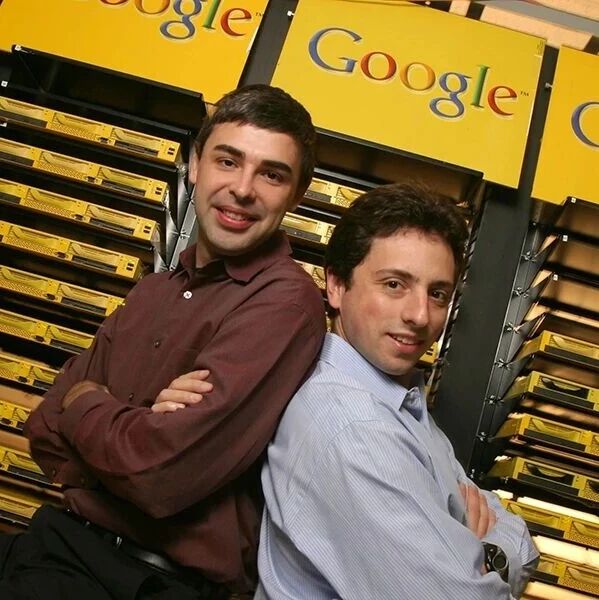
Gemini正将谷歌创始人25年前的设想变为现实
财富FORTUNE· 2025-12-31 13:06
Core Insights - The article discusses the evolution of Google from its inception to its current advancements in artificial intelligence, particularly focusing on the Gemini AI product, which aligns with co-founder Larry Page's vision for an ultimate search engine that understands user intent and provides accurate answers [2][5]. Group 1: Historical Context - Google was founded by Larry Page and Sergey Brin in 1998, with Page serving as the first CEO until 2001 [2]. - The company initially gained a 25% market share in search by 2000, a significant increase from its early days, but still far from its current dominance of approximately 90% [3]. - In 2000, Google's search advertising revenue was $80 million, which is projected to approach $200 billion by 2024 [3]. Group 2: Vision for AI - Larry Page expressed in a 2000 interview that artificial intelligence would be the ultimate form of Google, capable of understanding everything on the internet and providing precise answers [4]. - The recent launch of Gemini is seen as the closest realization of Page's vision for an advanced search engine [5]. Group 3: Gemini AI Developments - Google has integrated its latest language model, Gemini 3 Flash, into its AI mode search tool, enhancing its ability to provide high-quality answers to complex user queries [6]. - Gemini's multimodal reasoning capabilities allow it to interpret and reason based on text, images, audio, video, and code within a single prompt, significantly improving its performance [6]. - The model can manage user tasks within the Google ecosystem, such as handling emails and providing programming suggestions, showcasing its advanced functionality beyond traditional search engines [6].
2025年世界品牌500强发布
Xin Lang Cai Jing· 2025-12-26 12:24
Core Insights - Google ranks first, followed by Microsoft and Apple in the 2025 World Brand 500 list, with the United States leading with 184 brands, while China surpasses Japan with 50 brands, securing the third position globally [3][6]. Group 1: Brand Rankings - Google, Microsoft, and Apple are the top three brands in the 2025 World Brand 500 list [3][12]. - The United States has the highest representation with 184 brands, followed by France with 51, China with 50, Japan with 40, and the United Kingdom with 34 [6][12]. Group 2: Industry Representation - The automotive and parts industry leads with 33 brands, followed by the energy and food & beverage industries, each with 30 brands [4][5]. - The banking sector has 29 brands, while retail and computer & communications sectors each have 27 brands represented [4][5]. Group 3: Notable Chinese Brands - Key Chinese brands in the list include State Grid, Tencent, Haier, and ICBC, among others [7][8][9]. - The presence of Chinese brands has increased, with 50 brands listed, surpassing Japan's 40 brands [3][6]. Group 4: Impact of AI - The rise of generative AI is influencing brand creativity and expression, presenting both opportunities and challenges in the branding landscape [3][4].