
阿胶

Search documents
2025年山东省阿胶行业发展现状 发源地东阿县具有较好的产业集群化优势【组图】
Qian Zhan Wang· 2025-07-31 07:19
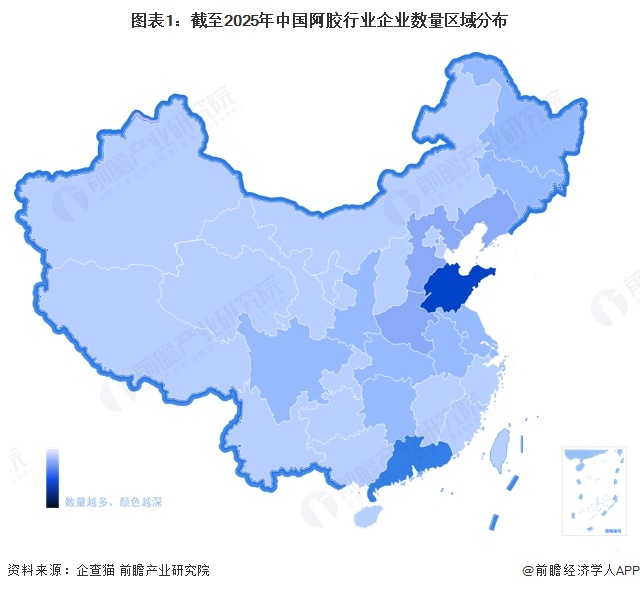
Core Insights - The article highlights the significance of Shandong Province as the primary region for the Chinese ejiao (donkey-hide gelatin) industry, with a concentration of registered companies and production capacity [1][11]. Industry Overview - The ejiao industry in China is predominantly located in Shandong Province, with major companies also found in Guangdong, Henan, Hebei, and Jilin [1]. - Shandong Province is home to over 200 ejiao production enterprises, with a duopoly market structure led by Dong'e Ejiao and Fupai Ejiao, while other brands compete in the market [7][11]. Production and Supply - The total number of donkeys in Shandong Province is projected to decline to 21,000 by 2024, with the province accounting for only 1.83% of the national donkey population as of the end of 2023 [3][4]. - The donkey breeding regions in Shandong are concentrated in seven cities, which account for over 95% of the province's donkey population [4]. Development Plans - The "Shandong Province Donkey Industry High-Quality Development Plan (2024-2035)" aims to double the donkey population by 2030 and establish 3-5 leading ejiao production enterprises, with a target of over 100 billion yuan in industry output value by 2035 [4][12]. - Dong'e County is recognized as a key area for ejiao production, contributing over 60% of the national ejiao output [12]. Key Companies - Dong'e Ejiao Co., Ltd. is a major player in the ejiao market, established in 1952 and known for its high-quality products and significant market presence [10]. - Fupai Ejiao Co., Ltd. has a long history dating back to 1950 and has developed into a comprehensive health industry group [10]. - Other notable companies include Jinan Guben Tang Biotechnology Co., Ltd., Jinan Qian Nian Biological Engineering Co., Ltd., and Shandong Hongjitang Pharmaceutical Group Co., Ltd., each contributing to the diverse ejiao product offerings [10].


白酒可能根本不存在杀业绩、杀逻辑阶段
雪球· 2025-07-29 08:34
Core Viewpoint - The article discusses the current state of the liquor industry, particularly the challenges faced by second and third-tier liquor companies, suggesting that the industry is entering a phase of performance decline, which may lead to significant price drops and a reevaluation of price-to-earnings (PE) ratios [2][3]. Group 1: Industry Performance - The liquor industry is experiencing a significant downturn, with many companies reporting poor mid-year results, leading to speculation about further declines in performance and valuation [2]. - Historical examples indicate that the anticipated phases of "killing performance" and "killing logic" may not occur as expected, as past performance declines have often already reflected negative market sentiment before official poor results are announced [3]. - The article highlights that the market often reacts prematurely to negative news, as seen in the cases of Yili and Dong'e Ejiao, where stock prices did not follow the predicted patterns of further declines after performance issues were revealed [3]. Group 2: Market Perception and Misconceptions - There is a tendency among investors to apply lessons from the real estate sector to the liquor industry, leading to an overly pessimistic outlook on liquor stocks [5]. - The liquor industry operates on a low-leverage model, contrasting with the high-leverage nature of real estate, which can lead to more severe consequences during downturns [5]. - The financial characteristics of real estate differ significantly from those of consumer stocks, as demand for liquor does not vanish in the same way that demand for real estate can during economic downturns [5][6]. Group 3: Supply and Demand Dynamics - The article posits that the liquor market will eventually reach a balance between supply and demand, as poor sales will force smaller producers out of the market, leading to a reduction in supply and a potential recovery in prices [6]. - In contrast, the real estate market faces challenges in reducing supply due to the nature of ownership and the presence of a large number of second-hand properties, complicating the recovery process [6].


预见2025:《2025年中国阿胶行业全景图谱》(附市场现状和发展趋势等)
Qian Zhan Wang· 2025-07-17 01:16
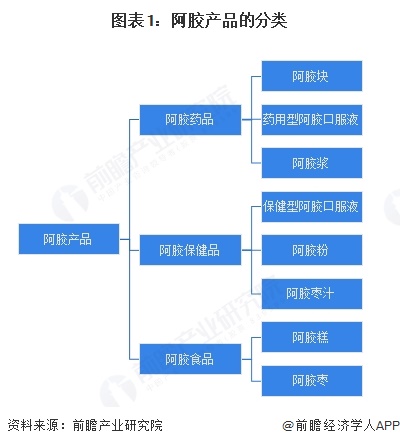
Industry Overview - Ejiao is a solid glue made from the dried skin or fresh skin of donkeys, known for its health benefits such as blood replenishment and immune enhancement [1][4] - The industry is currently in a growth phase, with over 200 manufacturers in China, and the market is expected to expand due to rising health awareness and disposable income [6][16] Product Classification - Ejiao products can be classified into three categories: medicinal products, health supplements, and food products, with specific regulatory approvals required for each [2] Industry Chain Analysis - The ejiao industry chain consists of donkey breeding (upstream), ejiao production and processing (midstream), and sales channels including hospitals, retail pharmacies, and e-commerce platforms (downstream) [4][5] Market Size and Growth - The ejiao market size in China is projected to reach approximately 29.1 billion yuan by 2024, with a significant increase in production from 7,460 tons in 2019 to 13,768.84 tons in 2024 [13][16] Competitive Landscape - The ejiao market is characterized by a duopoly, with Dong'e Ejiao and Fupai Ejiao dominating the market, holding 70% and 10% market shares respectively [20][21] - The top brands in the ejiao industry include Dong'e Ejiao, Fupai Ejiao, and Tongrentang, with Dong'e Ejiao leading in brand recognition [18][19] Regional Development - Shandong province is a key player in the ejiao industry, with 203 production enterprises and significant government support for industry development [21][23] - The consumption of ejiao is particularly strong in East China, where traditional practices drive demand [24] Industry Trends - The ejiao industry is expected to see a shift towards high-end and differentiated products, with increasing competition as new players enter the market [28] - The market is projected to grow to nearly 40 billion yuan by 2030, with a compound annual growth rate of 5.3% [29]


清风为伴产业兴丨亲清护企促发展
Zhong Yang Ji Wei Guo Jia Jian Wei Wang Zhan· 2025-05-18 00:29
Group 1 - The core industry of Dong'a County is the production of Ejiao, with 106 companies and an annual production capacity of 10,000 tons, generating a total output value of 7.15 billion yuan and employing over 20,000 people [1][2] - The local government is actively supervising the Ejiao industry to ensure a fair business environment, having initiated 21 cases related to misconduct in law enforcement, resulting in 21 disciplinary actions and 2 detentions [1][2] - The county's disciplinary committee has established a comprehensive oversight platform that includes 68 items across 17 departments to enhance service and regulatory efficiency for Ejiao enterprises [2] Group 2 - The local government aims to reduce excessive law enforcement actions and improve the operational environment for Ejiao companies by promoting joint law enforcement actions and lowering inspection frequency [2] - The initiative is part of a broader strategy to optimize the business environment and support the healthy development of the Ejiao industry, reinforcing its reputation as a premium product [2]