
交通

Search documents
四季度以来一批重大项目建设顺利推进
Zheng Quan Ri Bao· 2025-12-02 16:17
Group 1 - The core viewpoint of the articles highlights the acceleration of major project construction across various regions in China, aiming to boost effective investment and stabilize economic growth by the end of 2025 [1][2]. - In Fujian Province, a total of 130 projects with an investment of 701.26 billion yuan were included in a concentrated commencement and completion event, with 65 projects starting construction and 65 being completed [1]. - Chongqing launched 177 major projects with a total investment exceeding 180 billion yuan, covering multiple sectors such as modern industry, infrastructure, social welfare, and ecological protection [1]. Group 2 - Investment in major projects is seen as a "ballast stone" for stabilizing economic growth, creating a closed loop of "investment-production-revenue" that activates the industrial chain's collaborative effects [2]. - Guangdong Province has planned 1,500 key construction projects with an annual investment target of 1 trillion yuan, achieving 96% of its investment goal by October 2025 [2]. - The construction of infrastructure projects is expected to improve public services and enhance the overall living experience, laying a foundation for future industrial development and economic upgrades [2]. Group 3 - To ensure the sustained acceleration of major project construction, local policies should focus on five core areas: resource assurance, efficiency in approvals, financial empowerment, environmental optimization, and mechanism protection [3]. - Streamlining approval processes through "parallel approvals and acceptance of incomplete applications" is recommended to simplify project initiation and land use [3]. - Encouraging local enterprises to participate in project subcontracting and material supply can help reduce construction costs and enhance the precision of industrial chain support [3].
中央财政出资优化消费供给 “发钱”之外提振消费政策还能做什么?
Zheng Quan Shi Bao· 2025-12-02 00:55
Core Viewpoint - The selection of 50 cities for the new consumption pilot program aims to address the insufficient supply of high-quality consumption and stimulate innovation in the consumption sector through targeted fiscal support policies, shifting from direct subsidies to optimizing the consumption supply structure [1][3][6] Group 1: Pilot Program Overview - The pilot program includes 50 cities, comprising 4 municipalities, 5 sub-provincial cities, and 41 other cities, focusing on creating new consumption scenarios [4] - The program emphasizes three main support directions: launching new products, diverse service consumption scenarios, and cross-industry collaborations [3][4] Group 2: Fiscal Support and Strategy - The central government will provide substantial financial support, with super-large cities receiving a total subsidy of 400 million yuan, large cities 300 million yuan, and other cities 200 million yuan over two years, totaling approximately 17 billion yuan [6][4] - This initiative represents a strategic shift in fiscal policy, focusing on enhancing the "soft environment" for consumption rather than merely providing direct financial incentives to consumers [7][10] Group 3: Consumption Upgrade and Economic Impact - The pilot program is designed to enrich high-quality service supply and leverage consumption's ripple effect, promoting related industries such as culture, tourism, and transportation [3][4] - The initiative aims to create a sustainable consumption ecosystem that enhances urban competitiveness and fosters high-growth sectors like experience economy and cultural creativity [10][11] Group 4: Challenges and Recommendations - The implementation of the pilot program may face challenges such as avoiding homogenization, attracting social capital, and transitioning from reliance on fiscal subsidies to self-sustaining models [12][13] - Recommendations include investing in consumption infrastructure, optimizing public services, and creating a favorable institutional environment to support new consumption forms [13][14]
中央财政出资优化消费供给 “发钱”之外提振消费政策还能做什么?
证券时报· 2025-12-02 00:48
Core Viewpoint - The article discusses the announcement of 50 cities selected for the pilot program of new consumption formats, models, and scenarios, highlighting a shift in central fiscal policy towards enhancing consumption supply rather than merely providing subsidies to boost immediate consumer spending [1][3]. Group 1: Pilot Program Overview - The pilot program aims to address the insufficient supply of high-quality consumption and stimulate innovation in the consumption sector, with a focus on optimizing the consumption supply structure [1]. - The selected cities include 4 municipalities, 5 sub-provincial cities, and 41 other cities, each with tailored strategies based on their unique characteristics and resources [4]. Group 2: Fiscal Support and Strategy - The central government will provide substantial financial support, with a total of approximately 17 billion yuan allocated for the pilot program, which is about 5.6% of this year's 300 billion yuan subsidy for replacing old consumer goods [7]. - The fiscal support is designed to enhance the "soft environment" for consumption, focusing on innovative and diversified service consumption scenarios rather than traditional physical goods [6][8]. Group 3: Consumption Trends and Upgrades - There is a clear trend of increasing service consumption in China, with the proportion of per capita service consumption expected to rise by 5 percentage points from 2015 to 2024, reaching 46.1% [3]. - The pilot program emphasizes the creation of high-quality consumption ecosystems, including the establishment of flagship stores and first-release centers to enhance the quality of consumption [3][12]. Group 4: Challenges and Recommendations - The implementation of the pilot program faces challenges such as avoiding homogenization among cities, attracting social capital, and transitioning from fiscal dependency to self-sustaining consumption models [15]. - Recommendations include investing in consumption infrastructure and public services, optimizing regulatory frameworks, and creating a favorable institutional environment for new consumption formats [16][17].


新版基础设施REITs项目行业范围清单发布 商业办公设施、城市更新设施等被纳入
Zhong Guo Zheng Quan Bao· 2025-12-01 20:42
(REITs)项目申报要求》,此次清单将基础设施REITs进一步扩围至更多行业领域和资产类型。具体 来看,在消费基础设施领域新增体育场馆项目,以及商旅文体健等多业态融合的商业综合体项目、四星 级及以上酒店项目。此外,新增商业办公设施,包括超大特大城市的超甲级、甲级商务楼宇项目;新增 城市更新设施,包括老旧街区、老旧厂区更新改造项目,以及涵盖上述多种资产类型的城市更新综合设 施项目。 国家发展改革委表示,清单范围内符合条件的项目应严格按照常态化推荐发行阶段有关政策要求进行申 报。各省级发展改革部门、有关中央企业要坚持"优中选优",严格把关项目质量,强化风险意识,高质 量做好项目申报工作。 国家发展改革委政策研究室副主任、新闻发言人李超日前表示,将继续加强与证监会的协同配合,进一 步优化申报推荐流程,动态完善有关项目申报要求,提高工作质效,在严防风险、严把质量的基础上, 支持更多符合条件的项目发行上市,更好推动基础设施REITs支持实体经济发展。 (文章来源:中国证券报) 国家发展改革委12月1日消息,国家发展改革委对基础设施REITs发行范围作了进一步拓展,形成了 《基础设施领域不动产投资信托基金(REITs) ...
新版基础设施REITs项目行业范围清单发布
Zhong Guo Zheng Quan Bao· 2025-12-01 20:25
● 本报记者 欧阳剑环 国家发展改革委12月1日消息,国家发展改革委对基础设施REITs发行范围作了进一步拓展,形成了 《基础设施领域不动产投资信托基金(REITs)项目行业范围清单(2025年版)》,以更好发挥基础设 施REITs盘活存量资产、促进投资良性循环的作用。 (REITs)项目申报要求》,此次清单将基础设施REITs进一步扩围至更多行业领域和资产类型。具体 来看,在消费基础设施领域新增体育场馆项目,以及商旅文体健等多业态融合的商业综合体项目、四星 级及以上酒店项目。此外,新增商业办公设施,包括超大特大城市的超甲级、甲级商务楼宇项目;新增 城市更新设施,包括老旧街区、老旧厂区更新改造项目,以及涵盖上述多种资产类型的城市更新综合设 施项目。(下转A02版) (上接A01版)国家发展改革委表示,清单范围内符合条件的项目应严格按照常态化推荐发行阶段有关 政策要求进行申报。各省级发展改革部门、有关中央企业要坚持"优中选优",严格把关项目质量,强化 风险意识,高质量做好项目申报工作。 国家发展改革委政策研究室副主任、新闻发言人李超日前表示,将继续加强与证监会的协同配合,进一 步优化申报推荐流程,动态完善有关项 ...
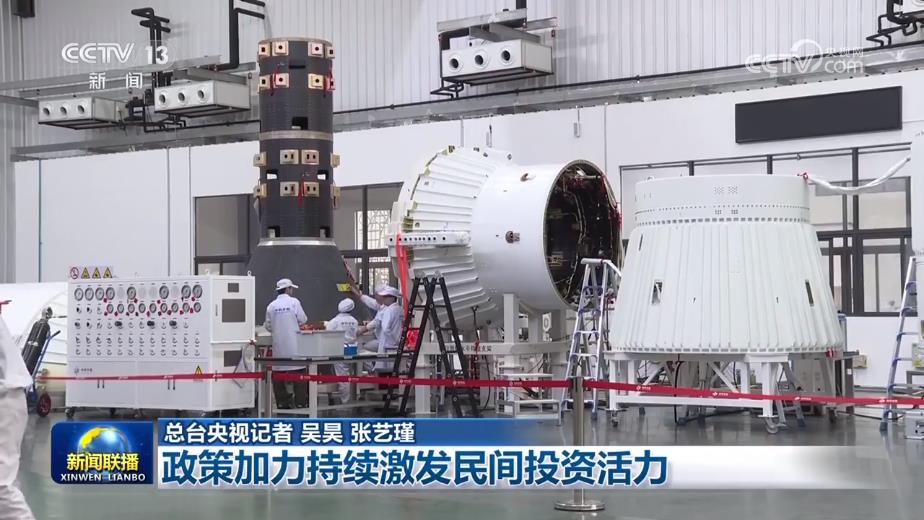
政策加力持续激发民间投资活力
Yang Shi Wang· 2025-12-01 12:24
Group 1 - The core viewpoint of the articles highlights the significant growth and potential of private investment in China, driven by relaxed market access and strengthened resource guarantees [1] - In the first ten months of this year, private investment in infrastructure has increased by 4.5% year-on-year, accounting for 22.6% of total infrastructure investment, which is a 1 percentage point increase compared to the same period last year [1] - Over 2,000 projects have attracted private capital participation, with a total investment exceeding 2.6 trillion yuan [1] Group 2 - Private investment is accelerating in new fields and sectors, with the highest private capital share in nuclear power projects in Guangdong reaching 20% [3] - In Henan, 5.3 billion yuan of every 10 billion yuan in private investment this year has been directed towards emerging industries [3] - The private investment in the automotive manufacturing, railway, shipbuilding, aerospace, and other transportation equipment manufacturing sectors has shown double-digit growth in the first ten months [3]
国家发改委:储能设施项目可申报基础设施REITs!
中关村储能产业技术联盟· 2025-12-01 10:39
Core Viewpoint - The National Development and Reform Commission (NDRC) has released a notification to expand the scope of infrastructure Real Estate Investment Trusts (REITs) to activate existing assets and promote a virtuous investment cycle [2][5]. Summary by Relevant Sections Expansion of REITs - The NDRC aims to enhance the role of infrastructure REITs in revitalizing existing assets and facilitating investment cycles, in line with national policies for urban high-quality development and consumption stimulation [5][6]. Eligible Project Categories - The notification outlines 15 categories of projects eligible for application, including: 1. **Energy Infrastructure**: Projects in clean energy such as wind, solar, hydro, natural gas, biomass, and nuclear power, as well as energy storage and flexible coal power projects [9]. 2. **Transportation Infrastructure**: Includes toll roads, railways, airports, and ports [9]. 3. **Municipal Infrastructure**: Covers urban water supply, gas, heating projects, and parking facilities [10]. 4. **Ecological and Environmental Infrastructure**: Involves urban sewage and waste treatment facilities [10]. 5. **Logistics Infrastructure**: Warehousing services including general and specialized cold storage [10]. 6. **Park Infrastructure**: Facilities in free trade zones and national-level development zones [10]. 7. **New Infrastructure**: Projects related to data centers, AI, 5G, and smart city initiatives [10]. 8. **Rental Housing**: Projects for affordable and public rental housing in major cities [11]. 9. **Water Conservancy Facilities**: Projects with water supply and power generation functions [12]. 10. **Cultural and Tourism Infrastructure**: Projects related to national heritage and major tourist attractions [12]. 11. **Consumer Infrastructure**: Includes shopping centers, community commercial projects, and sports venues [12]. 12. **Commercial Office Facilities**: High-grade office buildings in major cities [13]. 13. **Elderly Care Facilities**: Registered elderly care projects [14]. 14. **Urban Renewal Facilities**: Projects for the renovation of old neighborhoods and factories [14]. 15. **Other Infrastructure Projects**: Projects aligned with national strategic and industrial policies [15]. Project Quality and Compliance - Projects must adhere to the guidelines set forth in previous notifications and should be selected based on quality, with a focus on risk awareness [6][7].

进一步拓展!国家发改委发布重要清单!
中国能源报· 2025-12-01 09:38
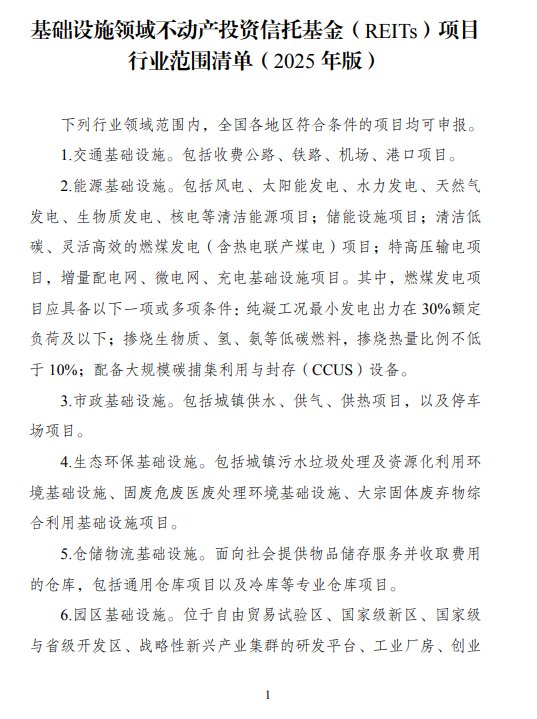
Core Viewpoint - The National Development and Reform Commission (NDRC) has released the "2025 Edition of the Industry Scope List for Real Estate Investment Trusts (REITs) in the Infrastructure Sector," which expands the scope of eligible projects to include various clean energy and infrastructure initiatives [1][2]. Group 1: Energy Infrastructure - The list includes clean energy projects such as wind power, solar power, hydropower, natural gas power, biomass power, and nuclear power [3]. - It also encompasses energy storage facilities, clean and low-carbon flexible coal-fired power projects, ultra-high voltage transmission projects, incremental distribution networks, microgrids, and charging infrastructure [3][4]. - Coal-fired power projects must meet specific conditions, such as having a minimum output of 30% of rated load under pure operation conditions or incorporating low-carbon fuels like biomass, hydrogen, or ammonia [3][4]. Group 2: Other Infrastructure Categories - Transportation infrastructure includes toll roads, railways, airports, and port projects [3]. - Municipal infrastructure covers urban water supply, gas supply, heating projects, and parking facilities [3]. - Ecological and environmental infrastructure includes urban sewage and waste treatment facilities, as well as solid waste recycling projects [3]. - Warehousing and logistics infrastructure is defined as facilities providing storage services for a fee, including general warehouses and specialized cold storage [4]. - New infrastructure projects include data centers, AI infrastructure, 5G, communication towers, IoT, industrial internet, broadband networks, smart transportation, smart energy, and smart city projects [4]. - Rental housing projects are specified for major cities, including affordable rental housing and public rental housing [4]. - Water conservancy projects with functions such as water supply and power generation are also included [5]. - Cultural tourism infrastructure encompasses natural cultural heritage sites and national AAAAA and AAAA level tourist attractions [5]. - Consumer infrastructure includes various commercial projects such as department stores, shopping centers, and community commercial projects [5].

国家发改委印发不动产投资信托基金(REITs)项目行业范围清单 范围包括风电、太阳能发电等
智通财经网· 2025-12-01 09:18
Core Viewpoint - The National Development and Reform Commission (NDRC) has issued the "Industry Scope List for Real Estate Investment Trusts (REITs) in the Infrastructure Sector (2025 Edition)", expanding the scope of projects eligible for REITs to include various clean energy and infrastructure projects [1][2]. Group 1: Project Categories - The eligible project categories include: 1. **Transportation Infrastructure**: Toll roads, railways, airports, and port projects [4]. 2. **Energy Infrastructure**: Clean energy projects such as wind, solar, hydro, natural gas, biomass, and nuclear power; energy storage facilities; and flexible, low-carbon coal power projects [4]. 3. **Municipal Infrastructure**: Urban water supply, gas, heating projects, and parking facilities [4]. 4. **Environmental Protection Infrastructure**: Urban sewage and waste treatment facilities, hazardous waste treatment, and solid waste recycling projects [4]. 5. **Warehouse and Logistics Infrastructure**: Warehouses providing storage services, including general and cold storage [4]. 6. **Park Infrastructure**: R&D platforms, industrial plants, and incubators located in free trade zones and national-level development zones [5][6]. 7. **New Infrastructure**: Data centers, AI infrastructure, 5G, communication towers, IoT, and smart city projects [6]. 8. **Rental Housing**: Affordable rental housing projects in major cities, public rental housing, and market-oriented rental housing for enterprises [7]. 9. **Water Conservancy Facilities**: Projects with water supply and power generation functions [7]. 10. **Cultural and Tourism Infrastructure**: Projects related to natural and cultural heritage, including tourism hotels within designated areas [7]. 11. **Consumer Infrastructure**: Urban commercial projects such as shopping centers, markets, and sports venues [7]. Group 2: Project Quality and Submission - Projects must adhere to strict quality standards and risk awareness during the application process, emphasizing the importance of high-quality project submissions [2]. - The NDRC will revise the list and project submission requirements as needed to better support the development of the real economy [2].

学习规划建议每日问答丨为什么要加强基础设施统筹规划
Xin Hua She· 2025-11-28 13:06
Core Viewpoint - The article emphasizes the importance of strengthening infrastructure planning and construction in China, focusing on optimizing layout, promoting integration, and enhancing safety resilience and operational sustainability [1] Group 1: Infrastructure Planning and Coordination - The need for coordinated planning and construction of infrastructure across various fields and regions is highlighted, addressing structural issues such as imbalances in development between urban and rural areas, and between different regions [2] - Specific areas of concern include the outdated infrastructure in rural areas, lack of essential facilities, and the disparity in investment between public and commercial infrastructure [2] Group 2: Integration and Sharing of Infrastructure - The article notes significant achievements in infrastructure development, such as the world's largest high-speed rail and highway networks, but points out the persistent challenges in collaborative planning and integration [3] - Issues like increased construction costs and reduced operational efficiency due to fragmented infrastructure development are discussed, emphasizing the need for integrated infrastructure systems [3] Group 3: Safety Resilience and Security - The article discusses the advancements in construction technology leading to enhanced safety in major infrastructure projects, yet it stresses the need for improved resilience against natural disasters and emergencies [4] - Concerns are raised regarding the adequacy of infrastructure in meeting national security requirements and the reliance on imported technology, which affects operational safety [4] Group 4: Sustainability of Infrastructure Operations - The article addresses issues such as excessive forward-looking designs and the overheating of investments in new infrastructure, advocating for sustainable operational practices [5] - It emphasizes the importance of balancing new infrastructure development with efficient utilization and the need for modernization and digital transformation of traditional infrastructure [5]