能源等

Search documents
长和发布年度业绩 股东应占呈报溢利118.41亿港元 同比减少31%
Zhi Tong Cai Jing· 2026-03-20 20:38
Core Viewpoint - The company reported a total revenue of HKD 507.297 billion for the year ending December 31, 2025, representing a year-on-year increase of 6% [2] - The company experienced a decrease in net profit after tax of 19%, amounting to HKD 19.233 billion, and a 31% decline in profit attributable to ordinary shareholders, totaling HKD 11.841 billion [2] - The company plans to distribute a final dividend of HKD 1.602 per share [2] Financial Performance - The reported EBITDA for the year was HKD 129.105 billion, reflecting a 3% year-on-year growth [2] - Excluding one-time losses and based on pre-IFRS 16 standards, the company recorded a basic net profit of HKD 22.258 billion, which is a 7% increase compared to 2024 [3] - Basic EBITDA and EBIT, calculated in reported currency, increased by 9% year-on-year, driven by significant growth in the port sector and strong performance from CK Hutchison Group Telecom [3] Major Transactions - The company completed a merger of its UK telecommunications business with Vodafone UK, which resulted in a one-time non-cash loss of HKD 10.922 billion [2] - In 2024, the company recognized a one-time non-cash impairment and other provisions related to its Vietnam telecommunications business amounting to HKD 3.74 billion [2] - The company announced the sale of its 100% stake in UK Power Networks to Engie S.A., expected to generate significant cash flow and net profit for the company in 2026 [2]

“AI颠覆一切”重创市场之际 “聪明钱”如何斩获阿尔法? 答案是短线战术操作
Zhi Tong Cai Jing· 2026-02-21 07:44
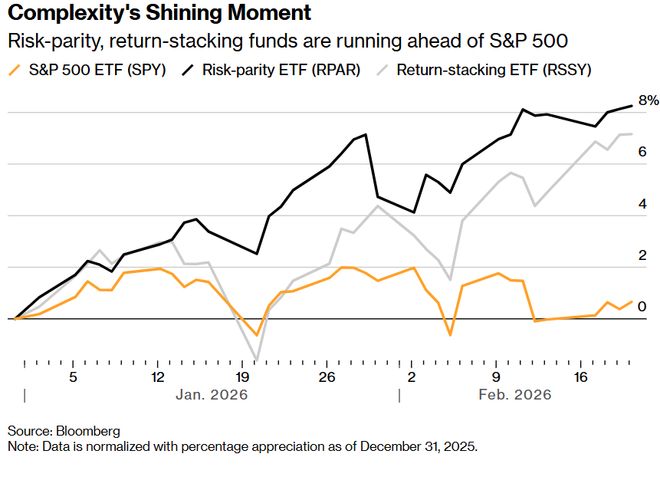
Core Insights - The article highlights that hedge funds and active stock pickers have outperformed benchmark indices due to market volatility driven by tariff fluctuations, AI disruption fears, and geopolitical tensions in the Middle East [1][7][10]. Group 1: Market Conditions - The current market is characterized by high instability and multiple factors causing disruption, including tariff uncertainties, AI-related concerns impacting software and growth sectors, and escalating geopolitical tensions in the Middle East [5][6][9]. - The S&P 500 software and services index has dropped approximately 15% since late January, erasing nearly $1 trillion in market value due to fears surrounding AI's disruptive potential [6][9]. Group 2: Investment Strategies - Hedge funds employing short-term tactical strategies and active stock selection have achieved significant "alpha" returns, outperforming the S&P 500 index by nearly double in recent months [7][12]. - The Bloomberg All Hedge Index reported a nearly 3% increase in hedge fund performance, marking the best relative performance against the S&P 500 in over two years [12][16]. - Complex strategies such as risk parity and return stacking have shown superior performance compared to traditional buy-and-hold strategies, which have become less effective in the current volatile environment [5][6][11]. Group 3: Economic Indicators - Bond yields, credit spreads, and the S&P 500 index have remained relatively stagnant, contrasting with the dynamic nature of short-term tactical trading favored by institutional investors [2][17]. - The market is currently not a passive investment paradise but rather a phase where tactical opportunities exist amidst liquidity and directional challenges [8][18].

十部门发文推动低空经济标准体系建设聚焦气象等领域推动低空技术规范化应用规模化发展
Xin Lang Cai Jing· 2026-02-04 03:04
Group 1 - The core viewpoint of the news is the release of the "Guidelines for the Construction of Low-altitude Economic Standard System (2025 Edition)" by multiple government departments, aiming to establish a comprehensive low-altitude economic standard system by 2027 and exceed 300 standards by 2030 [1] - The guidelines emphasize the establishment of a "four-dimensional integration" standard supply system, focusing on five core areas: low-altitude aircraft, low-altitude infrastructure, low-altitude air traffic management, safety supervision, and application scenarios [1] - The application scenario standards will target various fields such as agriculture, transportation, energy, surveying, cultural tourism, sports, medical rescue, meteorology, land, and ocean, promoting the standardized application and large-scale development of low-altitude technology [1] Group 2 - Meteorological departments are accelerating the modernization of meteorological technology and social services, exploring low-altitude economic meteorological support through the integration of meteorological observation into low-altitude infrastructure [2] - During the "14th Five-Year Plan" period, the China Meteorological Administration will implement low-altitude economic meteorological support actions, enhancing the top-level design of low-altitude economic meteorological support and promoting pilot projects [2] - The development of low-altitude meteorological applications will integrate low-altitude economic meteorological support with urban meteorological disaster prevention and reduction systems, facilitating the acceleration of emerging industries [2]
日度策略参考-20260203
Guo Mao Qi Huo· 2026-02-03 03:13
Report Summary 1. Industry Investment Ratings - **Bullish**: Biodiesel, Cottonseed Oil, Rapeseed Oil [1] - **Bearish**: Soybeans, Crude Oil, Fuel Oil, Asphalt, LPG, Container Shipping on European Routes [1] - **Neutral**: Most other industries including stocks, bonds, and various metals and agricultural products, with suggestions of short - term caution, waiting for opportunities, and controlling risks [1] 2. Core Views - **Macro - financial**: In the short term, policies will support the A - share market, but overseas liquidity tightening may cause panic. In the long run, the stock index is still expected to rise due to low - interest rates, "asset shortage" and economic bottom - building. Asset shortage and weak economy are beneficial for bond futures, but the central bank has warned of interest - rate risks [1]. - **Metals**: Macro - level risk aversion is pressuring the non - ferrous metals sector. Supply concerns in Indonesia are affecting nickel and stainless steel, while other metals like zinc, tin, etc. are facing different price trends and risks [1]. - **Agricultural products**: Different agricultural products have different market situations. For example, cotton has support but lacks a driving force; sugar has a bearish consensus but cost support; grains are expected to oscillate and decline before the holiday [1]. - **Energy and Chemicals**: The energy and chemical sector is affected by various factors such as geopolitical events, supply - demand relationships, and cost changes. Some products like PTA, ethylene glycol, and styrene are showing different price movements and trends [1]. 3. Summary by Related Catalogs **Macro - financial** - **Stocks**: Short - term caution is advised due to A - share weakness and overseas liquidity concerns. Long - term upward trend is expected due to low - interest rates and economic recovery [1]. - **Bonds**: Asset shortage and weak economy are favorable for bond futures, but short - term interest - rate risks are highlighted, and the Japanese central bank's interest - rate decision should be monitored [1]. **Metals** - **Non - ferrous metals**: Overall under pressure from risk aversion. Nickel and stainless steel are affected by Indonesian supply issues. Zinc is expected to correct, and tin's price has fluctuated but not in a trend - reversing way. Gold and silver are in short - term oscillatory or stabilizing trends. Platinum and palladium may be supported in the short term [1]. - **Industrial metals**: Alumina is expected to oscillate near the cost line. Steel products (rebar, hot - rolled coil) have limited upward space, and iron ore has a clear upper pressure [1]. **Agricultural products** - **Grains and oilseeds**: Soybeans are expected to be weak. Cotton is "supported but without a driver". Sugar has a bearish consensus but cost support. Grains are expected to decline before the holiday [1]. - **Livestock**: The pig production capacity still needs to be further released [1]. **Energy and Chemicals** - **Fossil fuels**: Crude oil and fuel oil may be affected by OPEC+ policies, geopolitical events, and market sentiment. Asphalt has high profits but is also affected by supply and demand [1]. - **Chemicals**: PX drives the chemical sector. PTA, ethylene glycol, and styrene have different supply - demand and price trends. Methanol, polyethylene, PVC, and LPG are affected by various factors such as geopolitical risks, supply - demand relationships, and cost changes [1]. **Shipping** - **Container shipping**: The freight rate on European routes has peaked and declined before the holiday. Airlines are cautious about resuming flights and plan to raise prices after the off - season in March [1].
全球宏观及大类资产配置周报-20260202
Dong Zheng Qi Huo· 2026-02-02 03:12
1. Report Industry Investment Rating | Asset Category | Rating | | --- | --- | | Gold | Bearish | | US Dollar | Bullish | | US Stocks | Sideways | | A-Shares | Sideways | | Treasury Bonds | Sideways | [24] 2. Core Viewpoints of the Report - Geopolitical risks continue to ferment, and the nomination of Kevin Warsh as the next Fed Chair has triggered significant market volatility. The short-term trend of various assets will be affected by factors such as monetary policy expectations, economic data, and market sentiment. [5][25] - The US economy maintains resilience, but there are still uncertainties in inflation and employment. The domestic economic recovery faces challenges, and the real estate market remains weak. [68][94] 3. Summary by Directory 3.1 Macro Context Tracking - Geopolitical risks continue to ferment, with the US's military threats against Iran and sanctions on Cuba potentially disturbing the market. [5] - The Fed's January interest rate meeting kept rates unchanged, but short-term rate cut willingness has declined. The nomination of Kevin Warsh as Fed Chair has led to significant market fluctuations. [5] - China's January PMI weakened, indicating that the domestic economic recovery is still full of twists and turns. The bond market remains in a sideways trend, and A-shares face short-term回调 pressure. [5] 3.2 Global Asset Class Performance Overview 3.2.1 Equity Markets - Global stock markets had mixed performance this week. Developed markets such as the S&P 500 and the Nikkei 225 had different trends, while emerging markets like the Shanghai Composite Index and the Hang Seng Index also showed varying performances. [7][8] - MSCI indices showed differentiation, with emerging markets outperforming developed and frontier markets, mainly driven by the weakening US dollar. [8] 3.2.2 Currency Markets - The US dollar index rebounded from a low, and the RMB exchange rate index slightly depreciated, while the RMB continued to appreciate against the US dollar. Emerging market currencies showed differentiation, and developed country currencies generally appreciated. [9] 3.2.3 Bond Markets - Global major developed country 10-year government bond yields fluctuated, mainly affected by concerns about Japan's aggressive fiscal policy. Emerging market country government bond yields also showed different trends. [15] 3.2.4 Commodity Markets - The global commodity market rose and then fell this week, with significant increases in energy prices and sharp corrections in precious metals. The domestic commodity market mostly recorded gains. [22] 3.3 Weekly Outlook for Asset Classes 3.3.1 Precious Metals - Gold is expected to be weak in the short term due to factors such as the nomination of Kevin Warsh as Fed Chair and the decline in short-term rate cut expectations. Silver is also expected to have further downward space. [24][25] 3.3.2 US Stocks - US stocks are expected to remain in a high-level sideways trend in the short term, with increased volatility. The market's risk appetite will be affected by factors such as corporate earnings and commodity market fluctuations. [24][42] 3.3.3 A-Shares - A-shares are expected to experience short-term corrections and will depend on the strength of the economy and policies in the medium term. The long-term bull market requires fundamental support. [24][52] 3.3.4 Treasury Bonds - Treasury bonds are expected to remain in a sideways trend, with limited upward space due to potential negative factors in the future. [24][58] 3.4 Global Macroeconomic Data Tracking 3.4.1 Overseas High-Frequency Economic Data - The US economy maintains resilience, with the GDPNow model estimating a Q4 growth rate of 5.4% and the Redbook retail sales year-on-year growth rate at 7.1%. [68] - The US inflation expectation has rebounded, but short-term inflation concerns have not significantly increased. The employment market remains resilient, with the number of continued and initial jobless claims remaining stable. [73] - The Fed's January interest rate meeting paused rate cuts, and the market's rate cut expectations have changed little. It is expected that there will be only 1 - 2 rate cuts in 2026, more likely in the second half of the year. [80] 3.4.2 Domestic High-Frequency Economic Data - The real estate market remains weak, with the secondary housing market showing signs of volume increase but still not exceeding seasonal levels. [90] - The economic data generally shows a pattern of weakening总量, strong supply and weak demand in terms of structure, and weaker domestic demand than external demand. [94] - The December financial data shows that the private sector's willingness to borrow is low, but there are also some positive changes in corporate financing demand. [99] - The December PPI and CPI continued to recover, and inflation is expected to rise in the future. [106] - The December import and export year-on-year growth rates exceeded expectations, and both exports and imports are expected to continue to improve in the future. [112]
全球股市立体投资策略周报1月第3期:地缘事件与财报季交织,科技结构冲高
GUOTAI HAITONG SECURITIES· 2026-01-20 03:15
Market Performance - Emerging markets continued to rise, with MSCI Global up by 1.9%, MSCI Developed up by 1.3%, and MSCI Emerging up by 6.8%[9] - The Hang Seng Index showed the best performance among emerging markets, increasing by 4.0%[9] - The 10Y U.S. Treasury yield rose significantly, indicating a shift in bond market dynamics[9] Investor Sentiment - Trading volume in the Chinese stock market surged, with the Shanghai Composite Index trading 4.054 billion shares worth $9.94 billion, a week-on-week increase[24] - The short-selling ratio in Hong Kong fell to 12.9%, below the 10-year average, indicating heightened investor confidence[24] Earnings Expectations - U.S. earnings expectations for 2025 were revised upward, with the S&P 500's EPS forecast increasing from +10.3% to +10.4%[68] - The Hang Seng Index's EPS forecast for 2025 was downgraded from -1.8% to -1.9%[68] - European earnings expectations remained stable, with the STOXX50 index's EPS forecast unchanged at -4.6%[69] Economic Outlook - The U.S. economic surprise index rose, influenced by lower-than-expected CPI data and uncertainties regarding the new Federal Reserve chair[9] - The Chinese economic surprise index also increased, supported by the central bank's monetary policy adjustments[9] Capital Flows - Global liquidity showed signs of tightening, with expectations for the Federal Reserve to cut rates decreasing slightly to 1.8 times in 2026[56] - Recent capital inflows into Hong Kong amounted to HKD 240 billion, with significant contributions from the Stock Connect program[65]
去年12月发布回购预案公司数量环比增近六成,行业龙头领衔大额回购
Mei Ri Jing Ji Xin Wen· 2026-01-11 05:41
Group 1 - In December 2025, the enthusiasm for stock buybacks in the A-share market significantly increased, with both the number of companies announcing buyback plans and the total amount seeing substantial growth [1] - A total of 35 companies announced new buyback plans in December, representing an increase of nearly 60% compared to 22 companies in November [1] - The total proposed buyback amount for these 35 companies reached approximately 10.548 billion yuan, a 54.89% increase from 6.81 billion yuan in November [1] - Among these companies, 24 planned to buy back over 100 million yuan, accounting for 68.57% of the total [1] Group 2 - State-owned enterprises and industry leaders showed prominent performance in the buyback announcements, with notable companies like China Metallurgical Group and Dong'e Ejiao participating [1] - The companies with the highest proposed buyback amounts included China Metallurgical Group (2.5 billion yuan), Luxshare Precision (2 billion yuan), ZTE Corporation (1.2 billion yuan), and others, highlighting the financial strength and market responsibility of leading enterprises [1]




基本面高频数据跟踪:铜库存小幅回升
GOLDEN SUN SECURITIES· 2026-01-06 06:24
1. Report Industry Investment Rating No information about the report industry investment rating is provided in the given content. 2. Core Viewpoints of the Report - Due to the lack of some high - frequency data during the festival, there is no forecast value for the current Guosheng fundamental high - frequency index. The long - short signal of interest - rate bonds is下调, with the signal factor at 3.1% (previous value was 3.2%) [1][9]. - In terms of production, the industrial production high - frequency index is 127.9, with a week - on - week increase of 0.1 point compared to the previous value of 127.8, and the year - on - year increase remains unchanged at 4.9 points [1][9]. - In terms of total demand, the high - frequency index of commercial housing sales is 40.5, a week - on - week decrease of 0.2 points compared to the previous value of 40.7, and the year - on - year decrease remains unchanged at 6.5 points; the high - frequency index of infrastructure investment is 121.9, a week - on - week decrease of 0.1 point compared to the previous value of 122.0, and the year - on - year increase narrows; the high - frequency index of exports is 143.7, remaining the same as the previous value, and the year - on - year increase narrows; the high - frequency index of consumption is 121.2, a week - on - week increase of 0.1 point compared to the previous value of 121.1, and the year - on - year increase remains unchanged at 3.3 points [1][9]. - In terms of prices, the month - on - month forecast of CPI is 0.0% (previous value was 0.0%); the month - on - month forecast of PPI is 0.0% (previous value was 0.1%) [1][9]. - The high - frequency inventory index is 163.8, a week - on - week increase of 0.1 point compared to the previous value of 163.7, and the year - on - year increase remains unchanged at 7.4 points [1][10]. - The high - frequency financing index is 246.5, a week - on - week increase of 0.6 points compared to the previous value of 245.9, and the year - on - year increase rises [2][10]. 3. Summary by Relevant Catalogs 3.1 Total Index: Fundamental High - Frequency Index is Stable - Based on the report "Fundamental High - Frequency Data - An Effective Tool for Bond Market Investment" published on September 5, 2023, Guosheng Securities constructed a high - frequency data system covering overall, production, demand, prices, financing, etc., and built the Guosheng fixed - income fundamental high - frequency index and its sub - indices [8]. - From December 29, 2025, to January 4, 2026, due to the lack of some high - frequency data during the festival, there is no forecast value for the current Guosheng fundamental high - frequency index. The long - short signal of interest - rate bonds is下调, with the signal factor at 3.1% (previous value was 3.2%) [1][9]. 3.2 Production: Overall Decline in Operating Rates During the Festival - The polyester operating rate is 86.0%, down from the previous value of 87.8%; the semi - tire operating rate is 69.4%, down from the previous value of 72.1%; the full - tire operating rate is 59.6%, down from the previous value of 62.0%; the PX operating rate is 88.4%, down from the previous value of 88.6%; the coal dispatch at Qinhuangdao Port is 50.6 tons, up from the previous value of 47.0 tons [17]. 3.3 Real Estate Sales: Slight Decline in Commercial Housing Transaction Area - The commercial housing transaction area in 30 large - and medium - sized cities in the current week is 390,000 square meters, down from the previous value of 420,000 square meters; the premium rate of land transactions in 100 large - and medium - sized cities is 2.1%, up from the previous value of 1.2% [30]. 3.4 Infrastructure Investment: High - Frequency Index of Infrastructure Investment Remains Stable - The high - frequency index of infrastructure investment in the current week is 121.9, down from the previous value of 122.0; the operating rate of petroleum asphalt is 27.4%, down from the previous value of 31.3% [39]. 3.5 Exports: Slight Decline in RJ/CRB Index - The high - frequency export index in the current week is 143.7, the same as the previous value; the RJ/CRB index is 299.9 points, down from the previous value of 300.6 points [46]. 3.6 Consumption: Increase in Average Daily Box Office of Movies - The average daily box office of movies is 166.12 million yuan, up from the previous value of 108.11 million yuan [58]. 3.7 CPI: Slight Increase in Pork Prices - The latest average wholesale price of pork is 17.7 yuan per kilogram, up from the previous value of 17.5 yuan per kilogram; the latest average wholesale price of 28 key - monitored vegetables is 5.6 yuan per kilogram, down from the previous value of 5.8 yuan per kilogram; the latest average wholesale price of 7 key - monitored fruits is 7.8 yuan per kilogram, the same as the previous value; the latest average wholesale price of white - striped chickens is 17.7 yuan per kilogram, down from the previous value of 17.9 yuan per kilogram [65]. 3.8 PPI: Continued Increase in Spot Price of Copper - The closing price of steam coal (produced in Shanxi) at Qinhuangdao Port is 673 yuan per ton, down from the previous value of 682 yuan per ton; the futures settlement price of Brent crude oil is 61 US dollars per barrel, down from the previous value of 62 US dollars per barrel; the spot settlement price of LME copper is 12,473 US dollars per ton, up from the previous value of 12,088 US dollars per ton; the spot settlement price of LME aluminum is 2,953 US dollars per ton, up from the previous value of 2,916 US dollars per ton [73]. 3.9 Transportation: Increase in the Number of Executed Flights - The passenger flow of the subway in first - tier cities in the current week is 38.97 million person - times, down from the previous value of 39.96 million person - times; the number of domestic executed flights is 12,548, up from the previous value of 12,353 [81]. 3.10 Inventory: Continuous Decline in Soda Ash Inventory - The soda ash inventory is 1.407 million tons, down from the previous value of 1.469 million tons [89]. 3.11 Financing: Credit Bond Financing Turns from Positive to Negative - The net financing of local government bonds in the week is 17.4 billion yuan, up from the previous value of - 3.2 billion yuan; the net financing of credit bonds is - 61.7 billion yuan, down from the previous value of 40.8 billion yuan; the 6M national - share bank acceptance bill transfer discount rate is 0.88%, down from the previous value of 0.93%; the average value of the bill rate - certificate of deposit rate is - 0.75%, down from the previous value of - 0.70% [100].
苏州市开展新春暖“新”十大行动
Su Zhou Ri Bao· 2026-01-04 00:54
Core Viewpoint - The Suzhou Municipal Committee for Social Work is organizing the "2026 New Spring Warm 'New' Ten Actions" to support new employment groups such as couriers, delivery workers, and ride-hailing drivers, enhancing their sense of belonging and happiness during the cold winter season [1]. Group 1: Actions and Initiatives - The "New Spring Warm 'New' Ten Actions" includes various initiatives such as "Warm 'New' On-Duty Action," "Warm 'New' Travel Action," and "Warm 'New' Health Action," aimed at providing comprehensive support to new employment groups [1]. - The "Warm Winter" activity, part of the "New Spring Warm 'New' Ten Actions," will donate a total of 3,000 food gift packages to new employment groups [2]. - The Suzhou Metro will offer 200,000 half-price ride coupons during the Spring Festival, available through the Alipay app [2]. Group 2: Specific Support Measures - The Municipal Human Resources and Social Security Bureau will provide transportation subsidies for companies or agencies that organize point-to-point transportation for returning workers after the Spring Festival [3]. - The State Grid Suzhou Power Supply Company plans to distribute a batch of charging service fee discount coupons for new energy vehicles to new employment groups from mid-January to mid-February 2026 [3]. - The Municipal Cultural and Tourism Bureau will prepare digital RMB cultural tourism consumption vouchers for new employment groups, which can be claimed through the "Jun Dao Suzhou" tourism portal [3]. Group 3: Community Engagement and Participation - The Suzhou Municipal Committee for Social Work is calling for more departments, units, and organizations to participate in the initiative to provide exclusive benefits for new employment groups [4].
基金研究周报:权益蓄势,金银回调(12.29-1.2)
Wind万得· 2026-01-03 22:38
Market Overview - The A-share market experienced a volatile adjustment last week, with major indices showing mixed performance. The Shanghai Composite Index slightly increased by 0.13% to close at 3,968.84 points, while the Shenzhen Component Index fell by 0.58%, and the ChiNext Index dropped by 1.25% [1][10] - The Hong Kong stock market started the year positively, with the Hang Seng Tech Index rising by 4%, indicating a positive signal from foreign capital towards emerging markets [1] Industry Performance - Most sectors in the Wande primary industry index declined last week, with Communication Services (+2.13%) and Energy (+1.54%) leading the gains, benefiting from policy expectations and stabilization in commodity prices. Conversely, Utilities (-2.64%) and Healthcare (-1.99%) faced pressure, likely due to risk-averse sentiment and weak consumption [1][10] Fund Issuance - A total of 33 funds were issued last week, including 21 equity funds, 6 mixed funds, 4 bond funds, and 2 FOFs, with a total issuance of 11.916 billion units [1][16] Fund Performance - The Wande All-Fund Index decreased by 0.31% last week. The Wande Ordinary Equity Fund Index fell by 0.76%, and the Wande Mixed Equity Fund Index declined by 0.63% [5][6] Global Market Overview - Global markets showed a mixed pattern last week, with U.S. stock markets generally retreating, while European markets rebounded moderately, led by a 1.13% increase in the French CAC40. Asian emerging markets performed strongly, with the Korean Composite Index rising by 4.36% and the Hang Seng Index increasing by 2.01% [2]