公路建设

Search documents
看燃了!跟着四川国企,看世界各地尽染“中国红”
Xin Lang Cai Jing· 2025-10-01 01:48
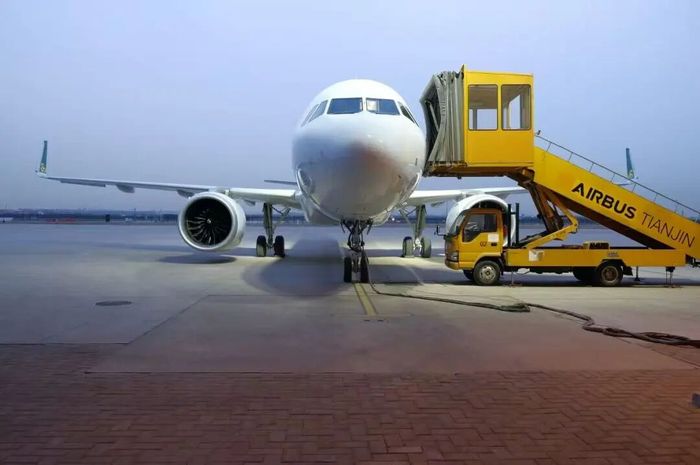
Group 1 - Sichuan Development (Holding) Company established a joint venture, Guoxiang International Aircraft Leasing Co., Ltd., with Standard Chartered Bank in Ireland, aiming to invest $500 million in the international aviation leasing industry [3] - The joint venture focuses on leveraging the strengths of its shareholders to accelerate entry into the high-end aviation finance sector, with a goal to lead and gather global aviation and financial resources [3] - Sichuan Road and Bridge Group won the first public-private partnership (PPP) highway project in Bangladesh, marking a significant milestone in the country's infrastructure development [5] Group 2 - The second phase of the Diamniadio International Industrial Park in Senegal, constructed by Sichuan Road and Bridge, is a key project under the Belt and Road Initiative and Senegal's national development strategy [8] - Sichuan Investment International is developing the Maxiangdi Hydropower Station project in Nepal, with a total installed capacity of approximately 601 MW and an investment of about $1.2 billion [10] - The project is the largest power investment by Chinese enterprises in Nepal and is prioritized in the China-Nepal hydropower planning white paper [10] Group 3 - The East Hospital project in Nairobi, Kenya, is being constructed by Huaxi Group and features a 14-story building with a total area of 7,800 square meters [12] - Huaxi Group is also involved in the construction of public buildings in Kuwait, which will include schools and convenience stores, covering an area of 126,000 square meters [14] - Sichuan Coal Industry Group is undertaking a decoration and installation project in Ethiopia's Bale Mountains National Park, which has been recognized as a UNESCO World Heritage site [17] Group 4 - Sichuan Geological and Mineral Group is supervising the exploration and development of a 2 million tons per year potassium chloride project in Laos, ensuring compliance with regulations and quality control [19] - The mineral exploration team from Sichuan Natural Resources Investment Group is actively engaged in metal mineral exploration in Zimbabwe and Mozambique, contributing to resource security for China [21] - The efforts of Sichuan state-owned enterprises abroad are recognized as vital for promoting Chinese culture and strengthening international friendships [21]

这么多“神仙公路”开通了,国庆长假去看看
Ke Ji Ri Bao· 2025-10-01 01:36
Core Insights - The recent opening of several highways in China has significantly enhanced travel opportunities for self-driving enthusiasts during the National Day and Mid-Autumn Festival holidays, showcasing engineering achievements and natural beauty [1][4]. Group 1: New Highways and Their Impact - The Jiuzhaigou (Ganchuan Border) to Mianyang section of the Jiuzhai Highway, spanning 245.8 kilometers, features an 82.15% bridge-tunnel ratio, reducing travel time from Chengdu to Jiuzhaigou from 8 hours to 4 hours [1]. - The Hunan Luzi Highway connects major tourist attractions like the Three Gorges and Zhangjiajie, shortening travel time from Zhangjiajie to the Three Gorges by 1.5 hours, thus boosting regional tourism [2]. - The Suida Highway in Jiangxi, measuring 127 kilometers, creates a "one-hour cultural tourism circle" by linking popular scenic spots, promoting economic and cultural integration in the region [3]. Group 2: Engineering Innovations - The construction of the Jinling No. 1 Bridge on the Luzi Highway utilized advanced techniques such as a hanging basket system and smart monitoring, completing the project 35 days ahead of schedule [2]. - The Suida Highway employed over 40 advanced technologies, including hydraulic tower lifting and "high-pile robots," to overcome environmental and geological challenges [3]. - The G331 National Road in Jilin adopted a creative approach combining mountain cutting and carbon dioxide blasting, reducing transportation distance by 80% and saving nearly 5 months in construction time [3].
高青至商河高速公路全线通车
Qi Lu Wan Bao· 2025-09-29 08:39
齐鲁晚报·齐鲁壹点记者 王瑞超 实习生 李文慧 9月29日,由山东高速集团投资建设的高青至商河高速公路青城西至大年陈段建成通车,至此,高青至商河高速公路 全线通车运营。 建设过程中,项目团队直面桥梁结构体系复杂、技术标准高等挑战,以技术破局攻克关键控制性工程,以数智赋能提 升工程品质与管理效能,以标准化手册统一施工规范与工艺,推动高青至商河高速公路如期建成通车。 技术破局,打造黄河特大桥"国内标杆" 作为高青至商河高速公路关键控制性工程,黄河特大桥全长3425米,主桥结构型式为下承式钢管混凝土系杆拱,采用 190m+260m+260m+190m不等跨四连拱设计,其四连拱建设规模居世界之最。 针对黄河特大桥结构体系复杂、安全风险突出以及施工精度要求极高等技术难题,高商项目组建专项攻坚团队,先后 赴重庆、四川实地考察双堡特大桥、四川嘉陵江大桥,与重庆交通大学、福州大学等高校的知名桥梁团队深入研讨, 构建"智库支撑+跟踪服务"专家指导机制,定期邀请专家为建设中的专项难题"把脉开方"。 同时,团队充分利用数字技术,结合BIM技术搭建桥梁三维模型,动态预演全流程建设工序,打磨出一套安全可靠的 设计施工方案。项目还在省内 ...

加快推动国家综合立体交通网建设,为全国建立统一大市场助力
Huan Qiu Wang· 2025-09-29 00:56
Core Insights - The Chinese Ministry of Transport reported that from January to August 2025, fixed asset investment in transportation reached 2.26 trillion yuan, indicating sustained high levels of investment in the sector [1] - The investment breakdown includes 504.1 billion yuan for railways, 1.5412 trillion yuan for highways, 143.3 billion yuan for waterways, and 70.7 billion yuan for civil aviation [1] - The 2025 National Conference on Accelerating the Construction of a Strong Transportation Nation emphasized the need for a comprehensive transportation network and rural road upgrades [1] Investment Trends - Rural road construction investment has remained above 400 billion yuan for eight consecutive years, with 164,100 kilometers of rural roads newly built or renovated in the past year [1] - By the end of 2024, the total length of rural roads in China is expected to reach 4.644 million kilometers, maintaining a compound annual growth rate of 2.4% since 2006 [1] - The proportion of graded roads in rural areas is 97.3%, indicating ongoing demand for upgrades [1] Policy and Market Implications - The implementation of the "Rural Road Regulations" is expected to enhance road quality and increase demand for new and renovated roads, benefiting sectors such as cement, water-reducing agents, waterproofing, and concrete [2] - The Ministry of Transport plans to construct 100,000 kilometers of new or renovated rural roads in the current year, with an additional 250 towns gaining access to roads of grade three or above [1]
辽宁:京哈改扩建、本桓宽、凌绥三条高速建成通车
Zhong Guo Xin Wen Wang· 2025-09-27 13:54
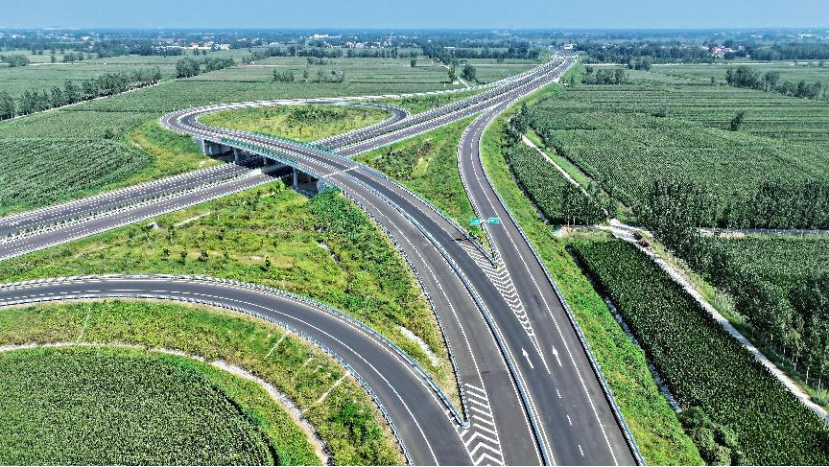
Core Insights - The simultaneous opening of three major highway projects in Liaoning Province marks a significant breakthrough in the transportation sector as part of the province's revitalization efforts [1] Group 1: Project Overview - The three highways include the Jingha Reconstruction Project, the Benxi to Jian National Highway, and the Chifeng to Suizhong National Highway, with a total construction mileage of 636 kilometers [1] - These projects were initiated on August 8, 2022, and have been completed an average of one year ahead of schedule [1] Group 2: Jingha Reconstruction Project - The Jingha Reconstruction Project spans 238 kilometers, upgrading the existing dual six-lane highway to a dual ten-lane highway with a design speed of 120 km/h [2] - It features 19 interchanges, 58 overpasses, 15 toll stations, and 6 service areas, becoming the first long-distance ten-lane heavy-load highway in China [2] Group 3: Benxi to Jian National Highway - The Benxi to Jian project covers 223 kilometers with a dual four-lane design and a speed limit of 100 km/h, connecting key areas in Liaoning and Jilin provinces [2] - It includes 148 bridges, 27 tunnels, 15 interchanges, and is significant for regional resource development and economic coordination [2] Group 4: Chifeng to Suizhong National Highway - The Chifeng to Suizhong project extends 175 kilometers with a dual four-lane design and a speed limit of 100 km/h, serving as a crucial link between major transportation corridors [3] - Its opening is expected to enhance the integration of Liaoxi and Inner Mongolia into the Beijing-Tianjin-Hebei economic circle [3]
大道如虹通八方
Liao Ning Ri Bao· 2025-09-27 01:35
Group 1 - The core achievement is the simultaneous opening of three major highways in Liaoning, totaling 636 kilometers, marking a significant milestone in the province's transportation infrastructure development [1] - The province's transportation infrastructure investment growth rate, coverage of high-speed rail, and other key indicators rank among the top in the country, with an expected investment of over 260 billion yuan during the 14th Five-Year Plan, an increase of over 18% compared to the previous plan [1][2] - The construction of highways has accelerated, with 14 projects totaling 1,385 kilometers implemented, and 732 kilometers of new highways expected to be completed by the end of 2025, five times the length built during the previous five-year period [2][3] Group 2 - The province has also focused on enhancing ordinary road networks, completing 61 major projects and achieving a 95.6% rate of secondary roads, which is among the highest in the country [3] - Significant improvements in rural road infrastructure have been made, with 9,500 kilometers of new and renovated rural roads, and 100% of eligible natural villages now having hardened roads [5] - The establishment of a multi-modal transport development alliance aims to enhance the efficiency of transportation services, with a 19.7% year-on-year increase in sea-rail intermodal transport volume [6][7] Group 3 - The province plans to construct and renovate 1,000 kilometers of railways and highways each, along with 6,000 kilometers of national and provincial highways by 2030, aiming for comprehensive connectivity and improved commuting times [8]

浙江沪杭甬附属订立土建施工合同
Zhi Tong Cai Jing· 2025-09-25 14:37
Core Viewpoint - Zhejiang Huhangyou (00576) announced the signing of construction contracts for the G92 Hangzhou Bay Ring Expressway project, specifically for the Ningbo Qijia Mountain to Zhoushan Jintang section, indicating a significant step in infrastructure development in the region [1] Group 1: Contract Details - The company’s non-wholly owned subsidiary, Zhejiang Yongzhou Double Line Phase II Expressway Co., Ltd., entered into a construction contract with Jiaogong Group for the TJ1 segment of the project [1] - Jiaogong Group will be responsible for various engineering tasks including the implementation and completion of the roadbed works, U-shaped trench sections, and the underwater shield tunnel [1] - A separate contract was signed with Jiaogong Road and Bridge for the TJ4 segment, which includes roadbed, bridge structures, and tunnel sections, along with other related engineering works [1] Group 2: Engineering Responsibilities - Jiaogong Group's responsibilities encompass the left and right line roadbed works, U-shaped trench sections, and underwater shield tunnel construction [1] - Jiaogong Road and Bridge will handle the roadbed, bridge structures using prestressed concrete T-beams, and various tunnel and interchange engineering tasks [1] - Both contractors are also responsible for defect liability during the defect liability period after project completion [1]
浙江沪杭甬(00576)附属订立土建施工合同
智通财经网· 2025-09-25 14:36
Core Viewpoint - Zhejiang Huhangyou (00576) announced the signing of construction contracts for the G92 Hangzhou Bay Ring Expressway project, specifically for the Ningbo Qijia Mountain to Zhoushan Jintang section, indicating ongoing infrastructure development in the region [1] Group 1 - The company’s non-wholly owned subsidiary, Zhejiang Yongzhou Second Line Expressway Co., Ltd., has entered into construction contracts with Jiangong Group for the TJ1 and TJ4 sections of the G92 Hangzhou Bay Ring Expressway [1] - Jiangong Group will be responsible for various engineering tasks including the implementation and completion of the roadbed works, U-shaped trench sections, and the underwater shield tunnel [1] - Jiangong Road and Bridge will handle the roadbed, bridge structures, tunnel sections, interchanges, and other related engineering works for the specified sections of the expressway [1]
北新路桥中标4.34亿元公路施工项目
Zhi Tong Cai Jing· 2025-09-25 11:11
Core Viewpoint - The company, Beixin Road and Bridge (002307.SZ), has been awarded a construction project for the G687 Tiemenguan to Alar highway, with a contract value of 434 million yuan [1] Group 1: Project Details - The project is for the fifth contract section of the G687 highway, which will be constructed to a dual-lane secondary road standard [1] - The design speed for the highway is set at 80 km/h, with a roadbed width of 12.0 meters [1] - The project includes the construction of one super-large bridge measuring 4657 meters, two medium bridges of 108 meters each, and one small bridge of 22 meters [1] - A total of 39 culverts will be constructed, along with five at-grade intersections, one access road, and five emergency stopping areas [1]

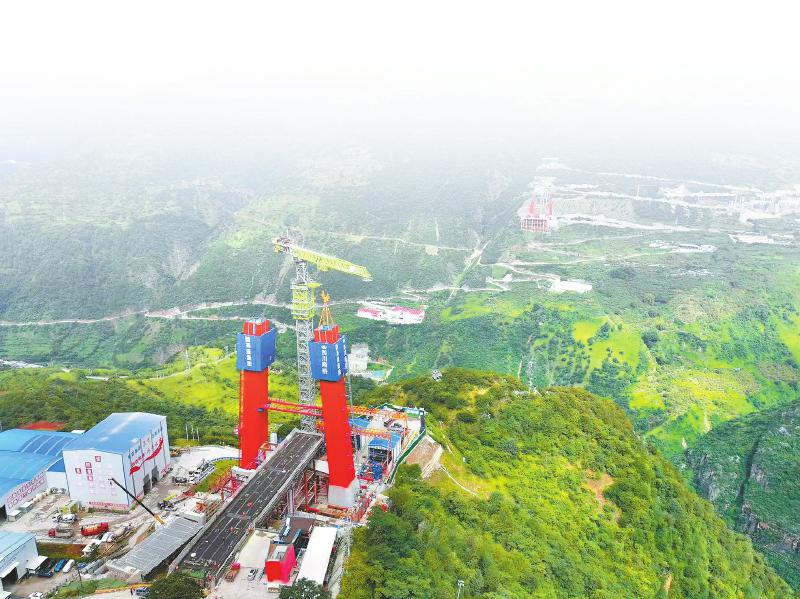
一至八月,全省公路水路完成建设投资近一千八百亿元,固定资产投资增速在经济大省中位列第二 四川交通投资的拉动力从哪来
Si Chuan Ri Bao· 2025-09-25 00:22
Overall Situation - In the first eight months, Sichuan Province completed a total construction investment of 1799.5 billion yuan in road and waterway projects, accounting for nearly 70% of the annual target, with a fixed asset investment growth rate ranking second among major economic provinces [6][7] Highway Investment - Investment in highways reached 892.5 billion yuan from January to August, with 1021 kilometers of new or renovated roads completed [6][10] - The newly opened Jiuzhaigou-Mianyang Expressway will allow for a full-speed journey from Chengdu to Jiuzhaigou in just 4 hours [6] - The construction of the Xichang-Shangri-La Expressway is progressing rapidly, with significant projects like the world's largest cable-stayed bridge underway [8][9] Waterway Investment - Waterway construction investment totaled 39.1 billion yuan in the first eight months, with a year-on-year increase of 6.9% [10] - The construction of the Minjiang Longxikou Hydropower Hub and other projects is accelerating, with new projects like the Jinsha River navigation construction starting soon [6][10] Project Management and Funding - Sichuan is implementing a multi-faceted investment mechanism to optimize funding, including government guidance and market operations [11] - The province has approved 8 highway projects with an estimated total investment of 2105.39 billion yuan, averaging 263.17 billion yuan per project [11] - A project management task force has been established to streamline the lifecycle of major projects, focusing on key areas such as preliminary work and funding [12] Future Planning - Sichuan aims to complete 900 kilometers of new highways, 1600 kilometers of national and provincial roads, and 10,000 kilometers of rural roads by the end of 2025 [14] - The province is also focusing on digital transformation in transportation, aiming to complete 90% of busy national highway segments by 2027 [15] - Plans are in place to develop 36 solar photovoltaic highways, integrating energy supply systems into transportation infrastructure [15] Strategic Development - Sichuan is enhancing its transportation network to support national strategies, including improving access to Tibet and developing new trade routes [17] - The province is preparing for the next five years by establishing a rolling project database and focusing on underdeveloped areas [17]