支付

Search documents
中国金融开放的一次战术推进 Visa通过Apple Pay打通服务接口
Jing Ji Guan Cha Wang· 2026-01-16 02:45
Core Viewpoint - Visa has announced that Chinese cardholders can link their Visa cards to Apple Pay for use in overseas physical stores, mobile apps, or online websites, marking a significant enhancement in cross-border payment services [2][3]. Group 1: Partnership and Technical Implementation - The initial collaboration involves eight banks, including Industrial and Commercial Bank of China and Bank of China, with more banks expected to join in the future [2]. - Visa employs payment tokenization technology to ensure card number information is desensitized, enhancing security during the card linking process [2][3]. - This partnership reflects a pragmatic adjustment in the strategies of international financial institutions in the Chinese market, focusing on optimizing existing services rather than exploring new markets [3]. Group 2: Regulatory and Market Context - The collaboration showcases new characteristics in China's financial opening process, emphasizing technical openness at the service interface level rather than traditional market access [3][4]. - Visa's use of payment tokenization aligns with regulatory requirements for data localization and cross-border security transmission, demonstrating a deep understanding of the Chinese regulatory environment [3][4]. Group 3: User Experience and Industry Evolution - User adaptation to using Apple Pay for overseas payments will require time and strategic efforts, as Chinese users are more accustomed to domestic mobile payment ecosystems [4][5]. - The collaboration illustrates a new path for the evolution of financial infrastructure, where card organizations, commercial banks, and device manufacturers work together through standardized interfaces [4][5]. - This partnership is a significant attempt for Visa to deepen its service capabilities in the Chinese market, while also enhancing the application scenarios of Apple Pay and improving the competitive edge of participating banks in cross-border financial services [5]. Group 4: Future Implications - The standardization of payment service interfaces is expected to improve with ongoing technological advancements and regulatory enhancements, potentially extending collaborations beyond payment services to broader financial service scenarios [5]. - This partnership signals a key transition in China's financial opening, moving from market access to ecological integration, reflecting deeper institutional confidence and resilience in the financial system [5].


央行下调结构性政策利率,美国对特定半导体加关税 | 财经日日评
吴晓波频道· 2026-01-16 01:01
Monetary Policy - The People's Bank of China will lower the interest rates of various structural monetary policy tools by 0.25%, reducing the one-year re-lending rate from 1.5% to 1.25% [2] - The minimum down payment ratio for commercial housing loans will be reduced to 30%, and the quota for re-lending to support technological innovation and transformation will be increased from 800 billion to 1.2 trillion yuan [2] - The current monetary policy approach focuses on targeted support for specific sectors rather than broad-based measures like interest rate cuts [3] Visa Policy - The U.S. will suspend visa processing for 75 countries to combat potential public charge applicants, effective January 21 [4] - This policy primarily affects countries with weaker economies, which may not contribute significantly to U.S. assets, potentially exacerbating labor shortages in the U.S. [5] Semiconductor Tariffs - The U.S. will impose a 25% tariff on certain imported semiconductors and related equipment starting January 15, with plans for further negotiations to enhance the domestic semiconductor industry [6] - This approach contrasts with the Biden administration's subsidies for domestic chip manufacturing, indicating a shift towards tariffs as a means to boost U.S. manufacturing [7] Ctrip Investigation - Ctrip is under investigation for potential monopolistic behavior, which may lead to significant fines and changes in its market practices [8] - The company's market share in China's online travel market is reported to be 56%, significantly higher than its competitors [8] Strategic Partnerships - SF Express and Jitu have entered a strategic mutual shareholding agreement worth 8.3 billion HKD, aiming to enhance their logistics networks and capitalize on cross-border e-commerce opportunities [10] - This partnership may increase competitive pressure in the logistics industry, particularly affecting smaller players [11] Payment Systems - Visa will support Chinese cardholders in binding their Visa cards to Apple Pay, enhancing convenience for overseas transactions [12] - This move is part of a broader strategy to deepen cooperation with domestic banks and improve consumer payment experiences [13] Baidu's Listing Strategy - Baidu is considering upgrading its secondary listing in Hong Kong to a dual primary listing to gain access to the Stock Connect program, attracting more mainland capital [14] - This strategy may also involve splitting its AI chip business for independent listing, which could enhance its market position [15]

银联手机Pay,不仅是把银行卡「装」进手机里
36氪· 2026-01-15 13:24
对于下意识调出扫码镜头或付款二维码、等待"扫"或"被扫"的中国用户而言,这是一种稍显尴尬且需要反应时间的体验。 而这种支付习惯的差异,正是全球支付市场标准分散的一个缩影。 时至今日,在中国及部分东南亚地区,二维码支付凭借低成本和技术便利性仍是主流习惯;而在欧洲、澳洲等地区,使用非接触式芯片卡支付,即"拍卡支 付",则早已构建起成熟的终端生态。 这种差异,既是跨境旅行者一个不大不小的痛点,也是支付机构打造全球化产品时必须跨越的鸿沟。 实际上,最近几年,银联一直在加大对旗下手机Pay产品的推广力度。目前,境外已有超100个国家和地区支持银联移动支付服务,包括银联二维码支付及银 联手机Pay。 反映在更直观的数据上,2025年前三季度,银联手机Pay跨境交易金额同比有超过三成的增长,交易笔数则增长超过一半,服务地区已覆盖中国香港、东南 亚、欧美等热门目的地。 在支付生态加速融合的背景下,其背后的战略意图也愈发清晰:不止步于将实体卡"装"进手机,而旨在打造一个能抹平用户体感差距、适应全球不同支付环 境的"通用式"工具。 打造一个能抹平用户体感差距、 适应全球不同支付环境的"通用式"工具。 手机Pay正让全球旅行体验变 ...
实测一句话点外卖!千问打通支付宝背后,AI付时代来了
Bei Jing Shang Bao· 2026-01-15 13:15
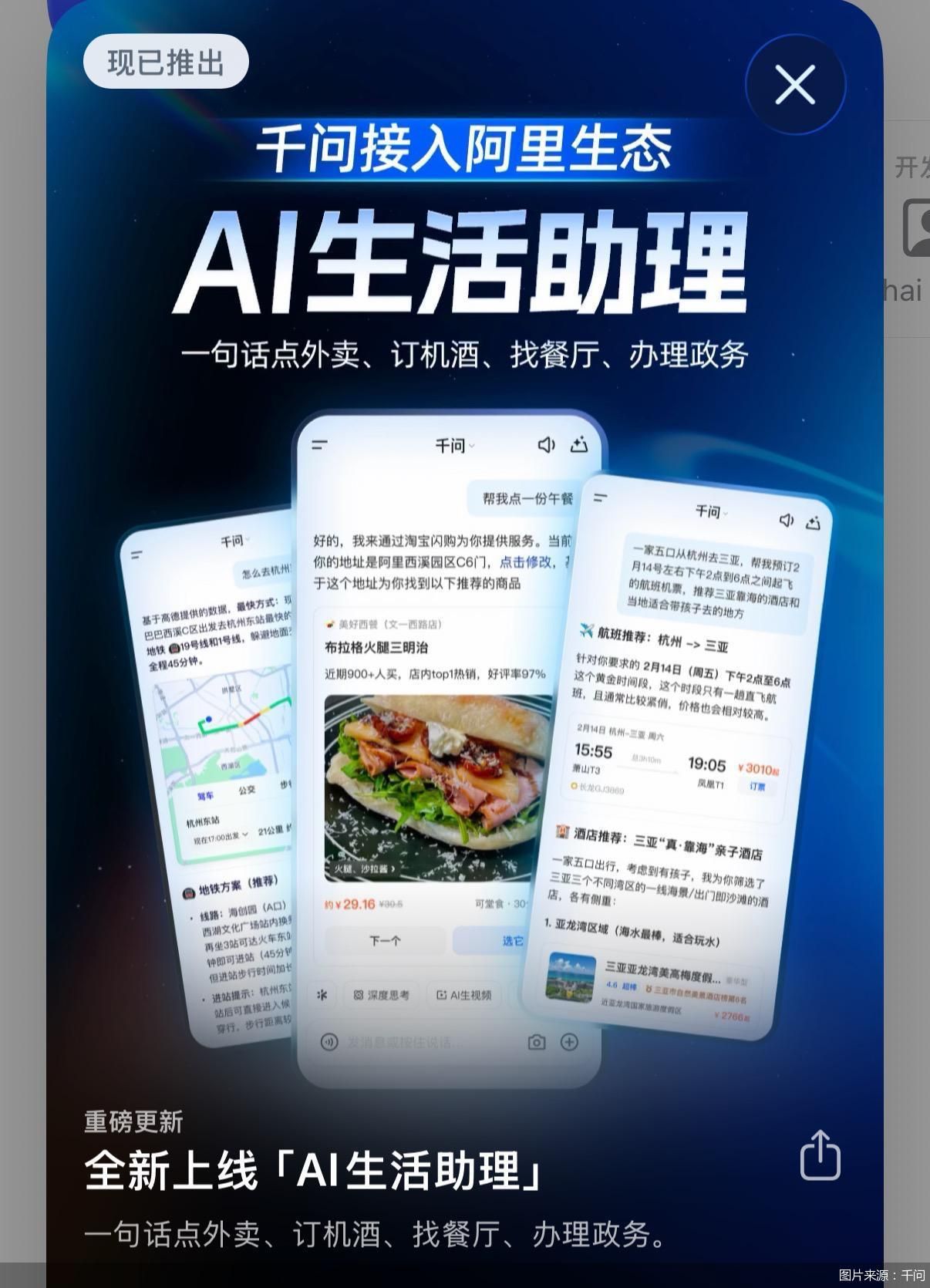
从2025年9月宣布推出国内首个"AI付",到如今通过千问App打通阿里生态,支付宝AI付再迎新进展。 实测一句话下单,全程AI秒级支付 一句话点外卖、订酒店、找餐厅,你体验过吗?1月15日,千问App重磅更新,全面接入淘宝闪购和支付宝AI付。 当天,北京商报记者实测发现,用户下载千问App后,只需给出"帮我点杯奶茶"指令,系统在绑定淘宝闪购并获取授权后,便可瞬时调用淘宝闪购的本地生 活资源,自动匹配就近门店、生成订单,消费者只要点击"选它",即可通过支付宝AI付完成付款。不久后,淘宝闪购骑手就将奶茶送至现场。 1月15日,千问正式接入阿里生态,定位为AI生活助理,北京商报记者注意到,其目前已全面接入淘宝、支付宝、淘宝闪购、飞猪、高德等阿里生态业务, 实现点外卖、买东西、订机票等AI购物功能,并向所有用户开放测试,此次升级将上线超400项AI办事功能。 以AI外卖功能为例,北京商报记者实测发现,用户只需给千问App下达一句话指令"帮我点杯奶茶",千问App可迅速回应,调用淘宝闪购下单,用户同意用 户协议,开通AI付服务后,即可无需任何跳转在端内完成AI支付。 "体验很丝滑,支付也很流畅。"多位北京地区消费者第 ...

根植中国 联通世界: 银联手机Pay的无界支付生态实践
Sou Hu Wang· 2026-01-15 12:01
在数字支付持续演进的浪潮中,一个值得思考的命题是:支付工具的价值,究竟应如何衡量?或许,答 案不仅在于技术的迭代速度,更在于其能否真正理解并服务于人的真实需求——跨越场景的阻隔,包容 多样的选择,并最终融入生活的脉络。 伴随着中国数字经济的澎湃步伐,在产业各方、合作伙伴与亿万用户的共同参与、塑造与检验下,银联 手机Pay的实践与演进,为我们理解当代支付工具如何从一项功能进化为一种服务生态,提供了一个真 切的观察窗口。 繁荣共生的合作伙伴生态:构建开放包容的技术底座 科技发展的终极目标是普惠。在移动支付领域,普惠意味着尊重市场上所有品牌与机型的用户,保障他 们平等享受前沿支付科技的权利。 2026年1月9日,银联国际与三星电子将基于"卡码合一"手机Pay方案推出联合支付服务。合作落地后, 境外居民在三星手机上绑定银联卡,即可灵活选择使用手机NFC支付或二维码支付。不止三星,银联手 机Pay始终坚持"生态中立"与"广泛兼容"的开放策略,与华为、vivo、OPPO、小米、魅族等国内外主流 安卓手机厂商均建立了深度合作关系。这意味着,中国市场上绝大多数安卓智能手机用户,在拿起手机 的那一刻,就已经拥有了使用银联手机P ...
世界正变得破碎,中国支付却忙着缝合
虎嗅APP· 2026-01-15 09:45
Core Insights - The article emphasizes the concepts of "resilience" and "DeepSeek" as key themes for 2025, highlighting the need for determination in navigating cycles and the courage to seek certainty amid uncertainty [2][3] - The payment industry is undergoing significant transformation driven by AI, with new infrastructures emerging to address previous limitations [3][4] Group 1: Payment Industry Transformation - In 2025, the payment industry presents a paradox where physical cards are diminishing, yet the underlying financial flows are surging, with UnionPay and NetsUnion processing 151.66 trillion yuan in payments during the summer, a 16.64% year-on-year increase [14] - The shift towards a "new four-party model" by UnionPay reflects a strategic adaptation to the diminishing returns of user attention in the digital economy [14][18] - The essence of cards has evolved from physical objects to digital identifiers, allowing various secure storage mediums to act as extensions of bank accounts, leading to a rapid expansion of UnionPay's network [17][19] Group 2: Addressing Market Gaps - The proliferation of AI and big data has intensified capital's focus on high-value markets, leaving underserved areas like rural markets and small businesses behind [22][25] - UnionPay's initiatives, such as issuing 44.6 million small business cards and over 1.4 billion rural revitalization cards, demonstrate a commitment to covering low-margin areas and supporting economic inclusivity [25][28] - The focus on elderly populations is evident through the establishment of over 8,000 senior meal assistance points and the issuance of 27 million senior-friendly cards, ensuring that technological advancements do not exclude vulnerable groups [28][30] Group 3: Enhancing AI Interactivity - The article discusses the necessity for AI to interact effectively with financial systems, highlighting UnionPay's introduction of a smart payment service based on the Model Context Protocol (MCP) [34] - This service allows AI to access payment capabilities without complex API integrations, while a robust risk control system ensures transaction security with an accuracy rate of 85% [34] - The future of transactions may involve interactions between user and merchant AI agents, necessitating a redefinition of legal relationships and responsibilities in financial transactions [36] Group 4: Cross-Border Payment Solutions - UnionPay's approach to cross-border payments emphasizes a non-intrusive connection philosophy, respecting local financial sovereignty while facilitating seamless transactions across different payment networks [39] - This strategy has led to partnerships with nearly 50 countries and regions, enhancing global payment interoperability without imposing uniform standards [39][40] - The ultimate goal is to create a payment infrastructure that connects independent systems while preserving their unique characteristics, reflecting a sophisticated level of globalization [40]

出境支付更便捷!Visa宣布:支持中国持卡人Apple Pay绑卡支付,首批8家银行
Mei Ri Jing Ji Xin Wen· 2026-01-15 08:28
Core Insights - Visa has become the first international card organization to support Apple Pay for Chinese cardholders, allowing them to link their Visa cards to Apple Pay [1][3]. Group 1: Visa Card Support - The card linking feature covers both Visa single and dual-branded cards, with initial support from eight banks including Industrial and Commercial Bank of China, Bank of China, Agricultural Bank of China, and others [3]. - Users can add their Visa cards to Apple Wallet through the latest bank apps or directly via the Wallet app on their iPhone, Apple Watch, or iPad [3]. Group 2: Future Expansion - More banks, including Shanghai Pudong Development Bank, China Construction Bank, China Minsheng Bank, and China Everbright Bank, are expected to issue Visa credit cards that will support this feature in the coming months [5]. - Mastercard is also preparing to launch similar support for some issuing institutions in the near future [5]. Group 3: User Experience and Security - The integration allows Chinese users to use their local Visa credit and debit cards for contactless payments both domestically and internationally, addressing previous limitations of Apple Pay in China [7]. - Visa's tokenization technology ensures that actual card numbers are not stored on devices or Apple servers, enhancing payment security [7][8]. - In case of device loss, Visa can immediately disable the digital account number stored on the device, ensuring user protection [8].
八家银行率先落地Visa支持Apple Pay绑卡,加码跨境支付场景布局
Bei Jing Shang Bao· 2026-01-15 08:14
Core Insights - Visa and Apple Pay have launched a collaboration to allow Chinese cardholders to link their Visa cards to Apple Pay for seamless cross-border payments, enhancing the efficiency and experience of international transactions [1][3][6] Group 1: Collaboration Details - The partnership enables Chinese cardholders to use Apple Pay for payments at overseas merchants, mobile apps, and online platforms, facilitating contactless transactions [3][4] - The initial participating banks include Industrial and Commercial Bank of China, Bank of China, Agricultural Bank of China, and others, with more banks expected to join in the future [4][6] Group 2: Consumer Benefits - The integration of Visa and Apple Pay allows for a streamlined payment process, reducing the need for repeated entry of card information, thus enhancing user convenience [5][6] - Apple Pay's standardized interface is designed to lower the usage threshold for consumers, making it easier to conduct transactions abroad [5][6] Group 3: Security Features - The collaboration incorporates advanced security measures, such as the use of a unique device account number generated by Visa's tokenization technology, which helps mitigate fraud risks [6][7] - Sensitive payment information is not stored on devices or Apple servers, ensuring a higher level of security for users [6][7] Group 4: Bank Strategy - This partnership represents a strategic move for banks to deepen their cross-border financial services and enhance customer engagement by embedding their card products into global mobile payment scenarios [6] - Banks are also launching promotional activities to encourage users to link their Visa cards to Apple Pay, enhancing the overall value proposition for consumers [5][6]


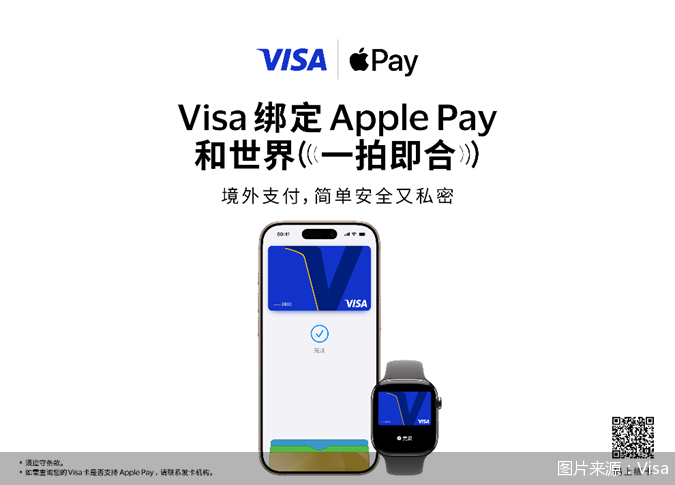
中信银行支持消费者将Visa卡绑定Apple Pay,境外支付更便捷、更安全
Jin Rong Jie· 2026-01-15 07:25
Core Insights - Citic Bank has announced support for binding its Visa credit and debit cards to Apple Pay, allowing cardholders to make payments anywhere Visa's "tap to pay" is accepted, both online and offline [1][4]. Group 1: Digital Financial Innovation - The integration of Apple Pay is part of Citic Bank's efforts to accelerate its digital transformation and enhance the convenience and competitiveness of its financial services [1]. - This initiative is seen as a significant step in promoting digital financial innovation and injecting new momentum into cross-border payment solutions for outbound customers [1]. Group 2: User Experience and Security - Apple Pay offers a simple, secure, and private payment method, allowing consumers to use it across various scenarios, including physical stores and online platforms [4]. - The setup process for adding Citic Bank's Visa cards to Apple Pay is straightforward, requiring users to follow prompts in the bank's app or the Wallet app on their iPhone [4]. - Security is a core feature of Apple Pay, as actual card numbers are not stored on devices or Apple servers; instead, a unique device account number is generated and securely stored [6]. Group 3: Customer Benefits and Market Trends - Cardholders can continue to enjoy the same rewards and benefits as with physical cards, including exclusive offers from Visa for first-time users and travel-related discounts [6]. - The demand for outbound travel among Chinese residents remains strong, with increasing booking volumes reported by major travel platforms, indicating a growing interest in international exploration [6]. - Citic Bank aims to strengthen relationships with global partners and expand overseas consumption scenarios to enhance user experience in digital finance [6].

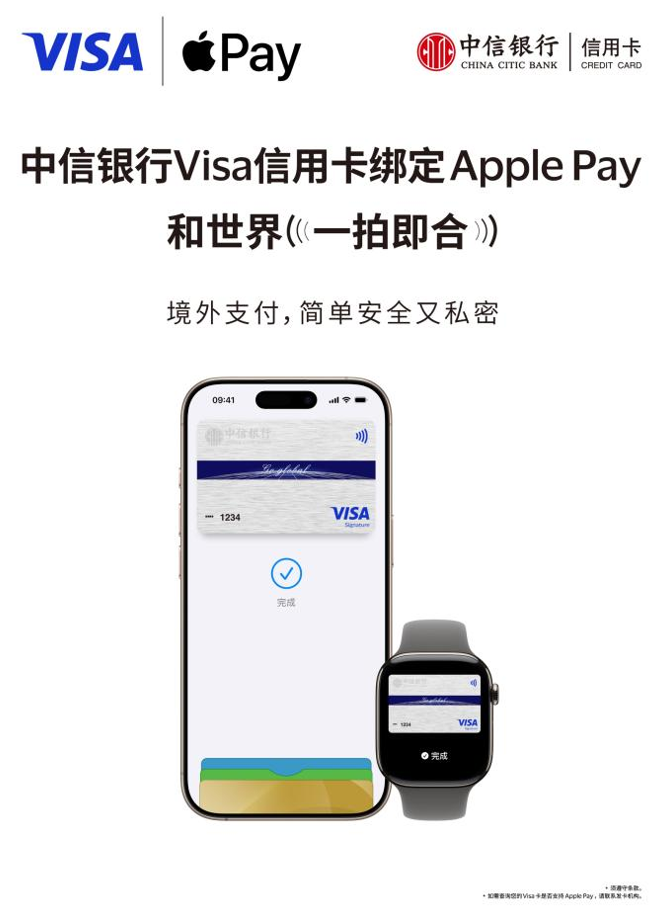
率先破局!Visa支持中国持卡人Apple Pay绑卡支付,首批8家银行
Di Yi Cai Jing· 2026-01-15 06:25
Group 1 - Visa has become the first international card organization to support Apple Pay card binding for Chinese cardholders, enabling more convenient payments [1] - The initial rollout includes support from eight banks, including Industrial and Commercial Bank of China and China Bank, with more banks expected to join later [1][2] - The collaboration aims to enhance cross-border payment convenience for Chinese consumers, allowing them to use Apple Pay for contactless payments abroad [2][4] Group 2 - The card binding process is simplified, allowing users to add their Visa cards to Apple Wallet without manual entry, and some banks offer instant card issuance and binding [3] - Visa has invested in payment security, introducing tokenization services to ensure safer transactions, particularly in cross-border scenarios [4][5] - Over 50% of e-commerce transactions within Visa's global ecosystem have adopted payment tokenization, significantly reducing fraud rates [5] Group 3 - Security measures include the use of a unique device account number that is encrypted and stored securely, ensuring that actual card numbers are not stored on devices or servers [6][7] - In case of device loss, Visa can immediately deactivate the digital account number upon request from Apple or financial institutions [6] - The introduction of this service is seen as a significant step for dual-branded cards, enhancing the payment experience for cardholders both domestically and internationally [8]