
工艺品制造

Search documents
山东外贸企业“内外兼修”寻生意秘笈
Zhong Guo Xin Wen Wang· 2025-05-15 16:04
Group 1 - The adjustment of US-China tariff policies has led to an increase in order volume for Chinese foreign trade companies, with one company receiving a $2 million order for ski gloves [1] - Companies are diversifying their markets, preparing for overseas factories, and enhancing product competitiveness to adapt to changing conditions [1] - The "2025 Shandong Province Foreign Trade Quality Products Shopping Season" event showcased over 400 quality foreign trade enterprises, attracting more than 1,000 professional buyers [1] Group 2 - Shandong Linuo Glass Technology Co., Ltd. emphasizes the importance of understanding domestic consumer needs and developing suitable products, such as lotus leaf-shaped tableware [2] - The transition of foreign trade enterprises to domestic sales is seen as a reshaping of China's light industry, with a focus on product competitiveness rather than merely offloading inventory [2] - Companies are leveraging IP collaborations and modular designs to expand their domestic market presence, with products like panda and football-themed toys appealing to buyers [2]
做好“找上门”的外贸生意
Xin Hua Ri Bao· 2025-05-12 23:35
Core Viewpoint - The new outbound tax refund policy in China aims to enhance the shopping experience for foreign tourists, with a lower refund threshold and increased cash refund limits, creating a "shopping and saving" cycle [1][2]. Group 1: Policy Changes - The refund threshold has been reduced from 500 yuan to 200 yuan, and the cash refund limit has been raised to 20,000 yuan [1]. - The "immediate purchase and refund" model is being promoted nationwide to facilitate foreign tourists [1]. Group 2: Opportunities for Jiangsu - Jiangsu province, with its rich tourism resources and manufacturing capabilities, is positioned to convert tourist flow into sustained economic growth through consumption upgrades [1]. - Key commercial areas such as Nanjing's Xinjiekou and Suzhou's Guanqian Street are expected to implement full coverage of the "immediate purchase and refund" policy [1]. Group 3: Enhancing Local Product Competitiveness - Jiangsu has many well-known local products, such as Yangzhou lacquerware and Yixing purple clay teapots, which can be marketed globally [2]. - There is potential to develop high-value-added products, including technology-driven electronics, to attract bulk purchases under the new tax refund limits [2]. Group 4: Service Improvement Initiatives - The need for bilingual tax refund assistants and personalized shopping advisory services has been identified to address potential language barriers for foreign consumers [3]. - Development of multi-language tax refund applications and the establishment of expedited refund channels at international airports are recommended to enhance the consumer experience [3]. - A fund for rapid resolution of foreign card payment disputes is suggested to ensure a smooth shopping and refund process [3]. Group 5: Strategic Implications - The essence of the new tax refund policy is to shift the foreign trade battlefield to local consumption scenarios, potentially increasing foreign trade revenue for Jiangsu [3]. - The initiative is seen as an opportunity for Jiangsu to redefine its value in the global consumer landscape, showcasing the quality and innovation of Chinese manufacturing [3].
用竹丝编织美好生活(我的家乡我建设)
Ren Min Ri Bao· 2025-05-11 22:30
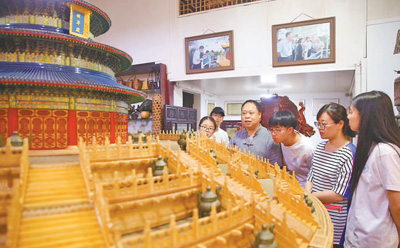
Core Viewpoint - The article highlights the efforts of Liu Yi, a bamboo weaving master, in preserving and promoting the traditional bamboo weaving craft in Xinchang, Zhejiang Province, through workshops, exhibitions, and community engagement [1][7]. Group 1: Bamboo Weaving Craft - Liu Yi has been dedicated to the bamboo weaving craft for over 30 years, teaching and creating intricate bamboo art pieces [2][6]. - The bamboo weaving history in Xinchang is rich, with Liu's father, Liu Guocai, starting his training at the age of 16 and later becoming the director of a bamboo weaving factory [4][6]. - The bamboo weaving industry in Xinchang once had around 2,000 practitioners, but the number has dwindled to about 200 due to the rise of plastic products and declining demand for traditional items [6]. Group 2: Art and Community Engagement - Liu Yi's workshop features impressive bamboo art, including a scaled-down replica of the Temple of Heaven, which took nearly a year to complete and involved extensive research and craftsmanship [3][6]. - Liu Yi has actively participated in exhibitions and awards since 2014, increasing the visibility of Xinchang bamboo weaving and attracting over 2,000 visitors to the non-heritage craftsman museum [7][8]. - The local government has established a bamboo weaving research center and community workshops to provide training and employment opportunities for local residents, with over 600 people participating in bamboo weaving training [8][9]. Group 3: Economic Impact - The bamboo resources in Xinchang are abundant, with over 200,000 acres of moso bamboo, providing a strong foundation for the bamboo weaving art [8]. - Workers in Liu Yi's workshop can earn approximately 150 yuan per day, and there are plans to expand the workforce and apply bamboo weaving to other design fields [8][9]. - Liu Yi is transforming his old house into a bamboo workshop to further engage the community and help villagers regain traditional skills, aiming to boost local income [9].

提前进入生产旺季,增订单!多举措发力外贸企业抵御外部因素扰动底气更足
Yang Shi Wang· 2025-05-08 08:10
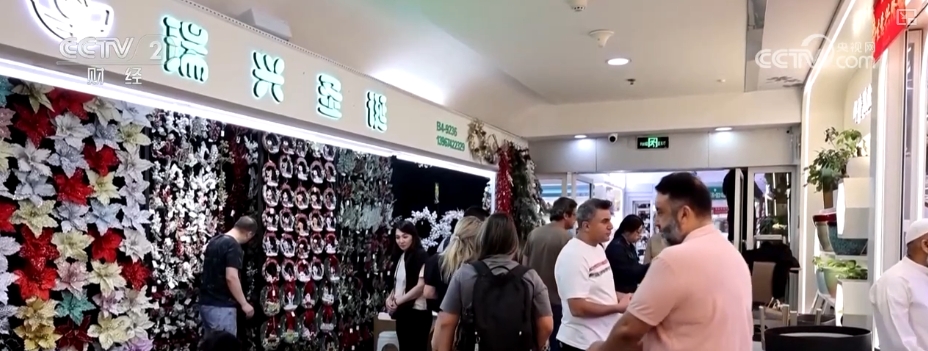
Core Viewpoint - Yiwu International Trade City is entering the peak season for Christmas product orders, with Yiwu accounting for nearly 80% of the global Christmas product market share [1] Group 1: Market Dynamics - Yiwu has a complete production and sales chain for Christmas products, including toys, trees, clothing, and lights, allowing for one-stop shopping for buyers [13] - The export value of Christmas products from Yiwu reached 130 million yuan in the first quarter of 2025, representing a year-on-year increase of 109% [19] - Many foreign buyers, including those from Central America, are increasing their purchase volumes, with some clients taking multiple containers per order [15][19] Group 2: Production and Supply Chain - Local manufacturers are experiencing a production peak, with warehouses filled to capacity as they prepare for increased orders [5] - Companies are adapting to the complex international trade environment by diversifying their markets and innovating sales models [24] Group 3: Buyer Behavior and Preferences - Foreign buyers are increasingly visiting Yiwu to select products personally, indicating a rise in direct purchasing rather than relying solely on trade companies [8] - A significant Argentinian buyer plans to purchase approximately three containers of goods, citing quality and competitive pricing as key factors [10] Group 4: Currency and Payment Trends - The fluctuation of the US dollar index has led exporters to increasingly use RMB for cross-border transactions, reducing the impact of currency volatility on their products [31]
一朵花开出无限可能——河南繁花经济系列观察③
He Nan Ri Bao· 2025-05-04 23:15
Group 1 - Li Ziqi's appearance at the 2025 CCTV Spring Festival Gala highlighted the popularity of peony porcelain accessories, which combine traditional craftsmanship with modern aesthetics [1] - The peony porcelain products, including rings, earrings, bracelets, and hair accessories, have become a popular representation of "Guochao" culture, appealing to younger consumers [1] - The production of peony porcelain reached nearly 70,000 pieces last year, showcasing the growth of this traditional craft [2] Group 2 - The peony porcelain gained international recognition as a "national gift" during the China-ASEAN Expo, featuring a stunning plate that symbolizes the beauty of Eastern aesthetics [2] - The development of peony pastries has evolved, with a new "pure peony" recipe achieved in 2023, enhancing the product's quality and appeal [3] - The extended product line of peony-related items, including paintings, pastries, and teas, has led to an annual output value exceeding 60 million yuan, demonstrating the economic potential of this industry [4]
传统工艺与现代科技携手 古色古韵与新潮元素结合踔厉奋发新征程 | 经典产业焕新升级
Zhong Yang Ji Wei Guo Jia Jian Wei Wang Zhan· 2025-04-21 00:12
Core Insights - The article discusses the revival and modernization of traditional industries in China, emphasizing the importance of cultural heritage and innovation in sectors like silk, tea, and ceramics [5][12][14]. Group 1: Classic Industries - Classic industries are defined as traditional sectors with a rich historical background and cultural significance, such as tea, silk, and ceramics [5]. - These industries are not only part of the market economy but also serve as carriers of Chinese wisdom, skills, and culture [5]. - The integration of traditional craftsmanship with modern technology is revitalizing these classic industries, allowing them to adapt to contemporary market demands [5][14]. Group 2: Innovation in Traditional Craftsmanship - The production of Longquan celadon, a traditional ceramic, involves over 70 intricate processes, showcasing the complexity and artistry of the craft [6]. - Craftsmen like Xu Chaoxing are innovating within traditional frameworks, spending years to rediscover lost techniques and enhance the quality of their products [7][8]. - In Chengdu, traditional lacquerware and Shu brocade are being modernized through innovative techniques and collaborations with younger artisans [9][13]. Group 3: Engaging Younger Consumers - Brands like Wangxingji are adapting to attract younger consumers by collaborating with popular culture and offering personalized products [10][11]. - The silk industry, represented by companies like Kaixiya, is shifting from functional to value-based consumption, focusing on cultural expression and design aesthetics to appeal to modern consumers [12]. - Traditional brands are increasingly recognizing the importance of engaging with younger demographics to ensure the preservation and relevance of their crafts [12][13]. Group 4: Digital Transformation - The integration of digital technologies in classic industries is crucial for their transformation and modernization [14][16]. - Companies like Kaixiya are implementing smart manufacturing systems and digital management processes to enhance efficiency and responsiveness to market demands [16]. - The use of advanced technologies, such as 3D printing and AI, is revolutionizing traditional production methods, allowing for greater customization and improved product quality [15][16].
