旅游零售

Search documents
旅游零售板块10月24日涨0.6%,中国中免领涨,主力资金净流出794.77万元
Zheng Xing Xing Ye Ri Bao· 2025-10-24 08:27
Core Viewpoint - The tourism retail sector experienced a 0.6% increase on October 24, with China Duty Free Group leading the gains, while the overall market indices also showed positive performance [1] Group 1: Market Performance - The Shanghai Composite Index closed at 3950.31, up by 0.71% [1] - The Shenzhen Component Index closed at 13289.18, up by 2.02% [1] Group 2: Individual Stock Performance - China Duty Free Group (stock code: 601888) closed at 70.52, with a gain of 0.60% [1] - The trading volume for China Duty Free Group was 243,000 shares, with a transaction value of 1.72 billion yuan [1] Group 3: Capital Flow - The tourism retail sector saw a net outflow of 7.95 million yuan from institutional investors and a net outflow of 41.19 million yuan from speculative funds [1] - Retail investors contributed a net inflow of 49.14 million yuan to the sector [1]



旅游零售板块10月23日涨0.62%,中国中免领涨,主力资金净流出7143.97万元
Zheng Xing Xing Ye Ri Bao· 2025-10-23 08:20
Group 1 - The tourism retail sector increased by 0.62% on October 23, with China Duty Free Group leading the gains [1] - The Shanghai Composite Index closed at 3922.41, up 0.22%, while the Shenzhen Component Index closed at 13025.45, also up 0.22% [1] - China Duty Free Group's closing price was 70.10, reflecting a 0.62% increase, with a trading volume of 147,400 shares and a transaction value of 1.026 billion yuan [1] Group 2 - The tourism retail sector experienced a net outflow of 71.4397 million yuan from institutional investors, while retail investors saw a net inflow of 49.8297 million yuan [1] - The breakdown of fund flows for China Duty Free Group showed a net outflow of 71.4397 million yuan from institutional investors, a net inflow of 21.61 million yuan from speculative investors, and a net inflow of 49.8297 million yuan from retail investors [1]

旅游零售板块10月22日跌1.47%,中国中免领跌,主力资金净流出1.65亿元
Zheng Xing Xing Ye Ri Bao· 2025-10-22 08:19
Group 1 - The tourism retail sector declined by 1.47% on October 22, with China Duty Free Group leading the drop [1] - The Shanghai Composite Index closed at 3913.76, down 0.07%, while the Shenzhen Component Index closed at 12996.61, down 0.62% [1] - China Duty Free Group's stock closed at 69.67, reflecting a decrease of 1.47%, with a trading volume of 173,100 shares and a transaction value of 1.209 billion yuan [1] Group 2 - The tourism retail sector experienced a net outflow of 165 million yuan from institutional investors, while retail investors saw a net inflow of 165 million yuan [1] - The breakdown of fund flows indicates that institutional investors had a net outflow of 165 million yuan, accounting for 13.66% of the total, while retail investors accounted for 13.61% of the net inflow [1]

10月21日晚间公告 | 协创数据拟40亿向多家供应商采购服务器;罗博特科签订6400万光纤预制及组装线设备意向协议
Xuan Gu Bao· 2025-10-21 12:03
Equity Transfer - Shandong High-Speed plans to transfer 7% of its shares to Anhui Expressway through an agreement [1] External Investment and Daily Operations - Qichuang Data intends to purchase servers from multiple suppliers for up to 4 billion yuan to provide cloud computing services [1] - Jindi Co. signed a strategic cooperation framework agreement with Yingboer to promote the application of electric drive system assembly products [1] - Awei Technology increased its investment in Luying Technology by 10 million yuan to acquire a 9.0744% stake [1] - Robotec signed an intention agreement worth approximately 64 million yuan for automation equipment related to optical fiber prefabrication and assembly lines [1] - China Jushi's subsidiary plans to initiate a cold repair and technical transformation project for an annual production line of 180,000 tons of alkali-free glass fiber [1] - Petrochemical Machinery intends to introduce strategic investors to increase capital in its wholly-owned subsidiary, Hydrogen Machine Company [1] - Zhuhai Mian Group plans to transfer 100% equity of its Zhuhai Gree real estate to Zhuhai Toujie Holdings, accelerating its full divestment from real estate to focus on duty-free and consumer businesses [1] - Haooubo signed a cooperation framework agreement with Roche Diagnostics (Shanghai) Co., Ltd. to collaborate in the field of chemiluminescence self-antibody testing products [1] - Jingu Co. received a notification from a global leading automotive company based in Germany, becoming a parts supplier for its European-produced new energy vehicles, developing low-carbon wheels [1] Performance Changes - Wancheng Group reported a net profit of 855 million yuan for the first three quarters, a year-on-year increase of 917% [2] - Hengtong Co. reported a net profit of 76.568 million yuan in the third quarter, a year-on-year increase of 182.55% [3] - Xinqianglian reported a net profit of 264 million yuan in the third quarter, a year-on-year increase of 308.57% [4] - Abison reported a net profit of 185 million yuan in the third quarter, a year-on-year increase of 138.55% [5] - Xinlian Electronics reported a net profit of 347 million yuan in the third quarter, a year-on-year increase of 141.14% [6] - Yingboer reported a net profit of 112 million yuan in the third quarter, a year-on-year increase of 580.62% [7]

旅游零售板块10月20日涨0.43%,中国中免领涨,主力资金净流入8260.14万元
Zheng Xing Xing Ye Ri Bao· 2025-10-20 08:27
Group 1 - The tourism retail sector increased by 0.43% on October 20, with China Duty Free Group leading the gains [1] - The Shanghai Composite Index closed at 3863.89, up 0.63%, while the Shenzhen Component Index closed at 12813.21, up 0.98% [1] - China Duty Free Group's closing price was 70.32, reflecting a 0.43% increase, with a trading volume of 277,400 shares and a transaction value of 1.966 billion yuan [1] Group 2 - The tourism retail sector saw a net inflow of 82.6014 million yuan from institutional investors, while retail investors experienced a net outflow of 25.094 million yuan [1] - The breakdown of fund flows indicates that institutional investors accounted for 4.20% of the net inflow, while retail investors had a net outflow of 1.28% [1]

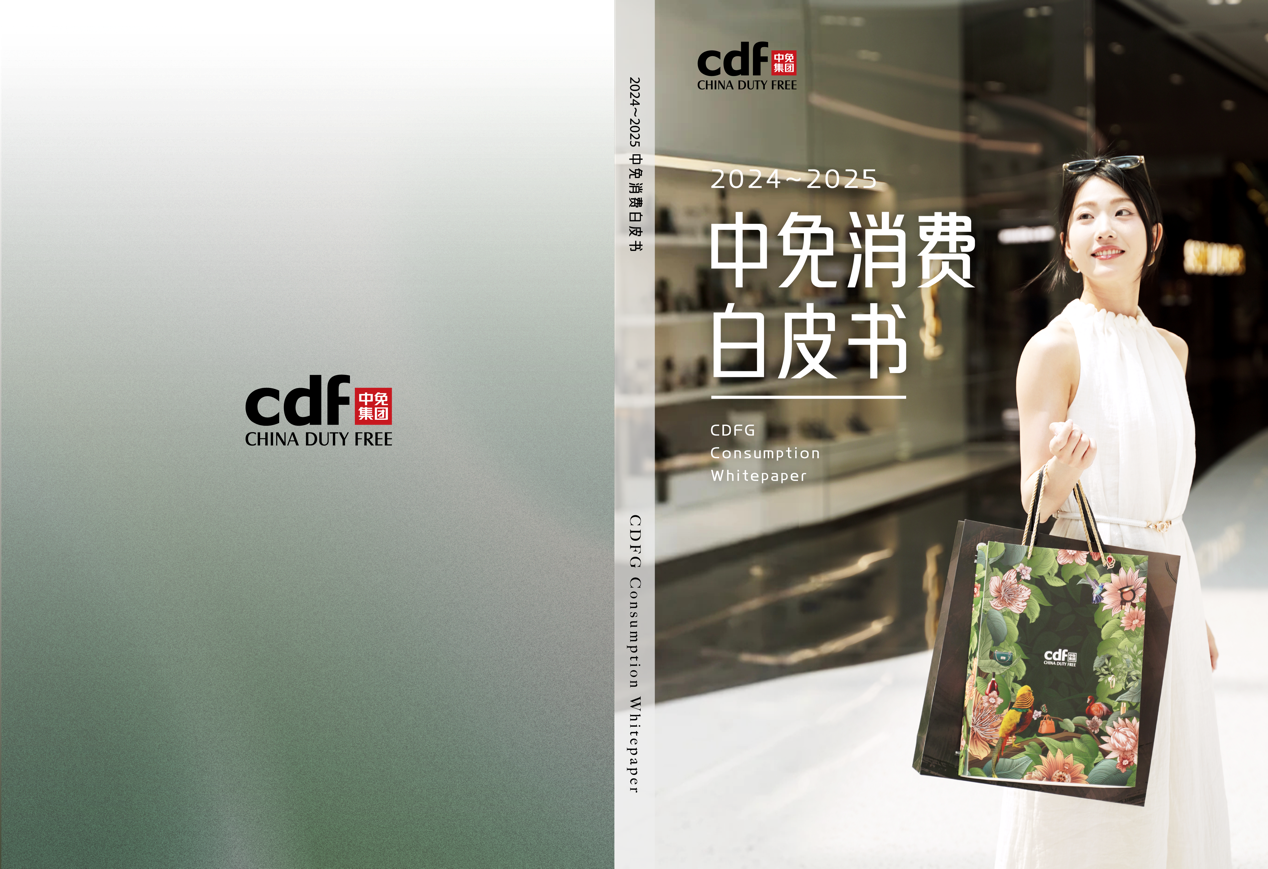
中免集团发布“中免消费白皮书”勾勒中国旅游零售市场复苏全景
Jing Ji Wang· 2025-10-17 09:32
Core Insights - The Chinese tourism retail industry is experiencing a recovery, supported by policy effects and expanding domestic demand, as highlighted in the "2024-2025 China Duty-Free Consumption White Paper" released by China Duty-Free Group [1][7] - The global duty-free and tourism retail market is projected to reach $74.13 billion in 2024, reflecting a 3% year-on-year growth and recovering to 85.8% of 2019 levels [3] - The market concentration in the tourism retail sector is increasing, with China Duty-Free Group maintaining a leading market share of 78.7% [8] Industry Trends - The integration of online and offline shopping experiences is redefining the duty-free shopping landscape, with a focus on "online ordering + offline experience" [13] - The consumer base is evolving, with a shift from broad coverage to precise segmentation, identifying nine distinct consumer categories based on preferences and demographics [12] - The demand for domestic brands is rising, particularly among younger consumers, leading to a shift in market dynamics traditionally dominated by international brands [13] Market Opportunities - The ongoing policy support, including the Hainan duty-free policy and the expansion of city duty-free stores, is expected to create additional market space [15] - The diversification of consumer needs is generating structural opportunities in product categories, driven by differentiated demands from various consumer segments [15] - China Duty-Free Group has introduced over 200 new brands and exclusive products, enhancing its product matrix to include more than 360,000 SKUs [16]
旅游零售板块10月17日涨0.09%,中国中免领涨,主力资金净流入9425.77万元
Zheng Xing Xing Ye Ri Bao· 2025-10-17 08:35
Group 1 - The tourism retail sector increased by 0.09% on October 17, with China Duty Free Group leading the gains [1] - The Shanghai Composite Index closed at 3839.76, down by 1.95%, while the Shenzhen Component Index closed at 12688.94, down by 3.04% [1] - China Duty Free Group's closing price was 70.02, with a slight increase of 0.09% [1] Group 2 - The tourism retail sector saw a net inflow of 94.26 million yuan from main funds, while retail funds experienced a net outflow of 32.97 million yuan [1] - The main fund's net inflow for China Duty Free Group was 94.26 million yuan, accounting for 3.88% of the total [1] - Retail funds had a net outflow of 6.13 million yuan, representing a -2.52% change [1]

旅游零售板块10月16日涨0.68%,中国中免领涨,主力资金净流出2059.72万元
Zheng Xing Xing Ye Ri Bao· 2025-10-16 08:27
Core Insights - The tourism retail sector experienced a slight increase of 0.68% on October 16, with China Duty Free Group leading the gains [1] - The Shanghai Composite Index closed at 3916.23, up 0.1%, while the Shenzhen Component Index closed at 13086.41, down 0.25% [1] Sector Performance - The tourism retail sector's key stock, China Duty Free Group (stock code: 601888), closed at 69.96, reflecting a gain of 0.68% [1] - The trading volume for China Duty Free Group was 247,100 shares, with a total transaction value of 17.38 million yuan [1] Fund Flow Analysis - The tourism retail sector saw a net outflow of 20.5972 million yuan from institutional investors, while retail investors contributed a net inflow of 9.4666 million yuan [1] - The breakdown of fund flows for China Duty Free Group indicates a net outflow of 20.5972 million yuan from institutional investors, a net inflow of 1.11306 million yuan from speculative investors, and a net inflow of 0.94666 million yuan from retail investors [1]

内蒙古实施境外旅客购物离境退税
Sou Hu Cai Jing· 2025-10-15 11:47
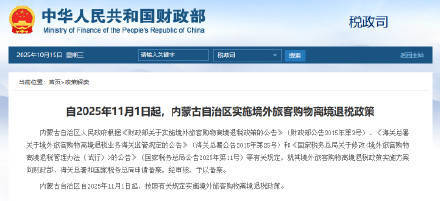
Core Points - Inner Mongolia Autonomous Region will implement a tax refund policy for overseas travelers starting from November 1, 2025, following the approval from the Ministry of Finance, General Administration of Customs, and State Taxation Administration [1]. Group 1 - The tax refund policy is based on several regulations, including the Ministry of Finance's announcement (2015 No. 3), the General Administration of Customs' announcement (2015 No. 25), and the State Taxation Administration's announcement (2025 No. 11) [1]. - The implementation of this policy aims to enhance the shopping experience for overseas travelers and potentially boost local tourism and retail sectors [1].
地缘政治新常态重塑旅游零售商业模式——科尔尼2025全球旅游零售报告(上)
科尔尼管理咨询· 2025-10-15 09:50
Core Insights - The travel retail industry is experiencing a structural disconnection between passenger volume and retail sales, with global passenger numbers reaching a record high of 9.5 billion in 2024, while travel retail sales only reached $74.1 billion, down 13% from 2019 [2][14] - The disparity in travel retail performance varies by region, with the Asia-Pacific region facing declines due to policy resistance and weak consumer spending from mainland China, while India shows strong growth [2][21] - External structural factors such as geopolitical tensions, economic fragmentation, and technological advancements are exerting continuous pressure on the travel retail sector [4][6] Passenger Behavior and Shopping Trends - Passenger shopping frequency is declining at an annual rate of 4%, and the value proposition of travel retail is weakening, with nearly 40% of travelers questioning the actual savings from duty-free shopping [3][39] - Different consumer segments exhibit varied spending behaviors, with Gen Z travelers showing purposeful spending on relevant and unique items, while older travelers are more conservative and price-sensitive [3][44] Regional Performance Disparities - The Asia-Pacific region, despite having the largest travel retail market valued at approximately $31 billion, saw a 2% decline in retail sales in 2024 compared to 2019 [20][21] - Europe, the Middle East, and Africa are experiencing synchronized growth in travel retail and passenger volumes, with Europe seeing a 9.2% increase in retail sales [22][23] - The Americas are at a critical turning point, with retail sales slightly exceeding pre-pandemic levels, but facing challenges such as fragmented retail layouts and limited digital channels [27][28] Category Performance Variability - The perfume and cosmetics category accounts for over one-third of global travel retail sales, with a slight decline in overall sales, while the tobacco category saw a 13% increase [30][31] - The candy and gourmet food categories grew by 8%, driven by promotional sales and the influence of younger consumers [31] - High-end products are gaining traction, while mid-tier categories are shrinking, indicating a polarization in consumer spending [47][49] Consumer Confidence and Value Perception - The average spending per traveler has decreased significantly, dropping to $15.5 in 2024, down 17% from 2019 [36][39] - The perception of value in travel retail is shifting, with consumers increasingly skeptical about the price advantages of duty-free shopping compared to local retail channels [42][55] - Clear pricing and value propositions are essential for driving consumer confidence and conversion rates in travel retail [52][56] Evolving Business Models and Strategies - The travel retail business model is evolving slowly, with a need for strategic reassessment to adapt to changing consumer behaviors and market dynamics [5][6] - Companies must focus on building resilient operations that can thrive amid ongoing disruptions and volatility [7][6] - The integration of dining experiences within retail spaces is emerging as a key strategy to enhance consumer engagement and drive sales [57][62]