
酿酒

Search documents
聊城新增2处省级工业遗产
Da Zhong Ri Bao· 2025-12-23 03:04
Core Viewpoint - The article highlights the recognition of two industrial heritage sites in Liaocheng, Shandong Province, emphasizing the importance of preserving and utilizing industrial heritage for cultural and economic development [1] Group 1: Industrial Heritage Recognition - The Shandong Provincial Department of Industry and Information Technology announced the second batch of industrial heritage sites, with Liaocheng's two sites ranking first in the province [1] - The recognized sites include the "Jingyanggang Chenniang Wine Cellar Group and Brewing Workshop," established in the 1970s, and the "Lingqing Tribute Brick Ancient Kiln and Firing Workshop," which has a history of over 500 years dating back to the early Ming Dynasty [1] Group 2: Importance of Industrial Heritage - Industrial heritage serves as a vital carrier of industrial culture, documenting significant information from various stages of industrial development and witnessing historical progress [1] - Liaocheng has prioritized the protection and utilization of industrial heritage, adhering to the principle of "protection first, reasonable utilization," and has cultivated one national-level and three provincial-level industrial heritage sites to date [1] Group 3: Future Development Plans - The city plans to further explore the historical value and contemporary significance of its industrial heritage, revitalizing old factories and equipment to inject cultural momentum into high-quality industrial economic development [1]
聊城|聊城新增2处省级工业遗产
Da Zhong Ri Bao· 2025-12-23 01:36
12月18日,省工业和信息化厅公示了第二批山东省工业遗产名单,聊城市景阳冈陈酿酒窖池群及酿 酒作坊、临清贡砖古窑及烧制工坊2处工业遗产成功入围,数量列全省首位。 "景阳冈陈酿酒窖池群及酿酒作坊"工业遗产,由建于20世纪70年代的两座老酒窖改建而成,收集企 业工业化进程中用到的老物件、老档案300余件;"临清贡砖古窑及烧制工坊"工业遗产始于明永乐初 年,历经明清两代鼎盛发展,至今已有500余年历史。 工业遗产是工业文化的重要载体,记录了工业发展不同阶段的重要信息,见证了发展的历史进程。 近年来,聊城高度重视工业遗产保护与利用,坚持"保护优先、合理利用"原则,持续深化工业遗产资源 挖掘与系统管理,聚焦遗产活化利用,推动工业遗产与文化传承深度融合,以点带面激发工业文化活 力,为传统产业转型赋能。截至目前,累计培育国家级工业遗产1处、省级3处。 下一步,聊城将持续深挖工业遗产的历史价值与时代内涵,活化利用老厂房、老设备等工业遗存, 为工业经济高质量发展注入文化动能。(记者 薛良诚 通讯员 李绍远) ...
【宝鸡】劳务品牌带动就业创业40万人次
Shan Xi Ri Bao· 2025-12-22 22:50
Core Insights - Baoji City has cultivated 38 distinctive labor brands, leading to employment and entrepreneurship for 400,000 people [1][2] - The city has implemented comprehensive policies and established a complete policy chain for labor brand development, including funding support and standards [1] - Baoji's labor brands are diversified and tailored to key industries, enhancing the integration of brands with industrial development [1] Group 1: Labor Brand Development - Baoji City has adopted innovative methods to enhance labor brand construction, making it a key task and annual goal [1] - The city has held the first municipal labor brand development conference in the province and issued the "Implementation Plan for Labor Brand Cultivation" [1] - A guidance team of 31 experts has been established to provide ongoing support to grassroots initiatives [1] Group 2: Economic Impact - The titanium industry in Baoji has reached a total output value of 56 billion yuan, while the brand value of Xifeng liquor has surpassed 330 billion yuan [1] - The "one bowl of noodles" economy has achieved a total industrial output value of 16.2 billion yuan, highlighting the increasing support of labor brands for key industries [1] - During the 14th Five-Year Plan period, the labor economy income in Baoji is projected to reach 32.3 billion yuan, creating a virtuous cycle of brand establishment and employment [2] Group 3: Training and Management - Baoji City has strengthened training, promotion, and management, establishing a training system that covers the entire occupational cycle [2] - The city has created seven master skill studios and included specialty occupations in the subsidy catalog [2] - A unified brand identity and dynamic management have been implemented to protect the rights of workers and promote brand upgrades [2]

从“黑色走廊”到“绿色标杆”
Xin Lang Cai Jing· 2025-12-21 19:38
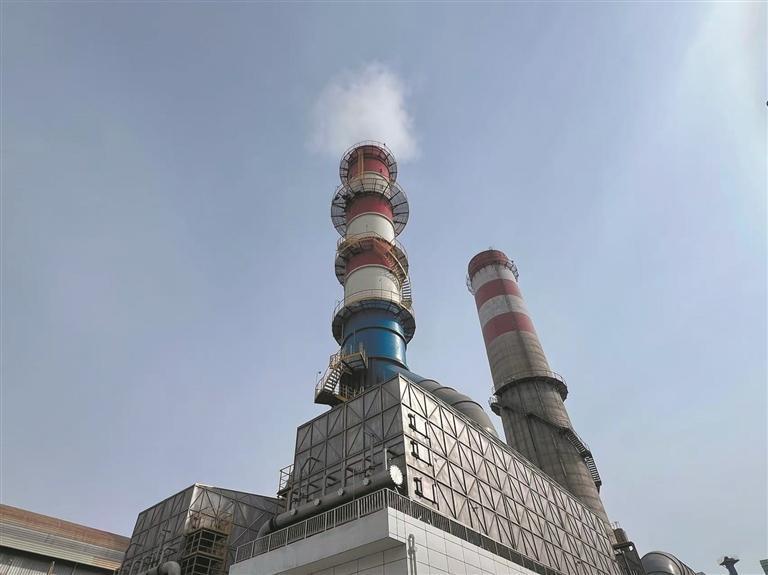
Core Viewpoint - The transformation of industrial enterprises in Haidong City from high-energy, high-emission operations to sustainable, green practices is highlighted as a significant achievement, driven by environmental protection initiatives and technological upgrades [5][15]. Group 1: Industrial Background - Haidong City, known as the "Gateway to Qinghai-Tibet," has attracted numerous enterprises due to its ecological advantages and green electricity [5]. - The region's traditional industries, such as ferroalloy and silicon carbide, have historically caused severe environmental degradation, prompting a shift towards sustainable practices [5][6]. - In 2017, the Central Environmental Protection Inspection Team identified significant environmental issues in Haidong's ferroalloy sector, leading to a push for industrial upgrades [5][6]. Group 2: Environmental Challenges - Haidong has 20 ferroalloy enterprises employing over 4,800 people, which are crucial for local economic development but have faced challenges like low equipment standards and serious emissions issues [6]. - The region's heavy industries have historically contributed to poor air quality and environmental complaints from local residents [7][8]. Group 3: Technological Upgrades - Following the 2017 environmental inspections, local governments encouraged ferroalloy companies to invest in energy-saving technologies and pollution control measures [9][10]. - Companies like Qinghai Shengji Silicon Industry and Qinghai Huaxin Silicon Industry have invested 180 million yuan in dust collection and emission control systems [9]. - A significant technological advancement involved creating a centralized casting point to reduce emissions, resulting in a drop in particulate matter concentration from 50 mg/m³ to 10 mg/m³ [10]. Group 4: Environmental Improvements - By 2024, Haidong's PM2.5 concentration decreased from 33 µg/m³ in 2017 to 29 µg/m³, with a 20.4% improvement in the overall air quality index [14]. - The satisfaction rate among residents regarding environmental conditions exceeded 93% [14]. Group 5: Industry Transformation - The shift from "black smoke" to "blue sky" represents not only environmental remediation but also a fundamental change in development philosophy, with many companies adopting a proactive approach to environmental responsibility [15][16]. - Companies are increasingly investing in clean energy and sustainable practices, such as the Qinghai Huzhou Tianyoude Qingke Wine Co., which has implemented solar power and reduced carbon emissions significantly [15].

古越龙山:股东大会审议通过《关于取消监事会并修订<公司章程>的议案》等多项议案
Zheng Quan Ri Bao Zhi Sheng· 2025-12-19 08:27
(编辑 丛可心) 证券日报网讯 12月18日晚间,古越龙山发布公告称,公司2025年第一次临时股东大会审议通过《关于 取消监事会并修订的议案》《关于修订和制定公司部分治理制度的议案》《关于增补独立董事的议案》 等多项议案。 ...

江西蒙山举办酒文化民俗节
Xin Lang Cai Jing· 2025-12-19 07:25
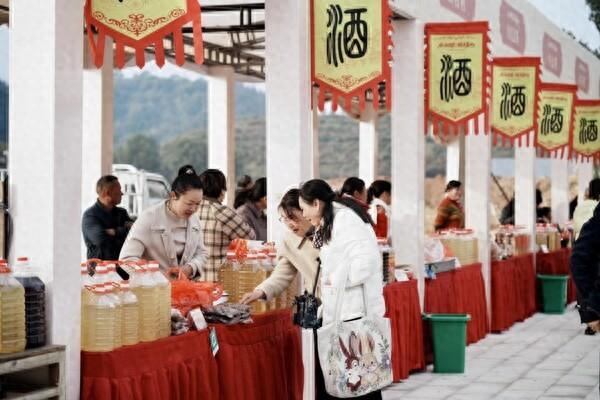
The photo shows that visitors are tasting local wine at the annual culture festival held in Mengshan Town in east China's Jiangxi Province. 来源:美通社 北京2025年12月19日 /美通社/ -- 12月4日,一场以酒文化为主题的民俗节在江西省蒙山镇拉开帷幕。此 次活动通过沉浸式的场景设计,让游客深度体验当地独特的民俗风情、传统酿酒工艺与地方美食。 活动现场设置了丰富多样的互动体验项目,游客既可参与套圈、打麻糍、书法创作、摔碗酒、投壶(即 以投入远处壶中箭矢数量决胜负的传统游戏)等活动,还能参与现场蒙山水酒酒王争霸赛。 本届民俗节已连续举办六届,吸引了大量游客前来体验特色文化活动,品尝当地佳酿与美食。 ...
古越龙山:12月18日召开董事会会议
Mei Ri Jing Ji Xin Wen· 2025-12-18 11:23
Company Overview - Guyue Longshan (SH 600059) announced its 12th meeting of the 10th Board of Directors on December 18, 2025, held at the China Huangjiu Museum, combining in-person and remote voting [1] - The company reported a market capitalization of 8.4 billion yuan [1] Revenue Composition - For the year 2024, the revenue composition of Guyue Longshan is as follows: 98.38% from the liquor industry, 1.24% from other businesses, and 0.37% from other industries [1]
张裕A:注销1243万股B股股份
Xin Lang Cai Jing· 2025-12-18 09:05
Group 1 - The company has completed the cancellation of 12.43 million B shares on December 17, 2025, at the Shenzhen branch of China Securities Depository and Clearing Co., Ltd [1] - The canceled B shares represent 1.86% of the company's total share capital before the cancellation [1] - Following the cancellation, the company's total share capital has decreased from 670 million shares to 657 million shares [1]

曾从钦:打造两个百亿级大单品,锚定“五新拓展”全面发力
Xin Lang Cai Jing· 2025-12-18 04:07
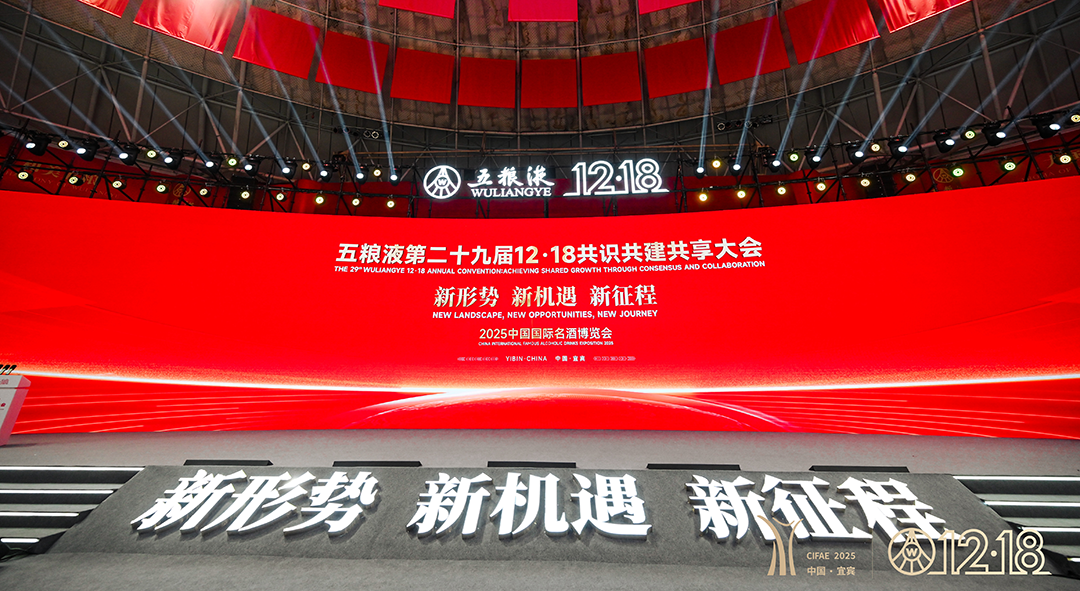
Core Viewpoint - The year has been described as extraordinarily challenging for the liquor industry, with Wuliangye adapting through innovation, collaboration, and proactive measures to navigate market changes and pressures [3][9]. Group 1: Industry Challenges and Opportunities - Wuliangye has effectively advanced channel innovation, adding 474 new traditional channels and achieving direct distribution coverage in 20 core cities [3][9]. - The liquor industry is entering a complex fifth round of deep adjustment, characterized as "cyclical," "structural," and "regressive" [3][9]. - There are significant opportunities for industry growth, driven by a favorable macroeconomic environment and structural changes in consumer demographics and consumption scenarios [3][9][11]. Group 2: Policy and Market Trends - Recent industry policies have provided support for the liquor sector, emphasizing the importance of historical and cultural value in liquor production [4][10]. - Consumer trends such as youth engagement, female consumption, and the aging population are identified as key areas for market expansion [5][11]. Group 3: Strategic Initiatives - Wuliangye aims to leverage five key advantages: quality, brand, market, team, and financial strength [5][11]. - The company has outlined its mission to preserve historical classics and its vision to become a globally recognized leader in the liquor industry [5][11]. - A comprehensive strategy called "Five New Expansions" will focus on targeting new consumer groups, channels, scenarios, markets, and operational mechanisms [6][12]. Group 4: Product Development - Wuliangye plans to establish a product system centered around its eighth-generation liquor, with strategic products aimed at achieving significant sales milestones [6][12][13]. - The company intends to create four national strategic products in the fragrant liquor category, targeting sales tiers of 100 billion, 50 billion, 20 billion, and 10 billion [13].

通信金融行业领涨,A股震荡上行
Zhongyuan Securities· 2025-12-17 09:29
Market Overview - On December 17, the A-share market opened lower but experienced a slight upward trend, with the Shanghai Composite Index facing resistance around 3834 points[2] - The Shanghai Composite Index closed at 3870.28 points, up 1.19%, while the Shenzhen Component Index rose by 2.40% to 13224.51 points[7] - Total trading volume for both markets reached 18,345 billion yuan, above the median of the past three years[3] Sector Performance - Key sectors showing strong performance included communication equipment, electronic components, energy metals, and finance, while sectors like decoration, aerospace, and brewing lagged behind[3] - Over 70% of stocks in the two markets rose, with energy metals and precious metals leading the gains[7] Valuation Metrics - The average price-to-earnings (P/E) ratios for the Shanghai Composite and ChiNext indices are 15.72 times and 47.69 times, respectively, above the median levels of the past three years, indicating a suitable environment for medium to long-term investments[3] - The market is expected to consolidate around the 4000-point mark, with cyclical and technology sectors likely to alternate in performance[3] Economic Outlook - The central economic work conference set a tone of "more proactive" economic policies for the coming year, while the Federal Reserve's interest rate cuts have led to fluctuating expectations regarding future easing measures[3] - The domestic economy is in a state of moderate recovery, but the foundation still needs strengthening[3] Investment Recommendations - Investors are advised to closely monitor macroeconomic data, changes in overseas liquidity, and policy developments[3] - Short-term investment opportunities are recommended in communication equipment, electronic components, energy metals, and finance sectors[3] Risk Factors - Potential risks include unexpected overseas economic downturns, domestic policy and economic recovery delays, and international relations changes affecting the economic environment[4]