智能穿戴设备

Search documents
凌晨预售!阿里巴巴首款自研AI眼镜来了
Zheng Quan Shi Bao· 2025-10-23 15:36
Core Viewpoint - Alibaba's first self-developed AI glasses, Quark AI glasses, will start pre-sale on October 24, with a price of 3,699 yuan for 88VIP members and 3,999 yuan for regular consumers, indicating a strategic entry into the AI glasses market [1][2] Product Features - The Quark AI glasses are equipped with dual flagship chips, Qualcomm AR1 and Hengxuan BES2800, featuring dual optical dual-display with adjustable viewing distance, and a customized fitting solution for myopic users [2] - The glasses support various functions including calls, music, translation, reminders, and photography, and utilize a unique integrated fitting solution instead of the common external attachment method [2] - An innovative dual-battery and replaceable battery design allows users to swap the main battery without interrupting usage, enhancing the product's usability [4] Technological Innovations - Alibaba has developed a SuperRaw night mode to address the challenge of low-light photography, enabling high-quality images even in dark environments [5] - The company emphasizes that AI glasses will serve as a crucial product form in smart wearables, enhancing human interaction capabilities and driving a significant increase in personal data volume [5] Market Outlook - According to IDC, global shipments of smart glasses are expected to reach 4.065 million units in the first half of 2025, a year-on-year increase of 64.2%, with the Chinese market projected to grow at a compound annual growth rate of 55.6% from 2024 to 2029 [6] - The AI glasses sector is experiencing explosive growth, attracting significant investment from major tech companies like Huawei, Baidu, Xiaomi, Apple, and OPPO, indicating a forthcoming period of rapid expansion in the industry [6][7] - The recent launch of Meta's Ray-Ban Display smart glasses, which sold out quickly, highlights the growing consumer interest and market potential for smart eyewear [6] Industry Trends - AI smart glasses are seen as the best medium for AI applications, driving the iteration and upgrade of smart wearable devices, with expectations that AR glasses will transition from niche products to mainstream computing terminals [7]


凌晨预售!阿里巴巴首款自研AI眼镜来了
证券时报· 2025-10-23 15:33
Core Insights - Alibaba's first self-developed AI glasses, Quark AI glasses, will start pre-sale on October 24, with a price of 3,699 yuan for 88VIP members and 3,999 yuan for regular consumers [1][4] - The glasses feature dual flagship chips, Qualcomm AR1 and Hengxuan BES2800, and offer a range of integrated services including navigation, secure payments, and travel reminders [3][4] - The AI glasses are designed to address common issues in the market such as discomfort, short battery life, and weak AI interaction, aiming to become a mainstream consumer product [5][6] Product Features - Quark AI glasses include functionalities like calls, music, translation, reminders, and photography, with a unique integrated prescription lens solution [4][5] - The glasses utilize a dual battery system with a hot-swappable design, allowing users to replace the main battery without interrupting usage [5] - A proprietary SuperRaw night mode has been developed to enhance low-light photography capabilities [5] Market Outlook - According to IDC, global shipments of smart glasses are expected to reach 4.065 million units in the first half of 2025, marking a 64.2% year-on-year growth [6] - The smart glasses market is projected to exceed 40 million units by 2029, with China's market share expected to grow at a compound annual growth rate of 55.6% from 2024 to 2029 [6] - Major tech companies like Huawei, Baidu, Xiaomi, Apple, and OPPO are entering the AI glasses sector, indicating a competitive landscape [6][7] Industry Trends - AI smart glasses are seen as a key driver for the evolution of wearable devices, transitioning from niche products to mainstream computing terminals [7] - The integration of AI and AR technologies is anticipated to create new growth opportunities in the consumer electronics market [7]
阿里巴巴首款自研AI眼镜将开启预售,市场空间广阔
Xuan Gu Bao· 2025-10-23 15:09
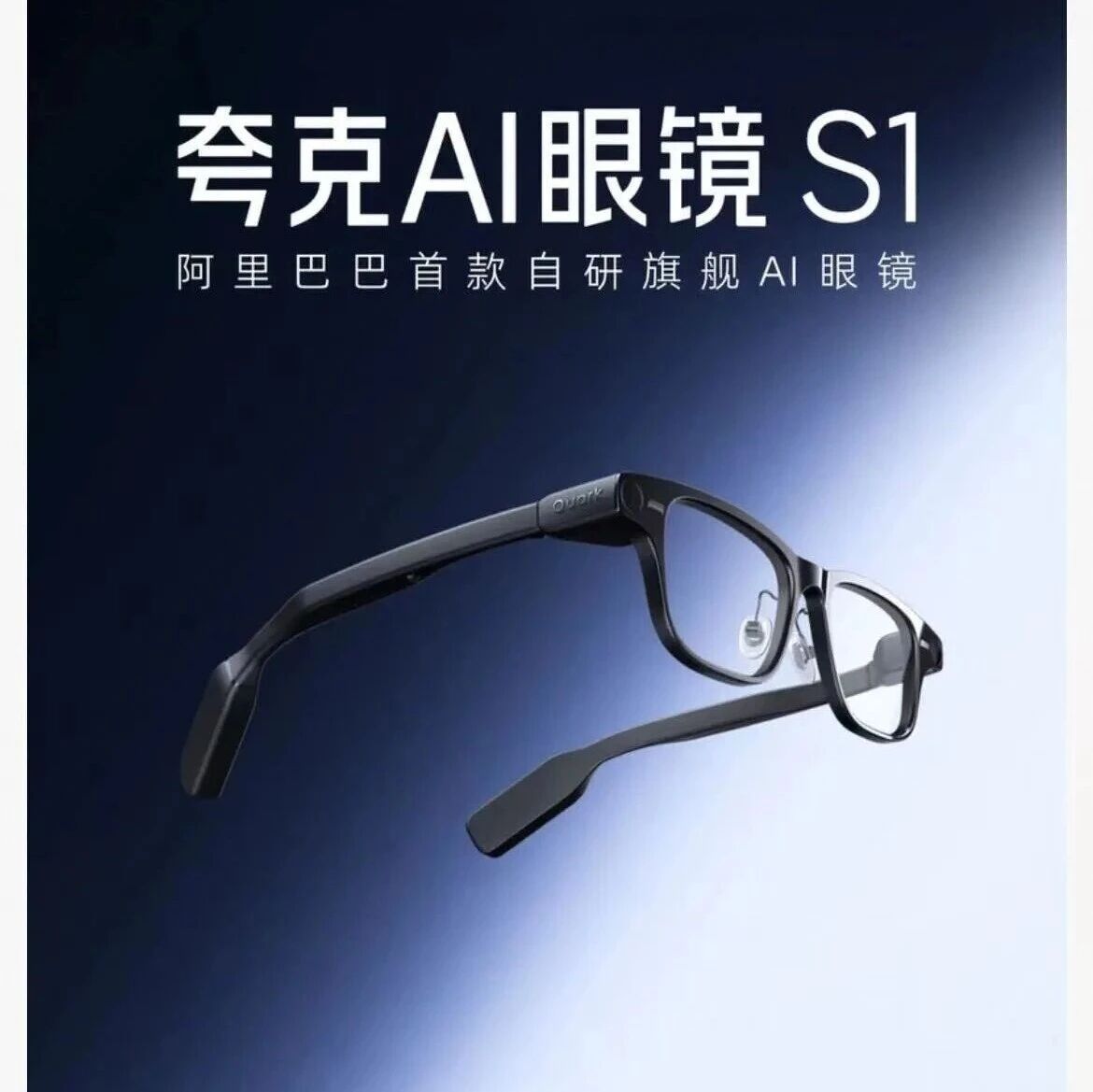
Group 1 - Alibaba's first self-developed AI glasses, Quark AI glasses, began pre-sale on the Tmall flagship store for Quark smart devices at midnight on the 24th, with a price of 3,699 yuan for 88VIP members and 3,999 yuan for regular consumers [1] - The glasses are equipped with dual flagship chips, Qualcomm AR1 and Hengxuan BES2800, and feature functions such as Gaode near-eye navigation system, Alipay "Look and Pay" secure payment, Taobao price comparison, and Fliggy travel reminders [1] - According to Guotai Junan Securities, AI glasses are expected to reshape the smart glasses industry logic, pushing the industry into an explosive growth phase, with a projected 188% increase in sales in the Chinese market by 2025 [1] Group 2 - Hengxuan Technology focuses on the research, design, and sales of smart audio and video SoC chips, with Alibaba as one of its clients [2] - Huanxu Electronics produces products for smart glasses and other smart head-mounted devices, including WiFi modules and multifunctional or specific function SiP modules [2]
“负债1亿坐绿皮火车”冲上热搜后,王自如以评测专家身份站台AI眼镜
Di Yi Cai Jing Zi Xun· 2025-10-23 14:44
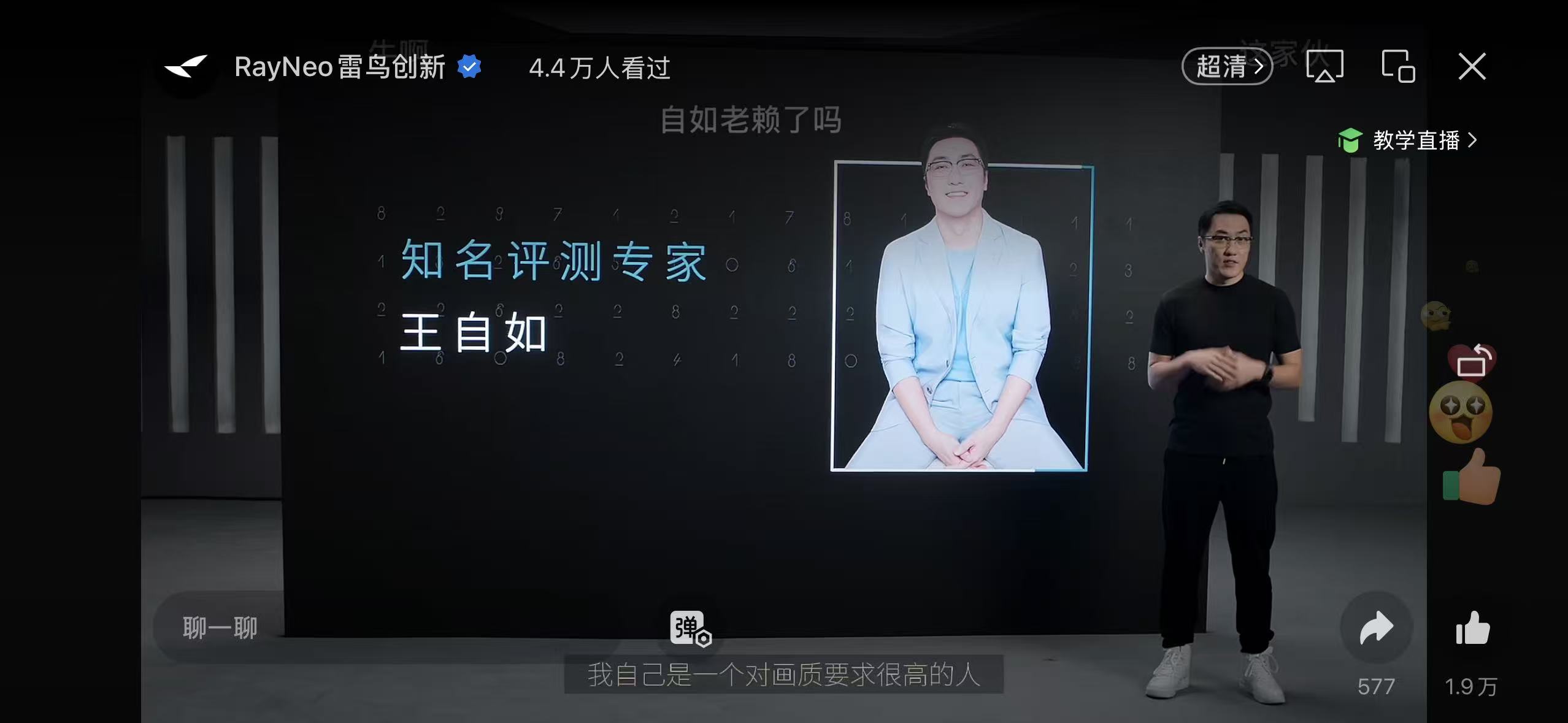
Group 1 - The core viewpoint of the article highlights the launch of Thunderbird Innovation's new AI glasses, ThunderBird Air4, which is positioned as a head-mounted television with advanced features [2] - The ThunderBird Air4 supports HDR10 format with a peak brightness of 1200 nits and is powered by a custom image quality chip, Vision4000, developed in collaboration with Pixelworks [2] - The pricing for ThunderBird Air4 and ThunderBird Air4 Pro is set at 1599 yuan and 1699 yuan respectively [2] - The CEO of Thunderbird Innovation, Li Hongwei, believes the AI glasses market is on the verge of explosion, with over 100 players in the industry but few making significant investments [2] - Research firm RUNTO predicts that by 2025, global and Chinese AI glasses market sales will reach 5.1 million and 1.37 million units respectively, with growth rates exceeding 200% [2] - The industry is currently experiencing intensified competition, especially during the Double 11 shopping festival, with many companies releasing new AI glasses [3] Group 2 - Wang Ziru, a product consultant for Thunderbird Innovation, has a background in mobile phone evaluation and previously worked at Gree Electric, where he led digital channel reform projects [3] - Wang Ziru's recent personal financial struggles, including a reported debt of 100 million yuan, have gained media attention [3]

“负债1亿坐绿皮火车”冲上热搜后,王自如以评测专家身份站台AI眼镜
第一财经· 2025-10-23 14:13
Core Viewpoint - The AI glasses market is on the verge of explosive growth, with over 100 players in the industry, but only a few are making significant investments. Thunderbird Innovation aims to capitalize on this opportunity by launching multiple new products in the coming year [3][4]. Group 1: Product Launch and Features - Thunderbird Innovation launched its new AI glasses, Thunderbird Air4, which supports HDR10 format with a peak brightness of 1200 nits and features a custom image quality chip, Vision4000, developed in collaboration with Pixelworks [3]. - The pricing for Thunderbird Air4 and Thunderbird Air4 Pro is set at 1599 yuan and 1699 yuan, respectively [3]. Group 2: Market Predictions and Trends - According to RUNTO, global and Chinese AI glasses market sales are projected to reach 5.1 million units and 1.37 million units by 2025, with growth rates exceeding 200% [3]. - The recent trend in the industry includes companies releasing new products during the Double 11 shopping festival, leading to intensified competition [4]. Group 3: Key Personnel and Background - Wang Ziru, a product consultant for Thunderbird Innovation, has a background in mobile device evaluation and previously worked at Gree Electric, where he led digital channel reform projects [4]. - Wang Ziru's recent financial struggles, including a reported debt of 100 million yuan, have attracted media attention, highlighting the challenges faced by industry professionals [4].

坐绿皮火车冲上热搜后,王自如以评测专家身份站台AI眼镜
Di Yi Cai Jing· 2025-10-23 13:53
Group 1 - Thunder Innovation launched its new AI glasses, Thunder Air4, on October 23, featuring HDR10 support and a peak brightness of 1200 nits [2] - The pricing for Thunder Air4 and Thunder Air4 Pro is set at 1599 yuan and 1699 yuan respectively [2] - The CEO of Thunder Innovation, Li Hongwei, believes the AI glasses market is on the verge of explosion, with over 100 players in the industry but few making significant investments [2] Group 2 - RUNTO predicts that global and Chinese AI glasses market sales will reach 5.1 million and 1.37 million units by 2025, with growth rates exceeding 200% [2] - The recent competition in the AI glasses market has intensified, especially during the Double 11 shopping festival, with multiple companies releasing new products [3] - Wang Ziru, a key figure in the industry, has recently gained attention due to his financial struggles and his return to entrepreneurship after leaving Gree Electric [3]
双十一智能眼镜选购指南:买光波导、拍摄还是音频?一文全说清
3 6 Ke· 2025-10-23 03:21
Core Insights - The annual Double Eleven e-commerce event is a significant opportunity for consumers to purchase digital products, particularly smart glasses, which have matured in functionality and technology [1][8] - Smart glasses are categorized into three main types: waveguide AI glasses, shooting glasses, and audio glasses, each catering to different consumer needs and budgets [9][16] Waveguide AI Glasses - Waveguide AI glasses, such as Rokid Glasses and StarV Air2, are positioned as high-end products with advanced features, including integrated cameras and enhanced interaction capabilities [3][5] - Rokid Glasses stand out for their complete input-output experience, allowing users to capture images with a simple framing interface [5][8] - Despite advancements, waveguide technology still faces challenges, including limited field of view, brightness inconsistencies, and high production costs, making them less accessible to average consumers [7][8] Shooting Glasses - Shooting glasses focus on the concept of "recording life" and are generally lighter and more affordable than waveguide glasses, with products like Thunder V3 and BleeqUp Range being notable options [9][11] - Thunder V3 is highlighted for its lightweight design and decent AI capabilities, while BleeqUp Range is tailored for sports enthusiasts with extended battery life and superior video stabilization [15][11] Audio Glasses - Audio glasses, such as those from Jiehuan and Mijia, are the most affordable option, integrating Bluetooth headset functionality and offering lightweight designs with long battery life [16][18] - These glasses serve as an entry point for consumers interested in smart eyewear, although they are seen as a compromise due to current technological limitations [18][20] Market Trends - The smart glasses market is evolving, with a clear distinction between high-end multifunctional devices and more accessible, specialized products [9][16] - The future of smart glasses is anticipated to shift towards more advanced models as technology improves, potentially leading to a market upgrade similar to the evolution seen in smartphones [18][20]

三星正式宣布进军AI眼镜领域,AI眼镜行业加速爆发
Xuan Gu Bao· 2025-10-22 15:14
Group 1 - Samsung has officially entered the AI glasses market, collaborating with Google and well-known eyewear brands like Gentle Monster and Warby Parker to integrate AI technology with fashion design [1] - The new AI glasses will be based on the Android XR system and will deeply integrate Google's Gemini multimodal AI model for a seamless user experience [1] - The AI glasses market has seen explosive growth this year, with nearly 30 new AI glasses products launched in the first half of 2025 and around 10 more expected in the fourth quarter [1] Group 2 - IDC data indicates that global smart glasses shipments are expected to reach 2.555 million units in Q2 2025, representing a year-on-year growth of 54.9%, with China's market showing even more impressive growth at 664,000 units and a 145.5% increase [1] - Market research institutions are optimistic about the AI glasses sector, predicting significant growth over the next 5-6 years, with the market size expected to reach $300-500 million by 2026 [1] - The share of the Chinese market is projected to increase from 20% in 2024 to 40% by 2030, becoming a key driver of global growth [1] Group 3 - GoerTek is providing vertical integration product solutions and one-stop R&D manufacturing services for AI smart glasses and other smart hardware devices to leading global clients [2] - Xunwei Communication is collaborating with multiple AI glasses manufacturers to supply antennas and precision structural components [3]
Meta们的AI眼镜梦,绕不开中国供应链
第一财经· 2025-10-22 09:56
Core Insights - The AI glasses market is rapidly evolving, with major players like Meta and Apple competing to launch innovative products, indicating a significant shift in consumer technology [3][4] - China is emerging as a leader in the AI glasses supply chain, with over 80% of global manufacturers based in the country, showcasing its competitive advantages in cost, efficiency, and technology integration [6][7][9] Market Trends - In the first half of 2025, global AI glasses shipments reached 4.065 million units, a year-on-year increase of 64.2%, with projections indicating shipments could exceed 40 million units by 2029 [6][15] - Companies like GoerTek, Crystal Optoelectronics, and Sunny Optical are identified as key players in the AI glasses sector, with significant stock price increases reflecting market optimism [6][8] Supply Chain Dynamics - The Chinese supply chain's strength lies in its comprehensive integration of components, including optics, chips, and sensors, which are critical for AI glasses production [7][8][9] - The transition from OEM to JDM models among Chinese manufacturers signifies a shift towards greater innovation and collaboration with international brands [11][12] Future Outlook - Experts predict that 2027 could be a pivotal year for AI glasses, potentially marking a moment akin to the "iPhone moment" for the industry, driven by advancements in AI and user interaction technologies [4][16] - Challenges remain, including improving user experience, reducing weight, and enhancing battery life, which are crucial for widespread adoption [18][19]





智能眼镜销量攀升 部分公司已步入收获期
Zheng Quan Ri Bao· 2025-10-21 16:39
Core Insights - The global smart glasses market is projected to reach 4.065 million units in the first half of 2025, marking a year-on-year growth of 64.2% [1] - By 2029, the market is expected to exceed 40 million units, with China's market share steadily increasing and a compound annual growth rate (CAGR) of 55.6% from 2024 to 2029, the highest globally [1] Market Dynamics - The smart glasses market is categorized into audio glasses, camera glasses, and AR glasses, all of which saw sales increases in the first half of this year, with China's total retail sales reaching 468,000 units, a 148% year-on-year increase [2] - The rapid sales growth is attributed to continuous product innovation and significant demand expansion, particularly among young consumers who favor tech products [2] - Major companies like Meta are launching new products, enhancing the feasibility of consumer-grade smart glasses and pushing them into mainstream markets [2] Company Activities - Numerous companies are actively entering the smart glasses industry, with over 25 new products launched from January to August this year [3] - Companies such as Thunder Innovation, Liweike Technology, Rokid, Goertek, and others are introducing smart glasses products or solutions, indicating a competitive landscape [3] - The industry is entering a phase of intensive new product releases, with expectations of increased benefits for related listed companies as competition intensifies [3] Supply Chain Developments - Shenzhen Baiwei Storage Technology has become a core supplier for major global wearable tech clients, including Meta, Google, and Xiaomi, providing ROM and RAM chips for AI/AR glasses and smartwatches [4] - Guangdong Lingyi Technology focuses on the R&D and manufacturing of core components for wearable devices, continuously expanding in the AI glasses and smart wearable sectors [4]