Food Delivery

Search documents
Stifel Raises DoorDash (DASH) Price Target to $255 After Deliveroo Deal Completion
Yahoo Finance· 2025-11-03 03:10
Core Insights - DoorDash, Inc. (NASDAQ:DASH) is projected to have strong earnings growth over the next five years, leading to a price target increase from $239 to $255 by Stifel [1] - Stifel plans to assess the impact of the Deliveroo acquisition in DoorDash's upcoming earnings report, which may positively influence its 2026 projections [2] - DoorDash operates as a local commerce platform through its DoorDash Marketplace and Wolt Marketplace, serving over 30 countries [3] Company Overview - DoorDash, Inc. connects merchants, consumers, and independent contractors, enhancing local commerce [3]

What To Expect in Markets This Week: AMD, Palantir, Pharmaceutical and Tech Earnings; Private-Sector Employment Report
Investopedia· 2025-11-02 12:55
Core Insights - Advanced Micro Devices (AMD) is set to report earnings, with investor optimism surrounding its AI products and recent deals, particularly a contract to supply AI chips to Oracle [1][3] - The earnings reports from tech firms, including AMD, Qualcomm, and Palantir, are anticipated to focus on the demand for artificial intelligence [2][3] - Pharmaceutical companies, including Novo Nordisk, Amgen, Pfizer, and AstraZeneca, are under scrutiny due to pricing pressures from the Trump administration [4] Technology Sector - AMD will report earnings on Tuesday, and investors are keen to learn about its AI chip supply deal with Oracle [3] - Qualcomm recently introduced two new AI chips for data centers, and it is also scheduled to report earnings this week [3] - Palantir's shares have more than doubled this year, driven by strong demand for its AI platforms, with its earnings report due on Monday [3] Pharmaceutical Sector - Novo Nordisk faces pressure from President Trump regarding the pricing of its weight loss treatment Ozempic, which currently costs over $1,000 per month [4] - Other pharmaceutical firms reporting this week include Amgen, Pfizer, and AstraZeneca, amid ongoing discussions about lowering drug prices in response to potential tariffs [4] Gig Economy - Key players in the gig economy, such as Uber, DoorDash, and Airbnb, are also expected to report earnings this week [4]


Wall Street Stands Tall After Trade Tensions, Tech Earnings
Schaeffers Investment Research· 2025-10-31 18:19
Group 1: Market Overview - The week saw significant focus on Big Tech earnings, trade deal developments, and a Federal Reserve meeting, leading to volatility despite mid-week records being achieved [1] - All three major indexes experienced weekly and monthly gains as October concluded [1] Group 2: Technology Sector Highlights - Various subsectors within technology were highlighted, including fintech and semiconductors, with Seagate Technology (STX) reporting strong earnings [2] - Major tech companies such as Meta Platforms (META), Microsoft (MSFT), Apple (AAPL), and Amazon.com (AMZN) generated significant options activity following their earnings reports [3] Group 3: Old Economy Insights - UnitedHealthcare (UNH) reported disappointing earnings, while UPS (UPS) faced scrutiny due to job cuts [4] - Lululemon (LULU) gained attention following a partnership with the NFL, and options traders reacted to earnings reports from both Lululemon and UPS [4] - Chipotle's poor earnings report negatively impacted fast casual restaurant stocks, but DoorDash (DASH) remained unaffected [4] Group 4: Seasonal Trends - November is historically a bullish month, with expectations for earnings reports to dominate headlines [5]





Kroger steps up ties with Uber as it sharpens focus on store-level fulfillment
Yahoo Finance· 2025-10-31 11:19
Group 1 - Kroger plans to enable delivery orders through Uber Eats at over 2,600 of its approximately 2,700 supermarkets, enhancing customer access and convenience [3][8] - The partnership includes a trial of Uber One for Kroger's Boost loyalty program members, offering benefits such as 6% cash back and free delivery, while Uber One members will receive a trial of Boost with double fuel points [4][5] - This announcement follows Kroger's earlier partnership with DoorDash to provide grocery delivery from nearly all locations, aimed at strengthening customer ties through competitive pricing and relevant offers [6][7] Group 2 - Kroger is focusing on using its stores for assembling delivery orders to improve the speed and efficiency of its e-commerce operations, alongside a review of its automated order-fulfillment network developed with Ocado [7] - The expanded relationship with Uber will allow Kroger to offer a full assortment of products on Uber's platform starting in early 2026, and customers will also be able to order meals from restaurants via Kroger's app [8]


Uber Eats Offers Restaurant Ordering to Kroger Shoppers
PYMNTS.com· 2025-10-30 19:52
Core Insights - Kroger has partnered with Uber to integrate Uber Eats into its digital shopping experience, allowing customers to order restaurant meals while grocery shopping [2][3] - This collaboration aims to create a seamless ecosystem that combines grocery shopping, meal delivery, and rewards [3] - Starting early next year, Uber customers will be able to shop and schedule deliveries from approximately 2,700 Kroger stores through the Uber Eats app [4] Company Performance - Kroger reported an increase in quarterly sales as consumers are eating at home more frequently, indicating a shift in shopping behavior [4] - The interim CEO noted that economic stress is leading customers, particularly low- and middle-income households, to seek deals, use coupons, and buy more private-label products [5] Market Trends - There is a growing demand for on-demand delivery services that offer convenience and value, with Kroger being a highly searched grocer on DoorDash [6] - DoorDash has seen a surge in grocery orders, with a record number of consumers purchasing groceries through its platform in the second quarter of this year [6]
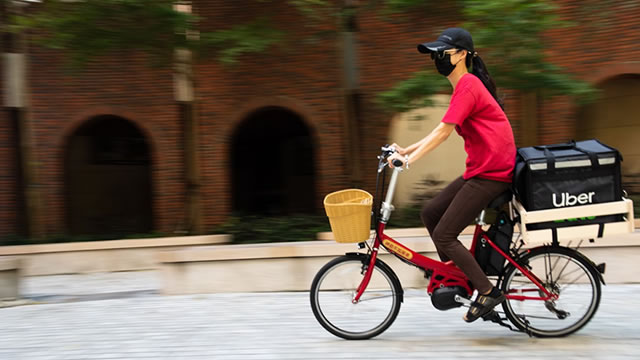
Kroger and Uber expand partnership
Supermarket News· 2025-10-30 17:44
Core Insights - Uber Technologies, Inc. and The Kroger Co. are expanding their partnership to integrate grocery and restaurant meal ordering through a unified platform [1][2] Group 1: Partnership Expansion - Starting in early 2026, Uber Eats users will have access to over 2,600 Kroger-owned grocery stores across the U.S., including major banners like Ralphs, Fred Meyer, and Harris Teeter [2] - Customers will be able to order groceries, household goods, and Kroger's private-label products via the Uber Eats app [2] Group 2: Membership Integration - Kroger Boost members will receive an extended free trial of Uber One, which offers discounts on rides and delivery fees [3] - Uber One members will have the opportunity to try Kroger Boost, which includes benefits such as fuel discounts and waived delivery fees on Kroger's platforms [3] Group 3: Digital Innovation and Customer Experience - The integration will allow users to order both groceries and restaurant meals from the Kroger app, enhancing customer flexibility [4] - Executives from both companies emphasize the goal of providing more choice and value through digital innovation [4] - The partnership will also focus on developing new retail media and advertising tools that leverage customer data for personalized promotions [4]
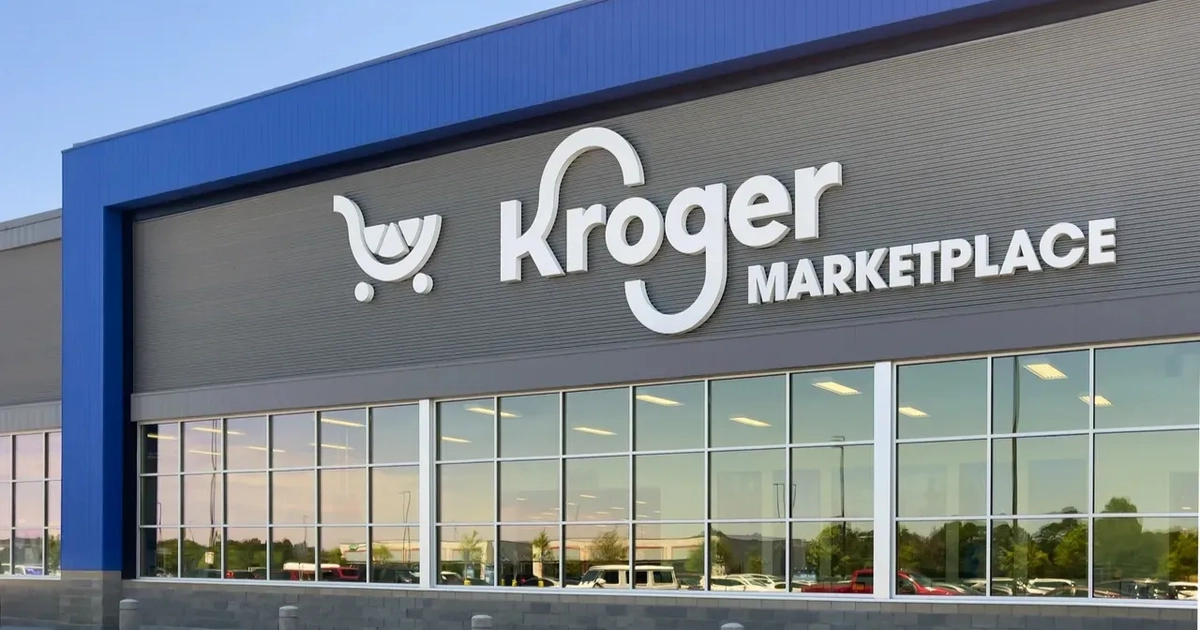
Kroger and Uber Eats Announce Expanded Relationship to Provide More Access, Rewards, and Choice for Customers Nationwide
Prnewswire· 2025-10-30 16:30
Core Insights - Uber Technologies, Inc. and The Kroger Co. have announced an expanded partnership to enhance customer convenience by integrating Kroger's grocery offerings with Uber Eats' delivery platform [1][2][3] Group 1: Partnership Expansion - The collaboration aims to fulfill more customer needs, attracting additional households and shopping occasions [2] - Kroger will be the first retailer to integrate Uber Eats directly into its digital shopping experience, creating a seamless ecosystem for customers [6] Group 2: Customer Experience Enhancement - Customers will have the ability to shop and schedule delivery from over 2,600 Kroger stores through the Uber Eats app starting early 2026, providing access to fresh groceries and household essentials [7] - The integration allows customers to toggle between restaurant delivery and grocery shopping on Kroger's platforms, with loyalty benefits and real-time delivery tracking [5] Group 3: Loyalty Benefits - Kroger Boost Members will receive an extended free trial of Uber One, offering 6% cash back, $0 delivery fees, and discounts on Uber Eats orders [7] - Uber One members will also have access to a free trial of Kroger's Boost membership, which includes benefits like 2X fuel points and $0 delivery fees for Kroger orders [7] Group 4: Strategic Goals - The partnership aims to provide customers with more choice and value while introducing new customers to Kroger, enhancing data for retail media initiatives [4]

20元吃现炒放心餐!《中国食品安全》杂志报道京东七鲜小厨,终结外卖“低质低价”
Zhong Guo Shi Pin Wang· 2025-10-29 06:29
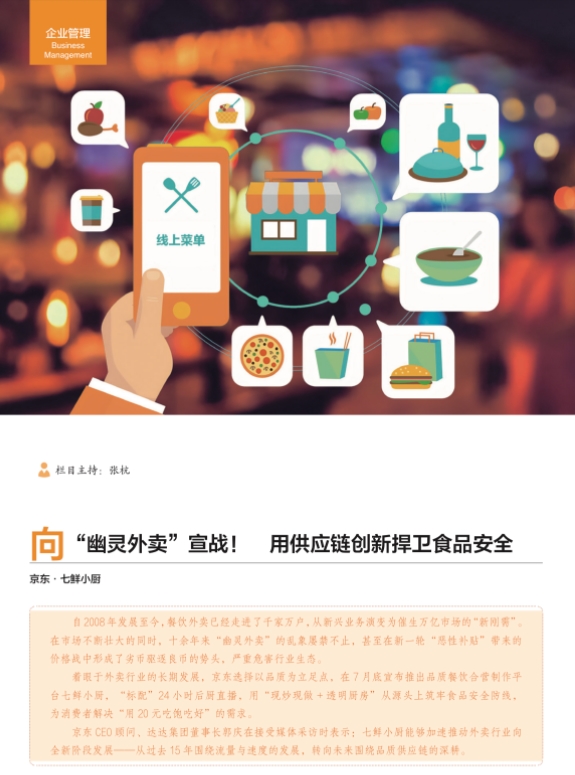
Core Insights - JD.com is adopting a unique approach in the food delivery market by launching the "Qixian Xiaochu" platform, focusing on quality dining and food safety through 24-hour kitchen live streaming and transparent kitchens [1][6][15] - The innovative model of Qixian Xiaochu is expected to reshape the food delivery industry by shifting the focus from speed and traffic to quality supply chains, promoting a healthier and sustainable ecosystem [1][5] Group 1: Performance and Impact - Since its launch during the JD 11.11 event, Qixian Xiaochu has shown outstanding performance in traffic and sales, significantly boosting orders for nearby quality restaurants by over 12% [4][14] - Qixian Xiaochu has attracted a large number of consumers seeking high-quality takeout, creating a flow-through effect that benefits surrounding restaurants [5][14] Group 2: Food Safety and Quality Assurance - The platform emphasizes food safety by using a well-established supply chain, ensuring that all ingredients are carefully selected and undergo strict quality control [9][10] - The introduction of 24-hour kitchen live streaming allows consumers to see the cooking process, enhancing trust and safety perceptions [6][15] Group 3: Business Model and Collaboration - Qixian Xiaochu employs a "dish partner" model, allowing restaurant brands and individual chefs to focus on recipe development while JD.com handles store operations [10][11] - The platform aims to collaborate with small and medium-sized businesses by providing supply chain and marketing support, helping them compete against "ghost kitchens" [11][14] Group 4: Future Developments - Qixian Xiaochu plans to expand its "transparent kitchen" concept through partnerships with hotels, creating new consumption scenarios and enhancing customer experience [14][15] - The initiative is positioned as a leader in transforming the food delivery industry, aiming to restore consumer trust and prioritize food safety [15]

India’s $200 million-an-hour IPO boom shows rise of local investors
The Economic Times· 2025-10-29 03:52
Core Insights - India has emerged as one of the world's hottest IPO venues, with total proceeds approaching last year's record of $21 billion, driven by significant local investor participation [1][28] - The current IPO wave is characterized by a shift towards domestic investors, including mutual funds and retail investors, reducing reliance on foreign funds and fostering a self-sustaining IPO market [2][28] - Despite the euphoria, there are concerns regarding excessive valuations and high over-subscription rates, which could lead to potential corrections affecting retail investors [3][28] Investment Trends - Local investors have invested 979 billion rupees in IPOs since the start of 2024, compared to 790 billion rupees from foreign funds, with domestic investments accounting for nearly 75% of total IPO proceeds for 2025 [6][28] - The participation of domestic institutional investors has increased, with their ownership in over 2,000 companies rising to 19.2%, the highest in 25 years, while foreign portfolio investor holdings have decreased to 17.3% [12][28] - Indian IPOs have generated a weighted average return of 18% this year, outperforming the NSE Nifty 50 Index's 9.7% gain, despite foreign outflows of approximately $16 billion [13][28] Market Dynamics - The IPO market is experiencing a diverse range of issuers, moving beyond tech startups to include companies in sectors like fintech and renewables, reflecting a broader market landscape [19][27] - The rapid growth of retail investing, facilitated by mobile trading apps and social media, has created millions of first-time equity investors, contributing to the robust demand for IPOs [10][11] - The median return for stocks one month after listing has decreased to 2.9% this year, down from 22% last year, indicating a potential fading ability to generate quick returns [23][29] Future Outlook - Analysts expect 2026 to be another strong year for IPOs, with proceeds potentially setting new records, drawing parallels to the early years of China's IPO boom [24][25] - India is home to over 90 private firms valued at over $1 billion, positioning it as the third-largest market for unicorns globally, supported by favorable regulatory changes [26][27] - The increasing breadth of the IPO market is attributed to the emergence of new themes and sectors, enhancing liquidity and investment opportunities [27]

Uber Technologies Inc. (NYSE:UBER) Expands into Autonomous Vehicle Sector
Financial Modeling Prep· 2025-10-28 18:16
Core Insights - Uber Technologies Inc. is a global leader in ride-sharing and food delivery services, making significant advancements in the autonomous vehicle sector, particularly in the robotaxi market through strategic partnerships with Baidu and Lucid [1][5] Market Performance - As of October 28, 2025, Uber's stock is priced at approximately $96.40, reflecting a slight decrease of 0.02% from a previous price of $95.90, with a daily trading range between $95.75 and $97.20 [2] - Uber's market capitalization is approximately $201 billion, with a 52-week high of $101.99 and a low of $59.33, indicating volatility in its stock performance [4][5] Industry Growth Potential - The global robotaxi market is projected to reach $45.7 billion by 2030, with a compound annual growth rate (CAGR) of 91.8% from 2023 to 2030, attracting significant interest from companies like Uber and WeRide [3][5]