智能家居

Search documents
人形机器人重塑公司估值,美的集团股价接连创年内新高
Di Yi Cai Jing· 2025-12-07 06:02
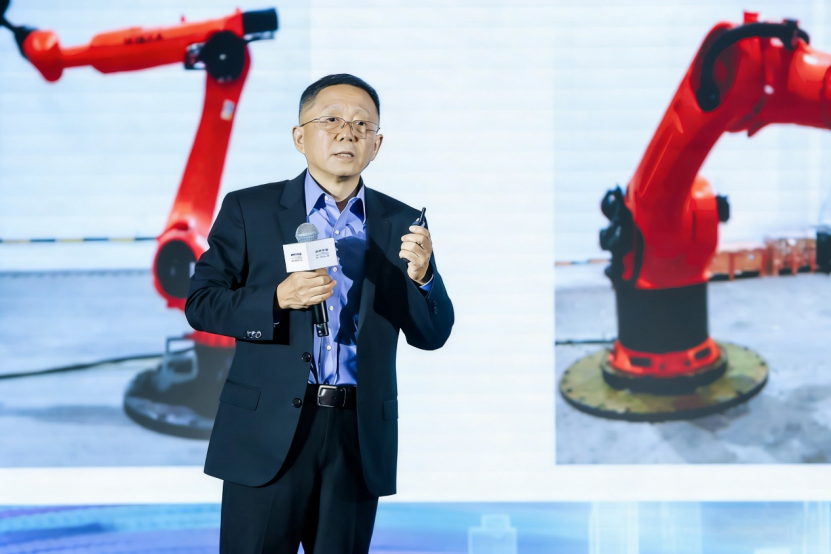
Group 1: Company Developments - Midea Group's Vice President and CTO Wei Chang announced the launch of the humanoid robot "MIRO U," which is the industry's first six-arm wheeled humanoid robot aimed at addressing the practical value of humanoid robot technology [1][3] - Midea's stock price reached a new high of 83.17 yuan per share, with a market capitalization exceeding 630 billion yuan, reflecting the company's growth resilience and potential despite facing demand and cost pressures in the domestic appliance market [1][12] - The company has established a comprehensive R&D capability in the robotics sector, from core component development to complete system integration, following significant milestones such as the acquisition of KUKA Group and the establishment of a national key laboratory for high-end heavy-duty robots [3][4] Group 2: Technological Innovations - The MIRO U robot features a core technology system developed by Midea, enabling stable elevation, 360-degree rotation, and high-precision control with six bionic arms, significantly enhancing operational efficiency in industrial scenarios [3][4] - Midea's humanoid robots are designed to follow a path of "industrial first, commercial follow, family exploration," prioritizing technology value transformation in controllable environments [4][5] - The company aims to solve the "technical landing value" issue in the humanoid robot industry through continuous technological iteration and deep engagement in practical scenarios [5] Group 3: Strategic Partnerships and Market Expansion - Midea has signed a strategic cooperation agreement with BYD Group to deepen the integration of smart home and smart vehicle technologies, expanding the "human-vehicle-home" ecosystem [6][8] - The partnership will focus on collaborative innovation in AI and the standardization of technology interfaces and data protocols, aiming to establish industry standards for smart interconnectivity [8][9] - Midea's overseas market is a significant growth point, with overseas revenue reaching 107.2 billion yuan in the first half of 2025, a 17.7% increase year-on-year, and the company plans to expand its overseas production scale and enhance localized product innovation [11] Group 4: Financial Performance and Investor Relations - Midea has committed to substantial shareholder returns, with a total of approximately 10.975 billion yuan spent on share buybacks this year, representing 1.9383% of the total share capital [12][13] - The company reported a revenue of 363.1 billion yuan and a net profit of 37.883 billion yuan for the first three quarters, reflecting a year-on-year growth of 13.81% and 19.5%, respectively [13] - Midea plans to distribute a dividend of 35 yuan per 10 shares for the 2024 fiscal year and an additional 5 yuan per 10 shares for the mid-2025 fiscal year, which is expected to attract value investors [13]


从一场展会,看美的为何能重新定义“家”的万亿价值?
Ge Long Hui· 2025-12-05 13:37
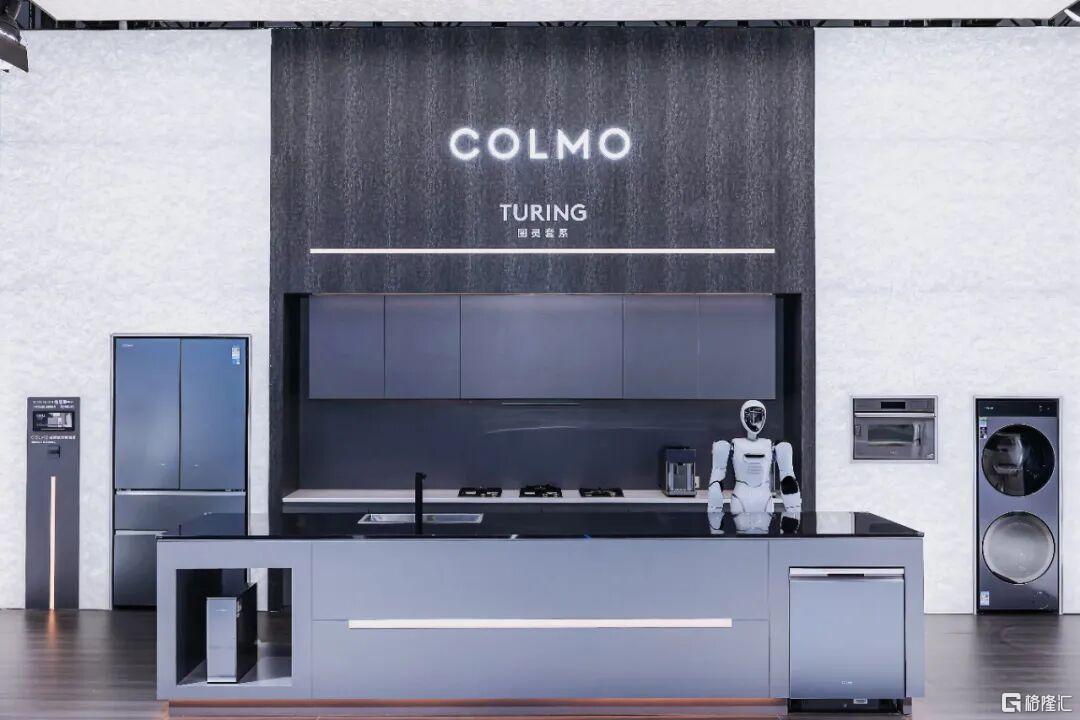
Core Viewpoint - The first Global Intelligent Machinery and Electronic Products Expo (AIE) in Zhuhai showcased Midea's vision for the future of smart home ecosystems, indicating a shift from basic functionality to integrated ecosystems and data fusion in the smart home market [1] Group 1: Midea's Smart Home Strategy - Midea presented two distinct yet complementary smart living "operating systems" at the expo: one targeting high-end users with AI HOME and the other focusing on broader accessibility with Smart for Joy [2][3] - The AI HOME system, centered around the COLMO brand, offers comprehensive smart home solutions, emphasizing user experience through autonomous learning and proactive service [3][5] - The Smart for Joy initiative aims to engage younger consumers by simplifying smart home technology, making it more accessible and user-friendly [6][8] Group 2: Market Positioning and Revenue Potential - Midea's high-end offerings are designed to enhance brand value and profitability by providing expensive, integrated smart home solutions to affluent customers, creating high switching costs and ongoing revenue opportunities [5] - The broader strategy aims to expand Midea's user base and cultivate an ecosystem, leveraging lightweight products to increase smart appliance penetration [8] Group 3: Strategic Partnerships and Data Integration - Midea's collaboration with BYD to create a "people-car-home" smart ecosystem represents a significant strategic advancement, integrating data and control between smart appliances and vehicles [10][12] - This partnership is expected to generate a powerful "data flywheel," enhancing user experience and enabling personalized smart services through continuous data flow [12][13] - The collaboration also opens avenues for innovative service models, such as energy and health management, transitioning Midea from hardware sales to ongoing service and data monetization [12][13] Group 4: Future Outlook - Midea's presentation at AIE signals a profound transformation in its business model, focusing on the potential for service monetization and the unique advantages of cross-scenario data assets [15] - The company's ability to define new living paradigms and convert them into reality will be crucial for its long-term value and market positioning [15]
中国扫地机器人霸榜全球:石头科技登顶,大疆跨界入局
Feng Huang Wang· 2025-12-05 05:40
Core Insights - The global smart vacuum cleaner market is expected to maintain strong growth, with a significant reshaping of the competitive landscape by 2025 [1][2] - All top five global vendors in terms of shipment volume are Chinese brands, indicating China's leading position in supply chain and technology in this sector [1] Group 1: Market Performance - In the first three quarters of 2025, the global smart vacuum cleaner market shipped a total of 17.424 million units, representing a year-on-year growth of 18.7% [1] - The third quarter alone saw shipments of 6.161 million units, with a year-on-year increase of 22.9% [1] - The Middle East, Africa, and Europe are identified as key growth engines driving the industry's expansion [1] Group 2: Company Performance - Roborock ranked first globally with cumulative shipments of 3.788 million units in the first three quarters, focusing on low-profile cleaning solutions [1] - Ecovacs achieved cumulative shipments of 2.453 million units, marking a year-on-year growth of 27.7%, and is accelerating its international expansion [1] - Dreame performed notably in the European market, holding a 26.8% shipment share in Western Europe, although it faced a decline in domestic market share [1] Group 3: Market Trends and Challenges - Xiaomi is performing well in the Asia-Pacific market due to its mid-range value-for-money strategy and ecosystem advantages [2] - The Chinese market saw shipments of 4.63 million units in the first three quarters, with a year-on-year increase of 27.2% [2] - DJI has entered the vacuum cleaner market, quickly becoming the sixth largest player in China, introducing new competition and uncertainty [2] - The industry faces challenges with high inventory pressure, impacting manufacturers' inventory turnover, profit management, and future product strategies [2]


IDC:2025年前三季度全球扫地机器人出货量同比增长18.7%
Zheng Quan Shi Bao Wang· 2025-12-05 04:17
人民财讯12月5日电,IDC《全球智能家居设备市场季度跟踪报告,2025年第三季度》显示,2025年前 三季度,全球智能扫地机器人市场累计出货1742.4万台,同比增长18.7%;其中三季度出货616.1万台, 同比增幅达22.9%。中东非与欧洲市场成为核心增长引擎,引领行业扩张。从厂商份额来看,中国厂商 包揽全球出货量前五。2025年前三季度,中国智能扫地机器人市场延续增长态势,累计出货量达463万 台,同比增幅高达27.2%,行业景气度持续凸显。 ...

以场景培育赋能产业创新(人民时评)
Ren Min Ri Bao· 2025-12-04 22:16
Core Insights - The concept of "scenarios" is increasingly recognized as a critical factor for driving innovation in both emerging industries and traditional sectors, highlighting the need for a dual approach to technology and industry development [1][2][3] Group 1: Importance of Scenarios - Companies in various sectors emphasize the significance of scenarios as both pain points and opportunities, with one company in low-altitude logistics noting that the transformation of industry prospects into financial opportunities is heavily reliant on scenario development [1] - The government has issued a policy aimed at systematically promoting scenario cultivation and openness, indicating a national-level recognition of the role scenarios play in the commercialization of new technologies and products [1][2] Group 2: Current Challenges - There is a noted insufficiency in effective scenario supply, which is hindering the transformation of new industries and models, with some technological achievements failing to realize their industrial value due to a lack of application scenarios [2] - The development of new scenarios is still in exploratory stages, which limits technological innovation and the ability to implement new models effectively [2] Group 3: Innovation and Development - Scenario cultivation is viewed as a form of innovation that requires proactive planning and development, with examples such as unmanned mining and coal extraction showcasing the potential for digital and intelligent transformation in traditional industries [2] - The need for large-scale application and openness is emphasized, as current scenarios are often limited in scope and depth, necessitating broader market access and the removal of barriers to entry [3] Group 4: Mechanisms for Growth - A focus on identifying, cultivating, and opening scenarios is essential for enhancing the innovation mechanism that connects demand, technological breakthroughs, scenario validation, and industrial application, thereby accelerating the development of new productive forces [3]
戴森推出真Ai清洁机器人
Xin Lang Cai Jing· 2025-12-04 04:14
Core Insights - Dyson has launched its True Ai cleaning robot in the Chinese market, marking its global debut [1] Group 1: Product Features - The True Ai cleaning robot boasts a processing power of one trillion operations per second [1] - It utilizes a combination of a processor, HD camera, and LiDAR dual laser technology for intelligent stain recognition and customized cleaning [1] - The robot is capable of multiple detections and confirmations of cleaning effectiveness [1]
华曦达再次递表港交所曾计划在北交所上市
Zheng Quan Shi Bao· 2025-12-03 23:34
Core Viewpoint - The company Huaxida is refocusing its IPO efforts from the Beijing Stock Exchange to the Hong Kong Stock Exchange, aiming to raise funds for market position enhancement, new product development, and global expansion in the smart home sector, particularly leveraging AI technology [1][2]. Group 1: Company Overview - Huaxida specializes in smart home solutions, providing hardware products such as digital video and network communication devices [1]. - The company primarily serves enterprise clients, including global telecom operators, trading companies, and electronics retailers, with a presence in multiple countries and regions [1]. Group 2: Financial Performance - Revenue figures for Huaxida show approximately 2.529 billion yuan in 2022, 2.367 billion yuan in 2023, and an estimated 2.541 billion yuan in 2024, with net profits of 251 million yuan, 191 million yuan, and 137 million yuan respectively [1][2]. - The company experienced a net profit decline of over 23% in 2023 and a further decline of over 28% projected for 2024 [1]. Group 3: Revenue Sources - A significant portion of Huaxida's revenue comes from overseas markets, with revenues of approximately 2.453 billion yuan in 2022, 2.269 billion yuan in 2023, and 2.406 billion yuan in 2024, accounting for 97.0%, 95.8%, and 94.7% of total revenue respectively [2]. Group 4: Profitability and Margins - The company's gross margin has decreased from 21.1% in 2023 to 19.0% in 2024, with a further decline to 17.6% projected for the first half of 2025, primarily due to reduced margins on digital video devices [2]. - The average selling price of digital video devices dropped from 265 yuan per unit in 2022 to 202 yuan per unit in 2024, impacting gross margins significantly [2].
华曦达再次递表港交所 曾计划在北交所上市
Zheng Quan Shi Bao· 2025-12-03 22:27
Core Viewpoint - The company Huaxida is refocusing its IPO efforts from the Beijing Stock Exchange to the Hong Kong Stock Exchange, aiming to enhance its market position and invest in AI technology for smart home solutions. Group 1: Company Overview - Huaxida specializes in smart home solutions, primarily targeting enterprise clients and focusing on the application of AI technology in home environments [1] - The company generates revenue mainly from hardware sales, including digital video and network communication devices [1] - Its smart home solutions create a comprehensive ecosystem for managing and connecting smart devices throughout the home [1] Group 2: Financial Performance - Revenue figures for Huaxida are approximately 2.529 billion yuan in 2022, 2.367 billion yuan in 2023, and projected at 2.541 billion yuan in 2024 [1] - Net profit has declined significantly, with figures of 251 million yuan in 2022, 191 million yuan in 2023, and a projected 137 million yuan in 2024, representing a drop of over 23% in 2023 and over 28% in 2024 [1] - The decline in 2023 is attributed to increased R&D expenses, while the 2024 decline is due to reduced gross margins and rising operational costs [2] Group 3: Market and Revenue Sources - A significant portion of Huaxida's revenue comes from international markets, with overseas income of approximately 2.453 billion yuan in 2022, 2.269 billion yuan in 2023, and 2.406 billion yuan in 2024, accounting for 97.0%, 95.8%, and 94.7% of total revenue respectively [2] - The company's gross margin has decreased from 21.1% in 2023 to 19.0% in 2024, with further decline expected to 17.6% in the first half of 2025 [2] - The average selling price of digital video devices has dropped from 265 yuan per unit in 2022 to 202 yuan per unit in 2024, impacting gross margins [2]
华曦达再次递表港交所
Zheng Quan Shi Bao· 2025-12-03 13:58
Core Viewpoint - Huaxida has shifted its focus to the Hong Kong Stock Exchange for its IPO after withdrawing its application from the Beijing Stock Exchange, aiming to enhance its market position in the smart home sector and expand globally [1][4]. Group 1: Company Overview - Huaxida is a provider of smart home solutions targeting enterprise clients, focusing on the application of AI technology in home environments [2]. - The company's revenue primarily comes from hardware sales, including digital video and network communication devices [2]. - Huaxida's smart home solutions create a comprehensive ecosystem for managing smart devices, with major clients including global telecom operators and electronic product retailers [2]. Group 2: Financial Performance - Revenue figures for Huaxida are projected at approximately 2.529 billion yuan, 2.367 billion yuan, and 2.541 billion yuan for 2022, 2023, and 2024, respectively [2]. - Net profits are expected to decline from 251 million yuan in 2022 to 137 million yuan in 2024, with a drop of over 23% in 2023 and over 28% in 2024 [2]. - The decline in 2023 is attributed to increased R&D costs, while the 2024 decrease is due to lower gross margins and rising operational expenses [2]. Group 3: Market and Sales - Huaxida's revenue is predominantly generated from overseas markets, with international sales accounting for approximately 97.0%, 95.8%, and 94.7% of total revenue in 2022, 2023, and 2024, respectively [3]. - The company's gross margin peaked at 21.1% in 2023 but is projected to decline to 19.0% in 2024 and further to 17.6% in the first half of 2025, primarily due to decreasing margins on digital video devices [3]. - The average selling price of digital video devices decreased from 265 yuan per unit in 2022 to 202 yuan per unit in 2024, impacting gross margins [3]. Group 4: IPO and Regulatory Challenges - Huaxida initially listed on the New Third Board in May 2014 and later withdrew its application for listing on the Beijing Stock Exchange in January 2024 [4]. - The company faced inquiries from the Beijing Stock Exchange regarding the sustainability of its revenue growth and the authenticity of its sales figures [4]. - After transitioning to the Hong Kong Stock Exchange, Huaxida is required to provide additional information on its business model and other operational aspects [4]. Group 5: Industry Positioning - Huaxida is positioned as a comprehensive solution provider for smart home hardware and software, with comparable companies including Skyworth Digital, Amlogic, and Jiulian Technology [5]. - The company aims to leverage innovative technologies to enhance its product offerings and capabilities in the smart home sector [5].
华曦达再次递表港交所
证券时报· 2025-12-03 13:52
Core Viewpoint - The company Huaxida is refocusing its IPO efforts from the Beijing Stock Exchange to the Hong Kong Stock Exchange, aiming to enhance its market position in the smart home sector and leverage AI technology for product development and global expansion [1][3]. Group 1: Company Overview - Huaxida specializes in smart home solutions for enterprise clients, focusing on the application of AI technology in home environments. Its revenue primarily comes from hardware sales, including digital video and network communication devices [3][4]. - The company's smart home solutions create a comprehensive ecosystem for managing smart devices, with major clients including global telecom operators, trading companies, and electronics retailers [3]. Group 2: Financial Performance - The financial data indicates that Huaxida's revenue for 2022, 2023, and 2024 is approximately 2.529 billion, 2.367 billion, and 2.541 billion yuan, respectively. Net profits for the same years are 251 million, 191 million, and 137 million yuan, showing a decline of over 23% in 2023 and over 28% in 2024 [3][4]. - The decline in 2023 is attributed to increased R&D costs, while the drop in 2024 is due to reduced gross margins and rising sales, marketing, and administrative expenses [3]. Group 3: Market Focus and Revenue Sources - Huaxida's business revenue is predominantly from overseas markets, with sales in Europe, America, and Asia. Revenue from international markets for 2022, 2023, and 2024 is approximately 2.453 billion, 2.269 billion, and 2.406 billion yuan, accounting for 97.0%, 95.8%, and 94.7% of total revenue, respectively [4]. - The company's gross margin peaked at 21.1% in 2023 but is projected to decline to 19.0% in 2024 and further to 17.6% in the first half of 2025, primarily due to decreasing margins on digital video devices and fluctuations in raw material prices [4]. Group 4: IPO Journey - Huaxida was listed on the New Third Board in May 2014 and later withdrew its application for listing on the Beijing Stock Exchange in January 2024, redirecting its focus to the Hong Kong Stock Exchange [5][6]. - The company faced scrutiny from the Beijing Stock Exchange regarding the sustainability of its revenue growth and the authenticity of its sales figures, which contributed to its decision to withdraw the listing application [6].