信息技术服务

Search documents
成都鑫锐恒驰贸易有限公司成立 注册资本100万人民币
Sou Hu Cai Jing· 2025-12-11 08:17
Core Viewpoint - Chengdu Xinrui Hengchi Trading Co., Ltd. has been established with a registered capital of 1 million RMB, focusing on various automotive-related services and products [1] Company Summary - The legal representative of Chengdu Xinrui Hengchi Trading Co., Ltd. is Wang Longyun [1] - The company’s registered capital is 1 million RMB [1] - The business scope includes retail and wholesale of automotive parts, sales of automotive decorative products, battery sales, and sales of new energy vehicle accessories [1] - The company is also involved in the research and development of automotive parts and manufacturing of automotive components and accessories [1] Industry Summary - The company operates in the automotive industry, specifically in sectors related to new energy vehicles and automotive parts [1] - It provides a wide range of services including technical services, software development, and information system integration [1] - The company is authorized to conduct internet information services and value-added telecommunications services, subject to regulatory approval [1]
广州褚酒臻品酒行有限公司成立 注册资本50万人民币
Sou Hu Cai Jing· 2025-12-11 07:36
天眼查App显示,近日,广州褚酒臻品酒行有限公司成立,注册资本50万人民币,经营范围为互联网销 售(除销售需要许可的商品);保健食品(预包装)销售;食品销售(仅销售预包装食品);食品互联网销 售(仅销售预包装食品);日用百货销售;农副产品销售;食用农产品零售;食用农产品批发;信息咨询服务 (不含许可类信息咨询服务);信息技术咨询服务;软件开发;信息系统集成服务;社会经济咨询服务;技术 服务、技术开发、技术咨询、技术交流、技术转让、技术推广;食品互联网销售;食品销售;酒类经营。 ...
揭阳市榕城区豪联五金厂(个体工商户)成立 注册资本1万人民币
Sou Hu Cai Jing· 2025-12-11 06:46
Core Viewpoint - A new individual business named "Hao Lian Hardware Factory" has been established in the Rongcheng District of Jieyang City, with a registered capital of 10,000 RMB, focusing on a wide range of retail and wholesale activities in various sectors [1] Group 1: Business Overview - The registered capital of the new business is 10,000 RMB [1] - The business scope includes manufacturing, wholesale, and retail of hardware products [1] - Additional activities include sales of pre-packaged food, clothing, electronics, and various consumer goods [1] Group 2: Product Categories - The business will engage in the sale of daily necessities, home appliances, kitchenware, and personal care products [1] - It also includes sales of toys, outdoor products, and sports equipment [1] - The company will offer a variety of services such as internet sales, information technology consulting, and personal internet live streaming [1]
新余市乔恒工贸有限公司成立 注册资本10万人民币
Sou Hu Cai Jing· 2025-12-11 02:18
Core Insights - A new company, Xinyu Qiaoheng Industrial and Trade Co., Ltd., has been established with a registered capital of 100,000 RMB [1] - The legal representative of the company is Luo Chungen [1] Business Scope - The company is authorized to engage in internet information services, subject to approval from relevant authorities [1] - General business activities include domestic trade agency, sales of forestry products, metal ores, non-metallic minerals and products, metal materials, construction materials, rubber products, coal and its products, and petroleum products manufacturing (excluding hazardous chemicals) [1] - Additional activities encompass retail of hardware products, domestic cargo transportation agency, non-residential real estate leasing, sales of building decoration materials, wholesale of hardware products, and sales of electrical wires and cables [1] - The company also offers services in supply chain management, information consulting (excluding licensed information consulting services), information technology consulting, and various technical services including development, consulting, exchange, transfer, and promotion [1]
唐山晁宏再生资源有限公司成立 注册资本5万人民币
Sou Hu Cai Jing· 2025-12-10 21:11
Core Viewpoint - Tangshan Chaohong Recycling Resources Co., Ltd. has been established with a registered capital of 50,000 RMB, focusing on various recycling and resource management services [1] Group 1: Company Overview - The legal representative of Tangshan Chaohong Recycling Resources Co., Ltd. is Liu Xueyan [1] - The company is engaged in the processing and handling of metal and non-metal waste materials [1] - The business scope includes recycling of resources (excluding production waste metals) and sales of recycled resources [1] Group 2: Business Activities - The company offers supply chain management services and domestic trade agency services [1] - It provides ordinary goods warehousing services, excluding hazardous chemicals [1] - Additional services include loading and unloading, enterprise management consulting, tax services, and technology-related services [1] Group 3: Technical and Sales Services - The company is involved in the wholesale and retail of computer hardware and software, as well as electronic products [1] - It offers information technology consulting, data processing, and storage support services [1] - The business also includes sales of network and communication equipment, as well as mobile terminal devices [1] Group 4: Additional Services - The company provides residential daily life services and property management [1] - It engages in leasing services, excluding licensed leasing services [1] - The company is authorized to conduct road cargo transportation (excluding hazardous goods) upon approval [1]
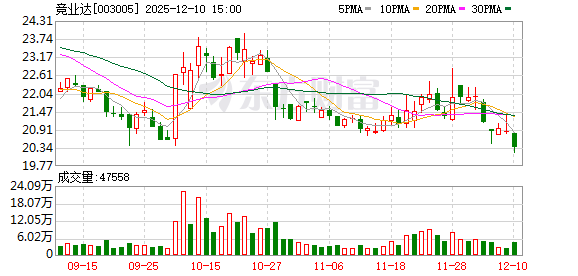
竞业达:2025年1-9月公司实现营业收入1.9亿元,教育收入占比79%
Zheng Quan Ri Bao Wang· 2025-12-10 13:11
Core Viewpoint - The company reported a revenue of 190 million yuan for the first three quarters of 2025, with education revenue accounting for 79% of total revenue, indicating a significant reliance on this segment [1] Group 1: Revenue and Financial Performance - The company's revenue fluctuation is primarily influenced by seasonal factors, with a notable decrease in revenue from rail transit projects, which dropped by 93.1 million yuan year-on-year, contributing to the overall decline in revenue [1] - Despite the short-term profit pressure due to project acceptance seasonality and strategic investments, the company maintains a robust order reserve in core businesses such as smart education and smart rail [1] Group 2: Strategic Investments and Growth Initiatives - The company is committed to investing and positioning itself in key areas such as industry large models, AIGC applications, and intelligent agents, with R&D expenditure increasing by 7.82% year-on-year [1] - The company is accelerating the construction of its marketing system and expanding its national sales network, resulting in an increase of approximately 250 employees compared to the end of 2024, which led to a rise in three major expenses by 14.97 million yuan year-on-year [1] Group 3: Long-term Development Outlook - The company is building momentum for the next phase of recovery and development through its marketing system expansion and talent investment, continuously strengthening its long-term development foundation [1]
神州控股拟减持神州信息2.95%股份
Guo Ji Jin Rong Bao· 2025-12-10 12:38
Core Viewpoint - Shenzhou Holdings plans to sell up to 28.8273 million shares of its subsidiary Shenzhou Information, representing approximately 2.9543% of its total share capital, to support its business development and general working capital, while maintaining its subsidiary status post-transaction [1][2] Group 1: Company Strategy and Operations - The company aims to become a leader in AI solutions centered around supply chains, showcasing its strategic ambition in the "AI + Supply Chain" sector [2] - Shenzhou Holdings operates through three business segments: traditional services including system integration and e-commerce supply chain services, software and operations services, and big data products and solutions [2] - The company is advancing its "Data × AI" strategy, focusing on high-quality industry data and leveraging its "Yanyun Infinity" platform to enhance its capabilities and create a closed-loop ecosystem [2] Group 2: Financial and Market Position - As of the announcement, Shenzhou Holdings holds 39.9211% of Shenzhou Information, indicating a significant stake in its subsidiary [1] - The proceeds from the share sale will be utilized for business development and to bolster working capital, reflecting the company's focus on enhancing its operational capacity [1]

华升股份:拟6.62亿元购买AIDC公司易信科技97.40%股份
Di Yi Cai Jing· 2025-12-10 12:30
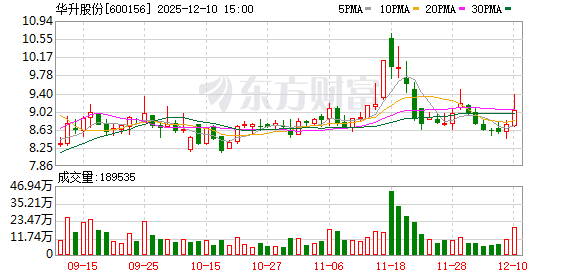
(文章来源:第一财经) 华升股份公告,公司拟通过发行股份及支付现金方式购买深圳易信科技股份有限公司97.40%股份,并 向控股股东兴湘集团发行股份募集配套资金。交易价格66234.17万元。本次交易不会导致公司实际控制 人发生变更。标的公司则深耕AIDC领域,专注于绿色算力基础设施的全生命周期服务,主营业务涵盖 服务器托管服务、智算中心热管理系统设计、智算中心热管理设备研发设计、带宽资源服务、IP地址服 务、算力服务等。 ...


海光信息、中科曙光仍将继续加强战略协同
Xin Jing Bao· 2025-12-10 12:08
Core Viewpoint - Haiguang Information and Zhongke Shuguang have announced the termination of their major asset restructuring due to significant changes in their stock prices since mid-August, influenced by various market factors [1] Group 1: Market Conditions - The stock prices of both parties have experienced considerable fluctuations and an overall increase since mid-August, driven by changes in domestic and international environments, the overall trend of the A-share market, the heat of the AI industry, and market expectations [1] Group 2: Strategic Collaboration - Both companies will enhance strategic collaboration while maintaining their independence, focusing on their core competencies [1] - Haiguang Information will concentrate on CPU and DCU chips, while Zhongke Shuguang will work on cutting-edge technologies such as super-node computing power, scientific large model development platforms, and cluster systems [1]


竞业达:海南竞业达瑞丰科技咨询中心(有限合伙)是公司在首次公开发行(IPO)前设立的员工持股平台
Zheng Quan Ri Bao· 2025-12-10 11:38
Group 1 - The core point of the article is that Jingyeda responded to investor inquiries regarding the establishment of Hainan Jingyeda Ruifeng Technology Consulting Center (Limited Partnership) as an employee stock ownership platform prior to its IPO in 2017 [2] Group 2 - The company was established in 2017, indicating a strategic move to align employee interests with company performance before going public [2] - The employee stock ownership platform is part of the company's broader strategy to incentivize and retain talent [2] - The interaction with investors highlights the company's commitment to transparency and communication regarding its corporate structure and employee engagement initiatives [2]