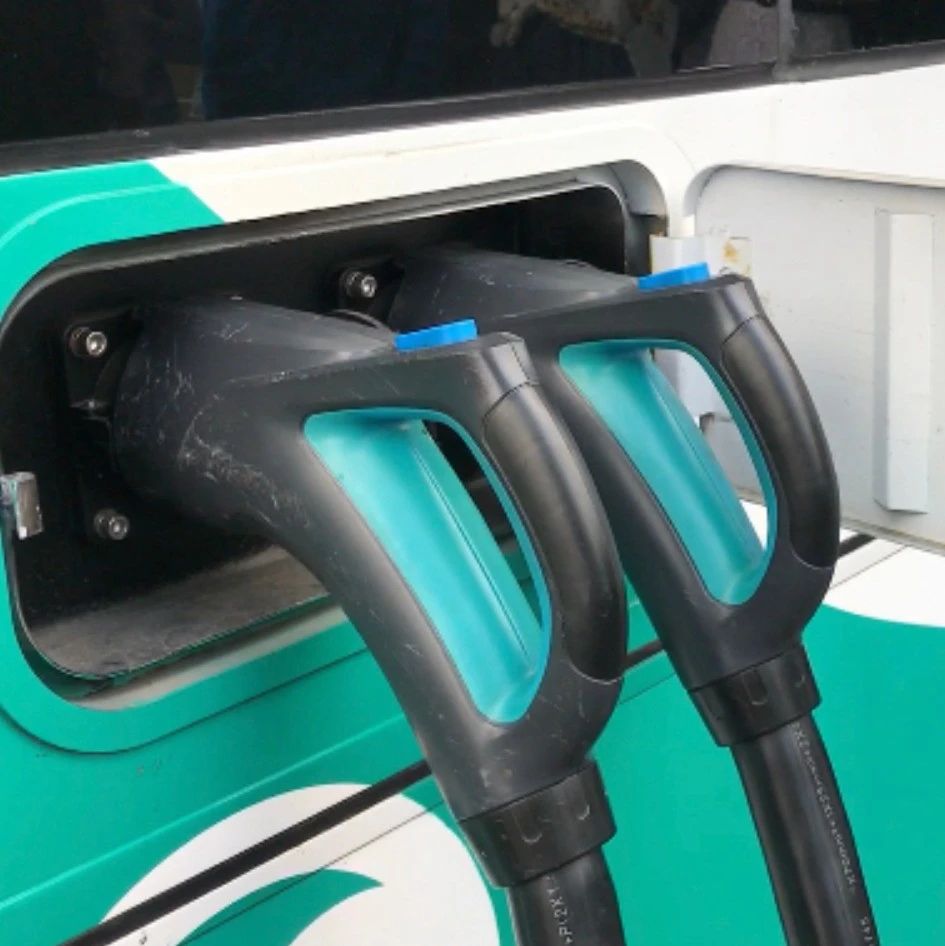
电动汽车充电

Search documents
先开辟产品再开辟市场 以科技创新引领能源革命
Zhong Guo Zheng Quan Bao· 2025-07-31 21:02
Core Insights - The article highlights the entrepreneurial journey of Yu Dexiang, the chairman of Teruid, who has led the company to become a leader in the power equipment industry through innovation and a focus on creating market needs rather than merely responding to them [1][3] Company Development - In 2004, Yu Dexiang founded Teruid after leaving a 13-year career at the State Grid Corporation, focusing on the box-type substation sector [1][2] - Teruid gained recognition by successfully completing the Qinghai-Tibet Railway project, producing 105 high-reliability box-type substations in under three months, which established the company as a key player in the railway construction boom [2][3] - The company went public in 2009, becoming the first listed company on the Growth Enterprise Market with stock code 300001 [2] Innovation and Product Development - Teruid has developed several industry-first products, including the first 10kV high-speed railway remote control box transformer and the first 220kV prefabricated offshore booster substation, filling gaps in the domestic market and advancing the power equipment industry [3][4] - The company achieved a revenue of 10.485 billion yuan in 2024, a year-on-year increase of 22.47%, with a net profit of 709 million yuan, up 91.42% [4] Expansion into Electric Vehicle Charging - In 2014, Teruid launched a second venture, Teruide, focusing on building a charging network for electric vehicles, which Yu Dexiang believes is essential for the future of electric mobility [4][5] - Teruide has developed a comprehensive charging network technology system, integrating charging networks, microgrids, and energy storage to support large-scale electric vehicle development [4][6] - By 2024, Teruide achieved profitability with a net profit of 290 million yuan, and it operates over 709,000 public charging terminals, capturing a 24% market share [7] International Expansion - Teruid has successfully expanded its operations to 56 countries, with a significant increase in overseas contracts, achieving 800 million yuan in overseas business in 2024, a 131.87% year-on-year growth [8] - The company completed a major project in Saudi Arabia, delivering 15 sets of 132kV mobile substations in under six months, showcasing its competitive edge in international markets [8]

我国电动汽车充电基础设施总数1610万个
Shen Zhen Shang Bao· 2025-07-31 19:05
Core Insights - The article discusses the recent trends in the financial market, highlighting the impact of economic policies on investment opportunities and risks [2] Group 1: Economic Trends - The financial market has shown a significant response to recent economic policies, with a notable increase in investment activity [2] - Analysts predict a potential growth rate of 5% in the upcoming quarter, driven by consumer spending and business investments [2] Group 2: Company Performance - Several companies have reported better-than-expected earnings, with an average increase of 15% in quarterly profits compared to the previous year [2] - The technology sector has outperformed others, with a 20% rise in stock prices over the last six months [2] Group 3: Investment Opportunities - Emerging markets are becoming increasingly attractive, with a projected growth of 7% in GDP, presenting new investment opportunities [2] - Sustainable investments are gaining traction, with a 30% increase in funds allocated to green technologies [2]

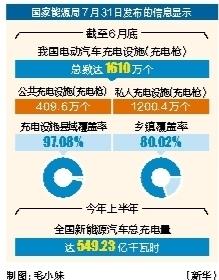
1610万个、549.23亿千瓦时……势头良好!多维“数”读经济绿色“新”发展
Yang Shi Wang· 2025-07-31 10:09
Core Insights - The total number of electric vehicle charging facilities in China reached 16.1 million by the end of June 2025, with public charging facilities at 4.096 million and private charging facilities at 12.004 million [4] - The coverage rate of charging facilities in counties is 97.08%, while the coverage rate in townships is 80.02% [4] - The total charging volume for new energy vehicles in the first half of 2025 was 54.923 billion kilowatt-hours, with the annual charging volume expected to be comparable to the annual output of the Three Gorges Dam [6] - Investment in key energy projects under construction and planned for the year exceeded 1.5 trillion yuan, marking a year-on-year increase of 21.6% [9] - Investment in new energy generation continues to grow rapidly, with significant increases in onshore wind power investments in Guangxi and Xinjiang, and offshore wind power investments in Guangdong, Fujian, and Shanghai [12] - Concentrated photovoltaic investments grew by 24.5% year-on-year, while distributed photovoltaic investments increased by over 70% [12]
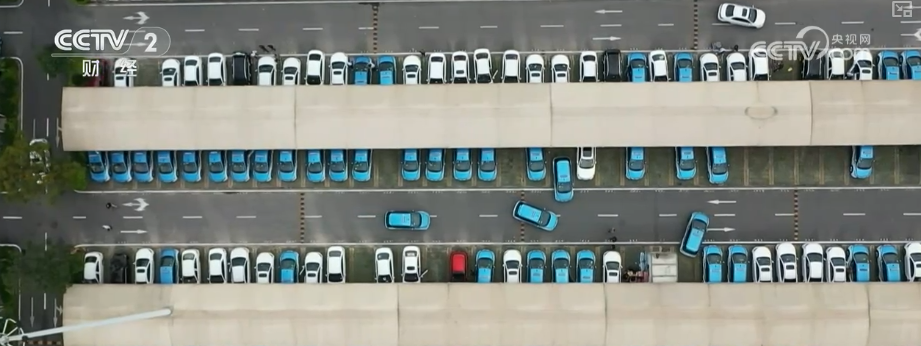
国家能源局答人民网记者问:我国电动汽车充电设施县域覆盖率达97.08%
Ren Min Wang· 2025-07-31 06:40
Core Insights - The total number of electric vehicle charging facilities (charging guns) in China has reached 16.1 million, with a county coverage rate of 97.08% and a town coverage rate of 80.02% [1][2] - In the first half of the year, the total charging volume for new energy vehicles reached 54.923 billion kilowatt-hours, which is expected to be equivalent to the annual power generation of the Three Gorges Dam [2] Group 1: Development of Charging Infrastructure - The National Energy Administration (NEA) has introduced a notification to promote the scientific planning and construction of high-power charging facilities, aiming to optimize the layout of charging networks [1] - The NEA has established a new statistical system for charging facilities data, which will be updated monthly and made available to the public [1] Group 2: Future Plans and Improvements - The NEA plans to enhance work coordination and policy planning to continuously improve the charging network and service quality [2] - The goal is to accelerate the construction of high-quality charging infrastructure to better meet the needs of consumers purchasing and using new energy vehicles [2]

中国充电联盟:截至6月底全国充电基础设施达1610万个
Zheng Quan Shi Bao Wang· 2025-07-31 05:36
Group 1 - The core viewpoint of the article highlights the significant growth in China's electric vehicle charging infrastructure, projecting a total of 16.1 million charging points by June 2025, representing a year-on-year increase of 55.6% [1] - Among the total, public charging facilities are expected to reach 4.096 million, showing a year-on-year growth of 36.7% [1] - Private charging facilities are projected to total 12.004 million, with a remarkable year-on-year increase of 63.3% [1]
国家能源局:截至6月底,我国电动汽车充电设施(充电枪)总数已达到1610万个
Mei Ri Jing Ji Xin Wen· 2025-07-31 03:22
Core Insights - The total number of electric vehicle charging facilities in China is projected to reach 16.1 million by June 2025, with 4.096 million public charging facilities and 12.004 million private charging facilities [1] - The coverage rate of charging facilities in counties is 97.08%, while the coverage rate in townships is 80.02% [1] - In the first half of this year, the total charging volume for new energy vehicles reached 54.923 billion kilowatt-hours, with the annual charging volume expected to be comparable to the annual power generation of the Three Gorges Dam [1]
智能充电上涨4.21%,报1.32美元/股,总市值7847.60万美元
Jin Rong Jie· 2025-07-30 15:31
Core Viewpoint - Smart Charging (XCH) has shown a stock price increase of 4.21% on July 30, reaching $1.32 per share, with a total market capitalization of $78.476 million [1] Financial Performance - As of December 31, 2024, Smart Charging's total revenue is projected to be $42.2037 million, reflecting a year-on-year growth of 9.59% [1] - The company's net profit attributable to shareholders is expected to be -$11.9405 million, representing a year-on-year decrease of 47.71% [1] Company Overview - Smart Charging Co., Ltd. provides comprehensive electric vehicle charging solutions, primarily including the C6 and C7 series of DC fast chargers [1] - The company claims to offer advanced battery-integrated DC fast chargers as part of its Net Zero Series ("NZS") along with supporting services [1] - The integration of proprietary charging technology, energy storage technology, and supporting services significantly enhances electric vehicle charging efficiency and unlocks the value of energy storage and management [1]
北京发布96项地方标准 首次制定69项
Zhong Guo Chan Ye Jing Ji Xin Xi Wang· 2025-07-10 00:22
Group 1 - The Beijing Municipal Government has released 96 local standards, including 69 new and 27 revised standards, aimed at improving various sectors [1] - The "Health Examination Quality Control Specification" is the first health examination standard collaboratively developed by Beijing, Tianjin, and Hebei, focusing on quality control in health examination services [1] - The standard emphasizes comprehensive quality control throughout the health examination process, including pre-examination, during examination, and post-examination phases, enhancing service quality and safety in the region [1] Group 2 - The "Electric Vehicle Charging Infrastructure Planning and Design Standard" mandates that 100% of new residential projects must include charging infrastructure, optimizing the planning and design of charging facilities [2] - This standard aims to improve the efficiency of parking resources and charging facilities by aligning charging characteristics with travel patterns in different public building contexts [2] - The "Food Safety Management Specification for Large Events" clarifies the responsibilities of organizing units, food suppliers, and inspection agencies, providing a scientific and standardized approach to food safety management for large events in Beijing [2] Group 3 - The "Administrative Mediation Service Specification for Consumer Disputes" is the first local standard in China addressing administrative mediation for consumer disputes, detailing service requirements and processes [3] - This standard aims to enhance the efficiency of mediation services and improve the enforcement level of market regulation, contributing to a better consumer environment in Beijing [3] - The "Technical Requirements for Indoor Emergency Shelters in Primary and Secondary Schools" outlines the conversion of schools into emergency shelters without disrupting educational functions, promoting standardized emergency management practices [3]
北京:新建商品房直接建设充电车位,配建指标为40%
Xin Jing Bao· 2025-07-08 06:18
Group 1 - Beijing has released 96 local standards, including 69 new and 27 revised standards [1] - The revised "Planning and Design Standards for Electric Vehicle Charging Infrastructure" specifies the allocation of charging parking spaces for different types of buildings [1] - The standards require new projects to determine the scale and layout of electric vehicle parking spaces and charging infrastructure in their planning design [1] Group 2 - Residential projects are provided with a "choose one" construction plan for charging infrastructure, ensuring that parking spaces meet safety requirements [2] - For residential projects with direct construction plans, the charging space allocation is set at 40% for commercial housing and varies for different types of affordable housing, with 30% for sales-type and 18% for other types [2] - Regardless of the chosen construction plan, all residential projects must reserve 100% of the required conditions [2] Group 3 - The design standards optimize the allocation requirements for public buildings such as offices, schools, and hospitals based on travel characteristics [3] - For administrative offices, schools, and hospitals, if charging spaces are directly constructed, 25% of the parking spaces must be allocated for charging [3] - For commercial and cultural facilities, the requirement is set at 20% for directly constructed charging spaces [3] Group 4 - Charging spaces should not be located below the fourth underground floor of buildings [4] - The standards emphasize the planning and safety requirements for fast and supercharging facilities, recommending the construction of supercharging stations where applicable [4] - New highway service areas must include charging facilities that reasonably combine supercharging and fast charging equipment, with at least two supercharging terminals [4]
总台中国之声丨四部门联合印发文件 促进大功率充电设施建设
国家能源局· 2025-07-08 03:08
Core Viewpoint - The recent issuance of the notice by the National Development and Reform Commission and the National Energy Administration signals an acceleration towards the era of high-power charging infrastructure in China, aiming to establish over 100,000 high-power charging facilities by the end of 2027 [1][3]. Group 1: Policy and Infrastructure Development - The notice emphasizes the construction of a well-structured, upgraded, and technologically advanced high-power charging infrastructure system, with plans to create demonstration cities and highways for high-power charging applications [3]. - High-power charging facilities are defined as those with a single-gun output power exceeding 250 kW, marking the first time such specifications have been established at the national level [2]. - The notice outlines specific support measures for the promotion of high-power charging facilities, including enhanced land, power supply, financial, and policy support [2]. Group 2: Impact on Industry and Users - The development of high-power charging networks is expected to drive industrial upgrades, promote intelligent and high-end supply chains, and enhance corporate profitability through increased infrastructure investment [3]. - High-power charging facilities can provide charging capabilities that allow for a range of over 200 kilometers with just 10 minutes of charging, significantly improving the user experience and alleviating "range anxiety" for electric vehicle users [3]. - The introduction of advanced charging technologies, such as liquid-cooled ultra-fast charging stations, is anticipated to further enhance the competitiveness of China's electric vehicle industry [3][4]. Group 3: Service Quality and Future Trends - The Four Seasons Flower Sea ultra-fast charging station in Anhui serves as a model for future charging station construction, integrating various services such as viewing platforms and retail options alongside charging facilities [4]. - The charging industry is moving towards service quality enhancement through the introduction of high-power equipment and value-added services, with a potential for tiered charging service fees based on service quality differences [4]. - Local initiatives are underway to implement a star-rating system for charging facilities, similar to hotel ratings, which may be promoted nationwide [4].