第三方支付

Search documents
稳定币如何落地支付领域?
2025-06-09 01:42
Summary of the Conference Call Records Company Overview - **Company Name**: Lianlian Digital - **Industry**: Cross-border payment solutions - **Market Position**: Leading independent digital payment solution provider in China with a market share of approximately 10% [6][1] Key Points and Arguments Business Model and Services - Lianlian Digital focuses on providing cross-border payment services and related value-added services to merchants on cross-border e-commerce platforms [2][1] - The company aims to enhance global trade activities by improving the efficiency of capital and information flow [2][1] - It offers a comprehensive suite of services including payment collection, reconciliation, and trade declaration, alongside marketing and logistics support [2][1] Financial Performance - In 2024, the company's total TPV (Total Payment Volume) grew by over 60%, with revenue increasing by 27.9% [3][1] - Digital payment service revenue accounted for 61.4% of total revenue, while value-added services contributed 11.1% [3][1] - Overall gross margin stood at 51.9%, with global payment gross margin exceeding 70% [3][1] Market Dynamics - The growth of cross-border e-commerce is a significant driver for the company, with an expected import and export growth rate of approximately 10.8% in China for 2024 [7][1] - The demand for comprehensive one-stop solutions is increasing as traditional small and micro enterprises seek to digitize their supply chains [7][1] Strategic Initiatives - The company plans to expand its global licensing footprint and activate the use of licenses in various countries [11][1] - Lianlian Digital is exploring the Web3 space and aims to issue a stablecoin to enhance trade settlement efficiency and reduce costs [1][5] Regulatory and Compliance Framework - Lianlian Digital holds 65 global payment licenses and has established a compliance, risk control, and anti-money laundering system [1][2] - The company is actively working to integrate Web3 capabilities into its existing payment systems [5][1] Competitive Landscape - The payment industry is categorized into three main players: card organizations, consumer-focused companies, and merchant-focused companies [6][1] - Lianlian Digital positions itself in the ToB (business-to-business) sector, providing third-party payment solutions [6][1] Future Outlook - The company anticipates that 2025 will be a pivotal year for profitability, with strategic adjustments expected to yield significant returns [15][1][24][1] - The introduction of stablecoin payments is expected to enhance transaction efficiency, particularly for non-mainstream currencies [17][1][26][1] Additional Important Insights - The company has a history of two major business transformations, evolving from mobile top-up services to domestic and then cross-border payment services [4][1] - The partnership with American Express and the sale of shares in a joint venture are part of a strategic realignment to focus on global licensing and Web3 initiatives [15][1][24][1] - The company is not planning to expand into the consumer market (C-end) and will continue to focus on serving merchants and small to medium enterprises [23][1] Conclusion Lianlian Digital is positioned as a key player in the cross-border payment industry, leveraging its extensive licensing, compliance framework, and strategic initiatives to capitalize on the growing demand for digital payment solutions in the e-commerce sector. The company's focus on innovation, particularly in the Web3 space and stablecoin issuance, is expected to drive future growth and profitability.
富友支付10年6战IPO夹缝求生 净利缩水清仓式分红3.65亿罚单缠身
Chang Jiang Shang Bao· 2025-06-08 23:09
Core Viewpoint - Shanghai Fuyou Payment Service Co., Ltd. (Fuyou Payment) has submitted its IPO application to the Hong Kong Stock Exchange for the third time, reflecting its long-standing ambition to go public despite facing significant challenges and declining financial performance [1][2][6]. Company Overview - Fuyou Payment was established in 2011 and obtained a payment business license in the same year, engaging in various payment services including card acquiring and internet payment [3]. - The company has attempted to go public multiple times, with its first A-share IPO plan initiated in 2015, but it has faced repeated failures, including three terminated advisory agreements with different securities firms [3][4][5][6]. Financial Performance - Fuyou Payment's net profit attributable to shareholders has decreased from 149 million yuan in 2021 to 84 million yuan in 2024, a decline of 43.43% [1][8]. - The company's revenue has shown some growth, with figures of 11.02 billion yuan in 2021, 11.42 billion yuan in 2022, 15.06 billion yuan in 2023, and 16.34 billion yuan in 2024, reflecting a growth rate of 3.63%, 31.87%, and 8.50% respectively [8]. - The company has a high dependency on its digital payment services, which accounted for over 92% of its revenue from 2022 to 2024, with a notable decline in gross margins [9]. Market Position - The third-party payment industry in China is dominated by major players like Alipay, WeChat, and China UnionPay, which collectively hold approximately 75.6% of the market share in the digital payment service sector [10]. - Fuyou Payment's market share is only 0.8%, achieved through aggressive pricing strategies that have impacted its profitability [10]. Dividend Policy - Fuyou Payment has been criticized for its substantial cash dividends, totaling 365 million yuan from 2021 to 2025, which represents about 91% of its net profit during the same period [12][13]. - The company's dividend strategy has raised concerns about its intentions to raise capital through an IPO while simultaneously distributing large amounts of cash to shareholders [11][14]. Regulatory and Compliance Issues - Fuyou Payment has faced multiple regulatory penalties, totaling nearly 7 million yuan from 2021 to 2024, for various compliance violations, including unauthorized foreign exchange operations and failure to meet customer identification requirements [16][17]. - The company has also been involved in legal disputes related to its past partnerships with P2P platforms, indicating potential ongoing risks [17].
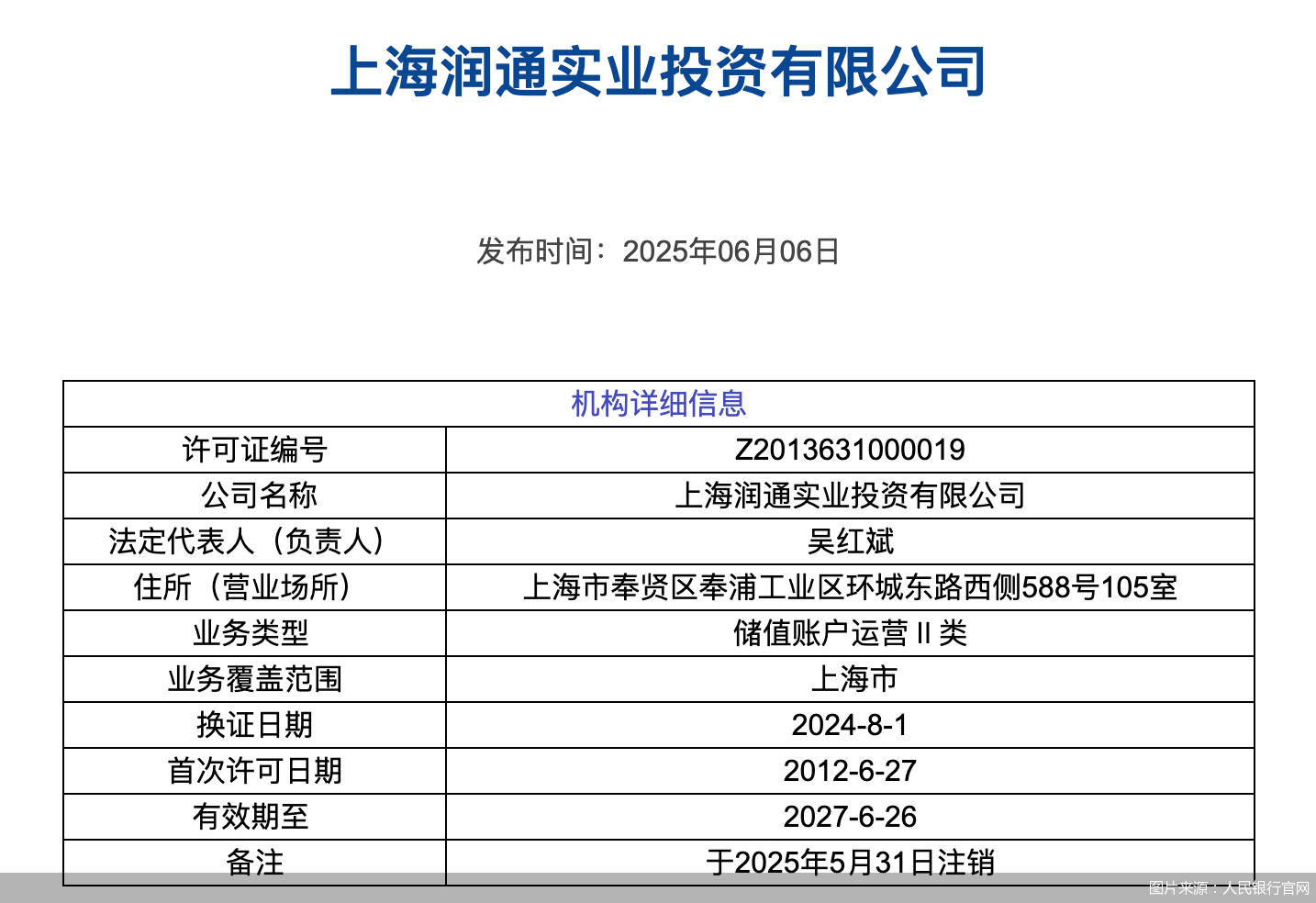
润通实业支付牌照被注销,预付卡仍是“摘牌”重点类型
Bei Jing Shang Bao· 2025-06-08 11:56
Core Viewpoint - The payment license of Shanghai Runtong Industrial Investment Co., Ltd. has been revoked, marking a significant reduction in the number of third-party payment licenses in China [1][4]. Company Summary - Runtong Industrial was established in September 2006 and obtained a payment license in 2012, allowing it to issue and accept prepaid cards in Shanghai [1]. - The company’s prepaid card brand, "Yingdian Life Card," was primarily used for commercial point consumption and e-commerce services, and was a popular choice for enterprises and individuals in Shanghai [3]. - Complaints from consumers regarding the "Yingdian Life Card" have emerged since early 2022, with issues related to account freezing and significant balance reductions due to undisclosed management fees [3]. Industry Summary - Runtong Industrial is the sixth payment institution to have its license revoked in 2023, contributing to a total of 102 institutions exiting the market, leaving only 169 payment licenses remaining [4]. - The prepaid card issuance and acceptance category is particularly affected, with many institutions voluntarily withdrawing from the market [4]. - The implementation of the "Non-bank Payment Institution Supervision and Management Regulations" has raised the minimum registered capital requirement to 100 million yuan, leading to expectations of further declines in the number of prepaid card licenses [4]. - Analysts suggest that traditional prepaid card businesses are facing saturation and profit pressure, necessitating a shift towards digital transformation and enhanced online product offerings to survive [5].

“稳定币”概念股活跃,机构调研马不停蹄
2 1 Shi Ji Jing Ji Bao Dao· 2025-06-05 10:56
21世纪经济报道记者易妍君广州报道随着美国和中国香港稳定币(Stablecoin)立法推进,叠加稳定币巨头 Circle上市预期,意外点燃了A股金融科技板块。 5月28日—6月5日期间,御银股份(002177)走出五连板,翠微股份(603123)、中科金财 (002657)、恒宝股份(002104)等数字货币、区块链概念股频频涨停。同时,港股相关个股也出现异 动。 招商宏观张静静团队指出,近期,美国和中国香港相继推出稳定币监管法案,代表着监管层对稳定币合 法化和规范化的正式接纳,为稳定币发展带来了生机,打开了全新的投资窗口。 不过,从国内二级市场来看,投资者也需要警惕相关风险。 受访人士向21世纪经济报道记者指出,当前多数(稳定币)概念企业仅停留在支付技术应用层,尚未触及 发行权或储备管理等核心环节。在这种"题材先行、实质滞后"的结构性错配特征下,投资者需警惕短期 情绪透支与实质业务进展脱节的风险。概念股猛涨背后 近期,稳定币立法迎来实质性进展:先是美国参议院于5月下旬投票通过《引导和建立美国稳定币国家 创新法案》(简称《GENIUS法案》);紧接着,中国香港《稳定币条例草案》获得香港立法会通过,并 于5月3 ...
第三方支付公司是否该为电信诈骗“消失的钱”负责?听金融法官讲
Bei Ke Cai Jing· 2025-06-04 15:30
Core Viewpoint - The rapid development of internet finance and the integration of third-party payment companies with online investment platforms have created convenient investment channels for consumers, but also highlighted security issues related to fund safety, particularly in cases of telecom fraud [1] Group 1: Case Background - In September 2017, an individual named Yang invested 3.12 million yuan through a third-party payment company, believing he was engaging with a legitimate investment platform, but the funds were redirected to problematic merchants due to unauthorized link redirection [2] - Yang managed to recover 1.28 million yuan but lost 1.84 million yuan, later receiving 70% of the remaining amount through a settlement agreement with the payment company [2] Group 2: Legal Findings - The Beijing Financial Court identified two main violations by the third-party payment company: allowing transfers between non-matching accounts and failing to monitor merchants' business activities effectively [3][4][7] - The court concluded that the payment company exhibited "surface compliance but substantial negligence," leading to a ruling that it should only bear 70% of the compensation responsibility [8] Group 3: Consumer Responsibility - The court emphasized that Yang, as a financial consumer, did not exercise due diligence in verifying the legitimacy of the investment platform and the recipient of the funds, which contributed to his losses [8][9] - The judge advised consumers to keep transaction records and evidence, report any anomalies immediately, and carefully read settlement agreements to avoid losing rights while seeking compensation [10]
涉10项业务违规 中通支付被罚没逾1800万元
Guo Ji Jin Rong Bao· 2025-06-03 14:01
第三方支付公司再收超千万元罚单! 中国人民银行广西壮族自治区分行近日公布的行政处罚决定信息公示表显示,中通支付有限公司 (下称"中通支付")因10项违法行为类型被警告、通报批评,罚款834.9万元,没收违法所得 1059.624856万元,罚没金额合计1894.52万元。 博通咨询首席分析师王蓬博告诉记者,处罚涉及支付业务全流程的多项关键环节:第一,未按规定 建立网络接口制度,且未能监测特约商户接口被转接。这直接导致支付通道存在被非法利用的风险,可 能引发资金截留或信息泄露;第二,消费者权益保护得到重视,"按规定进行资金结算,且未采取支付 指令验证措施"就涉及支付重复扣款等问题,与2024年该公司交易类客户投诉量激增67%直接相关;第 三,反洗钱相关行业老问题依然存在,客户尽职调查缺失和可疑交易监测失效都可能被洗钱分子利用, 导致资金流向不明。 王蓬博表示,从接口管理到交易监控,监管覆盖支付业务全链条,且单笔罚没金额达1894.52万 元,远超行业平均水平,显示监管对系统性风险漏洞的零容忍态度,机构违规成本持续提高。 时任中通支付副总经理曹某菊因对未严格履行客户尽职调查义务、未履行对可疑交易的风险监测和 相关 ...
2022-2024年度第三方支付罚单统计与分析报告
移动支付网· 2025-06-03 06:15
Investment Rating - The report does not explicitly state an investment rating for the industry Core Insights - The total amount of fines imposed on payment institutions in 2023 exceeded 64 billion yuan, indicating a significant increase in regulatory scrutiny [7][10] - The number of fines categorized as million-level and ten-million-level has been increasing, reflecting a trend of stricter enforcement [11] - The distribution of fines shows that Beijing and Shanghai are the primary regions where penalties are issued, with Beijing accounting for 15.63 billion yuan in fines [22][24] Summary by Sections Section 1: Overview of Fines - The report highlights that the total fines for 2023 reached over 64 billion yuan, with a notable increase compared to previous years [7][10] - The number of fines categorized as million-level and ten-million-level has been on the rise, indicating a tightening regulatory environment [11] Section 2: Fine Distribution - In 2022, the distribution of fines showed a concentration in major cities, particularly Beijing and Shanghai, which are key financial centers [22][24] - The report provides a detailed breakdown of fines by region, with Beijing and Shanghai leading in both the number and amount of fines issued [24] Section 3: Types of Violations - The most common violations leading to fines include breaches of consumer protection regulations, payment settlement management, and anti-money laundering regulations [19] - The report categorizes violations into several types, highlighting the widespread nature of compliance issues within the industry [19] Section 4: Monthly Distribution of Fines - The report notes that fines are predominantly issued in the second half of the year, with a peak in December [26][27] - Monthly data shows fluctuations in the number and amount of fines, with December typically seeing the highest penalties [27] Section 5: Future Outlook - The report suggests that the trend of increasing fines and regulatory scrutiny is likely to continue, impacting the operational landscape for payment institutions [11][19]
第三方支付罚单不止!哪些红线要警惕
Bei Jing Shang Bao· 2025-05-28 13:09
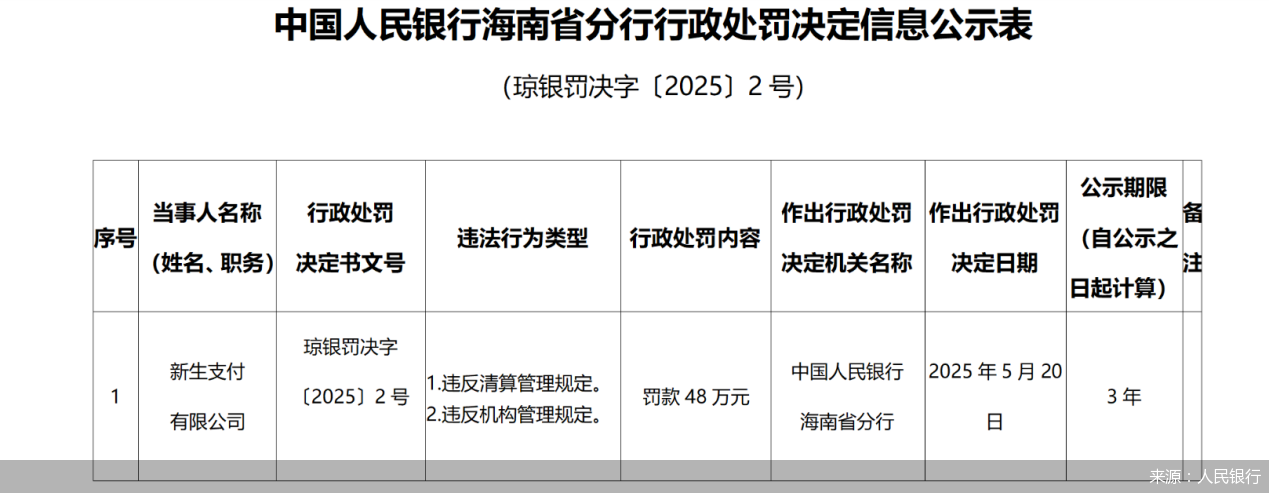
Core Viewpoint - The third-party payment industry is facing intensified regulatory scrutiny, as evidenced by recent fines imposed on companies for non-compliance with regulations [1][6][7]. Group 1: Regulatory Actions - Newborn Payment Co., Ltd. was fined 480,000 yuan for violating clearing management and institutional management regulations [1][3]. - Tianjin Rongbao Payment Network Co., Ltd. was fined 130,000 yuan for failing to properly safeguard relevant materials and not implementing effective risk control measures [5][6]. Group 2: Industry Context - The recent fines reflect a broader trend of increased regulatory oversight in the third-party payment sector, with a notable rise in penalties compared to the previous year [7][8]. - Analysts indicate that the introduction of new penalty clauses under the Non-Bank Payment Institutions Supervision Management Regulations has expanded the scope of regulatory enforcement [6][7]. Group 3: Compliance Challenges - Compliance shortcomings in risk management remain a significant issue for licensed payment institutions, particularly in merchant management and risk control measures [6][8]. - The industry is entering a full-chain regulatory era, with heightened compliance requirements and costs, particularly concerning anti-money laundering measures [7][8]. Group 4: Future Recommendations - Payment institutions are advised to enhance their anti-money laundering capabilities and improve communication with regulators to navigate the evolving compliance landscape [8]. - Companies should focus on core business areas and leverage strategic opportunities in digital and cross-border payments while ensuring robust compliance frameworks [8].
富友支付再次赴港IPO:净利润波动明显,上市前多次宣派股息
Sou Hu Cai Jing· 2025-05-22 08:29
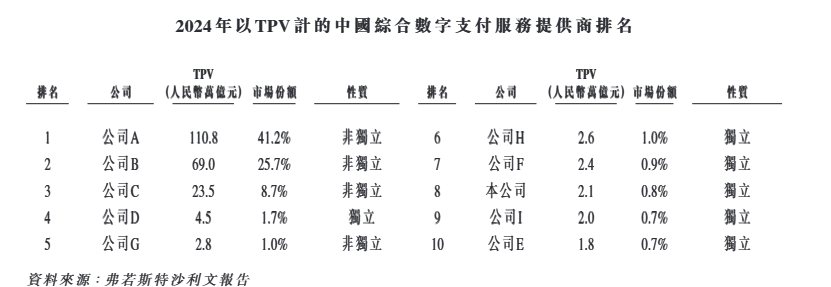
Core Viewpoint - Fuyou Payment has submitted an application for a Hong Kong IPO, with CITIC Securities and Shenwan Hongyuan Hong Kong as joint sponsors. The company aims to enhance its digital payment services across various business scenarios in China [1]. Financial Performance - From 2022 to 2024, Fuyou Payment's revenue has shown a compound annual growth rate (CAGR) of 19.6%, with revenues of RMB 1.142 billion, RMB 1.506 billion, and RMB 1.634 billion respectively [6][8]. - In 2024, the company reported a net profit attributable to shareholders of RMB 84.065 million, a decline from RMB 93.165 million in 2023 [7][8]. - The company has declared dividends multiple times since 2022, with a total of approximately RMB 185 million declared from 2022 to 2024. For 2025, a mid-term dividend of RMB 40 million has been declared, with RMB 24.4 million already paid [11][12]. Market Position - As of December 31, 2024, Fuyou Payment ranked 8th among third-party payment service providers in China, holding a market share of 0.8% with a total payment transaction volume (TPV) of RMB 2.1 trillion [4][6]. - The overall TPV for China's digital payment service market in 2024 was RMB 268.6 trillion, dominated by three major non-independent providers that collectively held 75.6% of the market share [3]. Regulatory Compliance - Fuyou Payment has faced four administrative penalties totaling RMB 6.9 million since 2021 for non-compliance with relevant laws and regulations [12]. Future Plans - The company plans to use the funds raised from the IPO to enhance its product offerings through innovative solutions, invest in technology platforms and infrastructure, expand its payment network, and deepen relationships with ecosystem partners [12].
拉卡拉:扎实推进“推广数字支付、共享数字科技、兑现数据价值”经营战略 将加快AI融合步伐
Quan Jing Wang· 2025-05-21 00:25
5月20日下午,拉卡拉(300773.SZ)2024年年度暨2025年第一季度网上业绩说明会成功在全景网举办。 交流会中,问及机器人发展布局,拉卡拉董事、总经理王国强称,公司推行"AI First"理念,以AI技术 为核心引擎,以"AI+数据"中台为依托,以AI场景化应用为落脚点,不断推动研发、风控、运营、客服 等工作的智能化升级。深度融合多模态处理、AIGC自助生成等AI能力,推出更多面向内部运营和商户 经营的场景化AI Agent,更好满足内部运营需要和商户服务需求。 就AI客服智能体,王国强介绍,公司AI客服智能体,在全年800+万次客户接线服务中实现超70%人工 替代;AI风控智能体100%覆盖商户入网审核作业,准确率达85%;贷后管理AI智能体、培训AI智能体 等已在银行客户成功落地。 王国强强调,2025年,公司加快AI融合步伐,重塑新一代商户钱包APP产品,通过多模态智能对话重构 支付服务,打造商户智慧开店、智慧经营的智能体应用。 谈及外延式发展战略,王国强表示,公司扎实推进"推广数字支付、共享数字科技、兑现数据价值"的经 营战略,进一步稳固支付业务的领先优势,同时,加快支付与SaaS融合,推动 ...