葡萄酒

Search documents
普华永道被罚
Sou Hu Cai Jing· 2025-10-16 12:37
Group 1 - The Hong Kong Institute of Certified Public Accountants (HKICPA) has condemned PwC's Hong Kong branch, RSM Hong Kong, and two of its partners for multiple audit deficiencies, imposing a total fine of HKD 1.6 million [1] - The audit deficiencies occurred during the fiscal years 2010 and 2011, where the auditors failed to obtain sufficient appropriate audit evidence regarding the revenue recorded by Dynasty Fine Wines Group Limited, leading to the issuance of an unqualified opinion [1][3] - An internal investigation by Dynasty Fine Wines revealed that a significant portion of the wine products claimed to be sold to a major distributor had not been delivered and were instead stored in external warehouses [3] Group 2 - The adjustments made by Dynasty Fine Wines to correct the misreported revenue indicated that the company should have reported a loss in 2011 instead of the previously disclosed profit, with retained earnings for 2010 and 2011 being reduced by approximately HKD 225 million and HKD 262 million, respectively [3] - The HKICPA's investigation highlighted extensive deficiencies related to revenue recognition in the audits for 2010 and 2011, particularly the auditors' failure to apply professional skepticism and obtain adequate evidence to confirm that the wine products were delivered and accepted by customers [3] - The penalties imposed included HKD 800,000 for RSM Hong Kong, HKD 600,000 for partner Zheng Guang'an, and HKD 200,000 for partner Jiang Lingyan [3]

宁夏银川:“赛事+票根经济”解锁葡萄酒产业融合发展新密码
Zhong Guo Xin Wen Wang· 2025-10-16 10:34
Core Insights - The article discusses the innovative "event + ticket economy" model introduced in Yinchuan, Ningxia, aimed at integrating the wine industry with cultural and tourism sectors to stimulate economic growth [1] Group 1: Wine Industry Development - Yinchuan has launched a new model to promote the deep integration of the wine industry with cultural tourism, providing fresh vitality to economic and social development [1] - The city has optimized four distinct tourism routes that combine wine tasting with various experiences, including art, hot springs, historical culture, and red culture [3] Group 2: Tourism and Visitor Experience - The tourism routes connect significant attractions such as Xixia Tomb and Zhenbeibu Film City, featuring 15 wineries with accommodation, 18 wineries with dining services, and 12 wineries offering both [3] - An electronic version of the "winery leisure tourism map" has been introduced to facilitate visitor navigation to wineries and attractions [3] Group 3: Ticket Economy Innovations - The "ticket economy" model allows visitors holding tickets from attractions, concerts, or marathons to enjoy free winery tours, wine tastings, or discounts on purchases [4] - During the "National Day" holiday, a promotional event was held in collaboration with 20 wineries, offering wine tasting experiences and food packages at attractive prices [4]

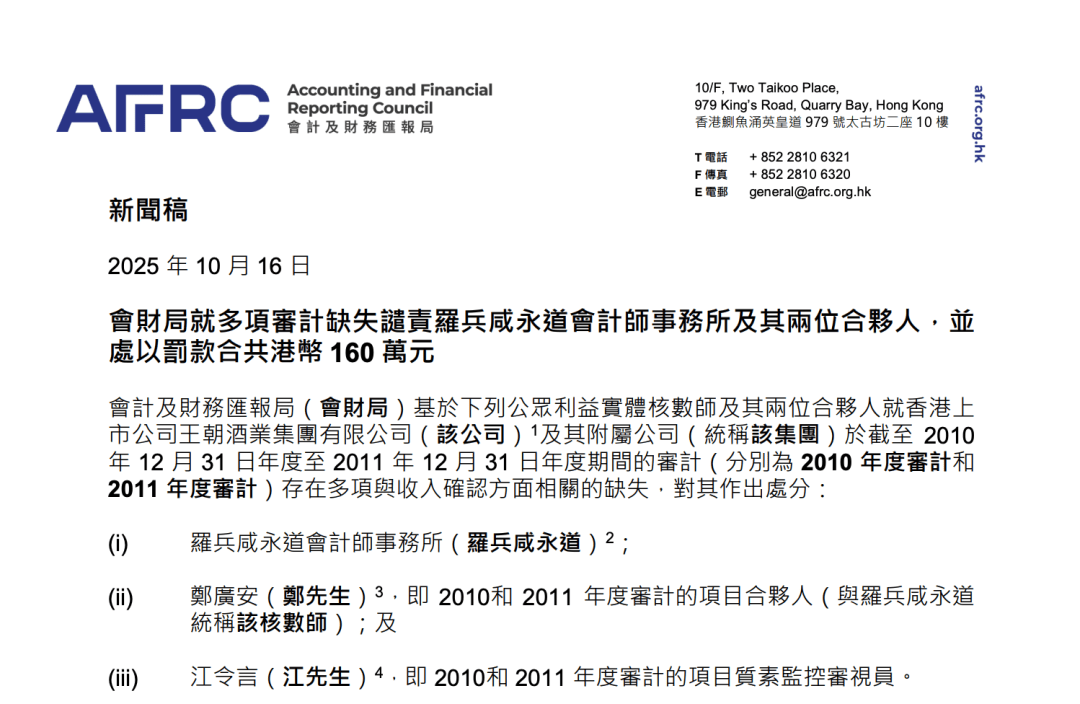
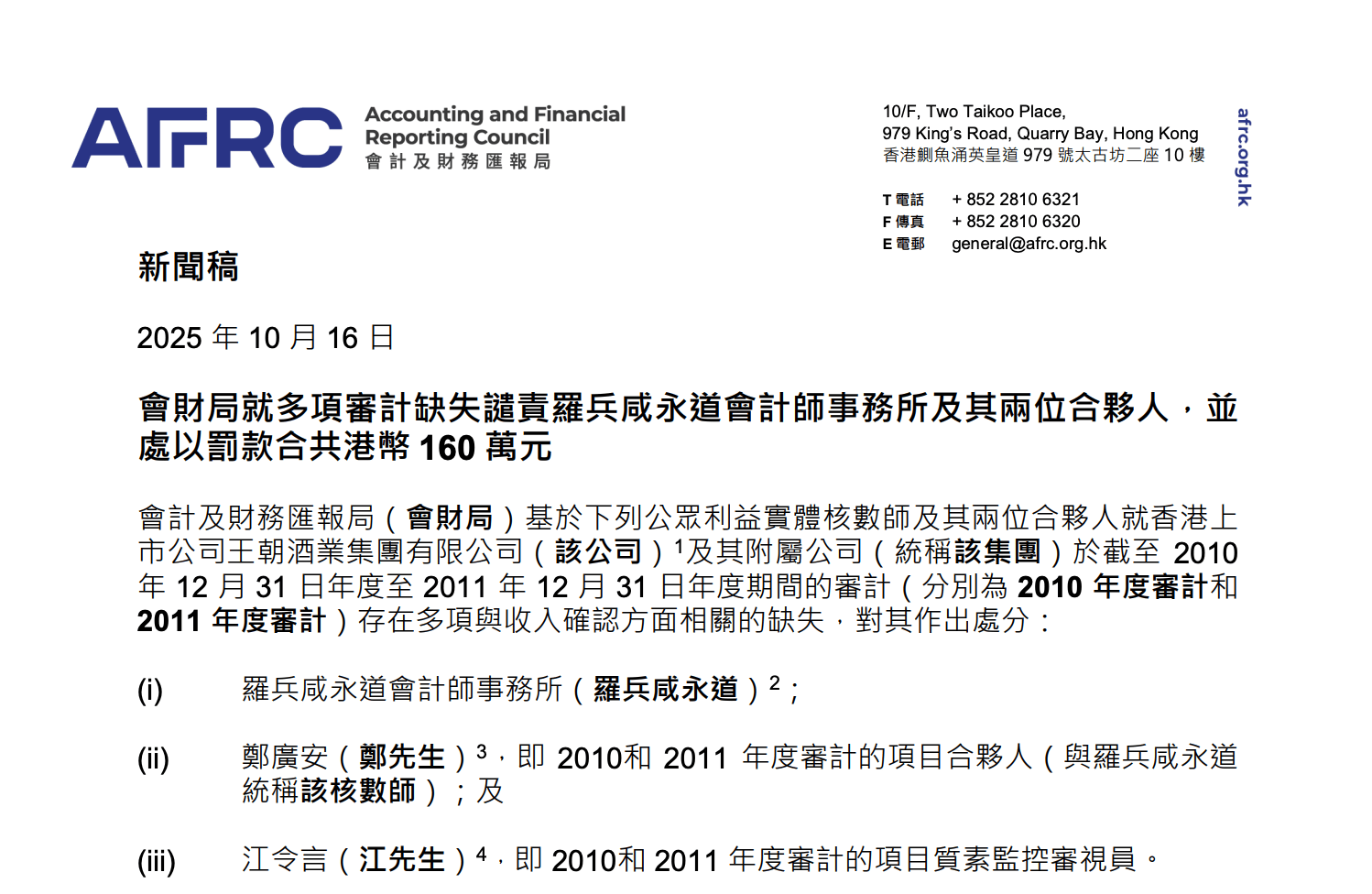
香港会财局就多项审计缺失谴责普华永道及其两位合伙人,并处以罚款共计160万港元
Sou Hu Cai Jing· 2025-10-16 09:43
Core Viewpoint - The Hong Kong Institute of Certified Public Accountants (HKICPA) has reprimanded PwC's Hong Kong branch, RSM Hong Kong, and two of its partners for audit deficiencies, imposing a total fine of HKD 1.6 million [1] Group 1: Audit Deficiencies - The audit work conducted by the auditors in 2010 and 2011 regarding revenue recognition was found to be deficient, failing to obtain sufficient appropriate audit evidence for the revenue recorded by Dynasty Fine Wines Group Limited and its subsidiaries [1][3] - The auditors issued an unqualified opinion despite the lack of adequate evidence, leading to significant misstatements in the financial reports [3] Group 2: Internal Investigation Findings - An anonymous tip received in late 2012 alleged that the revenue of Dynasty Fine Wines was overstated and that substantial sales figures were fictitious [3] - An internal investigation revealed that a large portion of the wine products claimed to be sold to a major distributor had not been delivered and were instead stored in external warehouses [3] Group 3: Financial Adjustments - The company made adjustments to correct the misreported revenue in its financial statements for 2010 and 2011, indicating that it should have reported a loss in 2011 instead of the previously disclosed profit [3] - The adjustments resulted in a significant reduction in retained earnings for 2010 and 2011, amounting to approximately HKD 225 million and HKD 262 million, respectively [3] Group 4: Penalties Imposed - The HKICPA imposed a fine of HKD 800,000 on RSM Hong Kong, HKD 600,000 on partner Zheng Guang'an, and HKD 200,000 on partner Jiang Lingyan for their roles in the audit failures [3]
价格持续下行,奔富在中国怎么了?
Sou Hu Cai Jing· 2025-10-16 05:11
Core Viewpoint - The Australian wine giant Treasury Wine Estates (TWE) has adjusted its performance expectations for the fiscal year 2026 due to weaker-than-expected sales in the Chinese market, leading to a temporary halt of its previously initiated AUD 200 million share buyback plan [2][10]. Group 1: Market Dynamics - The Chinese wine market has undergone significant changes, impacting not only baijiu but also international wine brands like Penfolds [2]. - Following the removal of anti-dumping duties on Australian wines in 2024, Penfolds has regained its position as the largest source of imported wine in China, contributing to record net sales for TWE in fiscal year 2025 [3][6]. - However, since the second quarter of this year, there has been a notable decline in wine consumption driven by changes in business banquet scenarios, which has adversely affected Penfolds [4][10]. Group 2: Pricing and Sales Trends - Since June, the market prices for Penfolds' major products, BIN 389 and BIN 407, have dropped significantly, with prices falling by 30 to 50 CNY compared to post-Spring Festival levels [4][7]. - As of September, the wholesale prices for BIN 389 and BIN 407 have decreased to below 450 CNY and 670 CNY, respectively, with e-commerce prices even lower [7][9]. - The decline in sales inquiries and orders has been observed since mid-year, with a notable drop in business banquet-related purchases [9]. Group 3: Financial Performance and Future Outlook - TWE's overall net sales and earnings before interest and taxes (EBIT) saw significant increases in fiscal year 2025, with EBIT rising by 17% and net sales in the Asian market increasing by nearly 20% [10]. - Initially, TWE projected low to mid-double-digit EBIT growth for fiscal year 2026, but the rapid cooling of the Chinese market has led to a reassessment of these expectations [10][12]. - TWE has decided to reallocate Penfolds' products to other markets and control the risk of parallel imports into China, while also exploring partnerships, such as the recent collaboration with Langjiu to launch limited edition products [12].
富邑撤回业绩预期 奔富在中国市场怎么了?
2 1 Shi Ji Jing Ji Bao Dao· 2025-10-16 00:30
Core Viewpoint - The Chinese liquor market is undergoing significant changes, impacting not only baijiu but also international wine brands like Penfolds, leading to a downward adjustment in TWE's performance expectations for FY2026 due to weaker-than-expected sales in China [1][3]. Group 1: Market Dynamics - Following the removal of "double anti" tariffs on Australian wine in 2024, Penfolds regained its position as the largest source of wine in China, achieving record net sales for FY2025, surpassing pre-pandemic levels [3][5]. - Since Q2 of this year, there has been a notable decline in wine consumption driven by changes in business banquet scenarios, adversely affecting Penfolds, which relies heavily on this segment [3][6]. - The market prices for Penfolds' major products, BIN 389 and BIN 407, have dropped significantly, with prices falling by 30 to 50 yuan since the Spring Festival, and current e-commerce prices are below 380 yuan and 550 yuan respectively [5][6]. Group 2: Company Performance and Adjustments - TWE initially projected low to mid-double-digit growth for Penfolds' EBIT for FY2026, but has since retracted this guidance due to a rapid cooling of the Chinese market [8][10]. - In response to the market downturn, TWE plans to reallocate Penfolds' product quotas to other markets and control the risk of parallel imports returning to China [10]. - TWE is exploring partnerships with local baijiu brands to tap into high-end consumer segments, including a recent collaboration with Langjiu to launch limited edition products [10].
好葡萄串起融合链
Jing Ji Ri Bao· 2025-10-15 22:12
Group 1 - The core viewpoint highlights the successful grape harvest in the Penglai District of Yantai City, Shandong Province, with a focus on the integration of modern technology in the wine production process [1] - The Penglai District has 80,000 acres of standardized grape bases and 62 wine production enterprises, generating a comprehensive output value of 5 billion yuan [1] - The implementation of a "smart management system for the entire wine production industry chain" enhances data governance and control across key processes such as grape cultivation, fermentation, and quality control [1] Group 2 - The Penglai District is promoting the integration of "wine + cultural tourism," leveraging high-quality tourism and local resources to create a comprehensive cultural and tourism complex [2] - Efforts are being made to cultivate a coastal wine culture system with Eastern characteristics, aiming for quality improvement through industrial integration and brand value enhancement through cultural innovation [2]
2025年1-4月中国葡萄酒产量为2.9万千升 累计下降27.5%
Chan Ye Xin Xi Wang· 2025-10-14 01:08
Core Insights - The Chinese wine industry is experiencing a significant decline in production, with a reported 37.5% year-on-year decrease in April 2025 [1] - Cumulative wine production from January to April 2025 has also dropped by 27.5%, totaling 29,000 kiloliters [1] Company Insights - Key listed companies in the Chinese wine sector include Zhangyu A (000869), Weilang Co., Ltd. (603779), Zhongpu Co., Ltd. (600084), ST Tongpu (600365), Xibu Chuangye (000557), and Huangtai Wine Industry (000995) [1] Industry Reports - The report titled "2026-2032 China Wine Industry Market Panorama Survey and Investment Potential Research Report" by Zhiyan Consulting provides insights into the market trends and investment opportunities within the industry [1][2] - Zhiyan Consulting is recognized as a leading industry consulting firm in China, specializing in in-depth industry research and providing comprehensive solutions for investment decisions [2]


马云的红酒,失宠了
3 6 Ke· 2025-10-13 03:17
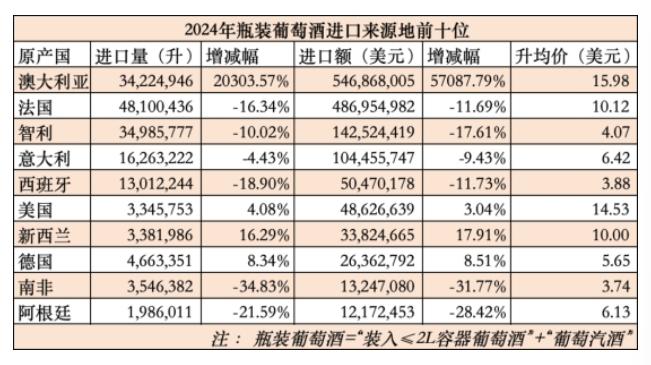
Core Insights - The domestic wine market, both imported and local, is experiencing a significant decline, driven by a shift in consumer preferences and market dynamics [1][2][4] Industry Overview - The Chinese wine industry has seen a drastic reduction in both production and sales over nearly a decade, with wine production dropping from 1.42 million kiloliters in 2015 to 118,000 kiloliters in 2024, a decrease of 91.7% [2] - The market size has shrunk from 30 billion yuan in 2015 to less than 5 billion yuan in 2024 [2] - Among the seven publicly listed wine companies in China, only three reported profits in the first half of the year, with the industry leader, Zhangyu, facing its worst financial results in 20 years [2][4] Import Trends - The import of bottled wine has seen varied trends, with Australia experiencing a dramatic increase in import volume by over 20,000% and value by nearly 57,000%, while imports from France and other countries have generally declined [3] Market Dynamics - The initial boom in the Chinese wine market was fueled by high-end social networking rather than genuine consumer interest, leading to a market that is now struggling to find a sustainable consumer base [1][4] - The concept of "popularization" in the wine market is gaining traction, suggesting that affordable wines priced below 100 yuan could become mainstream, while higher-priced wines serve as a supplementary option [7][10] Consumer Preferences - Modern consumers, particularly younger demographics, prefer sweeter wines and simpler consumption experiences, moving away from traditional wine rituals [10][12] - The notion of "micro-drinking economy" is emerging, but the appeal of wine as a casual beverage remains limited compared to other drinks like tea and beer [9][10] Branding and Marketing - The industry is exploring innovative marketing strategies, including collaborations with artists and celebrities, but these efforts often position wine as a secondary product rather than a primary focus [11][12] - There is a need for Chinese wines to develop unique branding and packaging that resonates with local consumers, moving away from excessive Western-style packaging that lacks differentiation [15][17] Future Directions - The future of Chinese wine may lie in creating products that reflect local tastes and drinking habits, with an emphasis on developing indigenous grape varieties and innovative production techniques [19][21] - The industry must focus on reducing costs and improving supply chain efficiency through direct-to-consumer models, leveraging e-commerce and social media platforms [21][22]
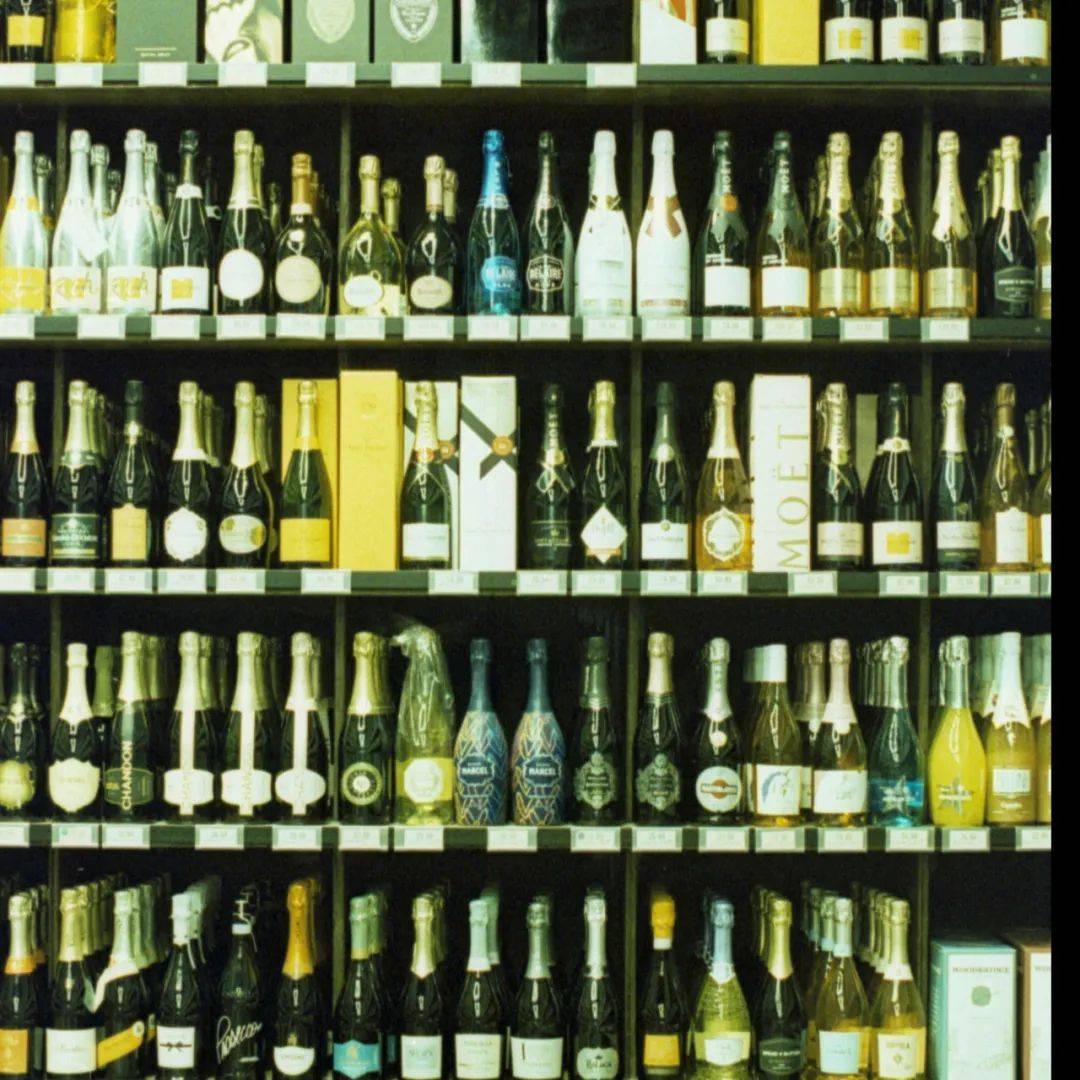
意大利起泡酒崛起,冲击法国传统香槟市场
Huan Qiu Shi Bao· 2025-10-12 22:46
Core Insights - Italian sparkling wine production has nearly doubled compared to 20 years ago, significantly impacting the traditional champagne market in France [1] - The global wine market remains sluggish, but sparkling wine, particularly Prosecco from Italy, is gaining popularity [1] - Italy is the leading producer of sparkling wine, accounting for one-third of the global market share, with a projected 12% increase in export volume in 2024 [1] Industry Trends - The share of sparkling wine in traditional wine regions like Bordeaux is rapidly increasing, with sparkling wine production now exceeding half of the total output in the region [1] - Italian sparkling wine producers are targeting the price range of €9 to €15, which has been abandoned by champagne producers, and are actively expanding exports to the UK and US [1] - The taste of sparkling wine has gained widespread acceptance among younger consumers, contributing to its rising popularity [1] Market Challenges - The French champagne industry is experiencing a decline in both production and sales, leading to concerns from the Champagne Producers Association regarding the impact of trade protectionism and competition from sparkling wines [1]
超越香槟!普罗塞克在美国的销售额突破5亿美元
Sou Hu Cai Jing· 2025-10-10 11:46
Core Insights - Prosecco has become the leading Italian sparkling wine in the U.S. market, capturing approximately 30% of the total sales of Italian sparkling wines from January to July 2025, surpassing Champagne's 28% share [1][2] - The market value of Prosecco has exceeded $500 million, reflecting a significant growth of 178% over the past seven years [1] - Prosecco is particularly popular among millennials and women, with millennials accounting for 27% of U.S. Prosecco consumers and women making up 60% of Prosecco drinkers [4] Market Dynamics - The "Prosecco Golden Triangle" regions, including Conegliano-Valdobbiadene, Asolo DOCG, and Prosecco DOC, have seen continuous growth, with sales reaching a record $531 million in 2024 [4] - Prosecco currently holds 87% of the sales of Italian sparkling wines in the U.S., representing about one-quarter of all Italian wine sales in the country, with an estimated annual consumption total of $2.9 billion [4] - The average price per bottle of Prosecco is approximately $19.50, making it accessible to a broad consumer base [4] Consumer Trends - The consumption of Prosecco is primarily concentrated in the East Coast, which accounts for over half of the total U.S. sales, indicating potential growth opportunities in the Western states and the Midwest [6] - Changing drinking habits among Americans, who are increasingly favoring lighter and refreshing beverages, have driven the demand for Prosecco and similar sparkling wines [6] - The global consumption and production of sparkling wines have nearly doubled since 2002, with Italy leading the market, accounting for one-third of global production [7] Competitive Landscape - Despite challenges in the overall wine industry, sparkling wines are experiencing a growth phase, contrasting with the decline in many wine markets [7] - French sparkling wine producers are also benefiting from this trend, with a 12% increase in exports of Italian sparkling wines, particularly Prosecco, in 2024 [7] - The Champagne industry is facing challenges due to economic pressures and rising production costs, leading to increased prices that may affect demand [9][11]