
博物馆

Search documents
损失惨重!卢浮宫大劫案背后:运营成本一年22亿元,15年约200个全职岗位遭裁撤!现场亲历者称“两次被疏散,工作人员神情紧张”
Mei Ri Jing Ji Xin Wen· 2025-10-20 07:41
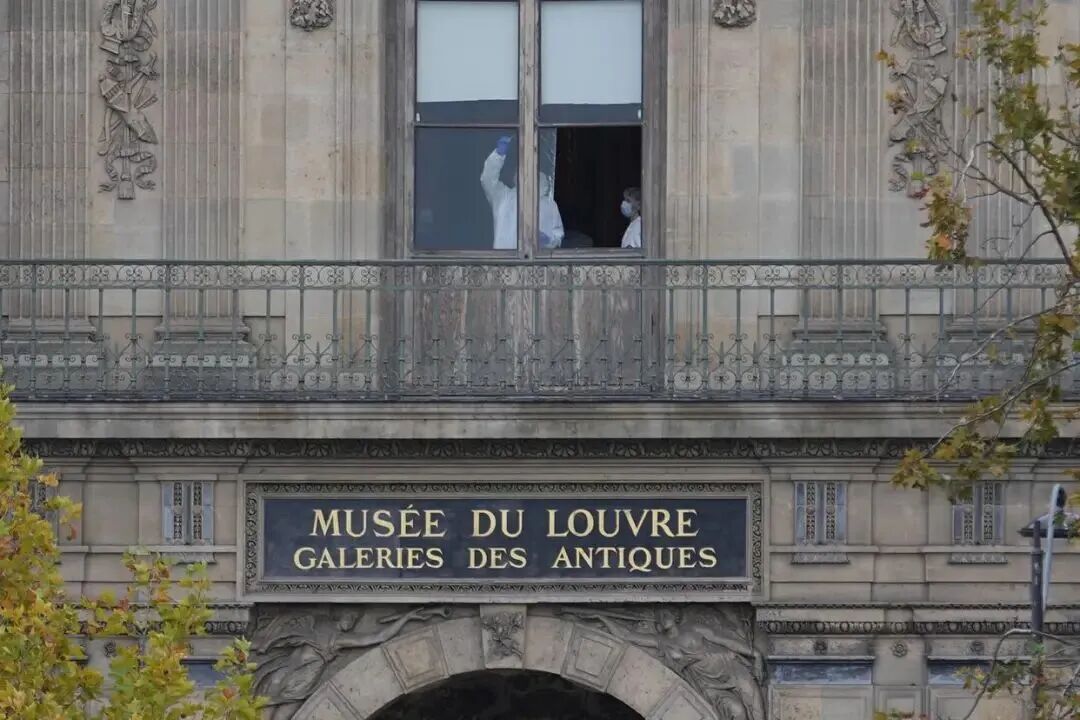
Core Points - A significant robbery occurred at the Louvre Museum in Paris on October 19, where thieves disguised as construction workers stole nine valuable pieces of jewelry from the Napoleonic era in just seven minutes [1][11][19] - The incident highlights the vulnerabilities in the security system of French museums, particularly the Louvre, which has faced multiple thefts over the past century [1][19] - The museum has reportedly reduced its security staff by approximately 200 full-time positions over the past 15 years, impacting its ability to maintain adequate security measures [1][21] Summary by Sections Incident Details - The robbery was executed by a group of three to four individuals who arrived at the museum disguised as construction workers and used a lift to access the building [11][13] - The thieves targeted the Apollo Gallery, breaking into high-security display cases and triggering the alarm system during the theft [13][19] - The stolen items included crowns and jewelry that belonged to historical figures such as Queen Marie-Amélie and Empress Eugénie, with one crown later found abandoned outside the museum [18][19] Visitor Experience - Visitors reported confusion and concern during the evacuation process, with multiple evacuations occurring as the situation unfolded [3][6][8] - The atmosphere was tense, with a significant police presence responding to the incident [8][11] Security and Financial Implications - The Louvre's operational costs for 2024 are projected to be €267.2 million (approximately 2.2 billion RMB), with a significant portion allocated to personnel costs [21] - The museum's financial reports indicate a total revenue of €301.9 million (approximately 2.5 billion RMB) for the same year, highlighting the economic scale of the institution [21] - The French government has initiated a "New Renaissance" plan for the Louvre, which includes enhancing security measures with an estimated budget of $930 million [21]

让中华优秀传统文化更好融入当代传承后世——从“一条河”看江苏文化“两创”
Xin Hua Ri Bao· 2025-10-19 23:16
Core Insights - The Yangzhou China Grand Canal Museum ("Zhongyun Museum") has become a popular cultural destination, receiving nearly 200,000 visitors during the National Day and Mid-Autumn Festival holiday, and hosting over 300 cultural events [1] - The museum is a significant achievement in the construction of the Grand Canal Cultural Belt and the Grand Canal National Cultural Park in Jiangsu, enhancing the cultural tourism profile of Yangzhou [1][2] - President Xi Jinping has emphasized the importance of protecting and utilizing the Grand Canal culture, providing guidance for Jiangsu's efforts in this area [1][4] Museum Overview - Opened in 2021, the Zhongyun Museum is the first modern comprehensive museum dedicated to the Grand Canal, covering approximately 80,000 square meters and showcasing the canal's historical and cultural significance [2] - The museum started with a "zero collection" approach and has since gathered over 16,000 artifacts, including bronze, jade, ceramics, and more, reflecting the rich history of the Grand Canal [2][3] Exhibitions and Visitor Engagement - The museum features permanent and temporary exhibitions that explore various aspects of Grand Canal culture, with current exhibitions focusing on historical cities along the canal [3] - As of now, the museum has welcomed nearly 15 million visitors and is set to achieve national first-class museum status by May 2024 [3] Cultural Innovation and Recognition - The Zhongyun Museum has received multiple awards for its innovative approaches, including recognition from UNESCO for its educational initiatives [4] - The museum offers a range of activities, including cultural workshops and lectures, enhancing the visitor experience and promoting cultural heritage [4] Broader Cultural Initiatives - Since the 14th Five-Year Plan, a network of Grand Canal-themed museums has emerged in Jiangsu, contributing to the preservation and promotion of canal culture [5] - Jiangsu is actively working on a comprehensive framework for the development of the Grand Canal Cultural Belt and National Cultural Park, emphasizing cultural protection and sustainable development [6][7]
法国卢浮宫数分钟被抢9件珠宝 一顶皇冠在馆外被找到
Xin Hua She· 2025-10-19 22:11
Core Points - A robbery occurred at the Louvre Museum in Paris on the morning of October 19, involving the theft of nine pieces of jewelry from the Napoleonic era [1][2] - The robbery was executed by a skilled team in a very short time frame, with reports indicating the entire operation took between 4 to 7 minutes [2][3] - The stolen items included necklaces, brooches, and crowns, with one piece, a crown possibly belonging to Empress Eugénie, being recovered outside the museum [3][4] Summary by Sections - **Robbery Details** - The robbery took place between 9:30 and 9:40 AM, where masked individuals used a small chainsaw to break windows and gain access [2] - The French Interior Minister described the incident as a "major robbery" carried out by an "experienced team" [2] - **Response and Investigation** - The Louvre Museum announced a temporary closure for the day following the incident [1][4] - The French Culture Minister stated that efforts were underway to locate the perpetrators, and no injuries were reported during the event [4] - **Historical Context** - The Louvre has a history of thefts, with notable incidents including the theft of the "Mona Lisa" in 1911 and the theft of Renaissance armor in 1983 [4]
法国卢浮宫发生持械抢劫事件
Yang Shi Xin Wen· 2025-10-19 10:00
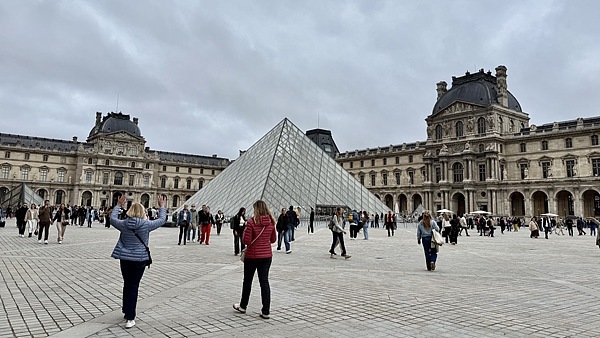
△卢浮宫(资料图) 卢浮宫博物馆发布消息称,由于特殊原因,博物馆当天将暂停对外开放。 法国文化部长达蒂当地时间19日早间表示,当天早上巴黎卢浮宫开馆时发生一起持械抢劫事件。暂 无人员受伤报告。目前调查正在进行中。 ...
法国卢浮宫发生持械抢劫事件 暂停对外开放
Yang Shi Xin Wen· 2025-10-19 09:25
卢浮宫博物馆发布消息称,由于特殊原因,博物馆当天将暂停对外开放。(总台记者 朱雪松) 法国文化部长达蒂当地时间19日早间表示,当天早上巴黎卢浮宫开馆时发生一起持械抢劫事件。暂无人 员受伤报告。目前调查正在进行中。 △卢浮宫(资料图) ...
文物活化、非遗传承、文旅融合 多视角感知中华文脉在传承中创新、在开放中焕彩
Yang Shi Wang· 2025-10-18 08:43
Core Perspective - The article highlights the significant advancements in cultural heritage and tourism in China during the "14th Five-Year Plan" period, showcasing the integration of technology and cultural preservation efforts [1]. Group 1: Cultural Heritage and Technological Integration - Over 130,000 new cultural heritage sites have been discovered, and nearly 2,000 national protection units are undergoing restoration [1]. - The use of virtual reality (VR) technology at the Sanxingdui Museum allows visitors to experience archaeological sites, enhancing engagement with ancient artifacts [3][7]. - AI technology has been employed to reconstruct ancient artifacts, such as the 2.53-meter bronze bird-foot statue, by accurately matching and assembling fragments from different excavation sites [9]. Group 2: Cultural and Tourism Industry Growth - The cultural tourism industry in China has seen a revenue surge, exceeding 10 trillion yuan, with museums receiving nearly 1.5 billion visitors annually [1]. - The Sanxingdui Museum has introduced various creative cultural products, such as bags and keychains featuring bronze figures, making ancient culture more accessible and appealing to younger audiences [10][12]. - In Gansu, the "Digital Dunhuang" project aims to reunite lost artifacts through digital means, attracting nearly 30,000 visitors from 29 countries since its launch [21]. Group 3: Regional Cultural Developments - Tibet's cultural tourism sector has welcomed over 57 million visitors in the first eight months of 2025, marking an 11.3% increase year-on-year, with cultural industry output exceeding 10 billion yuan [28]. - The "Village T" fashion show in Guizhou has gained national attention, showcasing local ethnic cultures and significantly boosting sales of traditional handicrafts [38].

博物馆人工智能热的思考
Ren Min Ri Bao· 2025-10-17 22:03
Core Insights - Artificial intelligence is reshaping museums by enhancing information processing, content generation, visitor experience, and collection preservation [1][2][3] - AI serves as a "super assistant" for data extraction and classification, a "source of inspiration" for educational projects, a "thoughtful partner" for personalized visitor services, and an "all-around guardian" for collection protection [1][2] - The integration of AI technology is leading to a dual upgrade in the museum sector, transforming them from information disseminators to co-creation platforms and from traditional services to diverse experiences [1] Challenges - The initial phase of AI application in museums faces challenges such as content accuracy, with issues like training data bias and algorithm opacity potentially leading to misinformation [2] - AI's knowledge production capabilities are limited, as it excels in information reorganization but struggles to produce original research [2] - Over-reliance on AI for content creation may undermine museums' core function as knowledge producers, and the lack of collaborative mechanisms and industry standards hampers widespread AI adoption [2] Future Directions - Museums should focus on strengthening their foundations, understanding audience needs, and reconstructing their functions in the digital wave [2] - Infrastructure development should include not only hardware support but also unified data standards and high-quality digital resource libraries [2] - Continuous evaluation and improvement of AI applications are essential for effectively leveraging technology to empower museum development [2][3]
王筱雯:“新中国第一馆”的昨天、今天与明天 | 文化中国行
Zhong Guo Qing Nian Bao· 2025-10-17 12:30
Core Insights - The article highlights the impressive cultural and historical significance of the Liaoning Provincial Museum (Liaobo), emphasizing its ability to rival major national museums in China [1][3] - The museum has recently hosted significant exhibitions, including the "Strengthening the Awareness of the Chinese National Community" theme exhibition, showcasing over 600 artifacts [3][11] Group 1: Historical Significance - Liaobo is recognized as the first museum established in New China, opening on July 7, 1949, and has played a crucial role in the development of museum practices in China [4][6] - The museum's establishment was part of a broader effort to preserve and protect cultural heritage during the tumultuous period of the Chinese Civil War [4][6] Group 2: Unique Cultural Aspects - Liaoning's cultural heritage is characterized by its unique historical interactions, serving as a crossroads for various civilizations, including agricultural, nomadic, and fishing cultures [7][15] - The museum houses approximately 120,000 artifacts, with significant collections of ancient art, including notable works from the Song and Yuan dynasties [7][10] Group 3: Modern Utilization and Engagement - The museum is actively enhancing the utilization of its collections through innovative approaches, including collaborations with local cultural institutions and the integration of technology [10][9] - Liaobo aims to foster a sense of historical identity and community awareness among younger audiences through educational programs and interactive exhibits [18][11]

吉林省立法创新推动博物馆事业高质量发展
Zhong Guo Xin Wen Wang· 2025-10-15 10:37
Core Viewpoint - The Jilin Provincial Museum Regulation is a significant local legislation aimed at promoting the high-quality development of museums in Jilin Province, marking the first provincial-level museum-specific legislation in China [1][3]. Group 1: Legislative Framework - The regulation consists of six chapters and 53 articles, outlining the basic principles for museum development, responsibilities of various parties, planning and construction, management systems, cultural relic protection, and overall development of the museum sector [1][3]. - The regulation will officially take effect on January 1, 2026, following its approval by the Jilin Provincial People's Congress on September 23 [1][3]. Group 2: Development Planning - County-level and above cultural relic management departments are required to develop museum development plans based on economic and social development levels, historical and cultural characteristics, public cultural needs, and collection resources [3]. - The regulation emphasizes the establishment of a museum system with local characteristics, encouraging the creation of both state-owned and non-state-owned museums that highlight unique themes and features [3]. Group 3: Cultural Relic Protection - The regulation addresses the relationship between cultural relic protection and utilization, stipulating that museum collections must not be rented, sold, or mortgaged to other entities or individuals [3]. - It mandates strict adherence to cultural relic protection and safety management regulations when developing related tourism projects to prevent destructive construction and excessive commercialization [3]. Group 4: Research and Community Engagement - The regulation supports scientific research in the museum sector and the application of research outcomes, promoting high-quality interpretation services and digital empowerment [4]. - It encourages museums to actively engage with communities and public spaces, including extended opening hours to enhance service levels [4].
巴黎毕加索博物馆宣布翻修,80多件馆藏将来沪展出
Yang Shi Wang· 2025-10-14 02:50
Core Points - The Paris Picasso Museum has announced the launch of a major renovation project named "Picasso 2030," which is the largest renovation since its opening in 1985, with a budget of €50 million [1][6] - The museum will remain open to the public throughout the renovation period from 2028 to 2030 [1] - A special exhibition titled "Very Picasso: Paul Smith's New Perspective" will be held at the Shanghai Pudong Art Museum starting December 22, featuring over 80 valuable pieces from the Paris Picasso Museum [3] Renovation Details - The renovation will connect the museum's internal courtyard with the adjacent Leonor-Fini Square, creating a 25,000 square foot outdoor sculpture garden that will be free to the public [1][6] - The new sculpture garden will display approximately twelve bronze sculptures by Picasso, including works themed around animals and transformation [6] - The exhibition space will be doubled to 8,600 square feet, with a new wing dedicated to temporary exhibitions [1][6] Historical Context - The museum is housed in the former private residence of tax collector Pierre-Ovide Fontenay, which has undergone multiple transformations since its inception [4][7] - The museum's collection includes over 5,000 artworks and 200,000 archival materials, showcasing Picasso's evolution from his Blue Period to Cubism and later works [4][8] - The museum was officially opened to the public on October 1, 1985, after the French government accepted Picasso's artworks as payment for inheritance tax [7][8] Funding and Challenges - The renovation project will be funded entirely through sponsorship, with contributions from the Picasso family and the museum's own funds, as the French Ministry of Culture is currently focused on other major projects [7] - The museum director emphasized that the project is not yielding to commercialism, maintaining a non-profit approach to overseas exhibitions [7]
