连锁餐饮

Search documents
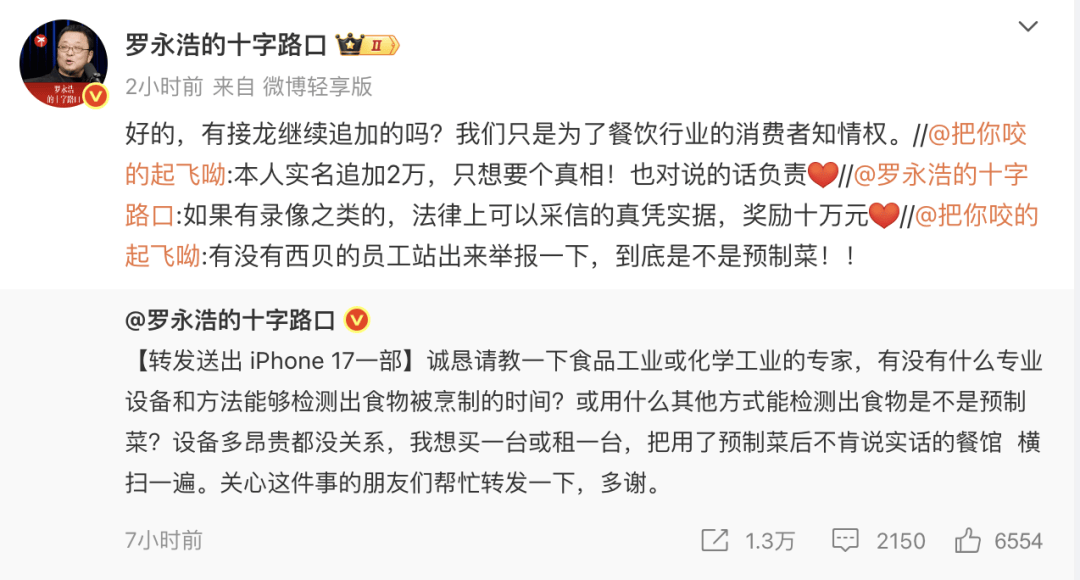
贾国龙称西贝没有一道预制菜,罗永浩发微博@贾国龙
Xin Lang Ke Ji· 2025-09-12 03:26
Core Viewpoint - The controversy surrounding the restaurant chain "Xibei" involves allegations of using pre-prepared dishes, with significant public discourse initiated by influencer Luo Yonghao, who criticized the high cost and prevalence of such dishes in Xibei's offerings [1][4]. Group 1: Company Response - Xibei's founder, Jia Guolong, responded to the allegations, asserting that the restaurant does not use pre-prepared dishes as defined by national standards, emphasizing that their food is prepared on-site and not pre-packaged [1][4]. - Jia expressed that the terms "pre-prepared" and "pre-prepared dishes" are distinct, clarifying that their cooking process involves pre-preparation but does not equate to serving pre-packaged meals [1]. Group 2: Industry Context - The pre-prepared dish industry is rapidly evolving, driven by the need for cost reduction and efficiency in the restaurant sector, with a reported 8% decrease in overall costs for restaurants utilizing pre-prepared dishes [4]. - Major chain restaurants, including Xibei, are reported to have a pre-prepared dish usage rate exceeding 80%, indicating a significant trend towards standardization and industrialization in the food service industry [4][5]. - The growth of food delivery platforms has further accelerated the shift towards pre-prepared meals, with estimates suggesting that 70% of delivery merchants utilized pre-packaged meals in 2022 [5].


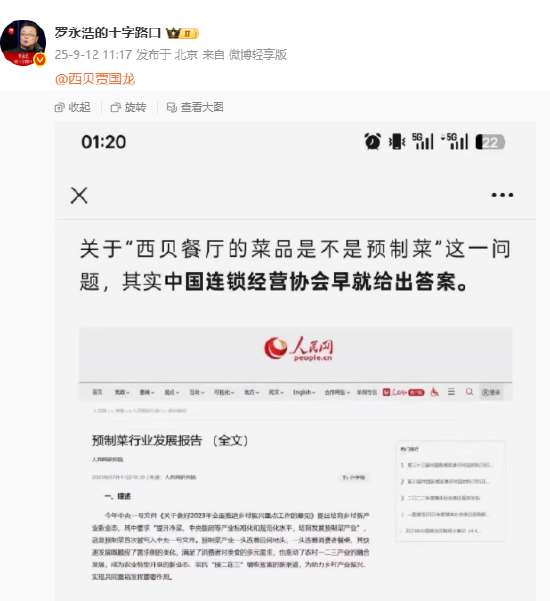
罗永浩悬赏10万征集西贝预制菜线索
证券时报· 2025-09-12 03:08
Core Viewpoint - The ongoing dispute between Luo Yonghao and Xibei over the use of pre-prepared dishes has escalated, with both parties taking strong stances and engaging in a public evidence contest [1][2][4]. Group 1: Company Background - Xibei, founded in 1988 in Bayannur, Inner Mongolia, is set to have nearly 400 stores across 62 cities in China by 2025, employing approximately 17,000 people [4]. - In 2023, Xibei's overall revenue exceeded 6.2 billion yuan, marking a historical high for the company [4]. - The company plans to open its first overseas store in Los Angeles in 2025, marking the beginning of its global expansion [4]. Group 2: Incident Details - On September 10, Luo Yonghao publicly criticized Xibei on social media, claiming that most of the dishes were pre-prepared and expensive, urging for legislation to require restaurants to disclose the use of pre-prepared ingredients [4]. - In response to Luo's comments, Xibei's founder, Jia Guolong, announced intentions to sue Luo for his negative remarks [2]. - Luo countered by offering a 100,000 yuan reward for anyone who could provide evidence of Xibei's use of pre-prepared dishes, shifting the conflict from verbal exchanges to a contest of evidence [2].
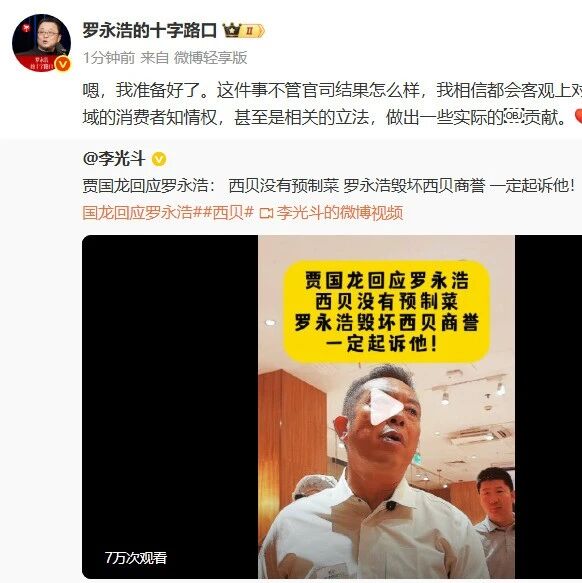
华与华董事长华杉:罗永浩这样污蔑贾国龙,他绝对受不了
Xin Lang Ke Ji· 2025-09-12 02:51
9月11日晚间,华与华营销咨询有限公司董事长华杉发微博表示,西贝是拼了老命要把菜做好的企业, 贾国龙又是极其爱惜自己羽毛的人,罗永浩这样的污蔑,他绝对受不了。 责任编辑:李思阳 近日,"西贝"陷入的预制菜舆论风波。 9月10日,罗永浩发博公开吐槽连锁餐饮品牌西贝:"好久没吃西贝了,今天下飞机跟同事吃了一顿,发 现几乎全都是预制菜,还那么贵。希望国家尽早推动立法,强制饭馆注明是否用了预制菜。" 9月11日,西贝创始人贾国龙在罗永浩就餐的餐厅对外界多方面问题进行回应,并称"将要起诉罗永 浩。" ...
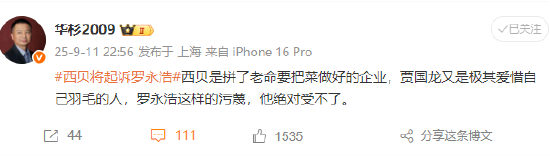
悬赏10万征集西贝预制菜线索,罗永浩被网友力挺,餐厅为何成为预制菜“禁区”?
3 6 Ke· 2025-09-12 02:50
Core Viewpoint - The controversy surrounding the use of pre-prepared dishes in restaurants, particularly highlighted by the public dispute between Luo Yonghao and the restaurant chain Xibei, raises significant questions about consumer rights and transparency in the food industry [1][21][23]. Group 1: Incident Overview - Luo Yonghao criticized Xibei for allegedly serving pre-prepared dishes, prompting a strong response from the restaurant chain, which denied the claims and threatened legal action [1][3]. - Xibei's founder, Jia Guolong, expressed concern over the impact of Luo's comments on the brand's reputation and stated that the restaurant uses fresh ingredients [1][3]. - The incident has sparked widespread public interest, with many netizens supporting Luo and questioning the pricing and quality of Xibei's offerings [5][6]. Group 2: Consumer Sentiment and Industry Trends - There is a growing distrust among consumers regarding pre-prepared dishes, with many preferring transparency about the food they consume [8][12]. - The acceptance of pre-prepared dishes has increased among younger consumers, particularly during peak seasons like the Spring Festival, indicating a shift in market dynamics [9][10]. - Consumers are sensitive to the distinction between pre-prepared and freshly made dishes, often feeling uncomfortable when paying premium prices for what they perceive as lower-quality food [12][14]. Group 3: Regulatory Landscape - The lack of a formal national standard for pre-prepared dishes has led to confusion and inconsistency in the industry, with various local and corporate standards in place [19][20]. - Upcoming regulations are expected to clarify the definition and safety standards for pre-prepared dishes, which could significantly impact the industry [20][21]. - The need for restaurants to disclose the use of pre-prepared dishes to consumers remains a contentious issue, with many restaurant owners reluctant to reveal such information for fear of losing customers [21][22].
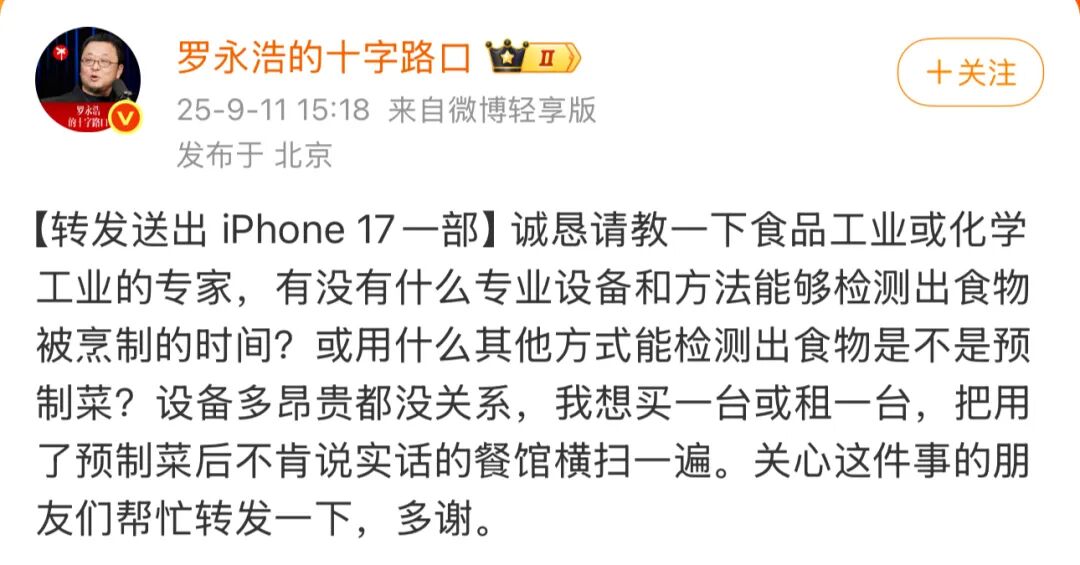
贾国龙:不否认此前“越高级预制程度越高”言论,红烧肉都得预制很长时间
Xin Lang Ke Ji· 2025-09-12 02:27
近日,"西贝"陷入的预制菜舆论风波。 9月10日,罗永浩发博公开吐槽连锁餐饮品牌西贝:"好久没吃西贝了,今天下飞机跟同事吃了一顿,发 现几乎全都是预制菜,还那么贵。希望国家尽早推动立法,强制饭馆注明是否用了预制菜。" 此前,西贝创始人兼董事长贾国龙却比较认可预制菜,其受访时还曾坦言, "好菜全是预制出来的,只 要越高级预制程度越高,预制菜是未来餐饮的大趋势。" 贾国龙表示,并不否认此前的言论,他表示,鱼翅、鲍鱼、等高级菜都得经过长时间的预制。否则菜品 做法比较复杂,不可能马上就上来,"就一个红烧肉,你都得预制很长时间。"他说。 贾国龙还表示,预制和预制菜是两回事儿,因为预制就是提前做,提前加工预加工,但预制菜就是成品 了。他指出,全在门店完成的这不叫预制菜,它是有预制工艺。 责任编辑:李思阳 9月11日,西贝创始人贾国龙在罗永浩就餐的餐厅对外界多方面问题进行回应,并称"将要起诉罗永 浩。" 贾国龙表示,餐饮行业不回避预加工菜品,但"我们不是预制菜,国家对预制菜有严格定义","按国家 规定,我们没有一道是预制菜,而且100%不是预制菜"。"罗永浩说全是预制菜,太恶心了,挺伤我们 的"。 ...
罗永浩悬赏10万,征集西贝预制菜线索
Sou Hu Cai Jing· 2025-09-12 02:24
昨天,在刚刚结束回应"预制菜"风波的新闻发布会后,记者了解到,西贝创始人、董事长贾国龙表示将会起诉罗永浩。 西贝创始人、董事长贾国龙在接受采访时,就"是否会起诉罗永浩"一问做出明确且强硬的表态。"一定会,我们一定会起 诉他,一定一定会起诉他!"贾国龙连用三个"一定"来强调他的决心。他表示:"他对我们的伤害是很大的,一定会起 诉。" 当被问及如何看待罗永浩作为西贝的用户,以及起诉用户的行为时,贾国龙将罗永浩的"消费者身份"与他的"博主行为"进 行了切割。 "用户是用户,我感谢他来消费。但他的行为已经跨出了一个正常消费者的行为,"贾国龙解释道。他认为,一个正常的消 费者如果对菜品不满意,西贝有非常通畅的反馈和补偿机制。 "我们承诺不好吃不要钱,你只要提出来,我们服务员可以麻利地给你退菜、换菜甚至免单。但你(罗永浩)吃得挺好,抹嘴 走了,回去就发了一个微博,对我们造成那么大的伤害。" 贾国龙补充说,商家的责任是让顾客吃好,如果吃不好,商家有责任道歉和补偿,这才是商家和消费者之间健康的正常关 系。 同时,他还发布10万元悬赏,公开征集西贝使用预制菜的"真凭实据"。 他认为,罗永浩的行为已经超出了这一范畴,并且在持续发 ...
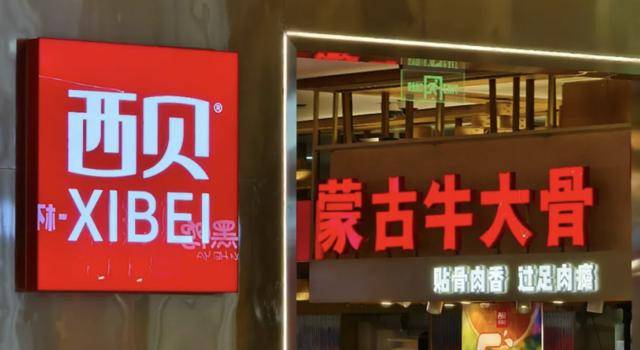
贾国龙:西贝忠实顾客很多,8月份客流创历史新高
Xin Lang Ke Ji· 2025-09-12 02:08
责任编辑:李思阳 9月11日,西贝创始人贾国龙在罗永浩就餐的餐厅对外界多方面问题进行回应,并称"将要起诉罗永 浩。" 贾国龙表示,说西贝又贵又难吃是"被黑了",他还强调,西贝忠实顾客很多,消费者用脚投票,八月份 客流历史新高,超过了19年,超过了23年,高过了20年,这个东西不是忽悠出来的。 近日,"西贝"陷入的预制菜舆论风波。 9月10日,罗永浩发博公开吐槽连锁餐饮品牌西贝:"好久没吃西贝了,今天下飞机跟同事吃了一顿,发 现几乎全都是预制菜,还那么贵。希望国家尽早推动立法,强制饭馆注明是否用了预制菜。" 贾国龙还表示,他自己亲自管定价,是参照市场上的价,还有消费者能接受的价来定价。 ...
罗永浩悬赏10万元征集西贝预制菜线索
Sou Hu Cai Jing· 2025-09-12 02:02
据新黄河报道,9月11日晚,西贝创始人贾国龙在最新的采访中,再次详细复盘了罗永浩的就餐过程,并抛出了两个关键细节:罗永浩一行人当场反馈"挺 好",且结账时累积了会员积分。但这一切都发生在他发布"真恶心"微博的"1个小时之前"。 贾国龙还原的场景,描绘了一次看似愉快且正常的消费体验。罗永浩一行四男一女点单丰盛,含双份菜在内共15道菜,且几乎全部吃完,仅剩下最后因上 菜较晚而未吃完的羊排和烤鱼。在用餐结束,服务员询问"吃的怎么样?"时,得到的现场回复是"挺好"。 在结账环节,据贾国龙透露,服务员当时询问是否需要累积会员积分,付款的随行人员表示"要"。这一举动,通常被视为消费者对品牌有一定认可度、并 愿意进行复购或深度绑定的信号。贾国龙推断,付款和操作积分的应该不是罗永浩本人,而是其助理或朋友。 与此同时,为了让消费者亲身体验"值不值",西贝宣布将从明天起,在全国所有门店上线"罗永浩菜单"。贾国龙澄清,这不是一个固定的套餐,而是罗永 浩点过的菜品列表,消费者可以任意点选。西贝为此提供了两大承诺:第一,"不好吃,不要钱",顾客可以随时退单;第二,欢迎顾客随时进入后厨,参 观任何一道菜的制作全过程。 同时,他还发布10 ...
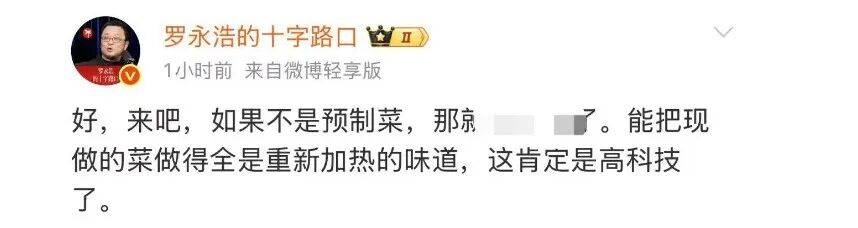
西贝贾国龙:没有一道是预制菜,预制和预制菜是两回事儿
Xin Lang Ke Ji· 2025-09-12 01:53
Core Viewpoint - The controversy surrounding the restaurant chain "Xibei" has been ignited by a public criticism from entrepreneur Luo Yonghao regarding the use of pre-prepared dishes, leading to a response from the founder of Xibei, Jia Guolong, who plans to sue Luo for defamation [1][3]. Group 1: Company Response - Jia Guolong, the founder of Xibei, stated that the restaurant does not serve pre-prepared dishes as defined by national standards, asserting that "not a single dish is pre-prepared" [1]. - The restaurant's representative mentioned that out of 15 dishes served, only two were left unfinished, which were the last to be served, indicating that the food was consumed positively by the customers [1]. - Jia emphasized the distinction between "pre-prepared" and "pre-prepared dishes," clarifying that pre-prepared refers to items that are partially made in advance, while pre-prepared dishes are fully cooked and ready to eat [3]. Group 2: Industry Context - The restaurant industry is facing scrutiny regarding the use of pre-prepared ingredients, with calls for legislation to require restaurants to disclose such practices to consumers [1]. - The definition of pre-prepared dishes is critical in this debate, as it affects consumer perception and regulatory compliance within the food service sector [3].
罗永浩悬赏10万元,征集西贝预制菜证据
Sou Hu Cai Jing· 2025-09-12 01:50
昨天,西贝创始人贾国龙在接受媒体采访时表示,"复盘了罗永浩来西贝吃饭时的菜品和接待服务,我们的总结是,做的饭中规中矩,他点的13道菜里没 有一道是预制菜,我们每一道菜都有制作标准和工艺。"在结束回应"预制菜"风波的新闻发布会后,西贝创始人、董事长贾国龙表示将会起诉罗永浩。 西贝创始人、董事长贾国龙在接受采访时,就"是否会起诉罗永浩"一问做出明确且强硬的表态。"一定会,我们一定会起诉他,一定一定会起诉他!"贾国 龙连用三个"一定"来强调他的决心。他表示:"他对我们的伤害是很大的,一定会起诉。" 与此同时,为了让消费者亲身体验"值不值",西贝宣布将从今天起,在全国所有门店上线"罗永浩菜单"。贾国龙澄清,这不是一个固定的套餐,而是罗永 浩点过的菜品列表,消费者可以任意点选。西贝为此提供了两大承诺:第一,"不好吃,不要钱",顾客可以随时退单;第二,欢迎顾客随时进入后厨,参 观任何一道菜的制作全过程。 "在大家看来,中央厨房、食品工厂出来的菜都是预制菜。而且网上有证据表明,西贝的中央厨房部分的菜品就是采购的工厂预制菜,贾国龙已经犯了'众 怒'。" 9月11日,面对西贝创始人贾国龙提到"西贝门店没有一道是预制菜",接近罗 ...