预制菜争议

Search documents
西贝关店30%后,天边砂锅焖面能帮贾国龙翻身吗?
后浪研究所· 2026-03-26 09:02
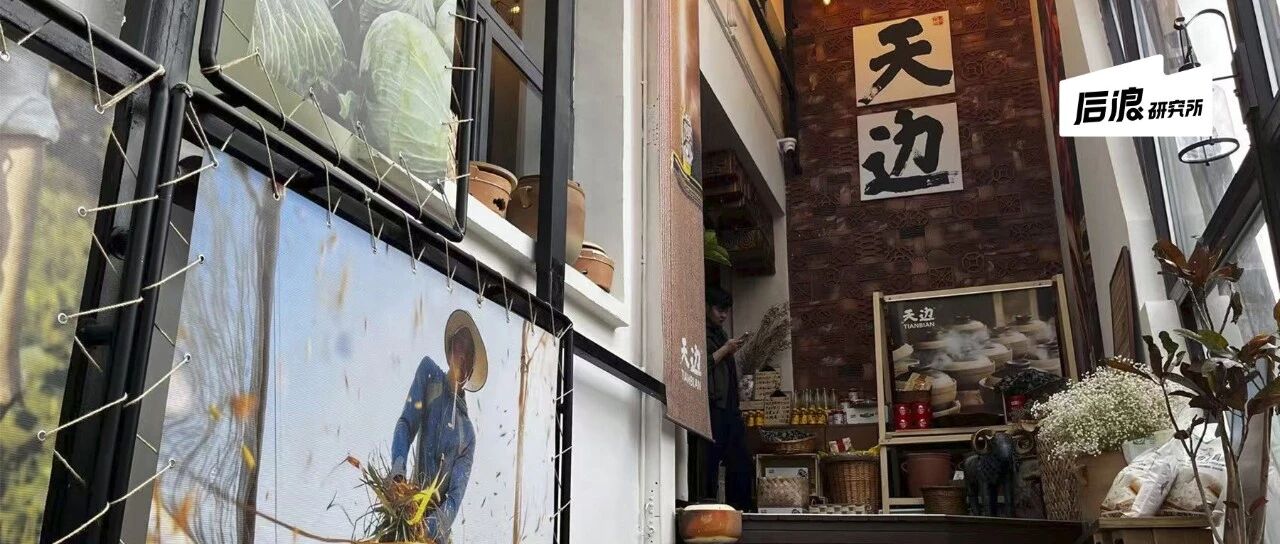
Core Viewpoint - The article discusses the recent developments of the new brand "Tianbian Clay Pot" by Jia Guolong, following the closure of 102 Xibei restaurants, focusing on its successful launch and the strategic shift in the restaurant's offerings [3][35]. Group 1: Business Strategy and Performance - Jia Guolong announced the closure of 102 Xibei stores, which represents 30% of the total stores, to concentrate on the new brand "Tianbian Clay Pot" [3]. - The first week of operation for Tianbian Clay Pot saw long queues, indicating strong initial demand, with customers waiting over an hour during peak dinner times [3]. - The average price for a clay pot noodle dish ranges from 45 to 59 yuan, which is considered affordable for the target demographic of office workers in the area [4][8]. Group 2: Menu and Pricing - The menu initially included a variety of dishes but later focused on clay pot noodles as the main offering, with prices significantly lower than similar dishes at Xibei [6][8]. - The pricing strategy appears to be well-received, as it avoids the high costs associated with Xibei's offerings, making it more appealing to consumers [8][39]. Group 3: Customer Reception and Experience - Customer feedback has been generally positive, with many praising the taste and quality of the dishes, despite some skepticism regarding the use of pre-prepared ingredients [12][34]. - The restaurant's design and open kitchen concept aim to enhance transparency and customer trust, addressing previous controversies surrounding food preparation methods [17][25]. Group 4: Market Position and Future Outlook - The shift to clay pot noodles allows the brand to sidestep the controversies associated with pre-prepared dishes, as the cooking method aligns more closely with customer expectations for freshness [14][40]. - Jia Guolong's past failures in launching new brands highlight the importance of aligning pricing and consumer expectations, suggesting a more cautious approach moving forward [37][41].

半年换爆品,捞金500万,“外卖推手”盯上打工人午餐
3 6 Ke· 2026-01-22 09:56
Core Insights - The rise of "盖码饭" (Gai Ma Fan) as a popular lunch choice among office workers in major cities is attributed to its affordability, convenience, and variety, with prices around 20 yuan [1][2] - The business model relies heavily on franchise operations, allowing rapid expansion and profitability through standardized processes and centralized supply chains [1][3] Group 1: Market Dynamics - Gai Ma Fan has become a staple for young professionals and white-collar workers, particularly in densely populated office areas and near universities [2][3] - The competition among Gai Ma Fan vendors has intensified, leading to price wars and a proliferation of similar offerings across various fast-food brands [4][5] - The average monthly profit for successful vendors can reach up to 120,000 yuan, driven by high order volumes during peak times [3][6] Group 2: Operational Insights - Vendors utilize a combination of manual cooking and automated cooking machines to meet high demand, with significant cost savings on equipment and ingredients [2][3] - The supply chain is centralized, with key ingredients like sauces and packaging provided by the franchisor, ensuring consistent quality and taste [2][8] - The operational model allows for quick adaptation to market trends, with frequent updates to menu items to maintain consumer interest [6][9] Group 3: Competitive Landscape - The market is witnessing a shift towards new food trends, such as "江西小炒" (Jiangxi Stir-fry), which offers higher profit margins and caters to similar consumer demographics [7][9] - Major brands like "霸碗" (Ba Wan) are expanding their offerings to include a variety of dishes in response to competitive pressures from both low-cost vendors and tech companies entering the food delivery space [10][11] - The evolution of consumer preferences indicates a growing demand for freshly cooked meals, contrasting with the rising controversy surrounding pre-prepared foods [9][10]
贾国龙二战罗永浩!谁才是压垮西贝的真凶?
商业洞察· 2026-01-18 09:23
Core Viewpoint - The article discusses the recent challenges faced by Xibei, particularly the closure of 102 stores, which represents about 30% of its total outlets, due to a significant decline in business attributed to public backlash over pre-prepared food accusations [5][11]. Group 1: Store Closures and Employee Impact - Xibei will close 102 stores in the first quarter, affecting approximately 4,000 employees, citing "overwhelming slander" as the main reason for the business downturn [5]. - The company has committed to ensuring that departing employees receive their full wages and that customer prepaid cards can be used at other locations or refunded immediately [5]. Group 2: Denial of Pre-prepared Food Accusations - Xibei's management strongly denies the accusations of using pre-prepared food, clarifying the difference between "central kitchen preparation" and "pre-packaged meals," asserting that their practices comply with national definitions [6][5]. - The article highlights that while Xibei's technical definition of pre-prepared food may be correct, public perception differs, leading to a disconnect between compliance and consumer trust [7]. Group 3: Business Viability and Market Dynamics - The closure of these stores is seen as a necessary move due to low profitability, with Xibei's average store net profit margin at only about 5%, and some loss-making stores facing fixed monthly costs nearing 500,000 [11]. - The article suggests that the pre-prepared food controversy was not the sole cause of Xibei's struggles but rather the tipping point in a broader context of changing market conditions and consumer expectations [12][14]. - Competitors like Mixue Ice City are expanding aggressively, while other high-end brands are scaling back, indicating a shift in market dynamics where value perception is increasingly critical [14].

李国庆喊话华与华、罗永浩帮西贝一把!
Xin Lang Cai Jing· 2026-01-16 16:22
Group 1 - Li Guoqing, the founder of Dangdang, has called on Hua Yu Hua and Luo Yonghao to support Xibei by investing in a new company alongside Jia Guolong, indicating a willingness for collaboration [1] - Luo Yonghao has expressed his openness to join the initiative, highlighting a potential partnership in the food industry [1] Group 2 - Xibei is currently facing controversy related to its pre-prepared dishes, which may impact its brand reputation and market position [1]

2026年,西贝还能上市吗?
Sou Hu Cai Jing· 2026-01-16 11:32
Group 1 - The core point of the article revolves around the recent announcement by Xibei's founder, Jia Guolong, regarding the closure of 102 stores, which represents about 30% of the total stores, affecting approximately 4,000 employees [6][7] - Xibei's revenue exceeded 6.2 billion yuan in 2023, and as of November 11, 2025, the number of stores had reached 354 [4] - The controversy began when a public figure criticized Xibei's food quality and pricing, leading to a public relations crisis for the company, which Jia Guolong attempted to address through various self-rescue measures [4][6] Group 2 - Jia Guolong's ambition for Xibei to go public by 2026 and achieve a market value exceeding 100 billion yuan is now in question following the recent turmoil [12][13] - Historically, Jia Guolong had expressed a strong stance against going public, stating "Xibei will never go public," but this position has evolved due to changing economic conditions and the need for capital [8][10] - The article suggests that Jia Guolong's personality traits, including stubbornness and pride, may have contributed to the current challenges faced by Xibei, potentially jeopardizing its future as a public company [15][19]
贾国龙:今晚10点将就罗永浩对西贝重大污蔑诽谤全面回应
21世纪经济报道· 2026-01-16 10:14
Core Viewpoint - The article discusses the ongoing public dispute between Xibei's founder, Jia Guolong, and entrepreneur Luo Yonghao, highlighting the challenges faced by Xibei in the restaurant industry amid negative publicity and operational difficulties [1][5]. Group 1: Company Response and Challenges - Jia Guolong confirmed that Xibei will close 102 stores, accounting for 30% of its total locations, due to ongoing challenges and negative publicity over the past 125 days [5]. - Jia emphasized that the company relies on its own efforts and has been working hard to navigate through the difficulties, indicating a commitment to the employees and the brand [5]. - The restaurant industry is experiencing increased competition and declining profits, with major players like Haidilao reporting a 3.0% year-on-year revenue decline to 20.703 billion [9]. Group 2: Public Relations and Management - Jia Guolong stated that Xibei does not engage in public relations, which raises questions about the effectiveness of its communication strategy, especially in light of recent controversies [9]. - The departure of Xibei's Vice President of Public Relations, Song Xuan, was framed as a personal decision, with Jia expressing support for him despite the ongoing challenges [8]. - Jia's approach to management reflects a belief in the company's operational success without reliance on public relations, which may be seen as naive given the current market conditions [9]. Group 3: Industry Context - The Chinese restaurant industry is projected to face a slowdown in revenue growth and profit margins, with many restaurant owners acknowledging the difficulty in maintaining revenue levels [9]. - Jia Guolong admitted that Xibei's revenue was already in a declining phase before the recent controversies, indicating pre-existing operational challenges [9]. - The overall market trend suggests that restaurants may need to either lower prices or abandon national markets to remain competitive, which poses a significant challenge for Xibei given its higher price point [9].
西贝关店102家:没有舆论风波,这些门店就能保住吗?
虎嗅APP· 2026-01-15 14:18
Core Viewpoint - The closure of 102 stores by Xibei represents the largest adjustment in its 38-year history, driven by operational challenges rather than just public relations issues [4][6]. Group 1: Operational Challenges - Xibei's single-store net profit margin is only 5%, with some stores facing fixed costs nearing 500,000 yuan per month, necessitating monthly revenues of 800,000 yuan to break even [6]. - The closures were primarily of low-revenue stores, selected based on hard metrics like rent costs and customer traffic, indicating pre-existing operational difficulties [6][12]. - The high-cost operational model, including premium ingredients and employee benefits, has become unsustainable in a competitive environment with declining consumer spending [6][12]. Group 2: Market Position and Consumer Perception - Xibei's average customer spending of approximately 92 yuan is not competitive in a market increasingly focused on value, particularly among its core demographic of price-sensitive family and elderly consumers [7][12]. - The backlash against Xibei during the pre-prepared food controversy highlighted a disconnect between the company's definition of "pre-prepared food" and consumer perceptions, exacerbating existing operational vulnerabilities [7][12]. Group 3: Strategic Adjustments - In response to declining customer traffic, Xibei attempted to revert some food preparation processes back to stores and reduced prices on over 30 menu items, but these measures did not fully restore customer flow [9][12]. - The decision to maintain operations for pre-booked events, despite financial losses, reflects a commitment to customer service but also raises questions about the sustainability of such decisions under financial strain [9][10]. Group 4: Future Outlook - Xibei's future stability hinges on addressing the long-standing imbalance between expansion and operational efficiency, as well as improving communication with consumers regarding its value proposition [12][13]. - The recent store closures serve as a cautionary tale for the restaurant industry, emphasizing that growth must be built on a solid operational foundation rather than mere expansion [12][13].
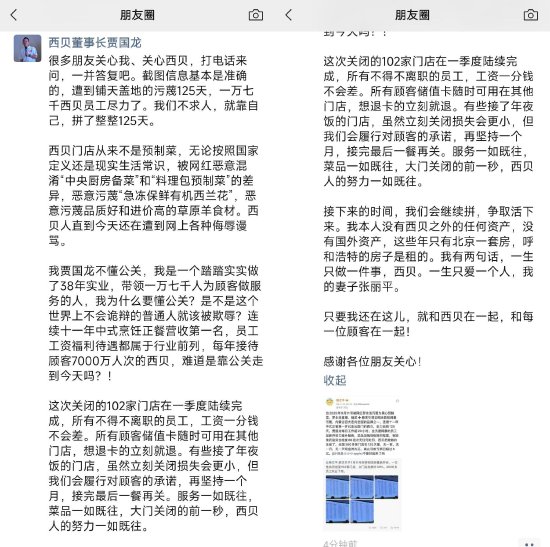
西贝贾国龙回应“拟大规模闭店”:关闭门店一季度陆续完成,工资一分钱不会差,顾客可随时退卡
Xin Lang Cai Jing· 2026-01-15 07:59
Core Viewpoint - The company, Xibei, is closing 102 stores across more than 30 cities, with plans to complete the closures in the first quarter. The chairman emphasizes the commitment to employees and customers during this transition [1][2][4]. Group 1: Store Closures - Xibei is planning to close 102 stores, with various closure strategies including "close," "early closure," "contract expiration closure," "overall transfer pending communication," "negotiating rent reduction," and "reassess in the first quarter" [1][6]. - The closures will be completed in the first quarter, and all employees affected will receive their wages without any deductions [2][4][6]. Group 2: Customer Commitment - Customers with stored value cards can use them at other locations, and those wishing to refund their cards can do so immediately [2][4][6]. - The company will continue to serve customers in the remaining stores for an additional month to fulfill commitments, especially for those who booked New Year's Eve dinners [2][4][6]. Group 3: Company Reputation and Operations - The chairman refutes claims that Xibei uses pre-prepared meals, asserting that the company has always focused on quality ingredients and service [2][3][7]. - Xibei has been recognized as the top revenue generator in Chinese cuisine for eleven consecutive years, with employee compensation and benefits being among the best in the industry [3][7]. Group 4: Personal Commitment of Leadership - The chairman has no assets outside of Xibei and emphasizes a lifelong dedication to the company and its customers [8][9]. - The chairman expresses a strong personal connection to the business, stating a commitment to continue fighting for the company's survival [8][9].
2026年,这22件好物让你全面开挂|36氪年度推荐
3 6 Ke· 2026-01-01 03:12
Group 1 - The article discusses the transformative events of 2025, highlighting various cultural and societal changes, including the rise of DeepSeek and the ongoing popularity of animated films like "Nezha 2" and "Zootopia 2" [3] - It emphasizes the continuous evolution in the food industry, mentioning the heated debates around prepared meals and the competitive landscape of food delivery services [3] - The article reflects on the unpredictable nature of global events, such as trade wars and conflicts, and how they impact daily life [3] Group 2 - A curated list of recommended books and media is provided, aimed at helping readers discover valuable resources amidst their busy lives [3] - Recommendations include "The Great Way" for its accessible investment philosophy, and "Deng Xiaoping Era" for its comprehensive historical perspective on China [4][10] - Other notable mentions include "Shit," an art book focusing on the mundane aspects of war, and "The Latte Factor," which encourages small daily changes for personal growth [12][14] Group 3 - The article features various media recommendations, such as the documentary series "Human Comedy," which presents real-life stories with a unique perspective [16] - It highlights the success of "The Joyful Night 2," a content phenomenon that engages audiences through interactive storytelling [18] - The podcast "QCode" is recommended for its high-quality audio storytelling, likened to a "listening movie" experience [32] Group 4 - The article concludes with a giveaway for readers to share their favorite books, fostering community engagement and encouraging literary exploration [63]

真刺激!华与华老板称西贝被算计。罗永浩怒怼:说不清就放录音,6 点前必须公开道歉
程序员的那些事· 2025-11-26 09:27
Core Viewpoint - The article discusses a public dispute between Luo Yonghao and Xibei, highlighting the tensions surrounding the use of pre-prepared dishes in the restaurant industry and the implications for brand reputation and public relations [1][3][4]. Group 1: Incident Overview - Luo Yonghao criticized Xibei for using pre-prepared dishes, which led to a strong reaction from Xibei's founder, Jia Guolong, who threatened legal action against Luo [1][3]. - The situation escalated when Xibei's brand consultant, Hua Shan, publicly defended Xibei and accused Luo of being a "network black mouth," suggesting that the criticism was part of a larger scheme against Xibei [3][4]. - Following this, Luo demanded a public apology from Hua by a specific deadline, indicating the seriousness of the conflict and the potential impact on Hua's consulting firm [8][9]. Group 2: Reactions and Implications - The public's reaction included skepticism about Hua Shan's motives, with some suggesting that the conflict might be a tactic to maintain Xibei's struggling status in the market [13]. - Luo's threats to release recordings if an apology was not issued indicate a significant escalation in the public relations battle, potentially affecting both Xibei and Hua's reputation in the industry [7][9]. - The incident reflects broader issues in the restaurant industry regarding transparency and the use of pre-prepared food, which could influence consumer perceptions and brand loyalty [4][6].